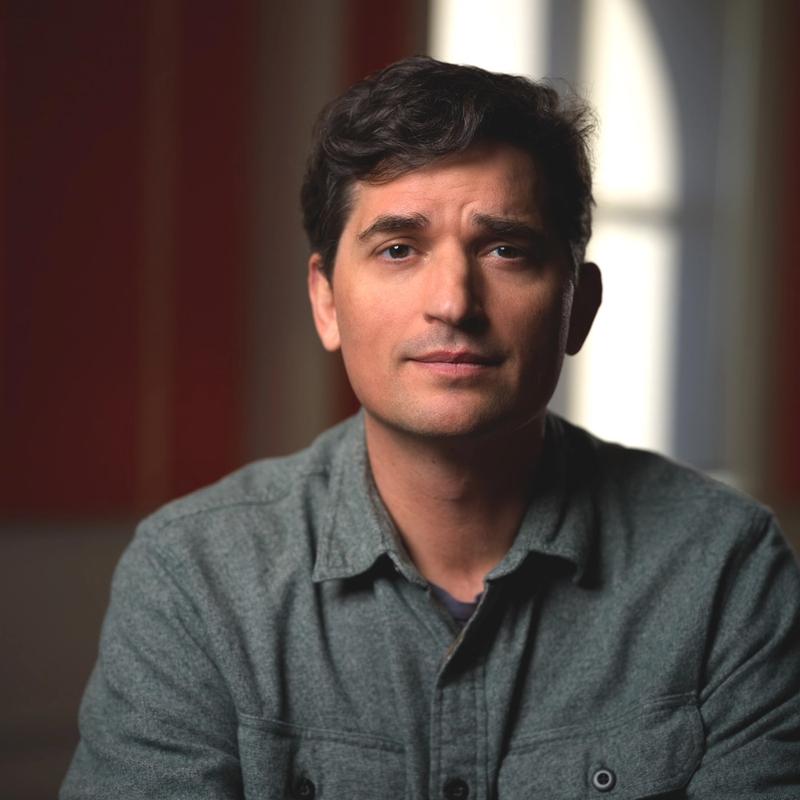
He built a music social network with 100 million daily page views. Then watched it sell for almost nothing. Then wrote a letter to Mark Zuckerberg the entire internet read. Then spent 12 years inside Y Combinator teaching founders not to make the same mistakes he made.
Dalton Caldwell was born in El Paso, Texas, in 1980, and grew up with the kind of Southwestern directness that never quite left him - even after Stanford, even after Silicon Valley. At Stanford he studied Symbolic Systems, a hybrid major stitching together cognitive science, linguistics, computer science, and philosophy. The degree is almost comically perfect for someone who would spend the next two decades thinking about how humans interact with platforms.
He graduated in 2003. Within weeks he co-founded imeem with his Stanford classmate Jan Jannink, a former Napster engineer who'd spent years watching the record industry fight the internet. They decided to stop fighting it. imeem was a social music network - legal, licensed, ambitious. The name was a play on "memes," coined in 2003, years before the word meant what it means now.
The Music Wars
For a few years, imeem worked. By 2007 it had done something no social network had managed: signed licensing deals with all four major music labels - Universal, Sony BMG, Warner, and EMI. All four. The industry called it impossible. Caldwell called it Thursday.
By 2008, imeem had 85 employees, over 100 million daily page views, and a $200 million valuation. Sequoia Capital and Morgenthaler Ventures had put in $27 million. From the outside, it looked like a victory. Inside, the math was killing them. Music royalties were crushing revenue faster than ads could fill the gap. The economics of licensed streaming - in 2008, before Spotify, before the model had been fully figured out - were a trap with no exit.
In December 2009, MySpace Music acquired imeem in a distressed sale. The price was somewhere between $1 million and $9 million - depending on which source you believe - for a company that had been valued at $200 million. Caldwell stayed on briefly as a consultant, then left.
In 2010, Caldwell gave a now-legendary talk at YC's Startup School at Stanford. The topic: why music startups are a bad idea. He named the specific royalty clauses, the licensing economics, the structural impossibility of ad-supported streaming against label costs. He was candid about everything that went wrong. Silicon Valley is a place where failure is supposedly celebrated but usually sanitized. Caldwell's talk was neither - it was a detailed autopsy in front of hundreds of future founders, delivered without self-pity. The recording circulated for years.
The Letter That Went Viral
By 2010, Caldwell had founded Mixed Media Labs and launched picplz, a mobile photo-sharing app. Andreessen Horowitz backed it. The timing was sharp - Instagram (then still called Burbn) was a direct competitor. a16z, having already committed to Caldwell, passed on Instagram. The decision cost them one of the most valuable bets in venture history.
picplz shut down on July 3, 2012. Instagram had won. But by then, Caldwell was already building something else - something more personal. On July 13, 2012, he published a blog post titled "Announcing an Audacious Proposal." He wanted to build a social feed API funded by subscriptions, not advertising. No data-selling. No promoted tweets. A network architecturally honest about who its customer was.
That was App.net. Within 32 days, 12,315 backers pledged $803,000 - far past the $500,000 goal. A real-time social platform built on the premise that users, not advertisers, should be the product's primary constituency.
Then, on August 2, 2012, Caldwell published what became known simply as "the letter." He described a meeting at Facebook HQ on June 13, in which Facebook executives told him his product competed with the new Facebook App Center and - in terms Caldwell characterized as coercive - pressured him to sell. He published the email thread. He named names. He called it a formula Facebook used systematically.
The letter was one of the first public accounts of Facebook's alleged M&A pressure tactics. Facebook declined to comment. A decade later, Congress was asking similar questions in antitrust hearings. Caldwell had just been early - as usual.
App.net itself wound down in May 2014. Subscription revenue wasn't enough. But the idea - that platforms should be honest about their economics, that developer access matters, that users deserve to know how the business works - never stopped being relevant.
The YC Years
In May 2013, while App.net was still running, Paul Graham invited Caldwell to Y Combinator as a part-time partner. In June 2014, he joined full-time. He would stay for more than a decade.
The numbers are almost absurd: 25 batches, over 1,000 startups, 6,500+ office hours. He helped advise more than 35 companies that became unicorns - DoorDash, Amplitude, Webflow, Retool. The collective valuation of companies in batches he worked has crossed $170 billion. In 2020, he was promoted to Managing Partner.
But what Caldwell is perhaps most recognized for at YC isn't the portfolio metrics. It's the mentality. His "just don't die" philosophy - blunt, survival-focused, stripped of inspirational padding - became one of YC's most repeated maxims. He warned founders about "tarpit ideas": concepts that seem exciting but pull companies into unwinnable markets. He co-hosted a podcast with Michael Seibel called "Dalton & Michael" that became essential listening for the YC founder community.
His 2010 letter to his 2008 self - published on Substack as "Letter to Myself in Late 2008" - is a startup post-mortem that reads like the advice no one gives you: do your layoff earlier and deeper ("70%, not 5-10%"), make the decision yourself even when it's unpopular, stop hoping the market will change. He had lived every mistake he warned founders about. That gave him standing.
Standard Capital
In June 2025, after 12 years, Caldwell transitioned to Partner Emeritus at YC - still connected, but stepping back from the daily work. And he announced his next act: Standard Capital, co-founded with Paul Buchheit (who created Gmail, was an early investor in OpenAI, and helped start YC) and Bryan Berg (who built core infrastructure and security at Stripe).
Standard Capital closed a $425 million Fund I. The model is deliberate: Series A investments, roughly 10% equity per deal, about 5 investments per cycle, four cycles a year. No board seats - Buchheit put it plainly: "The really only job of a board member is to fire the founder. If we're just helping you, we actually don't need a board seat." No legal fees charged to portfolio companies. No pitch decks required. Any founder, anywhere in the world, can apply with no warm introduction needed.
Most pointedly: Standard Capital publishes its full term sheet publicly, before founders apply. You see the deal before you walk in the door. By venture capital standards, that is radical transparency.
It is, in its way, the same argument Caldwell has been making since imeem. Build systems that are honest about their incentives. Don't sell users what you're charging advertisers for. Don't extract more than you contribute. It took him 25 years to get to a position where he could build that argument into the structure of a fund.