The furniture orders kept coming. That was the good news. In a retail engagement described by D4 Insight, the pandemic had sent e-commerce demand upward, pushing more information through the machinery behind the storefront. Then reports began timing out. Customer-care agents needed fresher data. New recruits made mistakes in the application. A business could sell someone a sofa and still struggle to move the record of that sofa through its own systems.
- D4 connects and manages enterprise software, from CRM to cloud infrastructure.
- Its retail work combines integration, report optimization, and user training.
- Its insurance offering applies AI to information buried in documents and online data.
There is something revealing about that problem. The retailer already had enterprise software. It had an e-commerce portal, warehouse applications, payment connections, and Microsoft Dynamics. What it needed was help with the relationships among them. D4 Insight’s most interesting work begins in precisely that crowded space, where a company owns the tools but the handoffs still need attention.
01 / The report that wouldn’t finish
D4’s May 2022 account describes a repair job with several moving parts. The team optimized the existing Dynamics 365 Finance and Operations environment, implemented Dynamics Customer Engagement, connected business applications, and strengthened production support. It also changed reports so they could handle larger volumes and used business events to exchange data between applications in real time.
Then came the distinctly human part: documentation and training. The company reports that users could generate large reports, downstream synchronization windows shortened, and common mistakes declined. These are D4’s reported outcomes. Their appeal is their specificity. A report completes. An update arrives. An employee understands the next step. Those are things an operations manager can actually watch.
A business could sell someone a sofa and still struggle to move the record of that sofa.
The intervention suggests a practical sequence worth copying: trace the work, find where information stalls, and fix the handoff together with the user’s routine. Adding software to a process that people already misunderstand gives them another thing to misunderstand. In this case, training belonged in the same scope as the technical work.
02 / Two systems, one customer
A second furniture-retail case sharpens the point. Customer-service representatives worked in Dynamics 365 while Salesforce also held service information. Without synchronization, an agent could have trouble locating a case, inspecting its product details, or seeing an update. Scheduling a technician depended on information that had to line up across systems.
D4 describes connecting the platforms through APIs in both directions. Create or update a case in one, and the corresponding operation can be sent to the other. The design covers the case and related information, including notes, emails, and attachments. It is the sort of plumbing customers notice only when it fails. Nobody wants to explain a broken chair twice because two databases have different memories.
This helps explain D4’s position in the market. It implements and supports established platforms while also doing custom development, migration, and release management. A buyer considering D4 is choosing a delivery team as well as technical expertise. The alternatives include another implementation consultancy, a broader systems integrator, or an internal team with time to own the integration.
03 / Make the next server less interesting
Infrastructure introduces the same coordination problem at a different scale. In another May 2022 case, D4 describes a hybrid environment with legacy infrastructure, a geographically distributed point-of-sale platform, and more than 500 servers maintained by multiple vendors. Operating expenses and lengthy service commitments were among the stated challenges.
The response centered on infrastructure as code: Terraform modules for Azure, reusable resource templates, and hardened base server images. D4 reports leaner cloud operations, more flexible scaling, and lower operating costs through Azure platform services where feasible. The copyable idea is straightforward. Turn a repeated setup into a maintained definition, so the next deployment begins with something tested and recognizable.
For a buyer, the useful cost question follows the work: how much time goes into provisioning, support, and maintaining differences between environments? That comparison needs an agreed baseline and a defined scope. A template offers little help if nobody owns its updates. A small operation with one straightforward system may have little reason to commission an elaborate integration project.
04 / An underwriter’s untidy inbox
D4’s data-and-AI offering approaches another kind of fragmentation. Commercial-insurance information arrives in emails, PDFs, spreadsheets, loss reports, and online material. The company describes a proprietary, customizable SaaS platform that combines natural language processing, AI, graph technology, and machine learning to extract information, connect records, and support underwriting and customer segmentation.
The interesting detail is the graph: understanding which pieces of information relate to which business. Extraction alone leaves a pile of facts. Connecting them makes risk assessment possible. For an insurer evaluating such a system, the sensible test is a representative set of submissions and a clear definition of a correct result. Speed means more when the decision remains traceable.
05 / The people between the platforms
The business model extends from advisory and implementation to ongoing management. Salesforce, Dynamics, Power Platform, cybersecurity, and DevOps sit alongside the data work. Its website displays customer logos including Ashley Furniture, Chubb, Gulf Bank, and Emirates NBD. Its delivery footprint spans North America, India, and the Middle East, giving its enterprise work a cross-border operating context.
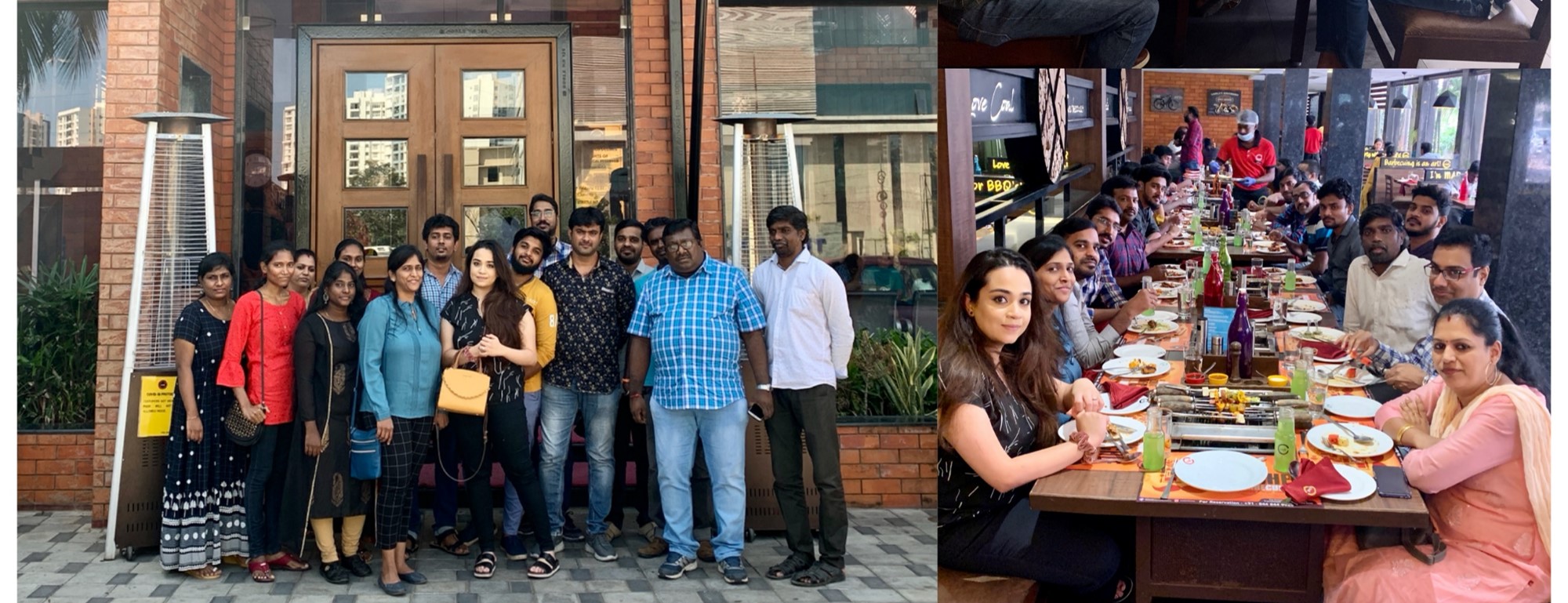
D4 describes a collaborative culture built around customer satisfaction. One company-published employee testimonial lists “focus, ownership, community, effective communication, and good leadership.” That is an employer-selected account, but ownership is an apt word for this work. Someone must take responsibility for what happens between one system’s successful update and another person’s empty screen.
In October 2026, D4’s writing on global capability centres argued for bringing delivery teams into strategic decisions earlier. Read alongside the retail cases, the argument has a practical shape. The people maintaining the connections can see where the business is struggling. Let them explain the bottleneck before deciding what to buy next.