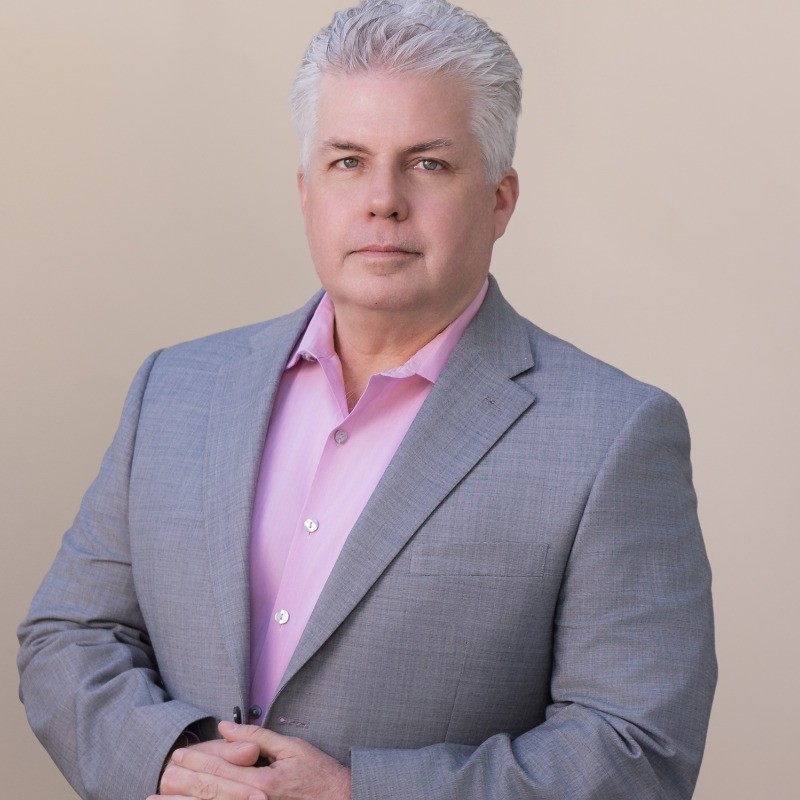
Most people meet cancer diagnostics as a waiting game. A biopsy goes out, a pathology report comes back, and days evaporate while a patient sits with a question mark. Davis's whole pitch is an argument against that wait. NovaScan's platform reads bioimpedance - the electrical resistance of tissue - and pairs it with machine learning to sort healthy from malignant in real time, at a fraction of the cost of the imaging and lab work it hopes to supplement.
The company gave its tools names with personality. MarginScan is aimed at skin excisions, checking in the moment whether a surgeon got all of the cancer or needs to cut again. nsCanary is the broader platform - the canary in the coal mine, listening for trouble across lung, breast, gastrointestinal and pancreatic tissue. Underneath sits a bit of borrowed physics with a jazz-record name: the Cole relaxation frequency, a measure of how cells respond to an electrical field.
Davis did not arrive here as a lab scientist. He arrived as a money guy who kept getting closer to the product. He was a partner at LaSalle Investments, a small shop that helped co-found Merge Healthcare - a medical imaging company that went public and was eventually acquired by IBM for around a billion dollars - and OrthoScan, later bought by Germany's ATON GmbH. He sat on a GTCR-backed team rolling up urology devices. He was a partner at Healthios, a healthcare investment bank founded by former Baxter chief Vern Loucks. He helped shape New Aera, a respiratory company later acquired by Inogen.
That is a resume full of exits, the kind of track record that lets a person keep advising and investing comfortably from a distance. Davis went the other direction. At NovaScan he stopped underwriting other founders' bets and made his own, taking the CEO seat of a clinical-stage company where the science is hard, the trials are slow, and the payoff is years out. He has raised over $20 million, landed a CPRIT grant out of Texas, stitched together strategic partnerships, and pushed the platform into multiple human trials.
His training helps explain the leap. Davis holds a BS in Mechanical Engineering from Washington University in St. Louis, an MS in Engineering from Northwestern, and an MBA from Northwestern's Kellogg School. Engineer first, financier second - so a company built on the electrical behavior of tissue is not a detour for him. It is the whole point.
In 2022, Wisconsin's WiSys named Davis and NovaScan founder Dr. William Gregory its Carl E. Gulbrandsen Innovators of the Year - a nod to the university-research roots underneath the Chicago startup. In 2024 he took the story to a bigger stage, presenting NovaScan's ex vivo and in vivo detection work at the LSI USA Emerging Medtech Summit, one of the field's marquee gatherings.