Alex Czarnecki’s parents wanted a little more room for the family finances. After his father retired, a backyard dwelling they could rent to students seemed sensible. Then came the other structure, the one nobody photographs: feasibility checks, permit forms, uncertain prices and the search for someone willing to build it. Czarnecki later described the project as a process lasting more than a year. The family got an education in how much work can fit between “we have a yard” and “someone can live there.”
Czarnecki had lived in a 300-square-foot studio ADU himself. He was no stranger to the appeal of a small home. What caught his attention was the large system surrounding it. He began working on Cottage in 2019 and launched it in 2020, as California’s changing ADU rules were drawing new homeowners into a building process that still felt designed for professionals.
A factory would have been the obvious answer
A small backyard house looks like a product. That makes it tempting to build one in a factory, ship it to a driveway and call the problem solved. Several companies took that route. Cottage made a different bet: the bottleneck was often the sequence of decisions before construction. Could the lot accommodate the unit? What would local rules allow? How should the plans fit the site and the homeowner’s use? Who would handle permits? Which builder would want the job?
Cottage’s answer was a software-supported marketplace. The company coordinated architecture, design and permitting, then brought a project to a local residential contractor. The builder did not have to begin with a vague inquiry from someone who had just discovered a lovely floor plan online. Cottage said its projects were vetted, designed and permitted before the contractor took them on. For a small building firm, a clearer project can be worth more than another lead in the inbox.
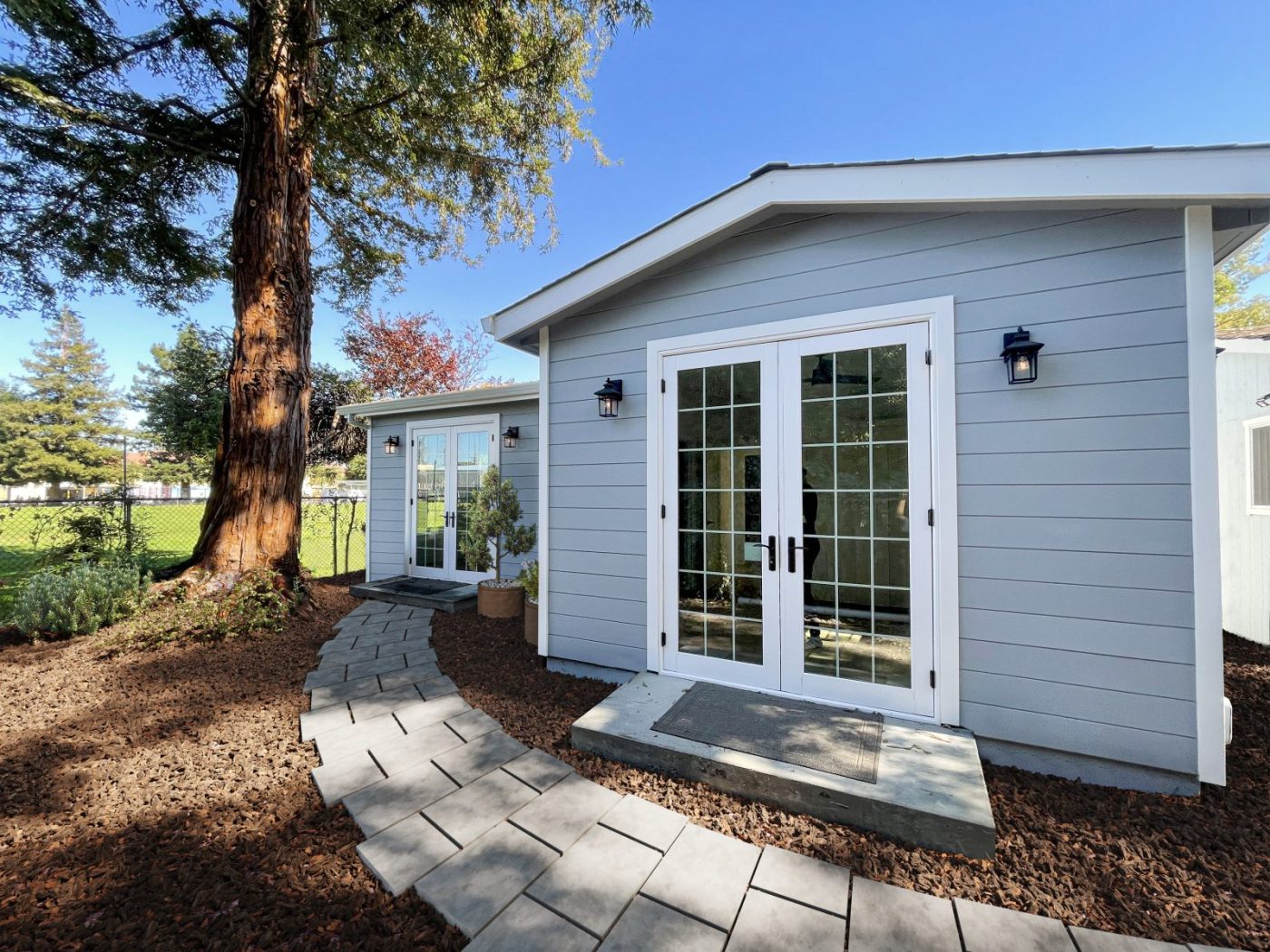
The distinction matters to homeowners as well. A prefabricated unit still needs a foundation, utility connections, site work and local approval. A custom unit adds design choices, but it can be shaped around a peculiar lot, an existing house or a family’s exact needs. Cottage offered that flexibility while trying to make the process feel less improvised. It was an asset-light construction company: no Cottage factory or warehouse, but plenty of coordination.
“We’re connecting homeowners to fragmented providers.”Alex Czarnecki, 2022
The product was the handoff
The original business model was unusually legible for home construction. Cottage advertised to homeowners and charged a fixed fee for the preconstruction work. It did not publish one universal price; the important point was that the fee had a shape before a project began. Czarnecki argued that homeowners would otherwise spend that money with an architect or project manager. The company also gave contractors a pipeline of projects and software tools to manage them.
The original Cottage sequence
- 01Check the site and the rules
- 02Design a custom ADU
- 03Navigate permitting
- 04Match a local builder
This is why Cottage sat in an interesting corner of the market. It competed with prefab ADU brands for the homeowner’s attention, yet operated more like a coordinator for fragmented local services. It also competed with the do-it-yourself route of hiring an architect and contractor separately. Its promise was that a homeowner could keep the individuality of a custom project without personally conducting every handoff.
By April 2022, the company said it had worked with hundreds of homeowners and contractors across the San Francisco Bay Area and Los Angeles. That month it announced a $15 million Series A led by Fifth Wall, with 1Sharpe Ventures, DivcoWest, Susa Ventures and Base10 Partners participating. The money was intended for its software and expansion. At the time, Czarnecki described Los Angeles as having reached market-level profitability in four months, a company claim about one market rather than a public measure of the whole business.
Series A funding gave Cottage room to build its platform and enter more markets.
Announced April 2022 · led by Fifth WallA backyard is never just a backyard
An ADU is an intimate piece of infrastructure. It might house an aging parent, an adult child or a tenant whose rent helps an owner stay in the neighborhood. It also changes what the neighbors see from their windows. Czarnecki’s advice to the Los Angeles Times in 2024 was characteristically practical: consider where an ADU’s windows face, and what fences or hedges might do for privacy. A drawing can make a second home look effortless; the lot and the people around it have opinions.
Cottage’s local knowledge showed up in smaller ways. Fremont listed a Cottage two-bedroom, 750-square-foot plan among its preapproved ADU plans for the 2022-2025 building code cycle. A standard plan can trim one piece of the process, although every site still has its own constraints. The company also ran educational material explaining ADU types, timelines, costs and financing. Teaching a homeowner what to ask may be as commercially useful as finding the answer.
Then the project got bigger
Cottage’s language gradually widened from ADUs to renovation. Its company profile describes a marketplace for vetted designers, contractors and engineers, with payments, project tracking and documents in one place. That broader scope followed the same logic as the backyard unit: homeowners need to find the right expert, compare proposals and keep a complicated project moving. The specific project might be a garage conversion, an addition or another renovation.
Cottage is now part of RenoFi, which specializes in renovation financing. RenoFi presents the combined offering as a place to find a professional and explore a way to pay for the project. It says Cottage currently matches homeowners with local designers, architects, contractors and engineers for free. That is a change from Cottage’s original fixed-fee preconstruction offer; the public material does not set out a current universal price for the full project or specify the marketplace’s present revenue arrangement.
The combined service covers the Bay Area, Greater Los Angeles, San Diego and Seattle, according to RenoFi. Those are markets where local rules, contractor availability and construction costs vary too much for one generic answer. The value of a match depends on local competence. The financing question arrives early too: an elegant plan has limited use if the owner cannot fund the work. RenoFi’s loans can be based on a home’s expected value after renovation, subject to eligibility and loan terms.
What travels beyond the backyard
There is a lesson here for anyone selling a complex service. Cottage did not start by promising a better hammer. It made the steps between intention and execution easier to see. It gave the buyer a clearer price for early work, gave suppliers more qualified projects, and put files and payments where everyone could find them. That approach works when the work is repeatable enough to organize yet local enough to need experts. It becomes harder when site conditions, rules or customer expectations outrun the service’s ability to coordinate them.
For a homeowner, the useful question is less romantic than “Could I have a cottage?” Ask what the site allows, who handles the permit, when a contractor is committed, what the quoted fee covers, and how financing changes the budget. Cottage was built around the discovery that the house is often the easy thing to imagine. The route to it is the product.