A swab has an oddly demanding job. It must collect something precious, hold it long enough to reach a laboratory, and then surrender it. A device that excels at the first task and botches the last can make the rest of the diagnostic process harder. The specimen is present. The question is how much of it becomes available for testing.
This is a useful way to understand COPAN Diagnostics. The company occupies the part of medicine that rarely gets the glamorous photograph: collection, transport, preparation, and the orderly movement of specimens through a laboratory. Its products include the little stick in the clinician’s hand and the machinery that takes over after the tube arrives. The distance between those two objects explains much of its business.
- Start with collection. FLOQSwabs use a flocked nylon surface to capture and release a specimen.
- Follow the handoffs. Liquid transport systems connect collection to automated processing, incubation, and imaging.
- Read the fine print. PhenoMATRIX’s U.S. clearance retains trained staff’s responsibility for final assessment.
01The tiny object with a large job
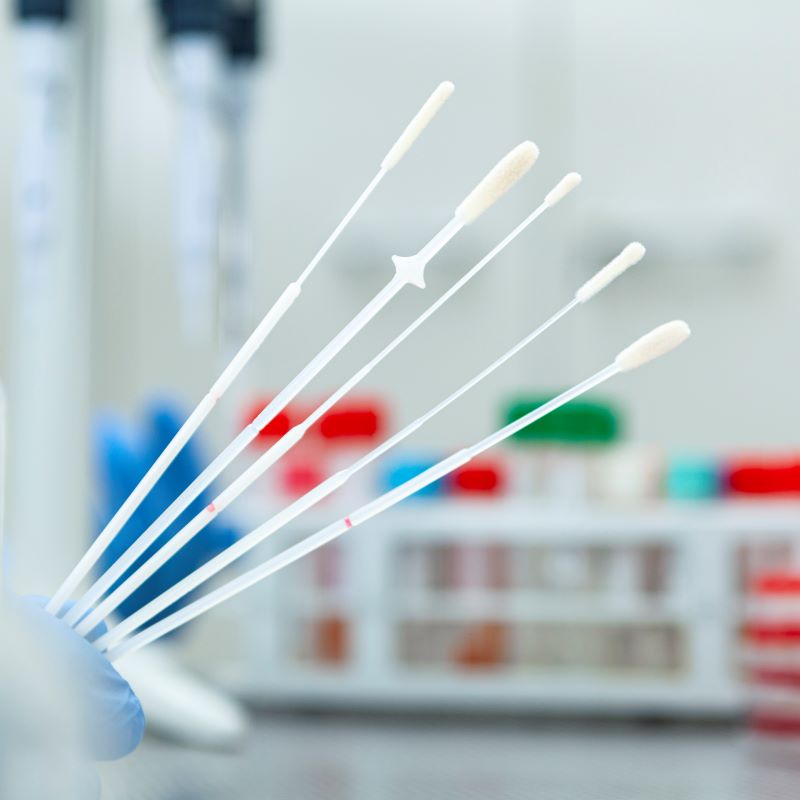
Look closely at FLOQSwabs and the useful detail is the surface. Short nylon fibers give the tip a soft, brush-like texture. COPAN offers different shapes for different sampling sites, including nasal, throat, and buccal collection. The design serves two linked purposes: picking up the sample and releasing it when the laboratory needs it. The swab’s appearance is modest; its assignment is rather less so.
The commercial insight is easy to miss. Collection sits upstream of the assay. Before arguing about how impressively an instrument detects an organism, someone must get a usable specimen into that instrument’s workflow. COPAN’s expertise in swab design and sample transport gives it a reason to be involved before laboratory automation even enters the conversation.
The U.S. business was founded in 1994 by Daniele Triva and Norman Sharples. It belongs to the privately held Italian Copan Group, whose origins go back to Giorgio Triva in 1979. The group credits Daniele with inventing FLOQSwabs in 2003. That distinction matters: COPAN Diagnostics brings a wider family of technologies to the Americas, with manufacturing and distribution alongside its laboratory-facing work.
02A tube becomes a workflow
ESwab makes the connection tangible. It combines a flocked swab with one milliliter of Liquid Amies medium in a screw-cap tube. A laboratory can take multiple aliquots from the collection. The sample becomes something that can be portioned, rather than a single swab that must be handled anew for each step. Its bacterial transport claims have defined conditions, including shorter assessed survival for Neisseria gonorrhoeae than for other organisms.
UTM serves a different assignment. Its current U.S. intended use concerns stabilizing and transporting upper respiratory specimens for compatible molecular viral assays. Choosing the right collection system therefore means matching the specimen, the target, and the assay instructions. A tube may look pleasantly generic. Its instructions are considerably more particular.
Once the specimen is in a workable format, the machinery can assume more of the routine handling. WASP, the Walk-Away Specimen Processor, automates inoculation and streaking. WASPLab adds linked incubation, digital imaging, and culture-management workflows. Colibrí prepares selected colonies for identification and susceptibility testing; Radian handles disk-diffusion workflows, subject to market availability. These are related jobs along a specimen’s route.
- 01CollectSwab + specimen
- 02PreserveTransport medium
- 03ProcessPlant + streak
- 04ObserveIncubate + image
- 05ReviewSort + assess
A simplified workflow; devices and protocols depend on specimen type and laboratory needs.
The business model follows that route. Hospitals and laboratories buy collection supplies repeatedly. They also buy instruments, software, and the support needed to make a configured system work. COPAN sells directly and through distributors. For the buyer, the attraction is continuity between the consumable and the process. For COPAN, an everyday collection purchase and a laboratory equipment decision can belong to the same customer relationship.
Its closest automation alternative is BD Kiestra, which also offers modular processing, incubation, imaging, and follow-up preparation. Modularity alone is no exclusive claim. COPAN’s distinctive proposition is the breadth of its collection-to-culture portfolio. A laboratory should compare actual specimen compatibility, service arrangements, and workflow requirements before treating a connected product family as an answer.
03When Apple needed the humble swab
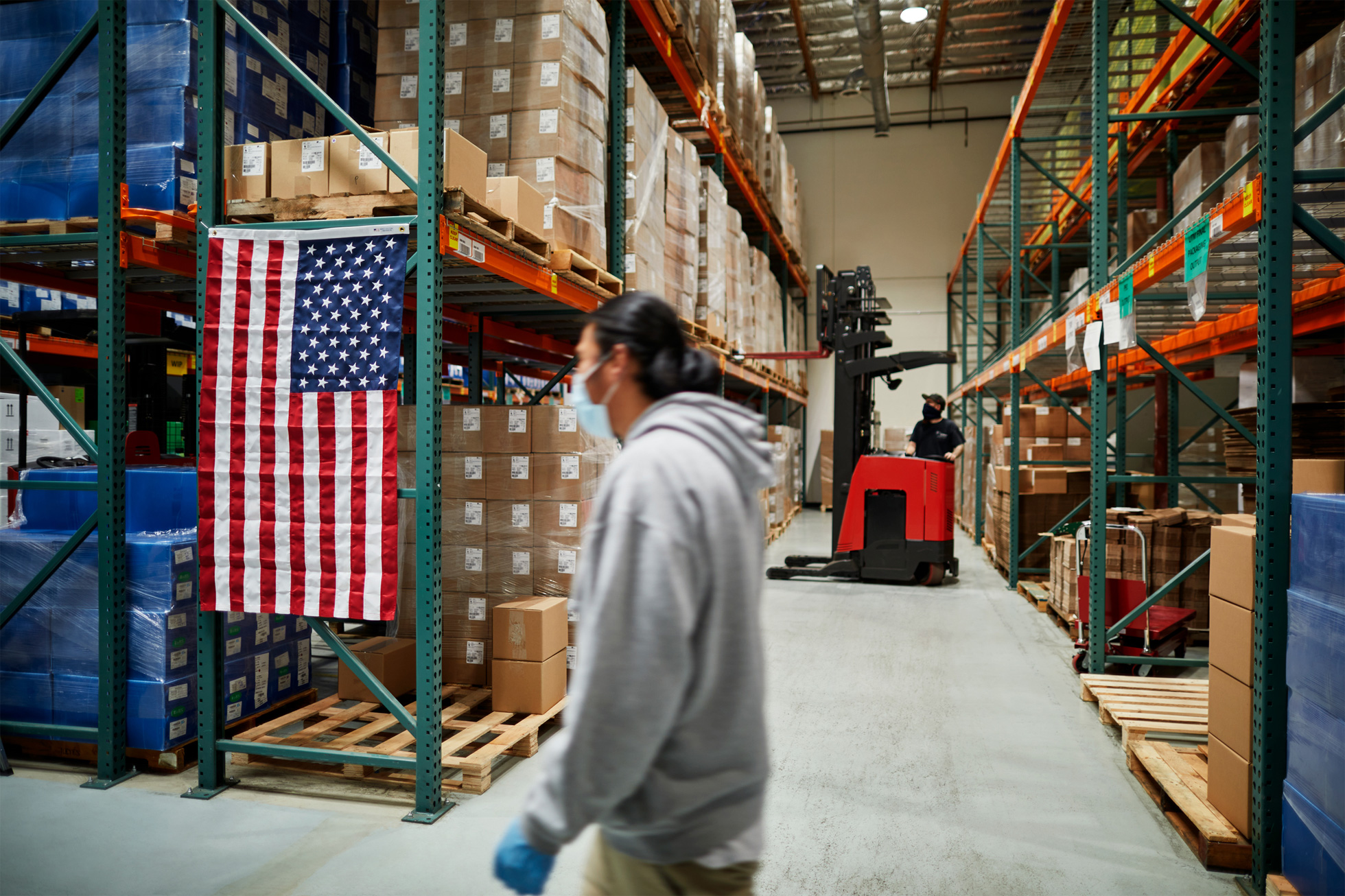
In May 2020, Apple awarded COPAN Diagnostics $10 million from its Advanced Manufacturing Fund. The immediate problem was supplying collection kits for COVID-19 testing. Apple supported equipment design, sourcing, and a larger Southern California facility. Its announcement included equipment partners K2 Kinetics in Pennsylvania and MWES in Wisconsin. The intervention reached into the production system, beyond the bank account.
By February 2021, Apple reported that COPAN had shipped more than 15 million COVID-19 collection kits. Production had risen close to 4,000 percent since the previous April, and nearly 250 employees had joined the expansion effort. Those are historical, company-reported results. They show what the collaboration produced during an exceptional period of demand.
Apple’s May 2020 manufacturing award supported collection-kit capacity, equipment, and expansion.
The episode supplies a practical lesson about constraints. A diagnostic effort can run short of a small physical input long before the sophistication of its testing equipment becomes relevant. Funding becomes more useful when it arrives with the ability to find materials, commission machinery, and organize production. The lesson travels well beyond swabs: identify the missing input and put expertise beside the capital.
04The economics of fewer handoffs
In a 2021 study of four North American laboratories using full automation, reported labor cost per specimen fell by 15 to 47 percent. At TriCore, peak daily volume rose from 872 to 1,083 specimens while combined processing and workup staffing remained at 16 full-time equivalents. That is a more interesting outcome than a simple promise to remove jobs: the laboratory handled more work with the same staffing total.
Pre/post observational audits; labor costs only. Bars share a $0-$8 scale. Reported savings include avoided hiring and are not equipment payback figures.
The study’s cost-avoidance calculations include staff a growing laboratory might otherwise have needed. They do not establish the purchase price of an automation installation or a universal return on investment. Budgeting must also account for equipment, service, consumables, interfaces, training, and validation. A lower labor cost per specimen is evidence to examine within that budget.
The useful thing to copy is the measurement discipline. Count the handoffs, measure the workload, and record when specimens become ready for review. Then ask whether staffing and reporting schedules allow anyone to act on the result. A machine can move a plate promptly; the laboratory still needs a plan for what happens next.
A machine can move a plate promptly; the laboratory still needs a plan for what happens next.
The operational question
The practical limits start with the input and the people. Approved containers and consumables matter. So do the laboratory’s space, specimen mix, information-system connections, and validated procedures. In a laboratory with little repetitive work to shift, the financial case deserves particularly careful scrutiny. Automation earns its place by addressing the work that actually exists.
05AI, with somebody still at the desk
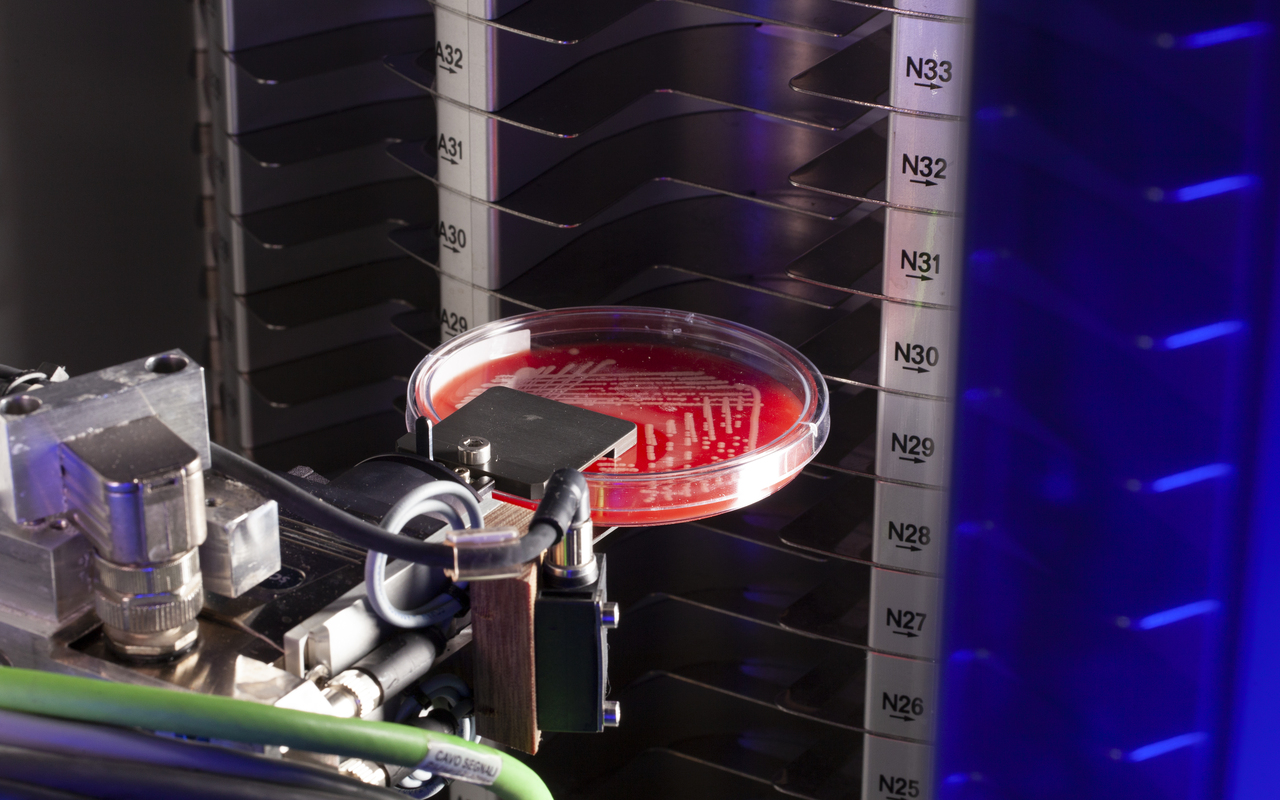
WASPLab captures a plate image at the beginning of incubation, creating a baseline for comparison as growth develops. Digital images let laboratory staff review cultures on a screen and retain a visual record. PhenoMATRIX adds image assessment and sorting, using laboratory-defined rules and information from the laboratory information system. The immediate benefit is an organized queue of cultures for review.
On January 22, 2026, the FDA cleared PhenoMATRIX as a Class II device under K251511. COPAN announced the clearance in February. The intended use covers automatic sorting of images of specified culture media, including blood-based, chocolate, MacConkey, and CHROMagar Orientation plates. Trained laboratory personnel evaluate the images for final assessment and result definition. The approved job is precise, and precision is welcome here.
COPAN’s newer moves retain that interest in practical work. It launched UriVerse in August 2025 to automate urine specimen de-capping, labeling, aliquoting, and re-capping. In September, it announced more than $7 million in U.S. manufacturing investments across California and Puerto Rico. Stefania Triva described the direction plainly: “Expanding our U.S. manufacturing footprint is a key part of our plan”.
The company’s arc is legible without making the swab sound heroic. Collect a usable specimen. Preserve it appropriately. Make its processing repeatable. Give the person interpreting the culture a better organized view. Each step offers an opportunity to lose time or improve the work. COPAN has built its business by taking those small opportunities seriously.
See the work for yourself
Explore COPAN’s website, its company news and microbiology blog.