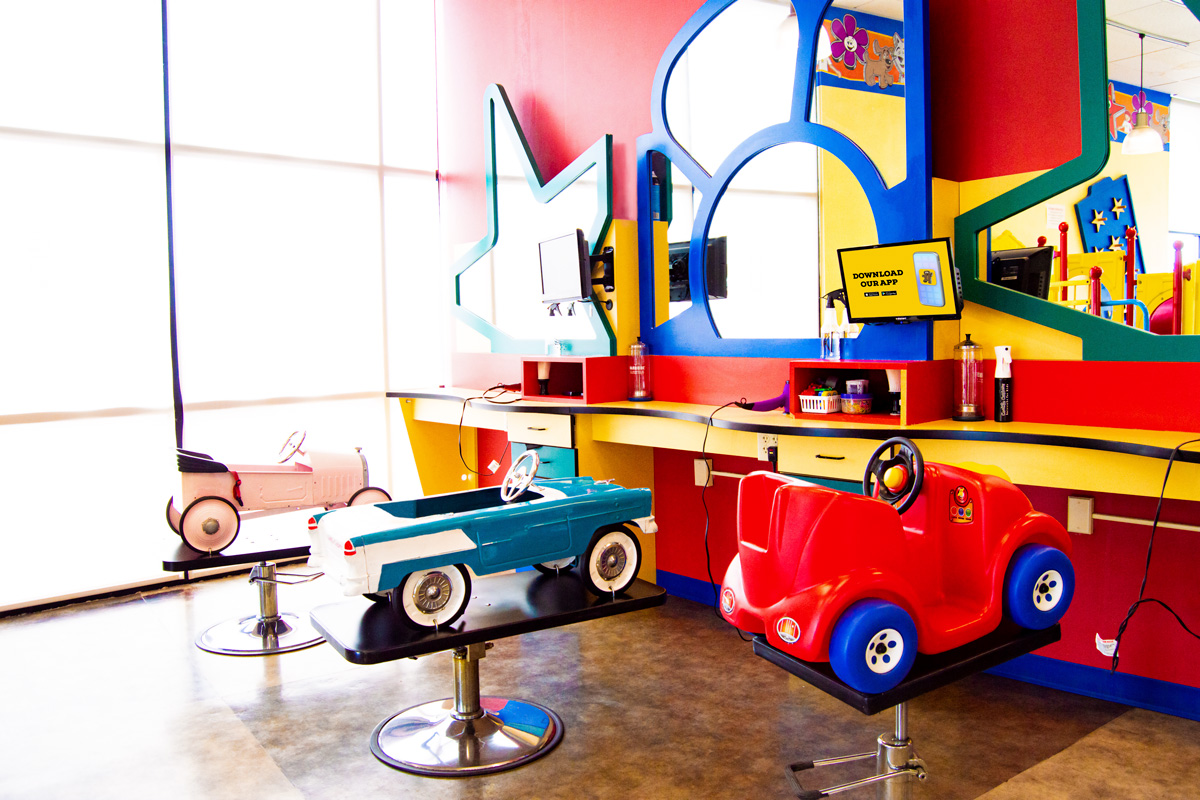
A salon chair can be a surprisingly demanding piece of furniture. It asks a child to climb up, sit still, accept a stranger’s attention and tolerate scissors near an ear. Adults see a haircut. A small child might see a collection of excellent reasons to leave. Cookie Cutters Haircuts for Kids begins by changing the furniture. Here, the chair might be a car.
That little substitution explains much of the company. The child gets a steering wheel; the parent gets a chance at a less difficult afternoon. The actual haircut remains essential. But the room acknowledges that getting to the haircut is a service in its own right. Think of the appointment as a sequence of small decisions: enter the room, approach the chair, accept the cape, stay for the cut. Each step can make the next one easier. A service business has plenty of opportunities to lose a customer before delivering what it sells.
- Children’s salons built around playful seating, screens and patient stylists.
- A franchise business serving families in the United States and Canada.
- A useful lesson: design the waiting, the service and the goodbye together.
The chair is part of the service
Cookie and Larry Shelton opened the first Cookie Cutters in Indianapolis in 1994. Neither arrived with haircutting experience. An early encounter with their young nephew’s barbershop visit helped them see the opening: a business could welcome children and still be poorly arranged for them.
Their answer was a salon that treated childhood as the organizing principle. Vehicle-shaped chairs made sitting down more appealing. Televisions offered something else to watch. Play areas gave waiting children something to do, although the company notes that these are not available everywhere. A balloon and lollipop supplied a small closing ceremony.
The buyer and the user are different people, with overlapping interests. Parents want a good cut and a manageable visit. Children need reasons to cooperate. Cookie Cutters makes those interests meet in the same chair. That is the appeal of its position between an ordinary family salon and children’s entertainment.
The owners who traded places
Neal Courtney was initially skeptical when his wife, Alexis, suggested buying a franchise. “Are you crazy?” was his recollection in a 2018 BYU Marriott profile. Their own children’s enthusiasm helped make the case. The couple became multi-location operators, then bought the company in 2014 and moved its headquarters to Salt Lake City.
The Sheltons went in the other direction. After selling the franchisor, they kept three Indianapolis salons and became franchisees. Running the whole organization had become wearing. As Larry told Entrepreneur in 2017, “Well, you have to either expand or sell.” They still liked the salons; they wanted a different job within the same idea.

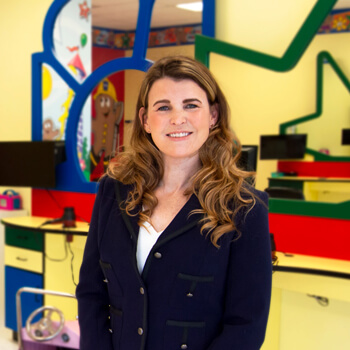
The exchange is revealing. A salon and a franchise system demand different kinds of work. One depends on the next appointment going well. The other must help many owners make that happen repeatedly. The Courtneys brought experience of the first problem to the second.
Thirty thousand dollars, no franchisees
Experience did not make every experiment work. A 2019 Entrepreneur report described the Courtneys spending $30,000 on internet advertising without recruiting a single franchisee. They changed course and worked with FranNet, the franchise consultancy and brokerage.
Reported in 2019. The next move: change the recruiting channel.
The distinction matters: selling a haircut to a nearby parent and selling a business to an aspiring owner are different sales. A channel suited to one cannot simply be assumed to suit the other. The useful thing to copy is the willingness to judge advertising by the actual customer it brings, then move when the result is empty.
Sometimes fun means turning it down
A colorful room does not settle every child’s nerves. For some children with sensory sensitivities, additional sound and activity can complicate the visit. A particularly concrete response came from Austin-area franchise owner Don Avena, who asked the Autism Society of Texas to train his staff in January 2017.
The organization’s later account described training videos, notes about individual triggers and opportunities to visit without getting a haircut. Families could call ahead and choose a quieter time. Austin Family also reported picture books explaining the process, lap blankets and adjustments to lighting and music. These were specific local accommodations, rather than evidence that every salon offers an identical setup.
The most useful feature may be the freedom to change the experience for the child in front of you.
For parents, the practical move is to discuss needs with the individual salon before booking. For other businesses, the lesson is equally concrete: an experience designed for a typical customer still needs room for someone who experiences it differently.
There is another limit to the model: owners cannot focus indefinitely on opening the next location while neglecting the ones already operating. In a November 2025 podcast interview, Neal described the pandemic as a moment when the company switched its attention from expansion to helping existing franchisees survive. A growing network also needs people who can keep the doors open.
What the colorful room costs
The menu extends beyond a standard KidsCut to shampoo services, braiding, bang trims and, at participating salons, teen and parent cuts. The first-haircut package adds a photograph, certificate and keepsake lock of hair. Prices and availability vary by location. The mobile app adds booking and loyalty features, making the next visit easier to arrange.
Behind that menu sits a franchise business. Owners buy access to the name, design, training and operating support. An extraction of the March 2026 franchise disclosure lists an initial investment of $138,200 to $390,200, including a $40,000 franchise fee. The franchise website separately lists a 5% gross-sales royalty and 1% advertising fee under terms labeled from its 2023 disclosure. These figures describe different dated materials, not a single current quote.
Initial investment range. Franchise fee included. Sales and profit are separate questions.
Sharkey’s Cuts for Kids, Pigtails & Crewcuts and Snip-its occupy the same broad niche; playful surroundings alone cannot guarantee loyalty. Staffing, local demand and the actual haircut still matter. That makes hiring and training central to the proposition. A car can invite a child to sit down; a stylist has to earn the trust that keeps the appointment moving. Another operator can buy bright furniture, but it must also develop the judgment to know when a screen helps, when a pause helps and when a family needs a different approach. Entrepreneur’s 2026 listing puts Cookie Cutters at 122 units and No. 348 in its Franchise 500. The idea has traveled. Its daily test remains wonderfully small: whether a child is willing to climb into the chair again.