The strange thing about a rebrand is how quickly it becomes a discussion about shapes. Somebody likes the circle. Somebody else fears the lowercase type. A third person, joining six minutes late, asks whether the green could be friendlier. By then, the expensive problem has disguised itself as a design problem. The people who run the company have not agreed on the company.
C.O.nxt, a 100% employee-owned marketing communications agency in Hartland, Wisconsin, has made a business out of catching that problem early. Its signature offering is called Brand Camp. The name sounds like lanyards and trust falls. The substance is more exacting: put people from different levels and departments into one workshop, ask what the brand promises, where it is credible, whom it serves and what it refuses to be. Only then make the things the public will see.
This is not all C.O.nxt does. The agency develops brands, campaigns, websites, applications, media plans, PR programs, social strategy, videos, analytics and crisis plans. It works from the seed in the ground to the steak on the plate, as its house line puts it. The interesting part is the sequence. C.O.nxt treats internal agreement as a deliverable, not as a happy side effect of the creative work.
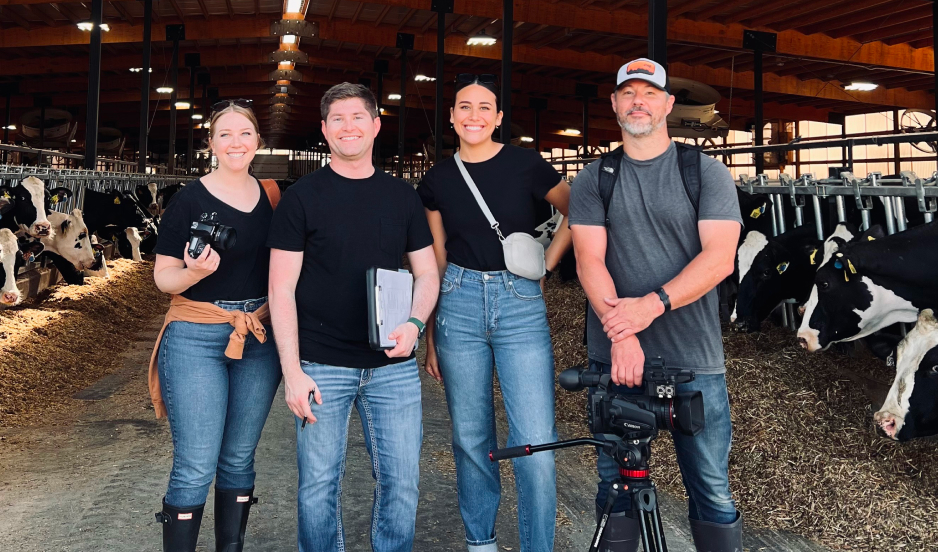
The room before the work
A campfire for corporate disagreement
Brand Camp can take a day, a half-day or a weekend retreat. It can happen in person, online or in a hybrid room. Participants work through purpose, personality, voice, audience and what the agency calls the brand's “true north.” The most portable choice is who gets invited. C.O.nxt argues for a mix of functions and seniority, including people who rarely get handed the marker.
The method does not promise democracy. A brand cannot be settled by counting sticky notes. It promises something more practical: commitment without consensus. People can accept a direction they did not choose if they understand how it was reached and know their experience made it into the room. That distinction is easy to miss. It is also why the workshop belongs as much to organizational design as it does to marketing.
C.O.nxt tested the idea on itself during its 2020 rebrand from Charleston|Orwig. The old name honored founders John Charleston and Lyle E. Orwig, who had opened the firm in 1992. The new one kept the initials while pointing forward. It was a neat piece of nomenclature, but the more consequential rehearsal was cultural: the agency asked its own employee-owners to submit to the same discovery it sells.
The first thing that failed
Graybill had outgrown Graybill
The cleanest demonstration came during the pandemic. Graybill Processing took surplus from food manufacturing and converted it into useful resources for livestock producers and feed suppliers. Its operation was circular before circularity became a corporate reflex. But the regional family name no longer carried the scale or the environmental idea the company wanted to express.
Normally, C.O.nxt would have taken the leadership team off-site. The pandemic removed the site. Instead of waiting, the agency ran Brand Camp virtually. That constraint changed the room, not the questions. The process surfaced a new name, AmpliSource, and a proposition about finding value in unexpected sources. C.O.nxt then turned it into identity, messaging, a brand book and a campaign aimed at two very different audiences: manufacturers with byproducts and farmers who could use the resulting feed resources.
This answers a useful question about what changed their minds. It was not a sudden affection for a different logo. The original identity stopped describing the business's ambition, and the pandemic made the usual workshop format impossible. The team changed the name because the strategy demanded it. C.O.nxt changed the delivery because reality demanded it.
Fluency as a service
The message changes at the barn door
Food and agriculture is not one audience wearing different boots. A dairy producer buying monitoring technology, a food scientist specifying an ingredient, a retailer protecting margin and a shopper choosing hot sauce do not share a vocabulary. The agency's specialization matters because translating among them is slow, technical work. C.O.nxt staffs for that translation with people who grew up around farms, studied agriculture, work in food culture or have spent years inside the category.
For Allflex Livestock Intelligence, the decisive voices were not the agency's. They were dairy producers and veterinarians who used the monitoring system. C.O.nxt gathered their stories, organized them around labor efficiency, reproduction, herd health and peace of mind, and distributed the resulting videos through a microsite, digital ads, triggered email, pre-roll and social. The campaign reported a 45.76% engagement rate and 73 leads in its first six months. Producers trusted producers.
At the other end of the scale, C.O.nxt's M-Power work for Merck Animal Health combined a dairy-solutions platform, digital banners, social, print, web and a physical presence at World Dairy Expo. The public campaign entry reported 8,681,947 impressions, 57,119 clicks and 278 QR scans from print placements. The booth was voted the event's best large commercial exhibit. Those figures do not prove that every impression became a customer. They do show the range of the machine: one idea translated from phone screen to trade-show floor.
The ownership decision
They declined the more lucrative ending
In 2018, Orwig, then-CEO Mark Gale and president Marcy Tessmann each owned one-third of the agency. They sold those stakes to an employee stock ownership trust. Tessmann said advisers believed an outside sale could have been more lucrative. The partners preferred to keep the company intact, independent and culturally continuous.
That was not charity. An ESOP is a succession structure and a retirement benefit, with shares held in trust for employees. It also sharpened the agency's pitch. Every person serving a client now has an economic connection to the firm's performance. At the time of the sale, more than 40% of employees had worked there for at least a decade. Dairyland Seed had been a client for 25 of the agency's 26 years; an Arm & Hammer division had stayed for 17. Continuity was already visible before ownership turned it into policy.
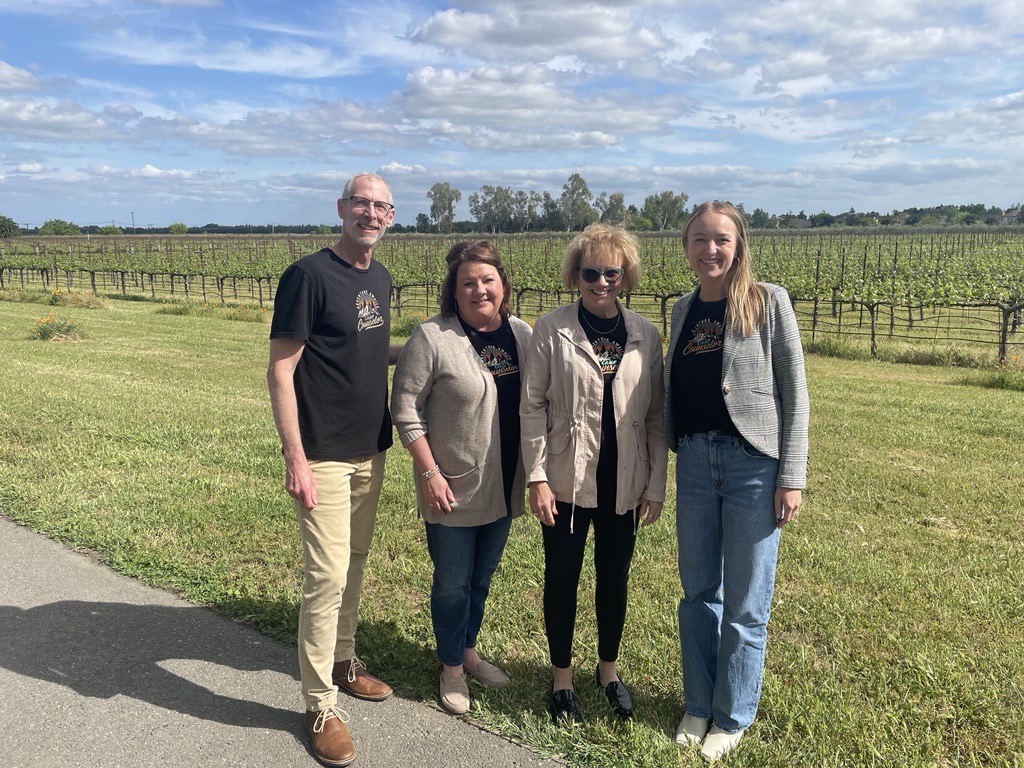
C.O.nxt now sells ESOP communication as a specialty: brand building, internal culture, acquisition announcements and the difficult task of explaining what ownership means after the celebratory meeting ends. It is a credible adjacency because the agency lives inside the structure. The wider Charleston Orwig Collective also includes Jigsaw, a sister agency serving healthcare and consumer-service organizations. Through TAAN Worldwide, C.O.nxt can collaborate with independent agencies beyond Wisconsin.
The part worth stealing
Copy the order, even if you skip the camp
C.O.nxt's services are custom engagements, not self-serve software, and Brand Camp is designed around the size and needs of the client. But the central idea does not require an agency purchase. The copyable part is the order of operations.
A workshop brief for Monday morning
- Invite the people who make the product, sell it, support it and explain it. Mix levels of authority.
- Ask each person what the organization promises, what customers would miss and where the current story is untrue.
- Separate hearing from voting. Record disagreement; do not pretend every idea survives.
- Write one position that joins product truth, customer need, category difference and cultural context.
- Only then decide the name, identity, channels, calendar and measures.
The method depends on candor. It weakens when leaders invite broad participation but have already chosen the answer, when a commodity product has no defensible difference, or when nobody owns the decisions after the workshop. A day can surface a strategy. It cannot manufacture operational truth.
That limitation is part of what makes the approach useful. C.O.nxt is not claiming that a campfire metaphor solves marketing. It is claiming that companies should settle the hard argument before they commission the expensive artifacts. In an industry tempted to begin with output, a meeting can be the most productive thing to sell.