A cinema ticket is a small purchase with a surprisingly long journey. Choose a film. Find a showtime. Pick a seat. Pay. Each step gives the customer another opportunity to leave. When Coderio worked on Cinemark’s purchasing experience, its account of the assignment began with a workshop: people in a room, tracing where the journey became difficult. The interesting engineering decision was to study the interruption.
- Coderio supplies Latin American engineers, complete squads and managed software projects.
- Its pitch combines overlapping working hours with experience inside enterprise teams.
- Its work runs from checkout design to payments, legacy systems and data governance.
That assignment offers a useful introduction to a company whose product is hard to photograph. Coderio sells the expertise and organization needed to build software. In the Cinemark case, the team moved from stakeholder discussions to prototypes, A/B testing and revisions. Coderio reports increased sales and fewer help-center calls. The sequence is the useful part: understand the stumbling point, test a change, then build around what you learn.
First, the calendar
The company’s proposition begins with geography. Engineers in Latin America can share substantial working hours with customers in North America. A question raised during the morning can become a conversation that afternoon. For a product team making daily trade-offs, that overlap has practical value. It reduces the waiting between a question and the person equipped to answer it.
Coderio describes its engineers as vetted, English-proficient and aligned with client time zones. Those qualities position it in the nearshore services market, between hiring an internal team and commissioning work from an external consultancy. The buyer is typically an organization with a software problem and a shortage of the right people, the right management capacity, or both.
“being in the same timezone made it easier to sync.”
Senior IT Software Architect, Coca-Cola
Testimonial published by Coderio
The apartment, then the interruption
Joaquin Quintas and Eugenia Kessler founded Coderio in 2017. He brought software engineering experience; she brought design. They began in their Buenos Aires apartment, reinvesting project revenue. With little money for marketing, they asked satisfied customers for introductions. Eventually, they hired enough fellow developers at their coworking space that it effectively became their office.
The pandemic exposed a weakness in that early business. Clients froze contracts. Developers still needed paying. As the founders later told Bootstrappers, the response was to pursue customers in the United States and Europe, including hiring business development leadership in Miami. The shared working day became a commercial advantage. A business built around a regional network had found a reason to look beyond it.
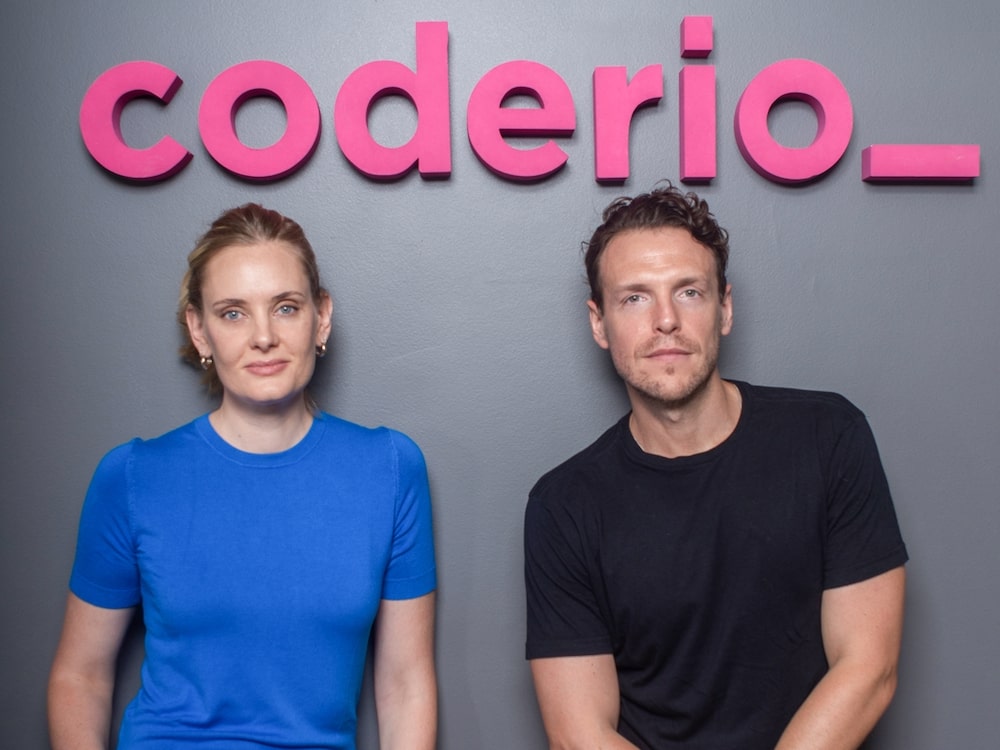
By September 2024, Quintas reported annual revenue approaching $20 million without external investment. That is a dated founder-reported figure, but it explains the business’s financial logic: sell expertise, deliver work and finance growth from customers. Its early mobile-app assignments had broadened into modernization, including systems that were decades old. The fashionable interface was only one layer of the job.
Three ways to buy a team
Coderio’s service menu makes the management question unusually visible. Staff augmentation adds engineers to a customer’s existing organization. Delivery squads supply a group assembled around the assignment. Software outsourcing covers a wider process, from scoping and requirements through execution, testing and deployment. These are different purchases because they distribute responsibility differently.
The practical buying question is how much direction your organization can provide. An established engineering department may need another Java specialist. A team facing a migration may need developers, testing and coordination together. A business commissioning a new application may need someone to organize the delivery process itself. Project scope and team requirements determine the commercial discussion; these are customized service engagements.
For a prospective customer, cost therefore needs a wider frame than an hourly rate. Compare the proposed team with the work your own managers will still perform: defining priorities, reviewing progress, providing access and accepting releases. A staffing engagement can leave much of that work with you. A managed project shifts more of the delivery process into the supplier’s remit. The useful comparison is the complete assignment.
The YellowPepper by Visa case gives that distinction some texture. Coderio describes supplying Java development, DevOps, automated quality assurance and product ownership. The assignment joined an existing payments organization. Technical ability mattered alongside integration with the customer’s product workflow. The contribution crossed several roles that a simple headcount would conceal.
The work behind the recognizable names
For FedEx, Coderio describes configuring continuous integration and forming a team with Java developers, DevOps expertise, a Scrum Master and QA. The aim was to introduce functionality into existing infrastructure. Here, modernization meant arranging the machinery of delivery as well as writing the application code. Testing and release processes belonged inside the assignment.
Its broader toolkit includes web and mobile development, cloud engineering and legacy migration. Specialized studios cover data governance, machine learning and AI, banking modernization, digital security and quality engineering. The combination puts Coderio close to enterprise operations: places where a new feature must coexist with old systems, sensitive information and established working habits.
The company says its culture supports that work through engineering guilds and chapters, shared knowledge and continuous training. Its leadership also includes a people-care function. For a services company, maintaining expertise across assignments is part of the offer: the customer buys access to people whose experience can extend beyond a single project.
AI still needs somewhere to live
Coderio now promotes AI assistance across planning, coding, testing, deployment and maintenance. Its data governance services address the surrounding obligations: data quality, privacy and compliance. The connection is straightforward. A useful model still needs dependable information and a system in which it can operate. Buying AI engineering may therefore start with repairing something much less exciting.
There are limits to what this arrangement can solve. If a customer cannot decide which problem matters, another squad may simply create more work awaiting a decision. If essential data remains inaccessible, an AI team cannot make access appear. These are implications of the delivery model, rather than reported Coderio failures. They suggest a sensible preparation step: name the internal decision-maker and settle the first measurable objective.
In March 2026, Coderio named New York its head office, keeping Miami operating. In May, it announced ISO 27001 certification. These moves fit its enterprise focus. For buyers, the transferable lesson is to define the bottleneck before choosing the team. Shared hours help people collaborate; clear ownership gives that collaboration direction. A shorter wait for an answer matters most when everyone knows which question needs answering.