The Story
The Kid Who Made "Cheating" a Business Model
There's a scene Roy Lee describes with perfect recall: a hotel lobby at 3am, police officers, and the slow-motion collapse of the thing he'd been building toward his entire life. He'd snuck out of a supervised field trip during high school - a teenage mistake that cost him his Harvard acceptance. "This was the big thing I'd been working for my whole life, just ripped away," he said later. He called it "pretty bullshit." Both things were true.
What happened next is the part the press keeps glossing over: Lee didn't spiral. He enrolled at Diablo Valley College, transferred to Columbia, and started building. Not building toward another prestigious thing to hold. Building things he could actually use.
The Amazon Interview That Changed Everything
In early 2025, while still at Columbia, Lee and co-founder Neel Shanmugam shipped Interview Coder - a Chrome extension that fed real-time AI solutions into your screen during live technical interviews. Invisible. Helpful. Deeply provocative to anyone who thought the interview process was a sacred measure of merit.
Lee didn't just build it and wait for press. He used it. Live. In an Amazon technical interview. And he recorded the entire thing.
He got the offer. Then someone - unclear who - reported him to Columbia. Amazon pulled the offer. Columbia placed him on academic probation and suspended him for a year. Lee posted the video anyway.
"Cluely is out. cheat on everything."
- Roy Lee, April 20, 2025The move that followed was either calculated genius or the instinct of someone who'd stopped caring what institutions thought of him. Probably both. Lee and Shanmugam dropped out of Columbia and rebranded Interview Coder as Cluely. The new tagline: "cheat on everything." The launch generated 70,000 signups in a single week.
What Cluely Actually Does
Strip away the controversy and Cluely is a technically interesting product. It runs as a desktop overlay that monitors your screen content and listens to live audio during meetings, interviews, and sales calls. Using large language models, it generates real-time suggestions, answers, objection responses, and summaries - all in an interface engineered to be invisible during screen sharing. The person on the other end of your call cannot see it.
For sales teams, it's an AI coach that feeds reps the right answer the moment a prospect raises an objection. For job candidates, it's the preparation that happens in real time instead of the night before. For enterprise customers, it integrates with existing knowledge bases to surface institutional knowledge exactly when it's needed. Lee's framing - that this is "cheating" - is his own. Most productivity software does something similar; Cluely just refuses to be apologetic about it.
The a16z Bet
Seed funding came fast: $5.3 million co-led by Abstract Ventures and Susa Ventures, closing April 21, 2025 - the day after launch. Within two months, Andreessen Horowitz led a $15 million Series A, pushing total funding to $20.3 million and the estimated valuation to roughly $120 million. That's not a valuation built on product fundamentals alone. That's a bet on a founder who understands attention, distribution, and timing in a way that most people twice his age don't.
The a16z investment memo noted something Lee himself would have put more bluntly: Cluely built a viral content machine and then built a product underneath it. The 60+ content creators and 700 video editors on Cluely's payroll are not a marketing department - they're a media company that happens to distribute software.
The Revenue Admission
In March 2026, Lee posted something unusual. He admitted, publicly, with receipts, that he had lied about Cluely's annual recurring revenue. In 2025 interviews he had claimed $7 million ARR. The actual number - shown via Stripe screenshot - was approximately $5.2 million in total revenue: $2.7 million consumer, $2.5 million enterprise.
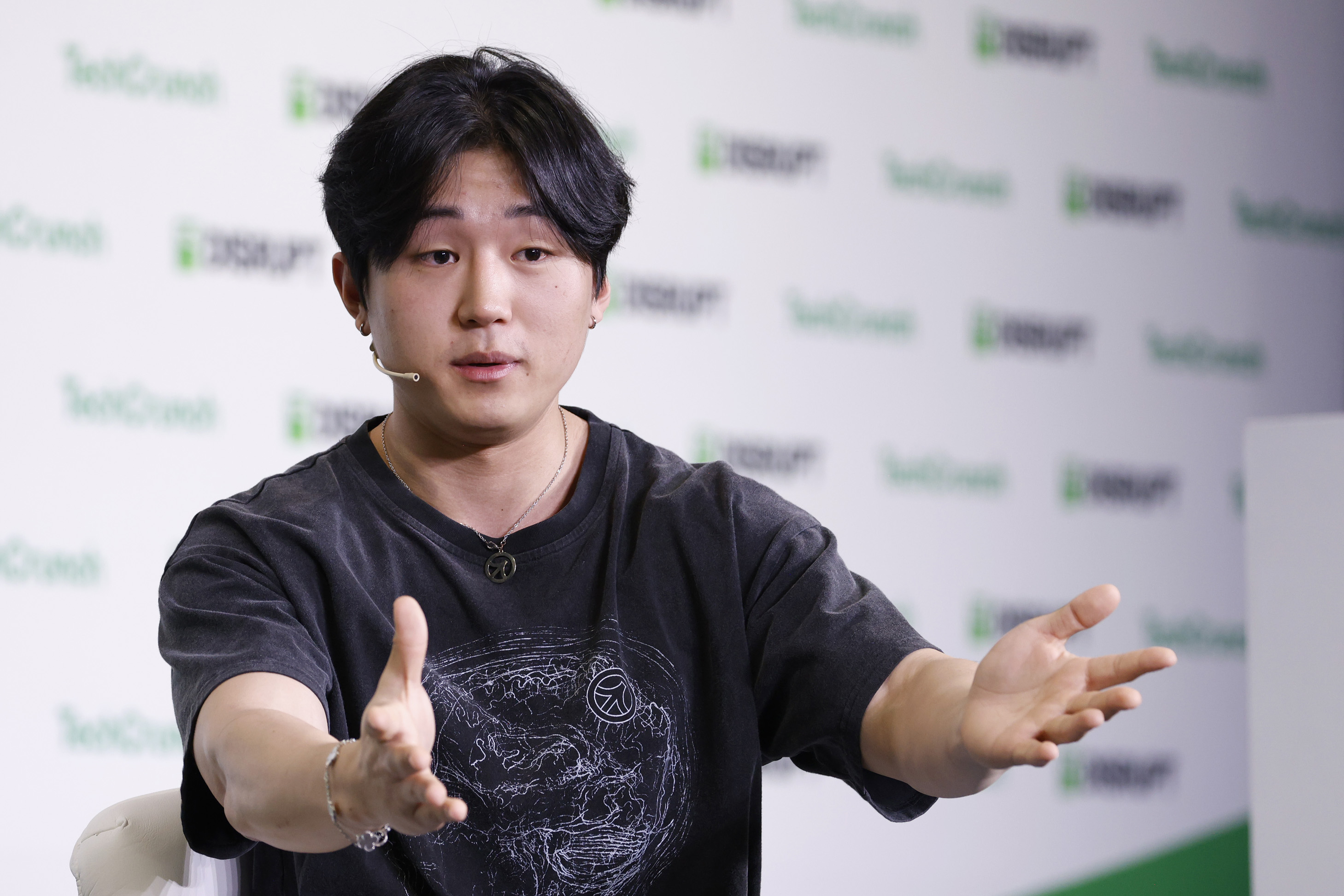
The move was disarming because it was voluntary. Nobody had caught him. He caught himself. The same founder who had advised at TechCrunch Disrupt 2025 that "you should never share revenue numbers" had shared the wrong ones - and then corrected the record himself. Whether that's integrity or PR is genuinely hard to say. In Lee's case, the two things are deliberately tangled.
The Pattern
Lee's career so far is a study in consequences that don't compound the way they're supposed to. Every removal - Harvard, Columbia, Amazon - accelerated something rather than closing it. The Harvard rescission pushed him toward a community college that kept him hungry. The Columbia suspension freed him to ship full-time. The Amazon rejection turned a quiet product into a cause. He doesn't pretend the rejections were gifts. He just didn't let them be endings.
At 21, he runs a company backed by one of the most influential venture funds on Earth, has 150,000 followers watching his next move on X, and sells software built on the premise that every high-stakes conversation deserves an AI in its corner. He might be wrong. The world may decide this is cheating. But the argument is increasingly hard to make when the interviewer is also using AI to screen your resume.