A clever AI agent can draft a plan, inspect a spreadsheet and decide which information it lacks. Then it reaches the digital equivalent of a locked shop at lunchtime. The service it needs wants an account. The account wants a human. The human wants to know why there are three invoices for nearly identical APIs. Intelligence has arrived at the counter without a wallet, a key or the patience for a demo request.
Christian Pickett has made a company out of that mildly comic failure. Orthogonal, which he co-founded with Bera Sogut in 2025, gives agents and developers a single way to discover, access and pay for outside APIs. The promise is plain: fewer subscriptions, fewer scattered credentials, no sales call for a one-cent request. An agent describes the capability it needs. Orthogonal finds an appropriate service, calls it, handles the underlying access and puts the charge on one account.
It is plumbing, proudly. Models may perform the visible magic, but a working system still needs permission, routing, billing, retries and an answer when one provider vanishes on a Tuesday. Pickett arrived at this corner of the market by spending his career close to those unphotogenic details. His biography reads like a curriculum for machine commerce assembled before the course had a name.
The career that rhymes in retrospect
Pickett studied computer science at McGill University from 2016 to 2021. There he met Sogut, a friend who would eventually become his cofounder. Before that reunion, their careers took parallel routes through the machinery of the internet. Pickett worked as a full-stack developer and Watson Digital Advisor at IBM, then built security software at BlackBerry. The early theme was access: who gets into a system, under what rules, and with what confidence.
At Coinbase, the theme became money. Pickett worked on payment rails and integrations across international markets. In March 2023, Silvergate and Signature Bank failed within days of each other. Much of the crypto industry relied on those institutions to move dollars in and out. Pickett later recalled that his team spent the stretch on redundancy work so the exchange would not depend on a single provider.
“When your ability to move money runs through a single provider, that provider is a single point of failure.”Christian Pickett
The sentence is both an operations lesson and an excellent way to ruin a minimalist architecture diagram. It stayed with him. If one bank can fail, one payment protocol can fail. If one API is rate-limited, an agent needs another route. Reliability rarely arrives by choosing the perfect dependency. It arrives by expecting dependencies to behave like dependencies.
Pickett next moved to Vercel, where he worked across billing. He helped rebuild usage pages, worked on the Pro plan, and served as a tech lead on the billing platform team. The work shifted from moving money to measuring what software consumed and translating that consumption into a comprehensible charge. This is a deceptively intimate part of a product. Billing is where a company's internal logic meets a customer's bank statement and hopes not to look ridiculous.
By late 2025, the pieces lined up. Pickett knew payments, billing and the cost of relying on one rail. Sogut brought experience from reCAPTCHA and Google Maps APIs at Google, along with work at Amazon Robotics. The two McGill friends now had the complementary ingredients for a problem neither had needed to invent.
A storefront for a customer with no eyes
The conventional internet assumes a patient, visually literate shopper. A person searches, opens tabs, compares pricing, creates an account, reaches for a card, copies an API key and stores it somewhere that will later be called “temporary.” Each step is survivable in isolation. In aggregate, it is a small pageant of human tolerance.
An agent does not browse that way. It may know that fresh company data, a web scrape or an image model would complete its task, yet lack the connection to use one. A preconfigured tool set becomes a ceiling. The moment the job requires something outside it, the agent guesses, stops or returns the problem to a person. Orthogonal's bet is that capability discovery and payment should happen together, at machine speed, behind one integration.
The company started with search, scraping, data and AI model APIs. Providers list their services, set prices and receive payment when an agent calls them. Developers can connect through an SDK, API, MCP server or command-line interface. Orthogonal handles the unlovely middle: credentials, rate limits, retries, routing and separate billing relationships. Its product vocabulary consists mainly of verbs: discover, orchestrate, pay.
Those verbs also explain why Pickett resists betting on one machine-payment standard. Coinbase's x402, Stripe and Tempo's Machine Payments Protocol, and other approaches offer different rails for software to transact. Pickett's Coinbase lesson argues for abstraction across them. The agent should care that payment works, not that its builder correctly predicted which protocol would become fashionable.
One destination, several possible rails
This is a useful restraint in a young market. The thesis is ambitious, but the method is almost conservative: support several routes, verify providers, keep humans involved in policy and preferences, and do not confuse autonomy with the absence of judgment. On Pantera Capital's Stateful podcast, Pickett and Sogut argued that full autonomy is not the final state for long-horizon work. A capable system still needs human preferences baked into what it may do and spend.
The friendship underneath the stack
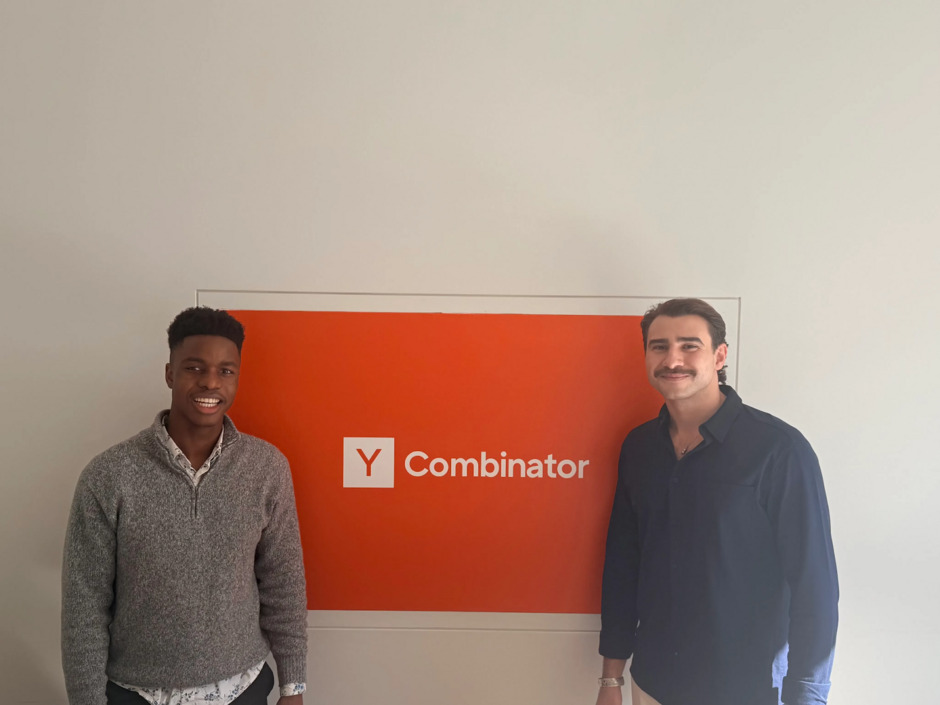
Orthogonal joined Y Combinator's Winter 2026 batch. Pickett's account of the three-month sprint contains the expected sleepless nights, launches, customer calls and product iteration at 2 a.m. The better detail is where he said much of the learning occurred: hallway conversations and dinners with people who challenged the founders' thinking.
For someone building systems that connect other systems, Pickett is notably attentive in public to the people doing the connecting. He thanked YC partners Tyler Bosmeny and Christina Gilbert, celebrated Sogut's complementary experience, and described leaving Vercel with gratitude for the people with whom he shipped and learned. The pattern is not ornamental. Infrastructure companies are negotiated into existence through partners, providers and developers. A connector with no relationships is merely a diagram.
One of those relationships began at a hackathon. Pantera investor Jay Yu met Pickett while experimenting with Coinbase's x402 toolkit. Their conversation turned to an agent-first access and payment layer for old and new API services. Months later, Pantera led Orthogonal's $4.3 million seed round, announced in June 2026, with participation from Y Combinator, Pioneer Fund, Decasonic, Blast Club, Outbound Capital and others.
“When an agent needs a capability it doesn't already have, Orthogonal will be the first place it goes.”Christian Pickett on the company's goal
The financing arrived after the YC sprint, but it did not change the story's central object. Pickett is still concerned with the moment an agent reaches the edge of its built-in abilities. What happens next determines whether the system is a convincing demo or useful infrastructure. A model can produce a plan in seconds. Access may require weeks of integration work. Orthogonal tries to compress that second clock until it resembles the first.
The new default
Pickett has written that the first service an agent can reliably find and pay for may become its default, and that defaults compound. The claim suggests a coming change in how software companies sell. Today's API provider optimizes documentation for a developer and pricing for a manager. Tomorrow's provider may also need structured descriptions an agent can evaluate, a callable price, machine-readable permissions and enough trust signals to be selected without a meeting.
This does not erase the storefront. It changes its customer. Search engine optimization taught companies to court an algorithm on behalf of a person. Agent discovery may ask them to court software on behalf of a task. The winning service may not be the one with the cleverest landing page. It may be the one that is available, payable, reliable and easy to understand at the exact millisecond a machine needs it.
There are unsettled questions around identity, permission, disputes and liability when software transacts with limited human intervention. Pickett treats those questions as reasons to build controls and multiple rails, not as decorations to add after scale. His ambition is not merely to let an agent spend. It is to give the agent a dependable way to acquire a capability while remaining inside policy.
The arc from BlackBerry security to Coinbase rails, Vercel billing and Orthogonal now looks unusually tidy. Careers are seldom that courteous while they are happening. Pickett followed the machinery that decides who gets access, how usage is counted and how payment survives failure. When AI agents appeared as a new class of customer, he was already standing beside the register, wondering why nobody had rebuilt it.