Chris Nagy remembers his first job as a chief financial officer through a colleague: the controller, a quiet presence who understood the numbers. After years at BlackRock, Nagy was learning what it meant to carry the finance brief himself. Two acquisitions, complicated debt arrangements and a business growing from $30 million to $50 million in revenue supplied the curriculum. His controller became a trusted partner. A promotion could give him the title. It could hardly give him every answer.
He recalled having to learn which colleagues understood the numbers. There is something pleasingly unglamorous about that admission. The early lesson was to identify the person whose knowledge made the work possible, then build a working relationship with them. The anecdote places another employee at the center of a story an executive might easily tell about himself.
“I had to learn quickly who really had a handle on the numbers.”Chris Nagy, recalling his first CFO role
By December 2024, when he returned to that experience in a conversation with CFO Thought Leader, Nagy had accumulated several finance leadership roles. His recommended reading was Trillion Dollar Coach, Eric Schmidt and his co-authors’ book about Bill Campbell. Collaboration and trust were recurring concerns. He also thanked the interviewer on LinkedIn and said the podcast was among his Spotify favorites. Even finance executives, apparently, have a listening queue.
That small scene is a useful way into a career that can otherwise disappear into company names and transaction announcements. Nagy has worked in financial services, software, data and research technology. Today he is chief financial officer and chief operating officer at Caseware. Before that came Salesloft, IPC Systems, Forsta and FocusVision. The titles grew broader; his account of learning the job remained surprisingly specific.
Before the surveys, the markets
Nagy’s earlier employers included BlackRock, Radianz, NYFIX and Vela Trading Technologies. They place his background in the machinery of financial markets, before his move into software for understanding customers. His work at BlackRock included strategic planning. Earlier commercial experience exposed him to pricing and market dynamics, the practical questions of what a service is worth and how a business delivers it.
He spent two and a half years at Vela before joining FocusVision in April 2018. By then, FocusVision described him as having more than 20 years of experience. He arrived as CFO alongside two other appointments: Thierry D’Hers as chief product officer and Mark Sonders as chief revenue officer. D’Hers had worked at Microsoft and Tableau; Sonders brought experience from Vertafore and Thomson Reuters. This was a group assembled around product, sales and finance.
The assignment had a concrete shape. FocusVision wanted to integrate its research tools into a single platform. Nagy would lead financial strategy and resources while colleagues led development and commercial work. The company offered surveys, online interviews, focus groups and research communities. Its customers used those tools to learn how people thought, felt and acted. The move took him from businesses serving financial markets into a business serving people who asked questions for a living.
His education includes an MBA in finance from the University of Pennsylvania’s Wharton School. The career that followed crossed industries rather than staying within one narrow market. A trading technology business and a research software company sell different things, but both require decisions about resources, customers and the cost of building products. Those recurring decisions provide a thread through the changing logos.
- 2018FocusVision CFO
- 2020FocusVision CEO
- 2021Forsta president & CFO
- 2024Salesloft CFO
- 2025Caseware CFO & COO
A CFO becomes a CEO, then a president
In August 2020, Nagy became CEO of FocusVision. The move extended his responsibilities beyond finance to the company itself. By January 2021, he was speaking publicly about its proposed merger with Confirmit. The two businesses had different strengths within research technology, and their owners, EQT and Verdane, wanted to combine them. Nagy described their capabilities as complementary. It was a statement about how the businesses could fit together, before the integration had begun.
The transaction closed on March 10, 2021. Kyle Ferguson, previously Confirmit’s CEO, became chief executive of the combined business. Nagy became president and CFO. Both existing brands initially remained in place, with a new name and strategy expected in the second quarter. That sequence matters: the legal combination came first, while customers continued to encounter familiar products. A merger announcement is a date; bringing businesses together is a longer assignment.
The completed leadership team announced in April listed Nagy as global president and CFO. Around him were leaders responsible for technology, people, legal matters, marketing and the qualitative and quantitative businesses. Giles Whiting held the COO role. The organization was combining specialties, with Nagy’s role connecting broad business responsibility and financial oversight. His move from CEO to president and CFO belonged to that new arrangement.
Forsta brought together FocusVision, Confirmit and Dapresy, the data visualization business already combined with Confirmit. Its name drew on a Nordic word for understanding. Its promise was to connect research methods that had often lived in separate tools. Surveys could provide scale; interviews could provide detail; dashboards could make the findings easier to use. The proposition was simple enough to describe. Delivering it involved established products and customers with established habits.
The November 2021 rollout emphasized continuity. Existing users would first see a name change, followed by improvements, with the company promising uninterrupted service. There is a particular discipline in that kind of ambition: the new business must announce itself while preserving the work people already depend on. For Nagy, Forsta was a founding leadership chapter in a combination of existing companies, each with a history of its own.
The next company still needs a team
After Forsta, Nagy served as CFO at IPC Systems. In September 2024, Salesloft announced him as its new finance chief, responsible for the global finance organization. The appointment placed him in enterprise software again, this time at a company helping business sales teams prioritize work and engage customers. Salesloft had acquired Drift earlier that year. Nagy arrived during another period when the company was changing its scope.
The announcement described more than 25 years of leadership experience and work on business launches, strategic exits, mergers and an initial public offering. Those are different kinds of corporate transition. A launch establishes something; a merger combines things; an exit changes ownership. His record included all three kinds of work, along with an IPO. The common responsibility was to help a company make its next move with a financial plan behind it.
At Salesloft, Nagy’s stated ambition was sustainable growth. The company’s technology was meant to help customers achieve growth of their own, creating a connection between his internal responsibility and the product being sold. CEO David Obrand welcomed him as a partner in the leadership team. The language of partnership fits the earlier controller story: important decisions were being described as work done with someone else.
Soon after joining, Nagy said his first priority was to listen, engage and understand the company. He wanted to become part of its culture and work closely with the executive team. That is a practical beginning for an incoming CFO. The financial statements can describe a business without revealing every reason it behaves as it does. Understanding the people who produce, sell and support the product gives the figures a working context.
His stance on economic conditions was steady: he believed business fundamentals should endure across changing cycles. In discussing growth, he put customers’ needs, product investment and sales activity in the same conversation. Finance had to understand how the business operated across departments. This helps explain why a financial executive’s remit can extend into strategy, and why Nagy’s later title would again include responsibility beyond the finance function.
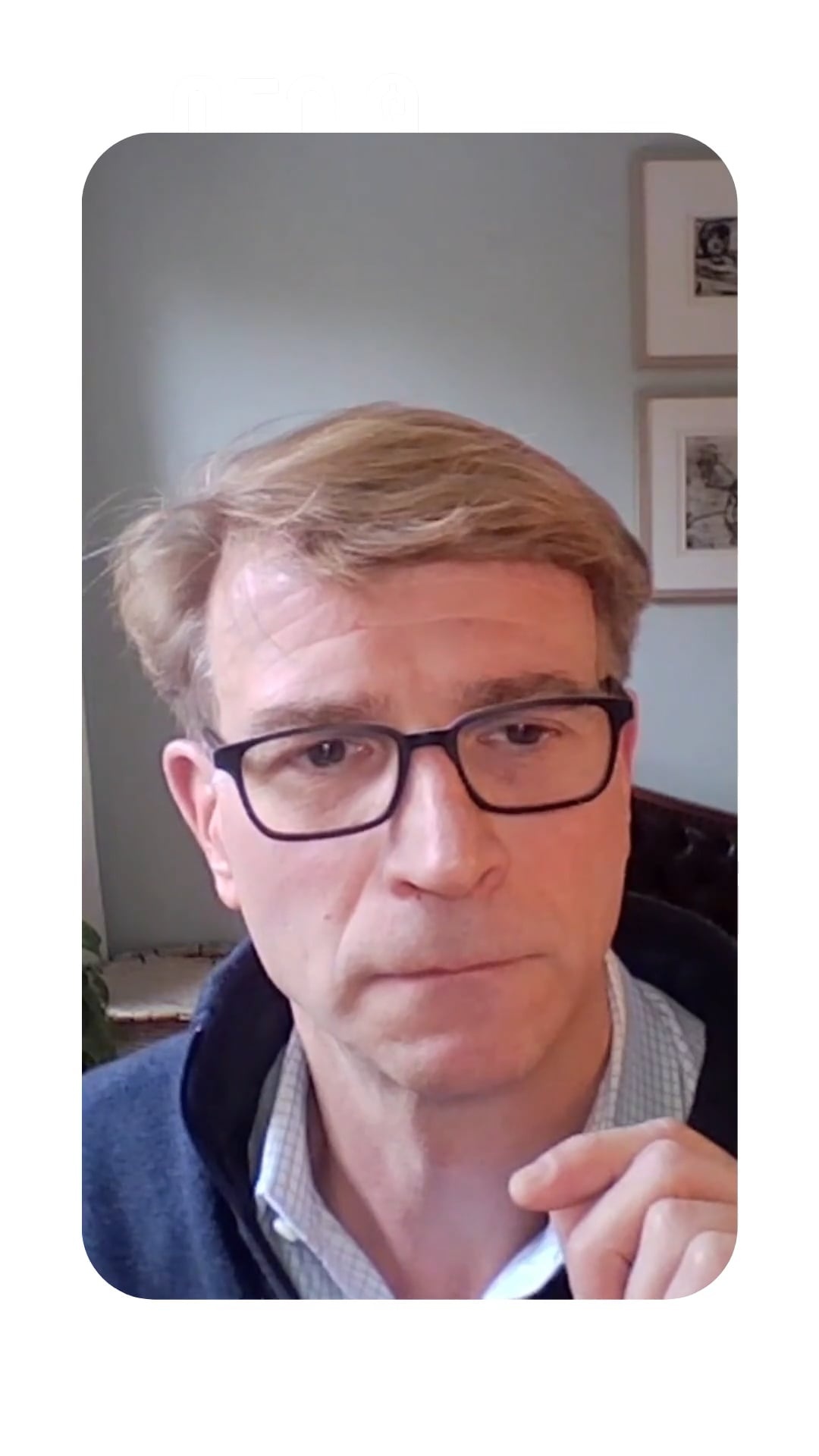
Two titles at Caseware
On August 18, 2025, Caseware announced an expanded leadership team, including Nagy as incoming CFO and COO in the third quarter. Its current leadership page lists him in both roles. The company makes software for audit, accounting, financial reporting and data analytics. Nagy’s new employer serves professionals whose own work depends on examining evidence and making sense of numbers. There is a neat circularity in a finance leader helping run software for the finance profession.
The appointments formed part of a wider change under CEO David Marquis. Product and technology leaders had joined earlier in the year, followed by marketing and customer success executives. Finance, operations and revenue appointments came next. Caseware described the group’s shared work as improving workflows, supporting customers and developing AI and cloud capabilities. Nagy entered as part of that team, with both financial and operating responsibilities.
Caseware reports that its platform serves users across 130 countries. That international setting suits the geographical breadth elsewhere in Nagy’s public life: GigaStar’s team biography identifies him as a New Yorker and an avid traveler who has visited more than 50 countries. Travel supplies a personal detail amid the corporate appointments. It is a reminder that a career’s map and a person’s map can be larger than the address beside a job title.
Two different maps: personal travel and his current company’s reach.
A return to the business of understanding
Nagy also advises businesses outside his main executive role. GigaStar lists him as a finance advisor. The company works in the creator economy, connecting YouTube creators and investors. Panoplai names him as an advisor and board member, with a focus on financial strategy and performance. Its work in research technology brings him back to the industry he knew through FocusVision and Forsta.
The Panoplai biography explicitly links his experience as FocusVision CEO and CFO with his Forsta presidency. For a research software business, that history has a particular relevance: he has seen the commercial and financial questions surrounding tools that help organizations understand customers. Advisory work gives that experience a different setting, alongside the responsibilities of running finance and operations at Caseware.
A former colleague, Gail Mannion, offers a more personal view of his working habits. Having worked for him at two organizations, she describes a manager who involved his team in objectives, asked for opinions and improved analyses and processes iteratively. Her account connects organized thinking with consultation. It also echoes the early controller anecdote without needing to turn it into a grand theory of leadership.
Across the companies, the recurring action is asking people what they know. A controller with a command of the figures. Colleagues with ideas about how to improve the work. Customers with needs a product must answer. Nagy’s career contains the transactions and titles expected of an experienced executive. The detail that makes it human is smaller: early in the job, he recognized that the quiet person in the room had something he needed to hear.