Escaped Saigon at age 3 Won an Emmy at 38 2.7M YouTube subscribers $5,000/hour consulting rate 500,000 students, 190 countries Building an AI clone of himself His wife said the first videos were unwatchable Started YouTube at age 42 Charges so much it makes your mom nervous 310 million views on The Futur $80M in studio billings at Blind Hard truths, gently told Teach 1 billion people. That's the plan. Escaped Saigon at age 3 Won an Emmy at 38 2.7M YouTube subscribers $5,000/hour consulting rate 500,000 students, 190 countries Building an AI clone of himself His wife said the first videos were unwatchable Started YouTube at age 42 Charges so much it makes your mom nervous 310 million views on The Futur $80M in studio billings at Blind Hard truths, gently told Teach 1 billion people. That's the plan.
Chris Do - founder of The Futur
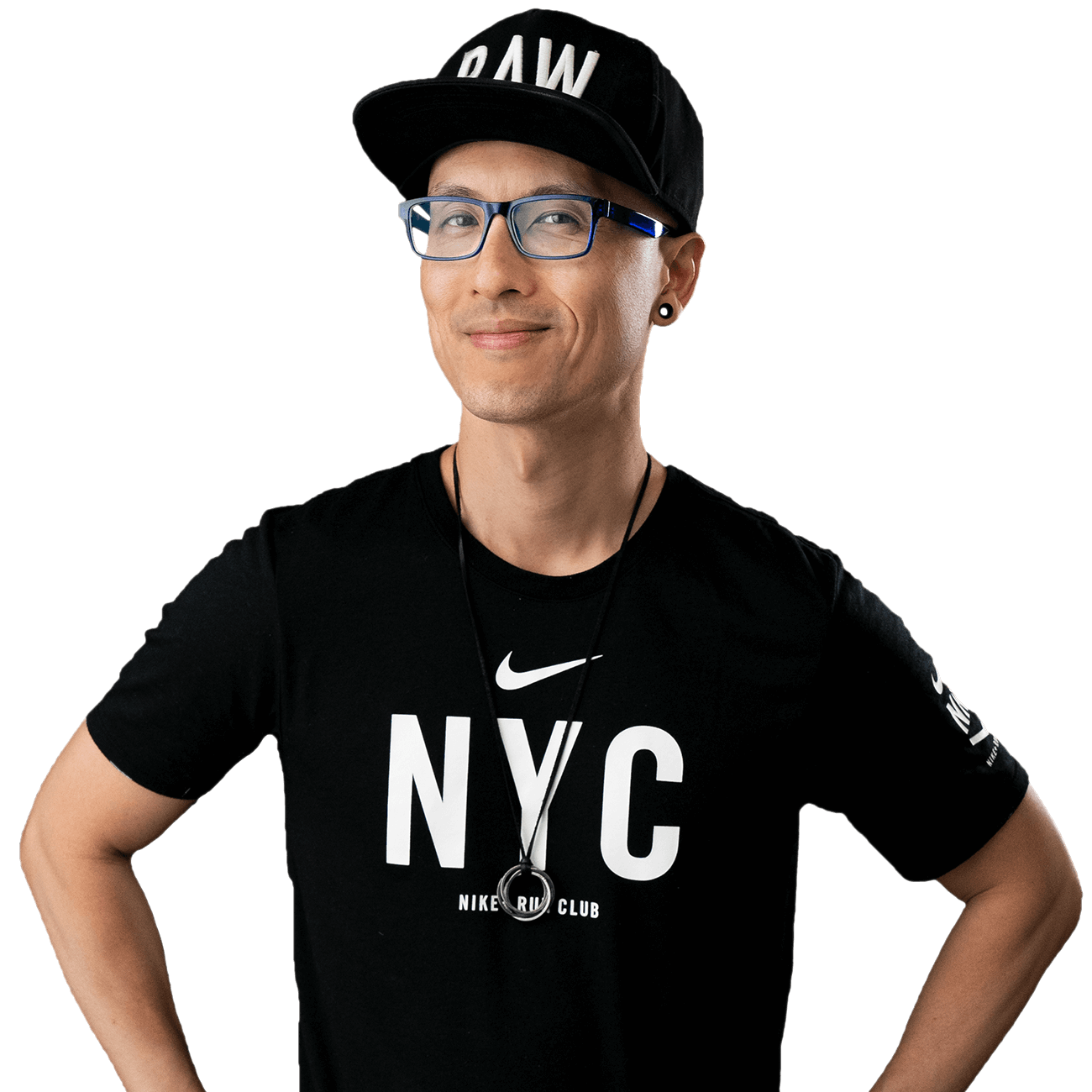
CHRIS DO - THE MAN IN THE GLASSES & THE CAP
Saigon, 1975 → Santa Monica → Everywhere
YesPress Profile  •  Creative Entrepreneur

CHRIS
DO

"I'll teach you to charge so much it makes your mom nervous. Hard truths, gently told."

Emmy Winner The Futur Designer Educator @thechrisdo
2.7M YouTube Subs
190 Countries
$5K Per Hour
April 30, 1975: The day Saigon fell. A three-year-old boy on a boat. Fifty years later he has 310 million views and a plan to teach a billion people to earn a living from their creativity.
$80M Lifetime billings at Blind
500K Community members worldwide
310M Total video views
1B People he wants to teach

"When you make it, you have an obligation to send the elevator back down for others."

- Chris Do
Act Two - The Studio Years

Twenty Years, Eighty Million Dollars

Blind became the kind of studio that other studios studied. Motion design before anyone called it that. Broadcast promos, video game trailers, music videos, commercials - work that lived for seconds on screen and took weeks to make. The brief era when a commercial could be genuinely cinematic, and Blind was at the center of it.

By its peak, Blind was generating $7M+ annually. The client list reads like a Super Bowl ad roster: Nike, Xbox, Sony, Microsoft, Honda, Intel, Google, Audi, NFL, MLB, Showtime, Snapchat, Riot Games, EA, Wells Fargo. Each project a small argument for what motion design could be when someone applied both craft and strategic thinking to it.

But the award that matters most to Chris Do isn't on that list. In 2010, he directed a music video for The Raveonettes - an alt-rock band nobody outside of indie circles had heard of - called "Heart of Stone." It premiered on Vevo. The Television Academy gave it the Emmy for Outstanding Individual Achievement in Animation. He has called it his highest creative achievement, which says something about a man who spent two decades making Nike ads.

The Credentials Nobody Expected

The paradox of Blind is that it succeeded by operating like two different companies simultaneously. On one side, the commercial machine - fast, polished, client-driven work that kept the lights on and earned the trophies. On the other, a genuine creative philosophy that Do was developing through teaching.

While running Blind at full velocity, he was also teaching Sequential Design at ArtCenter College of Design for over 15 years. And at Otis College. These weren't side projects - they were where he tested his ideas about creativity, pricing, client relationships, and what it means to be a professional creative in a world that chronically undervalues designers.

The tension between those two modes - studio operator and teacher - eventually broke open. By 2014, something had shifted. The market had changed. The business had changed. And Chris Do, at 42, was looking at a version of himself that had mastered one thing and was ready to start something completely different.

Blind Studio: Awards & Clients
Emmy Awards2 (Outstanding Animation)
Clio Awards3 wins
EffieGold
D&ADBritish Pencil
MTV VMAWinner
NikeBrand campaigns
Xbox / SonyGame trailers & promos
Also served:
Microsoft • Google • Intel • Honda • Audi • NFL • MLB • Showtime • Snapchat • Riot Games • EA • Wells Fargo
Act Three - The Pivot

"Value isn't determined by you, it's determined by the client."

- Chris Do, on pricing
The Philosophy

Hard Truths, Gently Told

Pricing

Charge for Outcomes, Not Hours

Value-based pricing means the client pays for the result, not for your time. A logo that repositions a company is worth the repositioning, not the hours spent in Illustrator. Most creatives never charge this way because they're afraid to.

Visibility

Stop Hiding Behind Your Work

The work alone doesn't sell itself. Designers who wait for the portfolio to speak for them are waiting for something that rarely happens. You have to show up. Be findable. Have a point of view that someone can disagree with.

Identity

Generalize Internally. Specialize Externally.

Have broad curiosity, wide-ranging interests, a restless mind. Fine. But when you go to market, go narrow. The market rewards specialists because specialists have a clear answer to "why you."

Business

Be Bilingual

Designers who only speak design are limited to conversations with other designers. To have real influence in a business, you need to speak the language of business: ROI, strategy, growth. That's where the leverage is.

Negotiation

There's No Penalty for Going High

In a negotiation, the cost of quoting a number that's too big is that you start negotiating down. The cost of quoting too low is that you're already done. Ask for more first. Every time.

Scale

Let the Best Content Win

New media has removed the gatekeepers. You don't need to be discovered. You need to be useful, consistent, and honest. The audience finds the thing that genuinely helps them. Make that thing.

1,000,000,000
People to Teach How to Make a Living Doing What They Love
Current estimate: 500,000 community members across 190 countries. Progress: underway.
0% of mission reached - but the trajectory is the point
Act Four - The Futur

From Studio to Empire

The Futur is not a design school. That's the first thing Do would tell you. It's a business education platform for creative professionals who were never taught how to run a business - which is most of them, because art schools teach craft and then set students loose into a world of contracts, pricing, negotiations, and client relationships nobody prepared them for.

The platform runs courses, workshops, a podcast, and Business Bootcamp - the flagship program on pricing and sales strategy, co-taught with Ben Burns and Matthew Encina. Content Lab, launched in September 2024, is a membership community focused on strategic content creation for entrepreneurs who want to build audiences, not just portfolios.

The YouTube channel hit 2.72 million subscribers with 310 million views across 2,177 videos. These are not polished productions with Hollywood budgets - they're conversations, whiteboard sessions, live coaching calls. The format is the message: this is what education looks like when someone stops trying to make it look expensive and starts trying to make it useful.

In late 2023, Do returned to Vietnam as an adult for the first time - a homecoming he documented publicly on LinkedIn under #homecoming. He wrote about the strangeness of returning to a country he left at three years old, wondering whether he would feel foreign there the same way he had always felt slightly foreign in America. His wife Jess went with him. He didn't resolve the question of belonging. He just went, and wrote about it honestly, which is more than most people do with the complicated geography of their identity.

The AI Clone Project

The most telling thing about Chris Do's ambitions right now is not the speaking tour or the YouTube numbers. It's the thing he calls Do-Bot.

The concept: an AI trained on his entire body of work - his book, his Business Bootcamp curriculum, a decade of YouTube videos, thousands of Q&A sessions - that can handle roughly 90% of consulting inquiries. Complete with synthetic voice and deepfake video capabilities. The goal is to make the knowledge available at a fraction of his $5,000/hour consulting rate.

This is either the most logical extension of a man who genuinely believes in teaching at scale, or a masterclass in what happens when someone has so thoroughly commoditized their perspective that they can train a machine on it. Possibly both.

The 2025 VidCon keynote - titled "Unbland Yourself" - prepared with 347 slides for a 45-minute slot on helping creators differentiate themselves in an oversaturated market. The number of slides is itself a data point: this is someone who does not measure effort by the minimum required.

The Timeline

From Saigon to Silicon Valley to YouTube

1972
Born January 13 in Saigon, Vietnam
1975
Family flees Saigon on April 30 - the day the city falls. Resettled in Kansas City, then San Jose, CA via Catholic church program
1991-95
ArtCenter College of Design, Pasadena. BFA in Graphic Design & Packaging. Rejected previously by UCLA, UCSD, and Cal State SLO.
1995
Graduates and immediately founds Blind in Santa Monica - a motion design and brand strategy studio
2000s
Blind grows into a $7M+ annual studio. Teaches Sequential Design at ArtCenter for 15+ years while running the business
2010
Emmy Award - Outstanding Individual Achievement in Animation for "Heart of Stone" music video (The Raveonettes). His self-described highest achievement.
2014
Co-founds The Skool with Jose Caballer. Begins YouTube content at age 42. Wife calls early videos "unwatchable." Pivots to pure educational value.
2016
Founds The Futur. Mission: teach 1 billion people to make a living doing what they love.
2019
Publishes "Pocket Full of Do" - 25 years of business lessons for creative entrepreneurs
2023
Returns to Vietnam as an adult for the first time. Emotional homecoming documented on LinkedIn. Euro Tour of business workshops.
2024
Launches Content Lab membership. LinkedIn headline: "I'll teach you to charge so much it makes your mom nervous."
2025
"Unbland Yourself" keynote at VidCon (347 slides, 45 min). Building Do-Bot: AI clone targeting 90% of consulting inquiries at scale.
In His Own Words

The Lines That Stick

"Stop waiting. Better to act on a poor idea than to never act on a great idea. Shut up and start!"

"Generalize internally, and specialize externally."

"In negotiation, there is no penalty for saying a number that is too big."

"What is the most difficult thing in the world? To know thyself."

"Designers need to be bilingual in order to have meaningful conversations and create a quantifiable impact on a business."

"The effort you put into consistently investing in yourself will determine the quality of your life now and in the future."

"Learn how to solve client problems and not your own."

"I just did it on faith." - on leaving Blind revenue to start The Futur

Who He Is

The Loud Introvert

Chris Do calls himself an introvert. Not the shy kind - the kind who finds large social gatherings draining and recovers in quiet rooms. This is a man who built one of the largest creative education communities on the internet by leaning into video content. The dissonance is intentional, not accidental.

He appeared on the Creative Courage podcast specifically on the subject of building a creative presence as an introvert. The episode is probably the most honest thing he's done publicly because it acknowledges the gap between the person he is privately and the presence he's built professionally. He didn't resolve that gap. He just worked with it.

His operating mode is "hard truths, gently told" - a phrase he uses as a personal tagline and genuinely means. He will tell a designer their rates are too low and explain exactly why. He will tell an entrepreneur their positioning is confused and show them how to fix it. He is direct without being cruel about it, which is a skill most people who value directness don't bother developing.

He draws from a wide intellectual frame: Chris Voss on negotiation, Tony Robbins on mindset, Seth Godin on marketing, Ken Robinson on creativity and education. The synthesis is his own - a business philosophy that treats pricing as a creative act, client relationships as a design problem, and personal branding as an obligation rather than an option.

What He's Built On

Creative DirectionExpert
Business EducationExpert
Content CreationExpert
Public SpeakingExpert
Brand StrategyHigh
Motion DesignEmmy Level
Sales & NegotiationHigh
Fun Facts

Ten Things About Chris Do

🛟

His family escaped Vietnam on April 30, 1975 - the exact day Saigon fell to North Vietnamese forces. He was 3.

📋

Rejected by UCLA, UC San Diego, and Cal State SLO before being accepted to ArtCenter. He founded a company immediately after graduating.

🏆

His Emmy was for directing a music video for The Raveonettes - an alt-rock band - not a Nike commercial. He calls it his career highlight.

📺

His wife called the first YouTube videos "unwatchable." He rebuilt the approach around pure value. He now has 2.7 million subscribers.

He started creating YouTube content at age 42. Most people his age were thinking about slowing down.

🤖

He charges $5,000 per hour for private consulting. He's actively building Do-Bot - an AI trained on his body of work - to extend that knowledge at scale.

📊

He prepared 347 slides for a 45-minute VidCon keynote. That's 7.7 slides per minute. He didn't use them all.

👨‍👦

His father went from bussing tables in America as a refugee to becoming a chief engineer at a Silicon Valley semiconductor company.

🌏

His content has been viewed 500M+ times worldwide. He's on a trajectory toward the 1 billion teachers he wants to reach.

🏠

He returned to Vietnam for the first time as an adult in late 2023 - 48 years after his family fled. He wrote about it as emotionally complicated.

Connect

Where to Find Chris Do