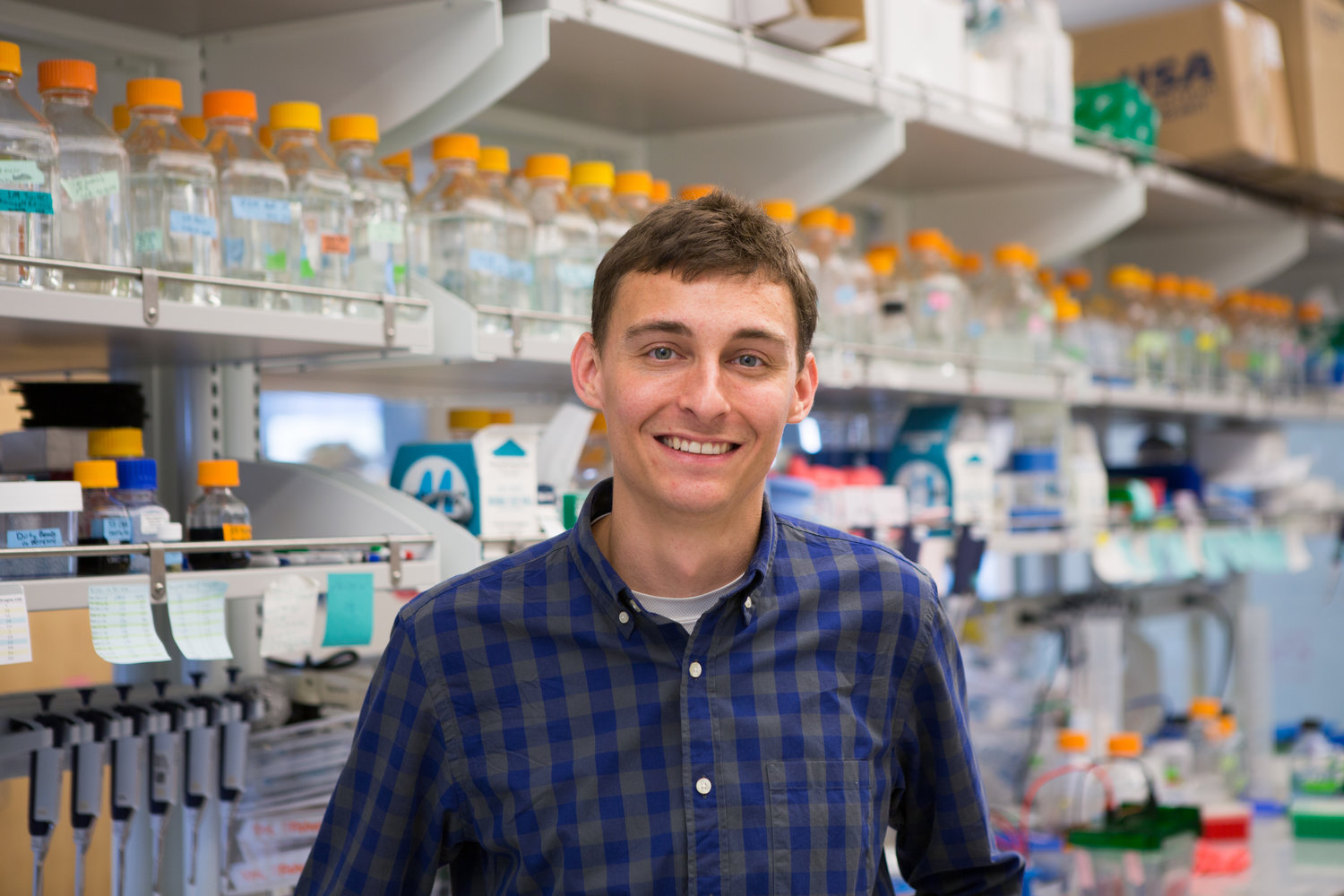
Chris Bahl had a sensible plan. A startup would emerge from his academic laboratory. A couple of postdoctoral researchers would join it. He would remain a faculty member, along with the rest of the group. The science would acquire a commercial life, and the laboratory would keep its familiar one. Then investors began asking whether he would come, too.
That question changed the decision. Leaving would affect everyone he supervised. Bahl spoke with his trainees individually, laying out the alternatives. Their preference, he says, was unanimous: keep the team together and join the company. In 2021, he resigned, cancelled his grants and sponsored research, and founded AI Proteins. A career change had become a collective departure.
“Mentoring is a sacred responsibility.”
Chris Bahl
It is a useful place to begin with Bahl, now the Boston company’s president and chief executive. His professional subject is the design of very small proteins. His career also contains a persistent interest in the structures that let people work together: research groups, teaching programs, scientific clubs, and the less glamorous business of keeping an organization going.
Three years in Maine, five in Seattle
At the University of Maine, Bahl completed his bachelor’s degree between 2002 and 2005, studying biochemistry and molecular and cellular biology. He added a master’s in biochemistry in 2006, working with Robert Gundersen. The undergraduate program also included minors in chemistry and microbiology. His academic shopping basket was rather full.
Dartmouth followed. From 2006 to 2012, he worked toward a biochemistry doctorate with Dean Madden. The training centered on the structure and function of an enzyme. In 2012 he received Dartmouth’s E. Lucile Smith Award for scientific excellence in biochemistry. Understanding how a molecular object was put together would become the preparation for designing new ones.
That same year, Bahl moved to the University of Washington to work with David Baker. His senior fellowship ran from September 2012 to September 2017. Baker’s group offered an environment where software could propose a protein and experiments could ask whether the proposal survived contact with reality. The interesting part was the distance between those two events.
In 2016, Bahl was a co-first author, with Gaurav Bhardwaj and Vikram Mulligan, on research describing ways to design small, constrained peptides. These molecules hold their shapes through chemical bonds. The team developed computational methods, made the proposed molecules, and examined their structures. The work included shapes beyond the usual repertoire available in nature.
The process had a pleasingly concrete sequence. Start with a rough blueprint for a molecular backbone. Let software search for amino acid sequences that might produce it. Make selected candidates. Test them. Establish whether the resulting structure matches the intended design. A persuasive computer image still had to answer to an actual molecule.
“That’s the fun stuff - making stuff that has function.”
Chris Bahl, 2016
His enthusiasm lands on the verb “making.” There is a practical streak in that phrase, a wish to move from an attractive structure toward something that performs a task. It also explains why a career in this field can alternate between time at a computer and time waiting for the laboratory to deliver its verdict.
A club with dinner on the agenda
Bahl became head of protein design at the Institute for Protein Innovation in October 2017. He held that post until October 2021. In the same period, he began building another organization with a considerably simpler admission process: the Boston Protein Design and Modeling Club.
Founded in 2017, the club brings together computational protein engineers and modelers across academia and industry. Bahl co-organizes it with Sergey Ovchinnikov and Nick Polizzi. It is based in Boston and welcomes an online audience around the world. The arrangements make room for both a scientific program and the conversations that continue after it.
A typical meeting starts with food and drinks at 6:30 p.m., followed by a 7 p.m. program. Seminars, tutorials and workshops share the schedule with discussions of new developments. The club even recommends joining its mailing list with a personal email account, so graduation or a new job need not sever the connection. Institutions change; the invitation survives.
The year Bahl founded the Boston Protein Design and Modeling Club. Its monthly program leaves room for dinner, discussion and people changing jobs.
In January 2024, the Open Molecular Software Foundation welcomed the club as a sponsored project. The affiliation gave this recurring gathering a place within a broader organization supporting molecular software. A community that began around a shared technical interest had acquired some institutional scaffolding of its own.
The teaching was already there
Teaching runs through Bahl’s record well before the company. At Maine, he assisted in an introductory biology course and lectured in chemistry laboratories. At Dartmouth, he worked as a biochemistry teaching assistant. Later came journal clubs, research supervision and the repeated task of helping someone turn an unfamiliar method into a usable skill.
His curriculum vitae describes weekly laboratory meetings and individual supervision for undergraduate researchers in Seattle. In Boston, it records research associates, postdoctoral fellows, interns and other trainees working with him. Those entries are measured in hours and recurring meetings. They give the eventual decision to consult his lab a longer history.
In 2017, the University of Washington recognized him with an Undergraduate Research Mentor Award. That year also brought the Protein Society’s Hans Neurath Outstanding Promise Travel Award. One recognized how he worked with younger researchers; the other supported his own place in the scientific conversation. Both belong in the picture of his early career.
The instruction has extended outdoors. Bahl has taught mountaineering and rock climbing with the Washington Alpine Club, and rock climbing with the Appalachian Mountain Club. A climbing class is a different setting from a research meeting, but both put a premium on explanation that another person can actually use. Jargon is less impressive when someone is waiting for the next instruction.
A company, then a second new job
AI Proteins began in 2021. Bahl initially served as president and chief scientific officer. Becoming a founder did not immediately mean becoming CEO. The distinction matters in his story because it leaves room for the intervening work of learning a business, building an organization and working alongside executives with other responsibilities.
In January 2025, the company announced his appointment as chief executive, succeeding Noah Beerman, who had departed the previous December. The scientist who had helped establish the technical approach now took responsibility for leading the company’s next phase. Wendy Dwyer, its chief business officer, and Michael Krepps, its chief strategy officer, joined him for that month’s Biotech Showcase.
Another connection from the laboratory became visible in August 2025, when AI Proteins announced James Bowman as its first chief technology officer. Bowman had been a postdoctoral researcher in Bahl’s group and was part of the company’s founding team. The old training relationships had begun to take new organizational forms.
In November 2025, AI Proteins announced a $41.5 million Series A financing led by Mission BioCapital and Santé Ventures. Alongside the funding came a decision about company structure: a hub-and-spoke model, with individual programs able to form subsidiaries while the central platform continued developing.
That arrangement addresses a practical tension for a founder whose central asset is a way of making things. Individual projects need attention and investment. The machinery that produces the next projects also needs to endure. The company’s announced structure was intended to give both a place to grow.
More people at the keyboard
Bahl’s interests in teaching and community extend beyond Boston. He co-founded the Latin American Workshop on Artificial Intelligence for Protein Design. The 2025 practical course in Puerto Varas, Chile, was aimed at students and postdoctoral researchers with limited previous experience, combining lectures with tutorials and a hackathon.
Its program named tools including AlphaFold2, RoseTTAFold, RFDiffusion and ProteinMPNN. Student and postdoctoral registration was free. Participants were expected to try the methods themselves and develop their own projects. That format gives a scientist a chance to leave with something more durable than a photograph of a presentation slide.
Public explanation has been another recurring job. Bahl became a TED Fellow in 2019 and returned to the TED stage in 2025. He has given technical presentations, appeared on podcasts and lectured on starting a company. His record includes talks on commercialization for the Harvard Biotech Club in several successive years.
He also serves on the Rosetta Commons executive board for the 2025–2027 term. His September 2026 curriculum vitae records chairing its financial sustainability committee. It is an unusually apt detail for a scientist turned CEO: useful tools and useful communities both acquire bills. Someone has to think about how they will keep operating.
On October 21, 2026, AI Proteins announced a research collaboration and license agreement with Astellas Pharma, described as valued at over $400 million. The announcement adds another business milestone to Bahl’s tenure. The stated agreement value represents the announced deal potential, rather than a disclosed payment already received.
For all the changing titles and larger figures, the earlier decision remains revealing. Bahl had an academic lab, a possible company and people whose futures were tied to his choice. He asked them. They wanted to continue together. Years later, that makes a fitting beginning for a protein designer’s business story: before building the next organization, find out who wants to build it with you.