A white sneaker is an unusually tidy object on which to hang a messy ambition. Chloe Songer and Stuart Ahlum wanted theirs to come back. They built Thousand Fell around shoes designed for disassembly and recycling, with customers able to return worn pairs and receive credit. The shoe had a planned afterlife. The bill for getting it there was another matter.
Including shipping, recycling a pair cost between $30 and $40 in the early operation. Customers were participating, yet the economics resisted. For Songer, the experience opened a question larger than footwear: how could a fashion business make the return journey workable? A shoe could be beautifully designed for its second life and still arrive there at an unreasonable expense.
A white sneaker, an awkward bill
Songer and Ahlum had met while working in Shanghai. They founded Thousand Fell in 2018, bringing retail experience to a product intended to test whether circularity could function as an actual business. It was a manageable experiment in one sense: one recognizable product category, designed with its eventual dismantling in mind. Sneakers also wear out. The founders could expect to learn from returns within a relatively short period.
The early process was pleasingly ordinary. Customers emailed to arrange a trade-in; the company sent a prepaid label. Songer later reported that more than 40 percent of customers returned sneakers within the first 18 months. Ease and an incentive made the proposition understandable. People already knew how to send a parcel. They needed a reason, and somewhere for it to go.
Early cost to recycle one pair, including shipping.
Historical Thousand Fell figure, reported in 2024.
There is a small comedy in a fashion company discovering that its next opportunity lies in sorting things people have finished wearing. Fashion is rather good at entrances. Songer’s attention settled on what happened when the product left the stage.
The fashion education behind the warehouse
She had reasons to care about both ends. Her mother was an artist, her grandmother worked in beauty, and she grew up collecting Vogue. During college she interned at Vogue China. After graduation, work at Alexander Wang Group brought her close to production; four years at Gap exposed her to manufacturing and consumption at a different scale.
That experience gave the later venture a particular angle. Songer knew the appeal of a product and the machinery required to put many versions of it into the world. The return journey would have to operate in that same world of budgets, purchase histories, suppliers and physical goods. An environmental intention would need an operating plan.
Her interest in environmental work predated the job titles. At Menlo-Atherton High School, she helped establish a recycling program and worked on a solar proposal. In 2009 she joined a US student delegation at UNICEF’s Children’s Climate Forum in Copenhagen. Classmates even devised a “Tree Hugger” superlative for her. At Duke, she majored in economics and minored in Chinese, a language she had initially approached through a course requirement.
Those choices form a useful background to the work she eventually chose: understanding how money moves, how products are made, and how people can be persuaded to participate. Her career brought those interests into the same room.
A wardrobe needs more than one exit
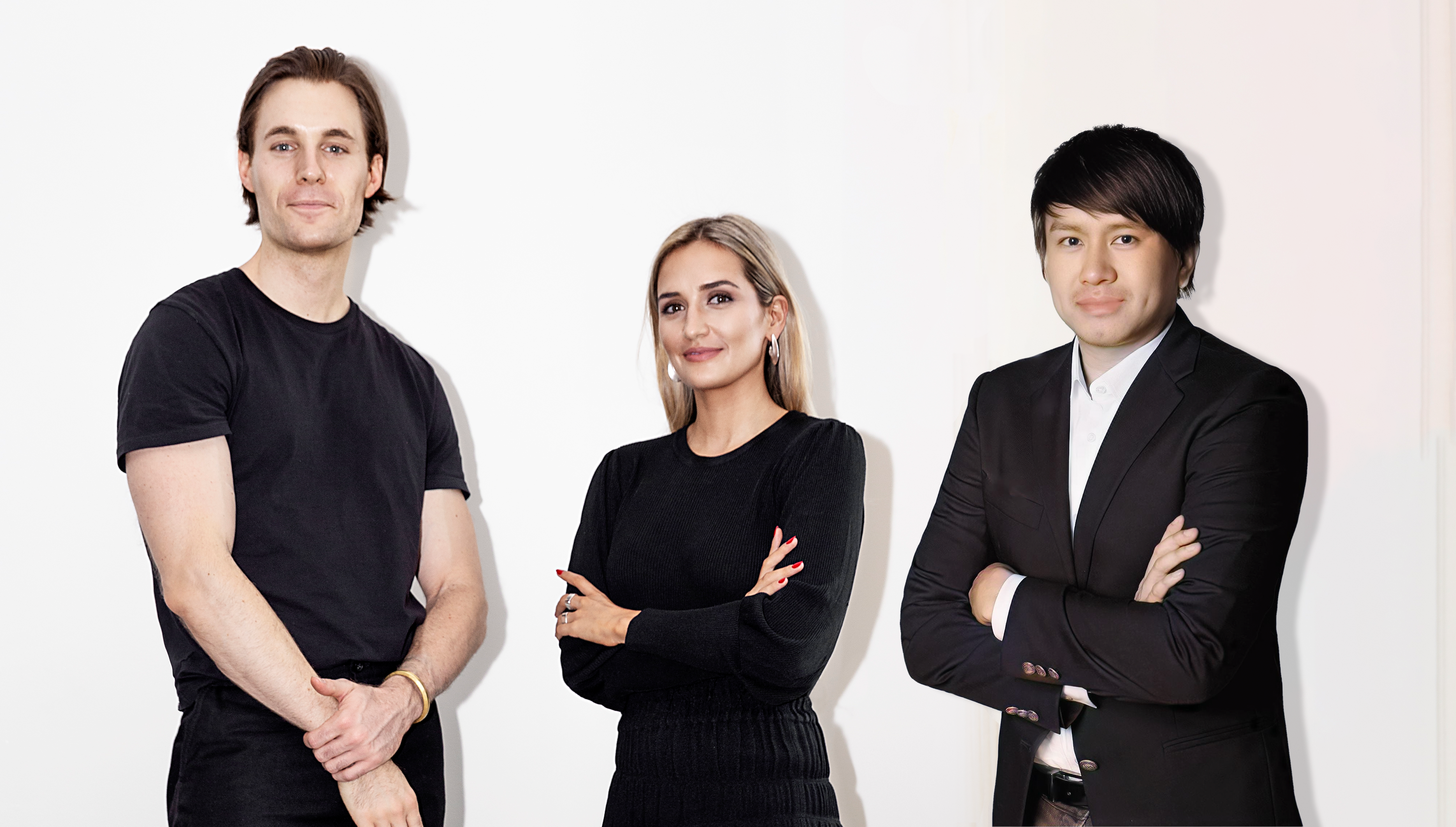
In 2021, Reformation approached the Thousand Fell founders about a footwear collaboration. Conversations widened into the infrastructure brands needed to take clothing back and sort it. Reformation became an early partner in the system that launched publicly as Supercircle in 2022. Songer became CEO; Ahlum became COO. Third co-founder and CTO Phong Nguyen brought experience from Gilt Groupe and Luminary.
The work required a different kind of product knowledge. In an early explanation of the platform, Songer described connecting to a brand’s order history so that a returned item could be associated with information about its materials. A retailer’s records could help answer a recycler’s question. Shipping and warehousing then had to turn that information into a usable physical delivery.
Consider a bag of unwanted clothing. It contains finished objects, each made to be worn as a whole. A recycler may need a bulk supply of a particular fiber. Getting from one to the other requires identification, separation, trimming, shredding and baling. Unknown compositions and blended fibers complicate the job. The care label becomes a surprisingly consequential scrap of literature.
- 01CollectTrade-ins and unwanted stock
- 02IdentifyCondition, composition, destination
- 03RouteResale, donation or recycling
Aggregation helps make those deliveries possible. Materials from several brands can be assembled into quantities a single brand might struggle to provide. The company’s role sits between a retailer with unwanted products and an operator with specific requirements for what it can accept. Both need the right material to reach the right place.
There are limits within that system. Fiber-to-fiber recycling is one outcome; other recycling routes produce different materials and uses. Resale and donation provide other exits. Following the distinctions makes Songer’s ambition more concrete. A collection program must eventually explain what happened to the things it collected.
The towel test
Parachute offered a useful expansion beyond shoes and clothing. Its collaboration with Supercircle began with damaged goods and unsellable returns before moving into a customer take-back program in 2024. Sheets and towels supplied substantial quantities of fabric, often in relatively straightforward compositions such as cotton or linen. A wardrobe problem had acquired a linen cupboard.
The economics still needed a candid explanation. At the time, Supercircle estimated processing costs of 60 cents to $1.20 per pound, against bale-sale proceeds of 15 to 40 cents. Brands paid for the gap. Fees supported the work of recovery; selling recovered material alone did not cover it. An old towel could have value and still require money to move through the system.
For a founder trained in economics and merchandising, that tension is central. Customers see a simple return offer. Behind it sit processing costs, transport and a brand’s decision to fund the service. The simplicity has to be made, and paid for, somewhere.
Teaching people to send things back
Songer also treated education as part of the business. Thousand Fell developed a community called Friend of the Future alongside the brand. She reported that 770 people attended its online Refashion the Future events in July 2021. The company was giving people somewhere to discuss sustainable fashion, alongside somewhere to buy shoes.
She described a commercial response, too: educational messaging could bring more engagement than a steady stream of sneaker photographs. Those were observations from an early brand, rather than a universal rule for retail. They suggest how she approached the task. The explanation belonged in the customer experience. Asking someone to change a habit required making that habit intelligible.
Her connections extended beyond customers. Built by Girls Ventures was an early investor in Thousand Fell, and Songer has spoken about the importance of funds supporting women founders. She also mentored young women through the Built By Girls network. In 2021 she received a Digiday Future Leader Award; inclusion in the Forbes 30 Under 30 Retail & Ecommerce class of 2022 followed.
There is room in this account for her enjoyment of objects, too. Songer likes thrifting and curating vintage furniture, and has described a growing collection of vintage glass. The habit fits a career spent considering what things are made of and what might happen to them next. A beautiful object can remain interesting after its first owner has moved on.
Looking back on Thousand Fell, Songer has said she might have benefited from taking more time before launch. Supply-chain disruptions had forced a move in manufacturing from China to Brazil. That is a useful admission from someone selling a change in how products move: her own route involved an abrupt change of plan. Launching a business adds customers, marketing and daily demands to the work already underway. The factory, the product and the return program all still have to function together.
The next life has to be arranged
Supercircle’s current offer covers two broad sources of goods: products customers have finished with, and inventory that retailers need to recover. Consumer programs include mail-in and store trade-ins. On the inventory side are returns, damaged products, samples and excess stock. The company connects those streams to recovery destinations and records the outcomes.
That scope takes Songer into conversations well beyond sneaker design. Recovering a sample from a stockroom and collecting a worn garment from a customer begin in different places. The convenience, information and handling requirements differ. A shared network has to accommodate both without losing track of what it is moving.
Company-reported website figures, observed 26 October 2026. Diversion covers multiple recovery routes.
In December 2025, Supercircle announced a $24 million Series A led by Foundry. The stated plans included technology development, supply-chain integrations, processing capacity and compliance reporting. The investment backed the less visible parts of the promise: the systems that make a return workable after someone has agreed to send it.
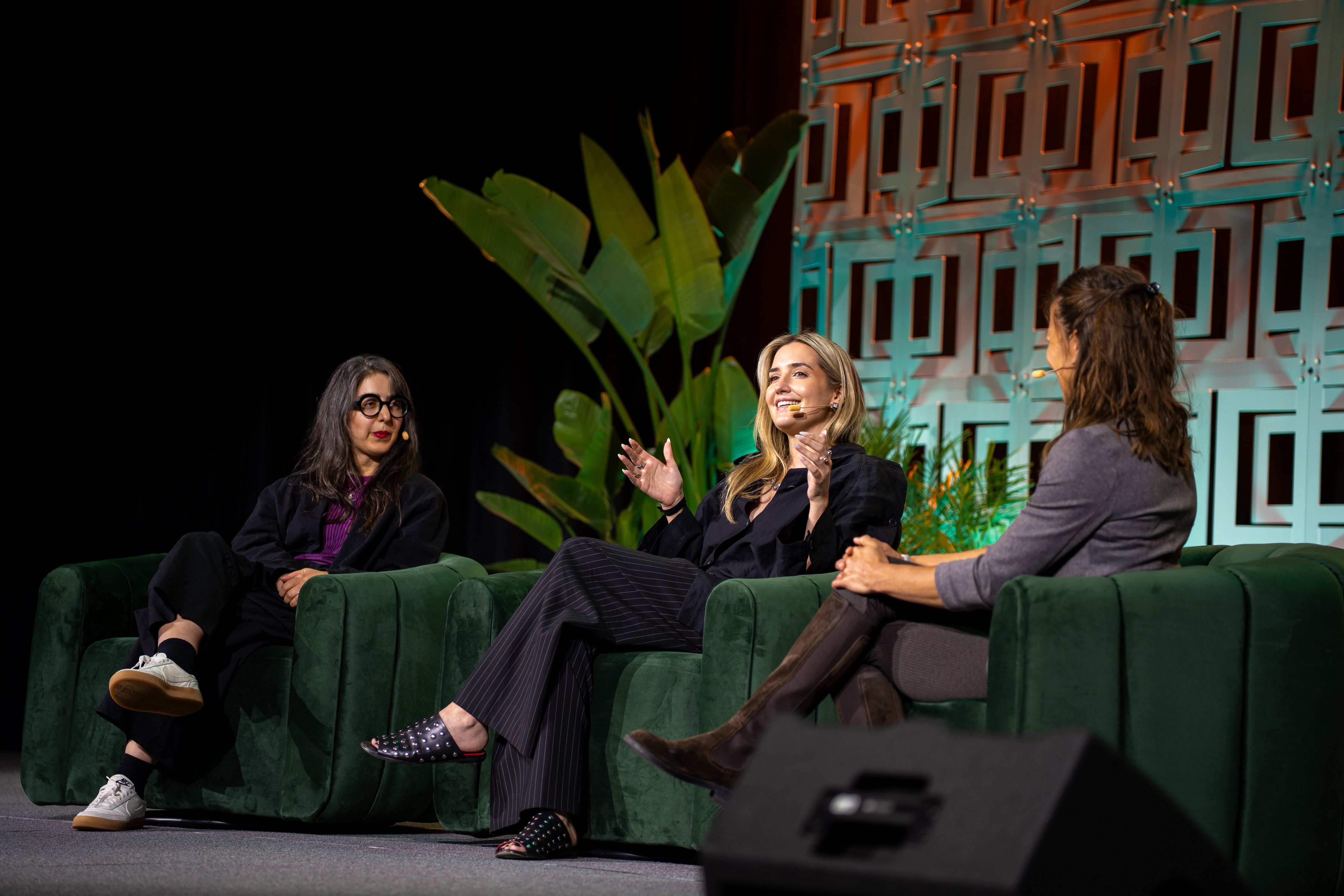
At Trellis Impact in May 2026, Songer joined Nike’s Golnaz Armin and Closed Loop Partners’ Bridget Croke for a discussion of technology and sustainability. She argued that brands acting early could create business models and value from circularity. The audience had changed since the first customers emailed for a shipping label. The practical proposition remained recognizable.
“We’ve barely scratched the surface of what this could be.”
Chloe Songer, speaking about Supercircle in 2024
The white sneaker was a useful place to start because it made the question tangible. Here was an object someone wanted to wear, then stop wearing. Songer followed it past that moment, through the awkward bill and into a second business. Fashion supplies an endless procession of next things. Her work is to arrange a next place for the things already here.