The first clue that Char Hu’s career would not remain tidy is the livestock. In his late twenties, newly arrived from the precise world of computational research, he helped run a small senior-living community north of Austin. The place sat on 15 acres and kept sheep, goats, donkeys and longhorns. Every so often, an animal escaped. Putting it back was not a metaphor, although it became one. A job could be carefully designed. Reality still wandered through the fence.
Hu also mopped floors and cooked. He has said the explanation was less noble than necessity: he did not yet know how to hire. This was the education after the doctorate, an immersion in all the jobs that appear when a family needs help and a business has to deliver it. A system that looks coherent from a distance becomes a chain of keys, schedules, invoices, groceries, rides, repairs and people who must show up when promised.
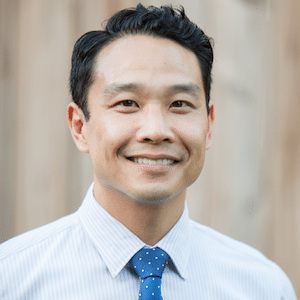
Before all this, Hu studied electrical engineering at the University of Texas at Austin and earned a doctorate at Baylor College of Medicine. His work used supercomputers to examine protein folding, the minute choreography by which a protein takes its shape. Colleagues at The Helper Bees now tease him about knowing Fortran, a venerable language with all the glamour of a filing cabinet. Hu joins in. He calls himself a recovering scientist.
Yet the scientist never quite recovered. He simply changed the scale of the model. After a caregiving experience in his own family, Hu left academic research and moved toward senior living and home services. He co-founded Georgetown Living in 2009, took part in Austin’s task force on aging, and helped operate a Medicare-accredited home-service business. Each venture gave him another view of the same stubborn gap: families wanted help at home, providers could offer it, and the systems between them made the transaction bewilderingly hard.
The model met the mop
The Helper Bees arrived in 2015 as Hu’s attempt to connect those pieces. Its customers are insurers and plans. Its work reaches the home through a credentialed network of providers offering caregiving, transportation, meals, housekeeping, pest control and modifications. The technology handles the quiet apparatus behind the visit: matching, verification, claims, payment and data. Software is present, but it is deliberately backstage.
The final mile, simplified
That choice fits Hu’s temperament. He is interested in the machinery, not the spectacle of it. In one conversation, he described the technology as “sneaky”: gathering useful information behind the scenes and returning it in a form people can use. The remark carries a physicist’s fondness for signals and an operator’s suspicion of anything that makes the customer do extra work.
“Capital isn’t a trophy - it’s a tool.”Char Hu on raising The Helper Bees’ Series C
By January 2025, the company said 43 major payers were using a network of more than 20,000 providers. It announced a $35 million Series C led by Centana Growth Partners, with existing investors joining the round. The money was aimed at expansion into Medicaid, broader service delivery and payment products. Hu framed the round in practical terms. Capital was leverage only when combined with the right team, timing and purpose.
The fundraising story has useful splinters. Hu says the lead investor in the company’s Series A declined four times before saying yes. Centana had passed on the Series B, then returned two years later to lead the Series C. Rejection did not close the relationship. It merely postponed the transaction. This is a less cinematic account of capital than the usual founder legend, and probably more instructive.
Friends who know where the fence is weak
The founding team predates the company by decades. Eric Corum, a co-founder and Hu’s brother-in-law, has known him since Hu was 12. Danny Lynch, the technical co-founder, met Hu in a boarding-school program when they were teenagers. Hu entered college at 16. Between the three of them lies a long private archive of bad hair, premature certainty and ideas that should have stayed on a napkin.
Hu sees that archive as an asset. His co-founders know his argument patterns and weak spots. They can separate a company disagreement from a family dinner. They have already watched one another make mistakes and return the next morning. When Hu offers a test for a co-founder, it is bracingly unsentimental: assume everything goes wrong. Is this still the person you want beside you?
The arrangement also reveals his cheerful pessimism. Entrepreneurs are expected to glow with conviction; Hu prefers to inspect the ways a plan may fail. It is not gloom so much as maintenance. Know where the fence is weak before the longhorn discovers it.
“The undercurrent is always I want to learn more, even the things I’m not great at.”Hu on the work he keeps choosing
That learner’s posture appears again in his management style. Hu tells experienced executives that they are expected to elevate him, to teach him what he does not know. He speaks candidly about growing into the CEO title after years as the person doing payroll, operations, finance, sales and fundraising. Once those functions belonged to capable leaders, he encountered the peculiar loss that comes with delegation: competence had made his old job disappear.
Two hundred people, no central switchboard
The difficult rehearsal came in 2020. The Helper Bees entered the year with roughly 20 to 23 employees. Within a few months it had about 200. Hu does not retrofit the surge with perfect strategy. The company hired bright, hard-working people who cared about the mission, often through the networks of employees already there. It then gave junior staff meaningful autonomy because decisions could no longer pass through one founder.
Mistakes were inevitable. Bottlenecks were optional. Leadership shifted from approving every choice to teaching principles that could travel without an executive attached. Hu has described culture as an active obligation, something every arrival is asked to help shape. A weekly update carries customer stories back to programmers and operations teams whose daily tasks can feel several steps removed from a front door.
Doctoral research at Baylor turns a fascination with complex systems into a working method.
Georgetown Living makes the work physical: buildings, meals, staffing and occasional livestock retrieval.
Hu, Corum and Lynch found The Helper Bees to connect home services with the organizations paying for them.
A rapid hiring wave forces decisions outward and turns autonomy from a preference into infrastructure.
A $35 million Series C funds the next push into public programs, payments and national service delivery.
Hu’s public work extends beyond the company. He received an SXSW Community Service Award in 2018 and was appointed to a Texas state advisory council in 2017. He has served with Austin organizations focused on older residents and families. More recently, his attention has returned to research. In 2026 he shared company studies examining how non-medical services relate to quality measures and promoted a survey of 1,480 older adults. The former scientist had found his way back to a principal-investigator role, though this time the laboratory was a service network.
The ordinary work of independence
There is a useful tension in Hu’s current argument. Individual stories create empathy, but a system cannot be designed from one story alone. The Helper Bees now has millions of service interactions from which to ask broader questions. Hu wants representative data without losing sight of the person waiting for a ride or the family trying to arrange a meal. Numbers should discipline the anecdote. They should not bleach it of meaning.
Away from work, the official biography becomes agreeably less strategic. Hu and his wife have three young children. He reserves spare hours for kayak fishing and what his company calls trashy science-fiction books. Both hobbies suit him: one requires patience with unseen movement beneath the surface; the other permits a complicated future to be solved before bedtime.
His stated horizon is wider than Austin but begins with the United States. The goal is to make aging at home workable at national scale, and perhaps eventually beyond it. That ambition depends on decidedly unromantic details: provider credentials, benefit rules, service quality, clean invoices and payments that arrive. A promise becomes useful only when someone can fulfill it.
This is where Hu’s two educations meet. The scientist looks for patterns across a vast number of observations. The operator checks whether the animal is back inside the fence. One protects the company from mistaking a memorable story for a general rule. The other protects it from mistaking a clean dashboard for a completed job. Hu’s work lives in the exchange between them, translating what happens at the door into a system and sending the system back out through the door. The company needs both habits. So does the problem.