In the first version of Chandni Chainani’s founder story, time was the product. Dropezy, the Jakarta grocery startup she built with Nitesh Chellaram, promised to bring milk, vegetables and household staples to the door in 20 minutes. The clock was the logo behind the logo. It turned convenience into a number anyone could understand.
Then Chainani did something more interesting than running faster. She changed the race.
At the end of 2022, profitability had become the question that would not politely leave the room. Chainani and her team went back to their data. Inside the daily orders, warehouse rhythms and supply relationships, they found an opportunity in protein. Dropezy’s consumer-facing quick-commerce operation had taught them how to buy, hold and move perishable goods. Indonesia’s poultry trade offered a place to use those lessons against a more stubborn problem.
In January 2023, Dropezy formally became Sekilo. The new company would serve food businesses rather than households, beginning with chicken and working across procurement, processing, cold storage and delivery. The glossy promise of minutes gave way to the practical grammar of cuts, kilograms, consistency and margin.
An education in the messy middle
Chainani’s route to the poultry business was less a sharp detour than a long apprenticeship in how commerce actually gets done. After studying management at the Singapore Institute of Management and earning an RMIT bachelor’s degree in business administration and management, with a major in business management and a minor in finance, she worked in finance and general operations in Indonesia.
The jobs that followed moved steadily closer to the transaction. At Zomato, she worked in sales and client success, where a restaurant’s appearance on a screen had to meet the less photogenic facts of acquiring and keeping a paying customer. At MatahariMall.com, she handled seller acquisition in fashion. At Zilingo, she moved through business development roles and eventually led sales for platform monetization.
These titles describe different industries, but the problems rhyme: persuade a seller, understand a buyer, make a marketplace useful, and find the revenue hiding between them. By the time she co-founded Dropezy in 2019, Chainani had spent years near the seams where digital demand meets offline supply.
The basement and the clock
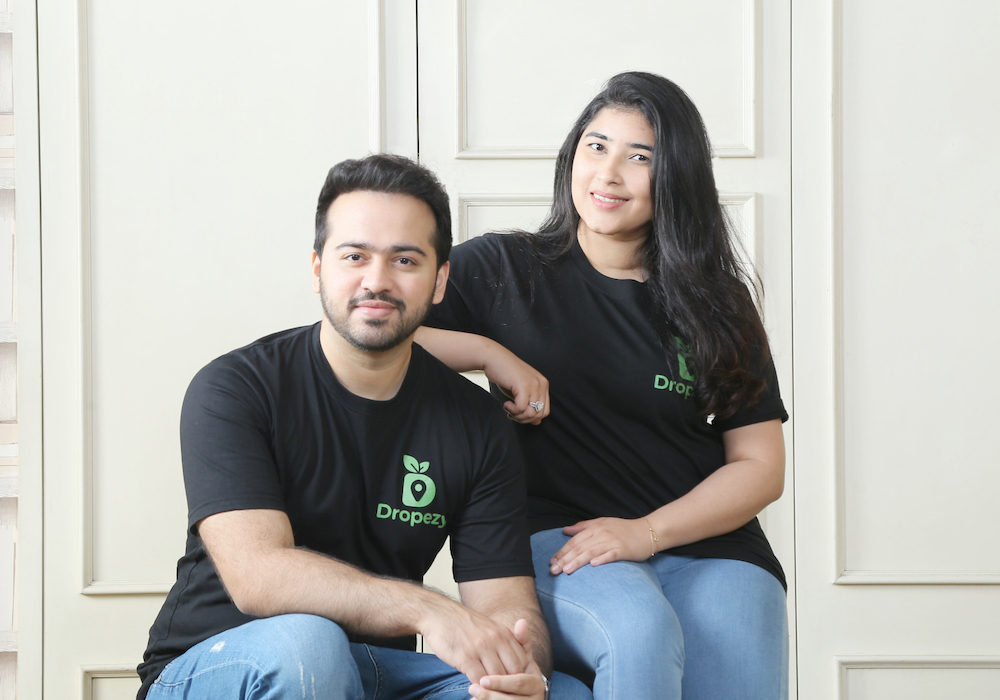
Dropezy began in a small room in the basement of a Central Jakarta apartment. Chainani and Chellaram packed and delivered the early orders themselves. This was customer research conducted with shopping bags: every missing item, awkward handoff and repeat purchase arrived without the softening effect of a dashboard.
The early proposition matched a local habit. Many Indonesian shoppers preferred buying small quantities of fresh food frequently rather than filling a refrigerator for a week. Dropezy offered grocery and household orders without a minimum, first around next-day delivery and later through a network of micro-fulfillment hubs designed to put stock close enough for a 20-minute trip.
The machinery grew. By September 2021, the company reported more than 5,000 active customers and 92 employees, including its own riders. A $2.5 million pre-Series A round led by Forge Ventures was intended to fund dark stores, technology and a larger assortment. Dropezy joined Y Combinator’s Winter 2022 batch. That year, Forbes named Chainani and Chellaram to its 30 Under 30 Asia list in Retail & Ecommerce.
Recognition is pleasant. It is also adhesive. Once the world knows your company for one promise, changing it can feel like arguing with your own biography.
“We officially pivoted to Sekilo in January 2023.”Chandni Chainani, translated from Indonesian
The spreadsheet stages an intervention
Chainani has described the decision as difficult and deliberate. When the company studied its numbers in late 2022, it saw substantial potential in protein. The team also saw that the capabilities it had built in operations and supply chain could travel. So it consolidated its effort instead of preserving the breadth of the original service.
The distinction matters. A pivot is often retold as a flash of inspiration, a cinematic turn in the founder’s chair. Sekilo’s was closer to an audit. Which part of the old operation created an advantage? Which customers had a costly problem? Where could control over inventory and logistics become more than an expensive promise?
The answer was downstream poultry. Restaurants, caterers, small food businesses, industrial buyers and other kitchens may depend on several vendors, exposing them to inconsistent quality, pricing and fulfillment. Their needs vary by cut, processing, quantity and timing. A missed delivery is not merely an annoyed app user; it can alter what a kitchen sells that day.
Sekilo’s answer is an asset-light operating layer that brings those steps into one system. The company says it uses data and automation across negotiation, pricing, inventory and demand planning. It offers halal-compliant supply, flexible order sizes and access to financing, beginning with poultry. In Chainani’s public description, the range stretches from 25-kilogram deliveries for small and medium businesses to upstream volumes as large as 10 tons.
Here the name Sekilo has a sly usefulness. “One kilo” sounds modest, almost domestic. But the business underneath it is interested in the full journey that makes any kilo dependable.
What the pivot kept
Dropezy and Sekilo look like different companies because their customers and storefronts are different. Operationally, the second grew from the first. Dark stores taught the team about inventory placement. Fresh groceries taught it about perishability. A committed delivery fleet taught it the cost of punctuality. Repeated small orders taught it that low quantities do not mean low expectations.
Even the shift from consumer to business buyer preserved an early instinct. In 2020, Chainani described Dropezy as a way for customers to order repeatedly in small quantities without fearing punitive delivery costs. Sekilo now frames small minimum orders as part of its value to food-service SMEs. The object changed from the household basket to poultry supply, but the respect for the smaller buyer remained.
This is what survives a useful pivot: not the branding, and not necessarily the product, but a set of earned reflexes. Chainani’s career had already taught her to acquire sellers, monetize a platform and manage client success. Dropezy added the physical education of warehouses and riders. Sekilo concentrates those lessons around a narrower buyer with an expensive recurring need.
The glamour of reliable chicken
Startup culture is fond of verbs that sparkle: disrupt, reinvent, accelerate. Supply chains prefer verbs with work boots: grade, chill, pack, deliver. Sekilo lives in the second vocabulary. Its challenge is to make several ordinary actions happen in the right order, at the right temperature, for a buyer whose own reputation depends on dinner arriving as promised.
That makes Chainani’s change of direction revealing. She had already built the more legible startup story: consumer app, fast delivery, dark stores, venture round, accelerator badge. The poultry trade is harder to explain at a party. It is also closer to an essential flow of Indonesian commerce.
Sekilo remains an active Y Combinator company based in Jakarta. Its current ambition is broader than distribution alone: an AI-powered halal protein supply chain in which procurement, processing, cold chain and delivery share one operating layer, and software improves decisions about price, demand and inventory.
The important word is not AI, however fashionable it may be. It is integration. Fragmentation forces a customer to become the coordinator of suppliers, processors and logistics. Sekilo wants the system to do that coordination instead.
The first company sold speed. The second sells fewer reasons for a kitchen to worry.
A founder who changed the unit
Chainani’s public career can be read as a sequence of units. A restaurant account at Zomato. A seller at MatahariMall. Platform revenue at Zilingo. A grocery basket at Dropezy. A kilogram of poultry at Sekilo. Each unit is small enough to count and large enough to expose the system around it.
Her story offers no tidy commandment that every founder should pivot, nor would such advice survive contact with an actual payroll. It offers something more useful: a picture of continuity inside change. The company could abandon its first market without discarding everything it had learned. Operations became an asset. Supply relationships became evidence. Customer behavior became direction.
The best pivots look obvious only after someone has absorbed the cost of making them. In January 2023, Chainani chose poultry over momentum’s theater. She moved from the loud competition to deliver the fastest basket toward the quieter work of making an essential supply dependable.
A stopwatch is exciting because everyone can see it run. A cold chain is valuable because, when it works, almost nobody notices. Chandni Chainani has built in both worlds. Her wager now is that invisibility, properly operated, can be the product.