The clue arrived before the job title. Chandar Pattabhiram was trained as a mechanical engineer, a field with tolerances, loads, and answers that ought to hold still. He could do the academic work. What he could not summon was devotion to it. He had acted in theater earlier in life and felt the tug of story: the pleasure of shaping attention, finding motive, and turning an idea into something another person could feel. Engineering gave him systems. Theater gave him stakes. Enterprise software marketing turned out to need both.
Pattabhiram describes career fit as the intersection of “passion and DNA.” His comic proof is music. He loves it, but his wife, he says, has rendered a less generous verdict on his natural equipment. Mechanical engineering presented the inverse problem: ability without the lasting appetite. After graduate study in management information systems at the University of Texas, he began in technology, moved through management consulting at Andersen Consulting, and eventually found the work that joined his analytical and theatrical halves.
The engineer finds his stage
Software marketing sounds, from a distance, like a department devoted to nicer nouns. In Pattabhiram’s version, it is the work of discovering why a complicated machine deserves a place in someone’s day. At Jamcracker and then Cast Iron Systems, the machine was cloud integration. The category was technical and young. The job was to help buyers see past an appliance and toward a platform that could connect a growing thicket of applications.
He spent a decade at Cast Iron, rising through product and channel marketing roles and remaining after IBM acquired the company in 2010. The experience became a recurring reference point in his later writing. Acquisitions, incentives, channel choices, and positioning were not abstract lessons. They were decisions with consequences for sellers, partners, customers, and the shape of the category itself.
A career built in connected systems
process and strategy
cloud integration
engagement
business spend
orchestration and AI
There followed Badgeville, where he led worldwide marketing, and Marketo, where he built product, solution, and corporate marketing teams before becoming CMO in 2016. The positioning challenge was larger than a slogan. Marketing automation was becoming crowded and functional. Marketo wanted to be understood as an enterprise engagement platform, a place where a company could manage a relationship rather than merely schedule an email. Pattabhiram’s instinct was to climb from feature to function to feeling.
“Marketing begins with storytelling.”Chandar Pattabhiram
A farewell written in the margins
When he left Marketo in June 2017, his team did not give him the standard engraved object destined for the back of a cupboard. Each person chose a favorite book and wrote a personal note inside. One colleague had visited his new home, noticed empty bookshelves, and converted that observation into a collective gift. The shelves filled with titles ranging from Phil Knight’s Shoe Dog to Into Thin Air and Churchill’s autobiography. More important, every spine carried a relationship.
It is the sort of anecdote executives normally try to manufacture in an off-site exercise. This one happened because somebody paid attention. The gift also matches Pattabhiram’s stated formula for teams: empowerment, recognition, and fun. Culture, in his telling, is not office decoration. It is strategic evidence. People reveal the actual organization through what they notice, what they reward, and how willingly they lend one another their judgment.
That summer became a deliberate pause. He read, wrote about failure and teams, advised leaders at Gainsight and LendingUSA, and tried to name the company he wanted next. The answer was a cloud-application “speedboat,” not a vast established liner. Then he built an equation, cheekily borrowed from Einstein.
Excellent Company = Mandatory Category × Competitive Advantage × Culture
Coupa passed his test. Companies had to manage spending; the cloud platform had a defensible approach; and the executives he met struck him as authentic, egoless, strategic, and oriented toward results. He joined as CMO in August 2017 and stayed until October 2023. During that run, Coupa’s marketing expanded beyond demand generation into a customer-centered category story about business spend management.
Let the customer carry the brand
A useful line from the Coupa years is also especially concise: “You can only showcase your brand by showcasing your community.” It reverses the usual corporate arrangement by placing the customer’s difficult work at the center and giving the company a supporting role. Advocacy, in this model, feeds awareness and acquisition, turning a line into a flywheel.
His approach could also be unapologetically mainstream. Coupa put its name around baseball and the World Series, translating an enterprise spending platform into the language of value plays. For a B2B marketer, sport is a dangerous costume if the connection is only borrowed excitement. Pattabhiram tied the stage back to the category: a good play produces value, and value was the promise Coupa wanted buyers to remember.
The same sports appetite surfaces in his management ideas. After hearing Malcolm Gladwell distinguish strong-link and weak-link games, Pattabhiram carried the thought into team building. Basketball can bend around a few exceptional players. Football, with fewer scoring moments, often punishes the weakest mistake. A durable company cannot merely collect stars. It must raise the whole side. This is less glamorous than talent mythology and much more useful on a Monday morning.
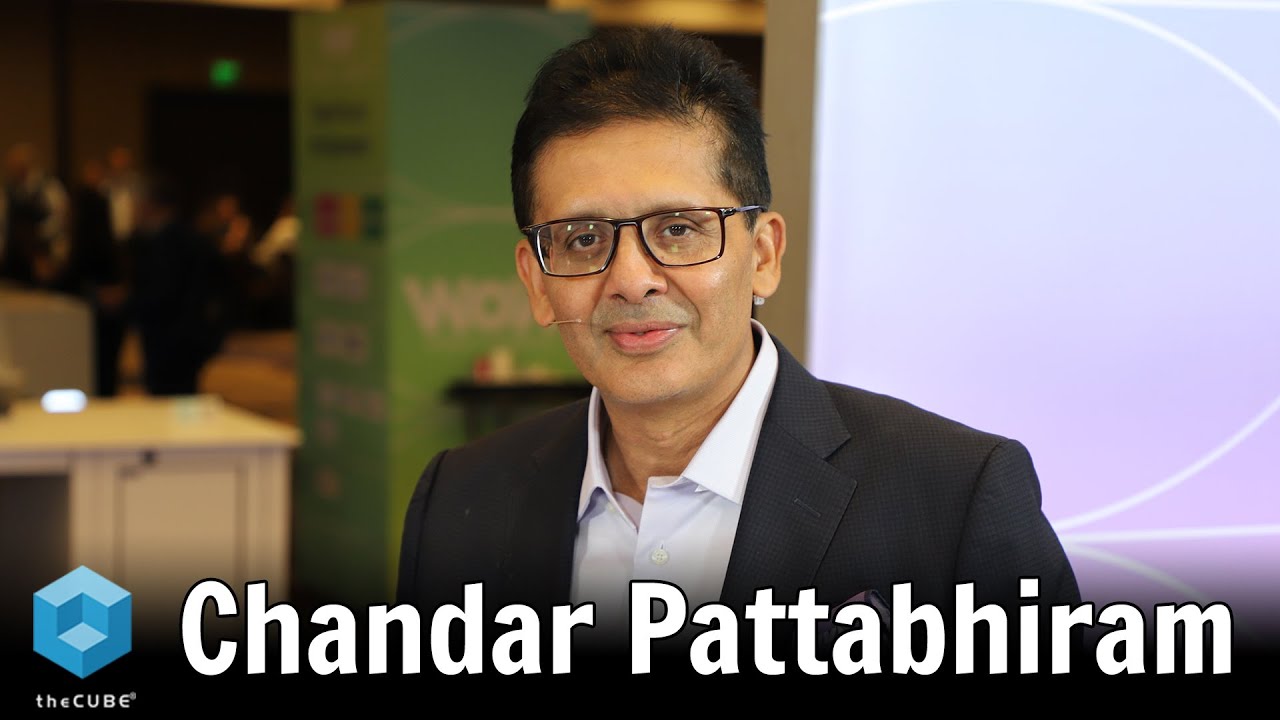
From the engine room to the alignment room
Board service changed the altitude of the questions. Pattabhiram joined Donnelley Financial Solutions as an independent director in 2022. He currently serves on its Corporate Responsibility and Governance Committee, where his experience in software, transformation, strategy, and technology sits inside a broader duty to the enterprise. His shorthand for the lesson is crisp: oversight is not execution.
That distinction sharpened his view of the CMO. He breaks the initials into three jobs. The C is chief: create leaders, absorb ambiguity, and produce clarity. The M is marketing: retain command of a domain remade by technology. The O is orchestrator: make product marketing, demand, brand, sales, partnerships, and operations behave like one go-to-market system. Plenty of CMOs master the engine room, where campaigns and clicks are visible. The boardroom wants the alignment room, where pipeline, win rate, deal size, and company strategy meet.
In May 2024, Workato gave that expanding idea a title: Chief Go-to-Market Officer. Pattabhiram’s remit reached across marketing, partnerships, field readiness, strategy, and revenue operations. The organizing purpose was blunt: set sales up to win more, win faster, and win bigger. It was also the culmination of a career spent around integration. Once he had connected applications. Now he was connecting functions.
“Bring philosophies, not playbooks.”Advice for entering a new company
The line is an argument for memory without nostalgia. A playbook smuggles old conditions into a new company. A philosophy travels lighter. Customer advocacy can travel. Curiosity can travel. A willingness to unlearn can travel. Last year’s sequence of campaigns should probably remain at last year’s company, where at least the ghosts know the meeting schedule.
The two-layer cake, served without the AI theater
At Workato, Pattabhiram entered another noisy category at the moment it became noisier. Every software company had agents. Every demonstration looked effortless. His response was to ask what happened after the demo. Intelligence needs access to systems, process context, permissions, and governance. Orchestration without intelligence can move work but cannot make many judgments. He drew the relationship as a two-layer cake.
The metaphor is homely enough to survive the jargon. Agents sitting at the edge of a business can answer questions. Agents connected to core processes can affect an outcome. But connection without control creates another problem: agent sprawl, a multiplying cast of digital workers that may become worse than the application sprawl companies already struggle to govern. Context, trust, and predictable skills matter because enterprise work is full of consequences.
In August 2026, after what he called an action-packed 26 months, Pattabhiram moved from Workato’s operating role into an active advisory one. His note lingered on teams, relationships, and the people who had challenged and taught him. The hands-on operator remains visible in the language. So does the bookshelf.
What remains when the title changes
There is a temptation to read a career like Pattabhiram’s as a parade of categories: integration, gamification, marketing automation, spend management, enterprise orchestration, agentic AI. A cleaner reading is available. He keeps arriving where a technical product needs a human account of itself. Then he asks the surrounding organization to live up to the account.
His compact phrases can sound like a marketer’s cabinet of labels: heart to mind, harm to harmony, engine room and alignment room, onlyness, speedboats, flywheels, cakes. Their usefulness is not literary permanence. It is portability. A team can carry a phrase into a meeting and use it to decide. That is what a good operating story does. It compresses without making the choice smaller.
The engineering never disappeared. It became the insistence that the parts connect. Theater never disappeared either. It became the instinct that a system matters only when people can locate themselves inside it. Three decades later, those two educations continue to share the stage. The title may shift from CMO to GTM officer to advisor or director. The work beneath it is remarkably steady: find the stakes, align the players, and make the machine mean something.