The first Canadian Chaiiwala of London had twelve seats, a name that made some customers curious and a drink that many others already knew by heart. It opened in Scarborough in 2021. The line outside supplied the business plan: take the sweet, milky, properly spiced chai of South Asian kitchens and roadside stalls, put it in a crisp modern café, and give the people who missed it somewhere to meet.
That sounds like a beverage story. It is really a real-estate and belonging story with a kettle at the centre. Canada has no shortage of coffee counters. It has fewer polished, late-night rooms designed for families, students, halal diners and friends who do not want a bar. Chaiiwala calls that audience the non-alcohol social crowd. Its Canadian pitch is blunt: Starbucks built coffee culture; it wants to build the equivalent around chai.
The product is a pause
The modern company began in Leicester in 2015, when co-founders Mohamed Sohail Alimohamed, Muhummed Ibrahim and Mustafa Ismail turned a converted bin store on Evington Road into a tiny tea shop. Ibrahim’s family history reaches back to a forefather selling chai in New Delhi in the 1920s. That lineage is useful, but the sharper founder observation was local: Leicester had plenty of people who loved proper chai and nowhere contemporary to buy it.
Their first promise was narrow. Chaiiwala’s karak uses a seven-spice blend, whole milk and slow brewing rather than a squirt of flavoured syrup. The company says stores pre-brew in small batches; one founder has described a proper brew taking about 40 minutes. A customer order, however, can arrive in five to ten. The trick is preserving the slow part before the customer asks for it.
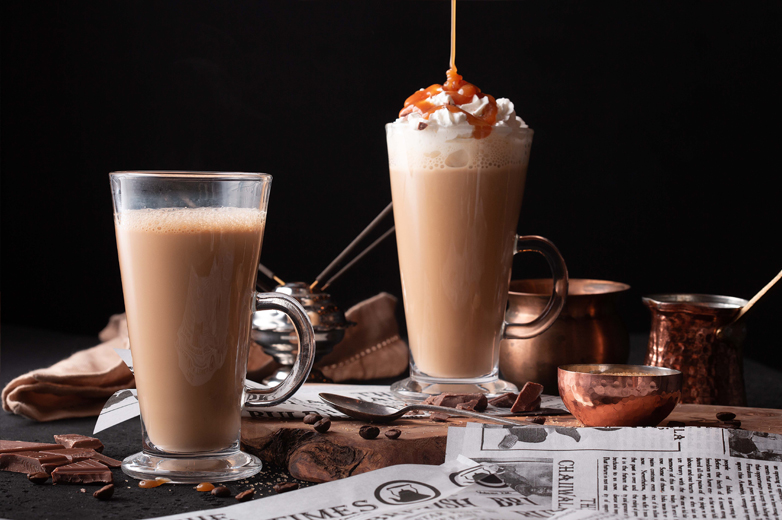
Food arrived because customers asked for something to eat with the tea. The menu now runs from desi breakfast and omelette wraps through samosa chaat, butter chicken rolls, Bombay toasties, biryani, falooda and gulab jamun cheesecake. It is halal, rich in vegetarian options and broad enough to sell from breakfast into the late evening. Chai is the frequency engine; street food raises the ticket and fills the day.
The queue changed the plan
The founders did not begin with a hundred-store diagram. People around them were sceptical that a dedicated chai counter could work at all. Then the small Leicester shop filled, customers requested food, and would-be operators began asking to bring the idea to London, Birmingham and Manchester. Demand arrived in a useful order: first for the cup, then for the menu, then for the business model.
That sequence changed the founders’ minds about franchising. Instead of immediately selling territories, they spent about six months researching the model. Their first franchise partner already operated roughly 60 Costa Coffee shops and was looking for growth beyond a saturated coffee category. Chaiiwala’s pitch was not that cafés were new. It was that an experienced operator could use familiar café machinery to serve a category the incumbents had mostly ignored. Franchising began in 2017, after the product and the inbound interest had supplied evidence.
The Chaiiwala machine
Canada was a demographic bet
Surrey, British Columbia business partners Shiraj Kothiwala and Ajmal Gundhra secured the Canadian rights. They did not begin by trying to make every Canadian a chai scholar. They opened in communities already fluent in the product, where the smell of cardamom could do more work than a national ad campaign. Scarborough came first, then Abbotsford. By September 2025 the system reported 22 cafés across four provinces; its company profile now says more than 25 across Ontario, British Columbia, Alberta and Quebec.
The format sits between a coffee chain, a dessert café and a quick-service restaurant. Against Tim Hortons or Starbucks, Chaiiwala offers cultural specificity, a savoury evening menu and a room made for groups. Against a neighbourhood chai shop, it offers recognizable design, mobile ordering, delivery and consistency. Against bubble tea, it sells warmth, breakfast and nostalgia. None of those is an impregnable moat. Together they create a position that is difficult to copy without looking like a copy.
“We wanted to create a space that feels like home - a place where people can gather, connect, and enjoy authentic chai and street food.”Shiraj Kothiwala, co-founder of Chaiiwala Canada
What it cost, and what failed first
A current Canadian franchise opportunity lists C$750,000 as the full investment. Treat that as a public marker, not a universal quote. Chaiiwala’s own franchise page says opening cost varies with location, configuration and store size; it discusses fees only with approved candidates. The UK program currently gives a separate typical range of £180,000 to £300,000. Different market, different property, different bill.
Full investment listed by a Canadian franchise marketplace. The operator says actual site costs vary and does not publish a fixed Canadian total.
The most revealing Canadian case is not a smooth grand opening. Franchisee Shabar Jivraj started construction on his Dixie and Eglinton store in Mississauga during the pandemic. Government rules halted work more than once. Labour and material costs rose. Rent remained perfectly punctual while the opening date did not. The store finally opened in June 2022.
What changed their approach was not a revelation in a boardroom. The restaurant industry was still damaged, so Jivraj pushed the business online, used available government relief and kept working toward the opening. Then a road sign did something the marketing spreadsheet had not predicted. Drivers waiting at a larger competitor across the street saw it; some abandoned that line to try Chaiiwala. The useful detail is almost comic: after all the expense of a new franchise, a board beside the road created the breakthrough.
The first thing to fail was the schedule. The first thing to work unexpectedly was a sign.The Mississauga lesson
The system behind the steam
Chaiiwala expands through owner-operators and franchise partners. The central system helps with location, design, fit-out, training, supply chain, marketing and sales planning. Canadian leaders bring local construction and permitting knowledge. Regular audits, reportedly every six to eight weeks, defend consistency. That matters when the brand claim is that a Canadian karak should taste like the cup that built the following in Leicester.
Globally, the model has stretched into airports, drive-throughs, universities and shopping centres. London Luton became its first airport partner in 2024; a 1,100-square-foot kiosk followed at Birmingham Airport with EG On The Move. In 2026 the company opened its first 24-hour drive-through, explicitly treating overnight sales as a test. The product may evoke an old street stall, but the growth playbook is modern QSR: adaptable footprints, centralized controls and more occasions per day.
Reported global system sales reached £89.4 million in 2024, up 35 percent. That is sales across the network, not Chaiiwala Ltd’s disclosed revenue, and it should be read accordingly. The same founder interview said customers visit as often as four times a week. Frequency is the important number. A franchise cannot live on a customer’s annual nostalgia trip.
What another founder can copy
- Start with a ritual, not a menu. Chai made the first shop legible in one sip.
- Protect the part customers notice. Slow-brew the tea; standardize the work around it.
- Open where fluency already exists. Cultural density lowers the education cost.
- Let demand pull the adjacencies. Customers asking for food created the all-day offer.
- Sell a place as well as a product. Seating, hours and hospitality turn a drink into a habit.
The tempting lesson is “put heritage in a nice room.” The better lesson is operational. Chaiiwala found one high-frequency product with emotional weight, made it reliably fast, surrounded it with foods that share customers and dayparts, then wrote a system other operators could run. The visual identity and spelling - two i’s in “chaii,” always - make the whole thing memorable.
Where the bet can go cold
If too few nearby customers already understand karak chai, education and trial become much more expensive.
A cramped site can sell cups but undercut the larger promise of an inviting third place.
High rent, permits and construction delays can consume the advantage before the first batch brews.
Rapid franchising weakens the brand if tea, food and hospitality drift between stores.
There is also a ceiling question. Chaiiwala has proved that diaspora demand can support a sizable chain. Its 100-store Canadian goal asks whether the format can travel beyond the most obvious neighbourhoods without sanding away what made it distinct. Seasonal coolers, Dirty Chaii and local menus help, but adaptation has to widen the door without turning the shop into another generic café.
For now, the company occupies an unusually clear patch of the market: brewed chai rather than syrup, a meal rather than a muffin, and a late table without a liquor license. The kettle is old technology. The opportunity around it is not.