Twenty is a polite little number. It fits on a dinner invitation; it scarcely fills a laboratory plate. In antibody discovery, where scientists have traditionally searched vast libraries for the rare molecule that binds a target, twenty sounds faintly comic. Yet Chai Discovery built its first convincing public demonstration around exactly that constraint: for each of 52 target proteins, its Chai-2 model proposed no more than 20 antibodies or nanobodies to test. Half the targets yielded at least one binder. Across all designs, the company reported a 16% experimental binding hit rate.
- Chai builds AI models that predict molecular structures and design new protein binders, especially antibodies.
- Its customers are drug researchers. Named partners include Lilly, Pfizer, Novartis, argenx and Bristol Myers Squibb.
- The free Chai-1 model predicts structure; controlled-access Chai-2 and Chai-3 move toward deliberate molecular design.
- The model proposes candidates. A laboratory still has to make them, test them and decide whether any is worth developing.
This is the sort of result that can become misleading in a hurry. A binder is not a medicine. It has to be stable, manufacturable, selective and safe; then it must survive the long indignities of preclinical and clinical development. But the scale of that first experiment matters. Chai was arguing that a scientist could begin with a specification instead of a fishing expedition, and arrive at a useful first batch small enough to fit in a single 24-well plate.
A map is not a molecule
The four founders - Joshua Meier, Jack Dent, Matthew McPartlon and Jacques Boitreaud - did not start by selling a miracle antibody. They began with a map. Chai-1, released in September 2024, predicts the three-dimensional arrangements of proteins and other biomolecules. The company made a web version free even for commercial use, and released model weights and code under an Apache 2.0 license. Researchers could put it to work without first signing a pharmaceutical partnership.
Structure prediction is valuable, but it answers a question about something that already exists. Drug discovery asks for an object that does not yet exist: a molecule that meets a chosen target at a chosen spot and behaves well when it gets there. Meier has described the gap plainly: earlier models could help scientists understand or rank molecules, but could not reliably create a new one with specified properties. That was the reason a protein-AI company first discussed years earlier did not launch until 2024. The founders thought the design tools had finally caught up with the ambition.
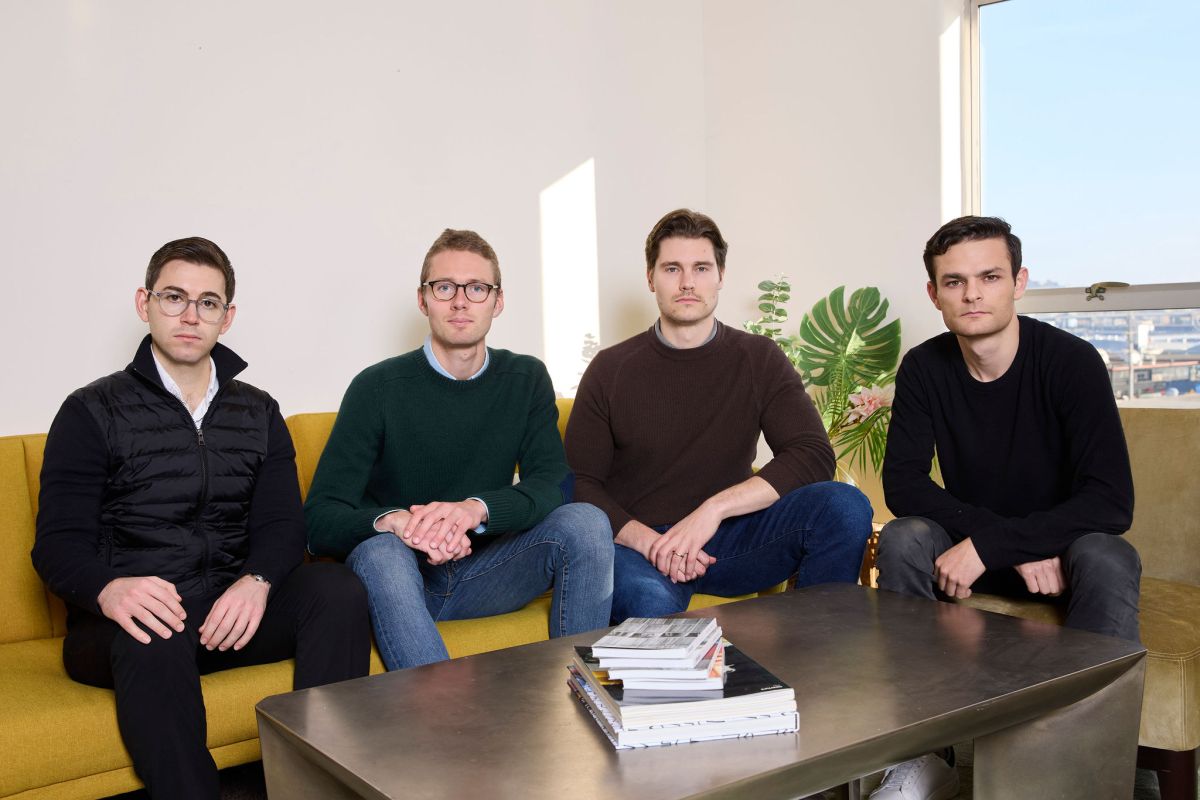
Their previous stops explain the company’s peculiar blend. Meier worked at OpenAI and helped develop a protein language model at Meta. He and McPartlon later worked on antibody design at Absci. Dent built machine-learning systems at Stripe. Boitreaud brought experience in computational drug discovery. Chai calls itself an applied research lab, but its customers expect a tool that works in ordinary research workflows. A clever paper is only the opening argument.
The laboratory gets a vote
The first Chai-2 result was a direct answer to an old frustration. Conventional antibody discovery may rely on animal immunization or screening enormous libraries. Earlier computational design often produced too few successful candidates to escape another large screen. Chai’s proposed change was to tell the model what target and, if useful, which epitope - the patch on that target where the antibody should attach - then test a modest set of suggestions in the lab.
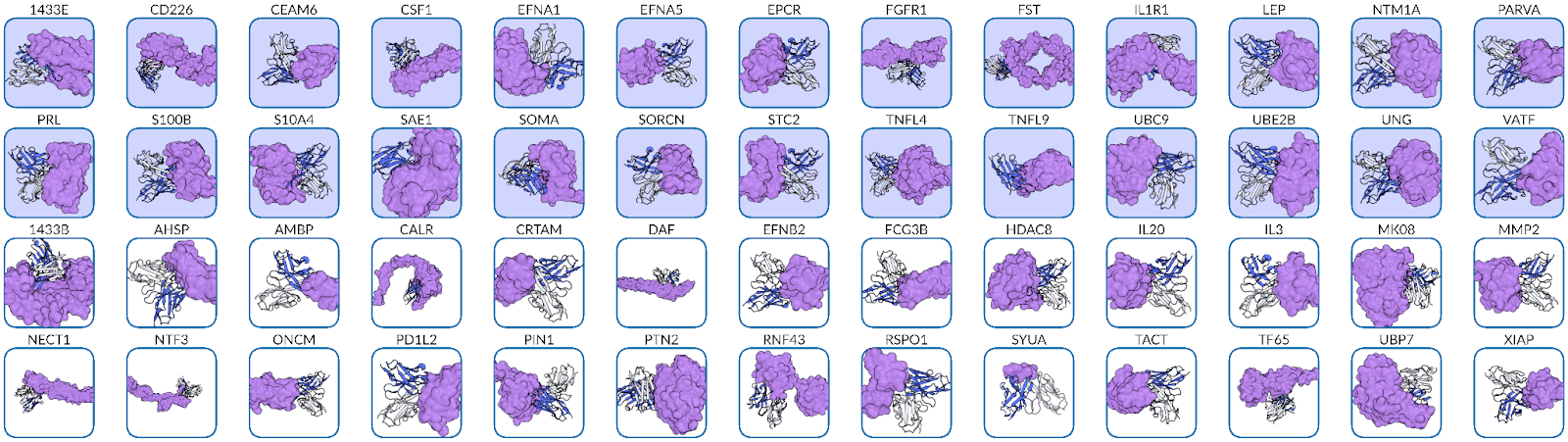
The company’s published figures say the approach found a binder for 50% of the 52 targets tested, with a 16% binding rate across the designs. For miniprotein binders, it reported a 68% laboratory hit rate. Those numbers are tied to Chai’s specific test panels and assays; they are not a general promise to every laboratory with a difficult target. They do, however, change the economics of the first experiment. If a team can begin with dozens of candidates rather than a huge library, it can spend more attention measuring what each candidate actually does.
That observation is more sober than the phrase “AI drug discovery” tends to invite. Chai does not remove the lab from the story. It makes a bet about where the lab’s time should go: away from blind search and toward verification. Scientists still have to express a molecule, check that it binds the intended target rather than a convenient bystander, and discover whether it survives the physical demands of being a drug candidate.
Binding was the easy headline
Chai’s November 2025 research addressed the next objection. Many designed binders are simplified fragments; therapeutic antibodies commonly use full-length monoclonal formats. In a study of 88 designed IgGs spanning 28 antigens, Chai reported that 86% had zero or one flagged issue on a set of developability measures. It used cryo-electron microscopy on five antibody-target complexes and said the observed binding positions matched the model’s intended epitopes. It also reported binders for each of six tested GPCRs, a class of membrane receptors that can be awkward to handle with conventional screening.
That is a more demanding claim than “it sticks.” A molecule that clumps, expresses poorly or binds the wrong thing gives researchers a new problem, not a new therapy. Chai’s product page therefore reads less like a chatbot prompt box and more like an engineer’s order form. Scientists can specify an antibody format, a target sequence or structure, a desired epitope, species cross-reactivity, and even chemical details such as glycans. The output remains a hypothesis until experiments bear it out, but the hypothesis arrives with more of the desired constraints already attached.
Choose a target
Supply a sequence or structure and the desired binding site.
Set constraints
Ask for format, specificity and other molecular properties.
Test a small batch
Produce the proposed molecules and measure real binding.
Check drug-like behavior
Examine stability, expression, selectivity and function.
Selling the drafting table
Chai’s commercial choice is as important as its scientific one. It does not pitch itself as a company with a private pipeline of drug candidates to take all the way through trials. It sells access to the design suite and works with organizations that already know the diseases, targets and regulatory gauntlet. Dent has said a single drug can cost hundreds of millions of dollars to move through trials; Chai would rather put capital into its models and products. He likens its collaborations more to large software partnerships than to customary biotech deals.
The distinction is visible in the names. Eli Lilly announced a biologics discovery collaboration, then a separate arrangement bringing Chai’s miniprotein design suite to selected biotechs through TuneLab. Pfizer licensed the platform, including Chai-3, alongside custom software. Novartis, argenx and Bristol Myers Squibb announced antibody discovery collaborations. A researcher can use Chai-1 freely; commercial Chai-2 access goes through the company.
The company’s own financing is less mysterious. Its announced rounds add to about $630 million: roughly $30 million in seed funding, $70 million in Series A, $130 million in Series B and $400 million in a July 2026 Series C at a stated $3.8 billion valuation. That money is not the cost of one antibody design. Chai says the latest round will fund compute, data, research and product development. In a business where the answer must be tested in atoms and assays, the bill arrives from more places than a cloud provider.
The copyable part
Most readers will not train a molecular foundation model. The useful lesson is smaller and more portable. Start with a precise brief. Generate a batch that is cheap enough to inspect properly. Measure the outcome in the real world, including the properties that might ruin an apparently good result. Then make the next batch better. Chai’s 24-well argument works because its success criterion was observable binding, followed by increasingly demanding tests of antibody quality. It would work less neatly where targets lack usable structural information, where manufacturing dominates the problem, or where early binding tells little about clinical benefit.
The company’s name, Meier says, is a contraction of chemistry and AI; the team also likes the tea. It is a pleasingly modest pun for an expensive technical project. A model may sketch the key, but biology still owns the lock. Chai’s wager is that a better sketch lets scientists try fewer keys before one turns.