A freight shipment can be visible and still be lost in plain sight. One system says Saturday. Another says Sunday. A rail delay appears in one portal, the truck plan lives in another, and the person expected to make the decision is doing clerical diplomacy between two databases. The screens glow. The shipment waits. Chad Raube, President and CEO of IntelliTrans, has a name for the deeper error: confusing information with action.
“Visibility without the ability to act and execute really isn’t that valuable,” he said in 2026. It is the sort of sentence that appears obvious only after someone has bothered to say it. Freight technology has spent years learning to show where things are. Raube is interested in the more awkward sequel: whether the people watching can do anything useful before the opportunity passes.
That question fits a career that has never stayed politely inside one industry. Raube has worked in cable broadband, venture capital, financial-services software and transportation management. His academic route was just as broad: international relations at Carleton College, environmental technology at Imperial College London, then an MBA at Harvard Business School. The sequence sounds eclectic. The operating habit underneath it is remarkably consistent. He enters a system with settled assumptions, learns the machinery, and then asks whether the machinery has mistaken longevity for logic.
The career is a set of windows
At Virgin Media, Raube launched the consumer internet business from the ground up. The company credits that unit with reaching 70 percent market share and growing from no revenue to more than $400 million in four years. Those are emphatic numbers, but the lesson he carried forward was less about cable than instrumentation. A broadband company knew infrastructure, acquisition costs and churn. A technology company treated every customer interaction as a signal capable of changing the product.
Then he crossed to the other side of the table. In 2008, Raube became an original partner at London-based Dawn Capital, working with SaaS companies and joining portfolio boards. Venture investing sharpened a particular posture: an investor cannot afford to accept an industry simply because insiders agree on its rules. The outside view is the job. It asks whether a company is creating durable value or applying exquisite polish to a faulty architecture.
Operating, however, supplies the useful correction to investor cleverness. Someone must still make Monday morning work. In 2013, Raube moved to Wisconsin-based Info-Pro Lender Services, a provider of software-enabled tax, escrow and flood services to banks and credit unions. Over roughly a decade as President and CEO, he helped turn a regional business into a national challenger. The company was ultimately acquired by LERETA. Raube also led Guaranty Closing and Title. The pattern he later described was familiar: experts knew the compliance workflow intimately; the outsider asked whether software could remove part of that workflow instead of merely accelerating it.
A succession, not a bonfire
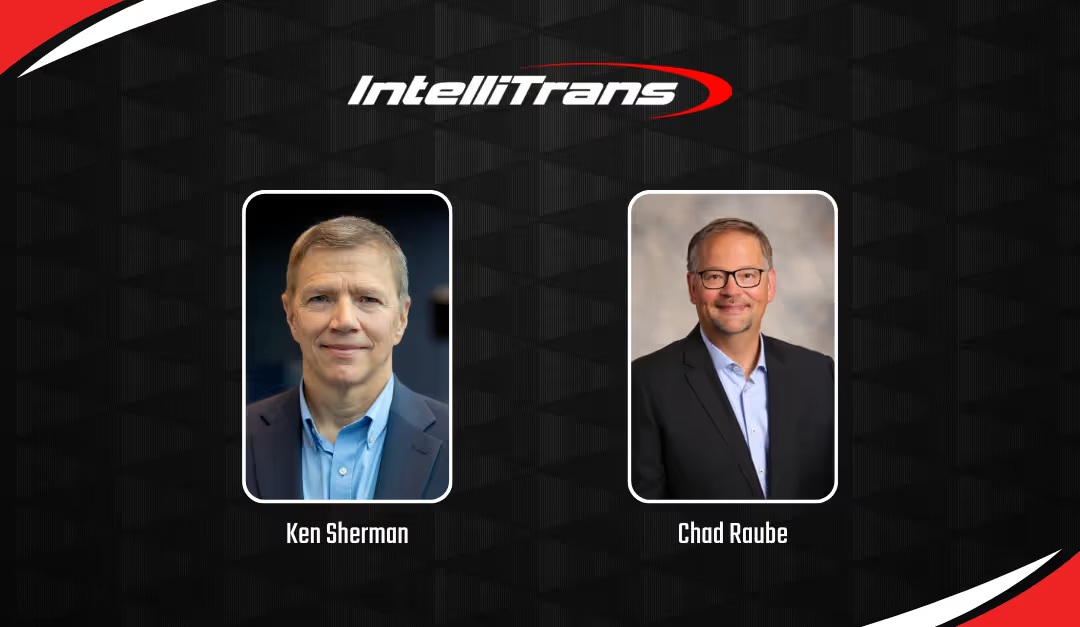
Raube arrived at IntelliTrans in August 2023, succeeding the retiring Ken Sherman. His language at the time was tellingly evolutionary. He thanked Sherman, praised the foundation already in place and promised collaboration. There was no theatrical denunciation of the past. Adults inheriting useful companies rarely need a bonfire; they need a better map.
The map began with customers. During 2024, IntelliTrans conducted surveys and user focus groups, made more than 500 product enhancements, expanded its Conway operations footprint and added senior technology, product and commercial leaders. In 2025, it opened a new headquarters in the Atlanta logistics hub. It added shipment-level carbon tracking and introduced a new identity meant to mark the shift from a company known for rail expertise to one building across rail, truck and other modes.
The brand work was the visible part. The more consequential work sat beneath it: common data, connected modes and operational workflows. In February 2026, IntelliTrans launched a self-service API developer portal designed to make partner connections faster and more reliable. The portal is not glamorous in the manner of a robot doing a backflip. It solves the older and more profitable problem of systems refusing to understand one another.
From sight to response
Rail · Carrier portals
Align identifiers
Act once
A dashboard reports. An operating system connects the report to a decision while the decision still matters.
Five systems, several truths
Raube says a typical shipper may rely on five to ten core platforms: transportation and warehouse systems, carrier portals, rail tools, ocean platforms and financial software. Each may hold a slightly different account of the same journey. When disruption comes, people who should be managing exceptions become amateur historians, reconstructing which timestamp deserves belief.
The delay is not irrational. If the first warning has been wrong before, an operator waits for confirmation. Yet caution consumes the very window in which a cheaper route, a truck substitution or a customer call might have changed the outcome. Two days spent reconciling records can turn resilience into escalation. Real-time data is not especially real if nobody trusts it in time.
This is why Raube’s enthusiasm for artificial intelligence arrives with an asterisk the size of a railcar. “If the data’s not good, the AI on top of this is going to lead to bad decisions,” he has said. Faster reasoning over disputed facts merely industrializes the dispute. His prerequisites are less fashionable and more useful: shared identifiers, API connections, validated events and outputs that can be audited. In freight, a confident wrong answer may carry inventory, money and a missed production slot with it.
The visiting investor test
In September 2026, Raube gave his method a name: perspective arbitrage. It draws on Daniel Kahneman’s distinction between the inside view, immersed in a problem’s particulars, and the outside view, attentive to patterns and base rates. Raube also recalls hearing Clayton Christensen lecture at Harvard Business School about incumbents trapped by incentives and resource allocation. One framework describes the cognitive pull. The other describes what happens when organizations obey it.
Raube’s contribution is practical. Domain expertise is not the villain. Freight depends on people who understand Class I railroads, dwell times, seasonal pressure, equipment and customer commitments. The mistake is allowing mastery of the present system to settle the question of whether that system should retain its present shape. Perspective arbitrage means holding both views at once, then knowing which one the moment requires.
Applied to bulk freight, the exercise changes the questions. Visibility has historically meant discovering an exception: a car on the wrong track, a shipment late, detention accumulating. A technology company might instead ask whether location data should help commit inventory, sequence production or negotiate with a customer before an exception exists. Trucking has treated capacity as procurement; an outsider might see orchestration across live availability, performance and demand. Rail’s physical infrastructure changes slowly. The information layer above it does not have to.
There is a useful modesty in this approach. Raube is not proposing that a visiting executive understand rail better than a career rail operator by lunchtime. He is proposing that the visitor may notice the question the operator no longer hears. The operator, in turn, knows which elegant theories survive contact with a yard at 2 a.m. Put both perspectives at the same table and the conversation improves.
Leadership after the dashboard
Raube describes leadership as rewarding when practiced with integrity and purpose, and says he measures success through the growth of people and organizations as well as financial performance. That formulation helps explain why his technology argument keeps returning to human judgment. The promised endpoint is not a supply chain without operators. It is an operation where experts spend less time reconciling screens and more time deciding what to do.
He has been making versions of this case publicly for years. A 2017 Milwaukee podcast conversation centered on entrepreneurship, strong leadership and the region he calls home. He has appeared on BBC and Sky News, co-authored business cases published by Harvard University Press and, more recently, written directly for the freight trade. The vocabulary has changed with the industry. The aspiration has not: build systems that let people see the consequential choice sooner.
At IntelliTrans, that means carrying a respected rail legacy into a multimodal world without pretending the legacy is baggage. It means connecting truck and rail data before a delayed handoff becomes a two-day investigation. It means treating AI as a demanding customer of good information, not as a ceremonial layer sprinkled over old inconsistencies. And it means asking, with enough frequency to be mildly irritating, whether today’s workflow is a law of nature or simply yesterday’s compromise.
The freight still has to move. Steel wheels still meet steel rails; weather remains unimpressed by strategy decks. Raube’s outside view does not abolish those facts. It distinguishes the fixed constraint from the inherited habit. That distinction is small enough to fit inside a question and large enough to redirect a company.