Chad Anderson had spent years dealing with a very earthbound asset: real estate. At JPMorgan Chase, he managed a $50 billion portfolio through the Great Recession. Buildings had addresses, loans had terms, and the financial crisis had made the consequences of a bad assumption painfully concrete. By 2012, he wanted a change. The next market to catch his attention would be rather harder to visit.
He went to Oxford for an MBA, where professor Marc Ventresca taught him about the formation of new markets. That year, SpaceX delivered cargo to the International Space Station and returned its spacecraft to Earth. Anderson saw a commercial opening worth investigating. He began collecting information about investment: who was putting money into space companies, where it went, and whether the activity added up to a career.
“But I was looking to do something more meaningful.”
Chad Anderson, on leaving his finance career
Today he runs Space Capital, a New York venture firm reporting more than $1 billion in assets under management across four institutional funds. The intervening story includes British evenings, an aerospace partner, a reluctantly accepted book commission and a swim around a Scottish island. Anderson has made exploration a fairly literal part of his working life.
Britain by day, America by evening
Oxford supplied a way of thinking. Britain supplied a place to put it to work. After business school, Anderson helped develop the country’s space sector at Satellite Applications Catapult, working on the practical business of helping an emerging industry grow. He was also learning from companies to deepen his understanding of operations and technology.
The fund took shape around that job. He worked on it in the evenings, catching the American business day from the other side of the Atlantic. In 2015, he moved to New York and launched an investment vehicle assembled one deal at a time. The calendar matters: noticing a market in 2012 and having enough activity to pursue it full time in 2015 were separate events.
Tom Ingersoll subsequently became his partner. Ingersoll had built aerospace businesses and led Skybox Imaging, acquired by Google for $500 million. Anderson brought the finance background; Ingersoll brought experience making the machines and businesses work. Their podcast conversations return to technical execution and commercial discipline. It is easy to admire an ambitious spacecraft. Someone still has to ask whether the company can deliver it.
His formal education had already crossed disciplines: a BBA at Seattle University covered finance, economics and Chinese, followed by the Oxford MBA focused on entrepreneurship and innovation. His earlier work included roles at UBS and Amazon. The move into space added a technically demanding industry to that business background. Finding partners who understood the engineering became part of the work, alongside finding companies that could attract investment.
A signal needs a customer
Anderson’s investment argument becomes clearer when the rocket leaves the picture for a moment. Consider GPS. A capability developed for government use became accessible through commercial equipment, then supported businesses whose customers rarely thought about satellites. Navigation could be packaged for drivers, farmers and logistics operators. Space became part of an ordinary purchasing decision.
Space Capital organizes that process into infrastructure, distribution and applications. Launchers and satellites provide capabilities. Distribution businesses make their signals and information usable. Applications sell an answer to a customer’s problem. The framework gives Anderson a way to look across a market that otherwise gets compressed into photographs of launchpads.
His conversations with founders often concern the middle of that chain. SkyWatch, for example, aggregates Earth-observation data and makes it accessible through software interfaces. The attraction is practical: a developer can work with satellite information without negotiating an entire mission. Anderson sees that reduction in friction as a condition for more businesses to emerge.
There is a worldly quality to this version of space investing. The interesting question concerns what a business can do with access once it has it. A photograph from orbit can be remarkable and still need processing, distribution and a paying customer. Anderson’s finance training has somewhere useful to go in that conversation.
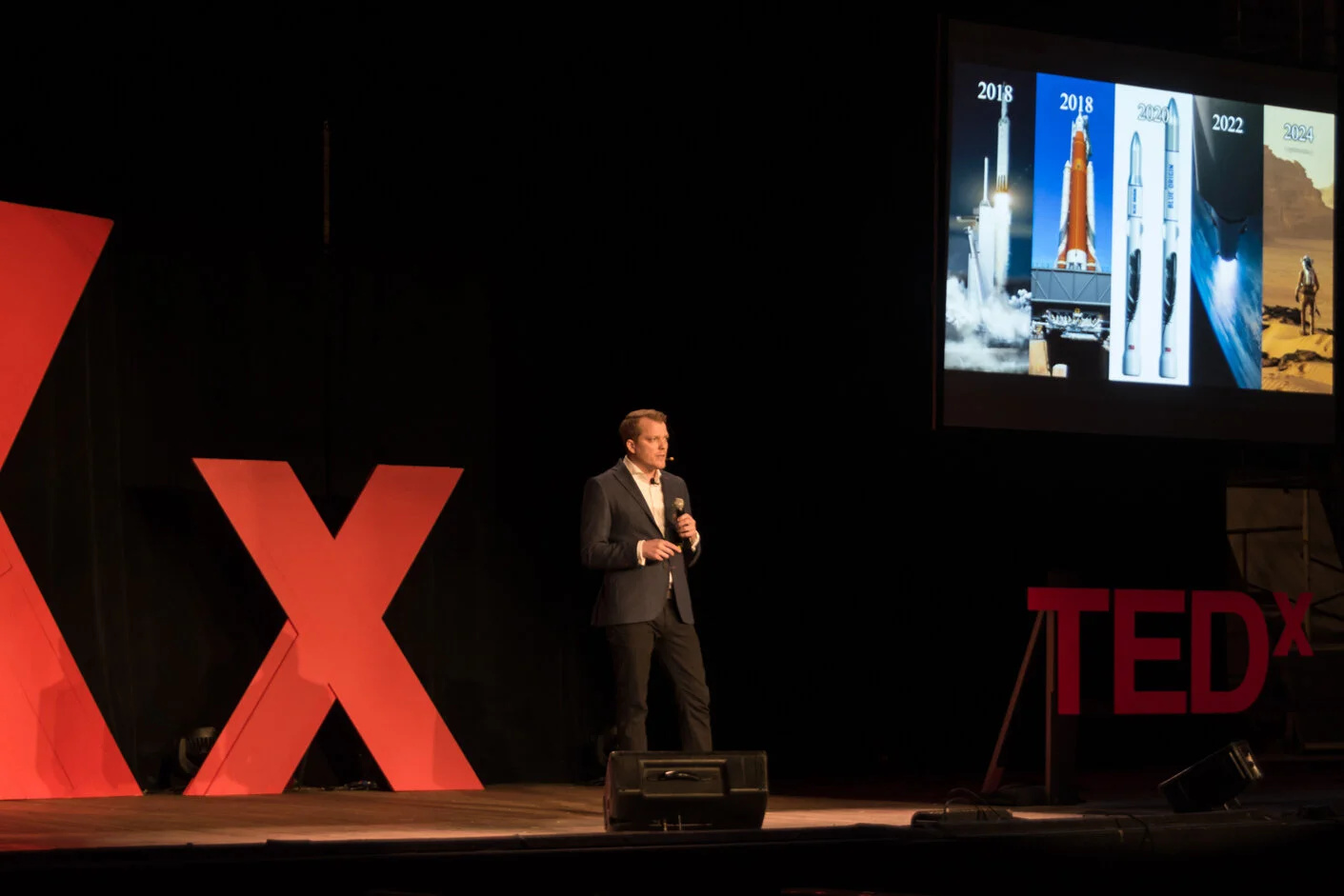
The long way to a whisky tasting
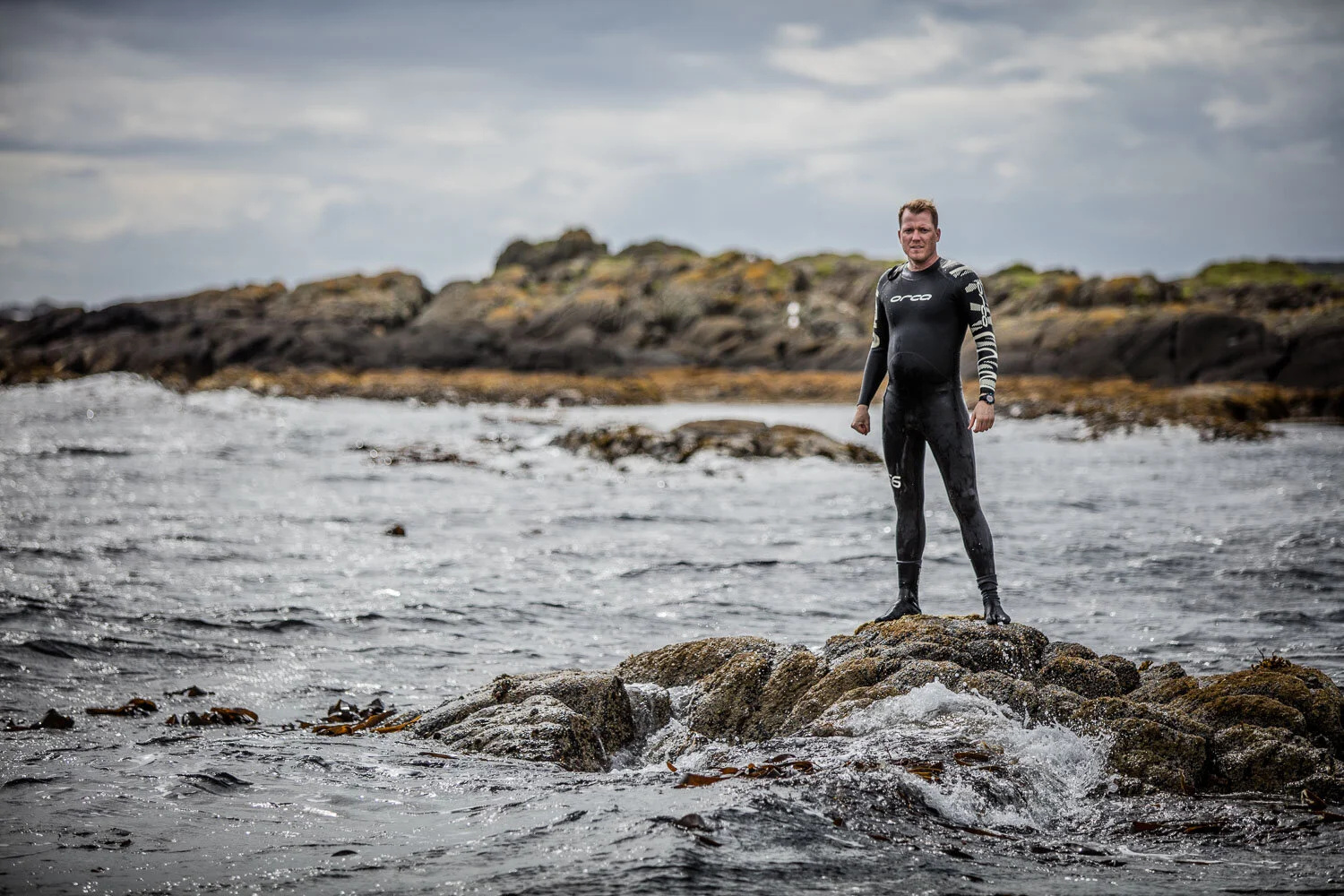
His personal website opens with four occupations: author, explorer, producer and venture capitalist. The explorer entry comes with mileage. On July 29, 2017, Anderson, Justin Fornal and Johnnie Mundell completed an eight-day swim around Islay, the Scottish island whose coastline runs for roughly 100 miles. The journey followed an interest in its history and distilling traditions.
The expedition took inspiration from Alfred Barnard, who documented whisky distilleries in the nineteenth century. Anderson’s group brought a botanist, an architectural historian and a film crew. The land team collected samples of water, peat and barley; the kayakers recorded marine life. Captain Gus Newman helped the swimmers navigate the tides and weather. This was a team undertaking with plenty happening beyond the water.
There was also a cask. The expedition carried a 30-gallon oak vessel, adding whisky from the island’s working distilleries. The resulting blend was intended for a limited bottling benefiting the Royal National Lifeboat Institution. A tasting tour ordinarily requires a booking and a designated driver. This one had kayaks, scientific samples and a sea captain.
The detail gives the explorer title some texture. Anderson took part in a project that combined a physical route with history, local knowledge and documentation. The photographs put the investor somewhere very different from a conference stage: standing in a wetsuit on a rocky coast, with the weather making its own arrangements.
A barrel with an itinerary
In October 2021, Anderson joined Fornal and Emiliano Ruprah for another expedition involving a wooden vessel and an inconvenient route. They transported a 50-gallon barrel of fermenting agave through Oaxaca, Mexico. The project sought to expose the ferment to different environments before distillation. Its equipment list gave logistics a prominent role in the adventure.
The barrel traveled by donkey cart, railroad pump car, rowboat and human effort. Moving an actively fermenting load imposed a schedule of its own. The expedition combined an interest in mezcal production with a journey through the region, and became associated with The Mezcalarians, a film mixing documentary material with narrative invention.
That distinction belongs in the telling. The film embraces fantasy as part of its presentation; the expedition’s barrel and participants belong to its documented foundation. Anderson’s site records a March 11, 2023 premiere at The Explorers Club. The project gave the producer line of his biography a concrete expression, and gave the barrel a more eventful itinerary than most luggage enjoys.
The author who initially declined
Wiley’s invitation to write a book did not immediately appeal to Anderson. He saw a distraction from his business and turned it down. Further conversations persuaded him that the firm’s research and experience could become a coherent account of a market taking shape. The research had already found an audience; a book offered it another form.
The Space Economy appeared in April 2023. Its scope extends from investing and starting companies to careers, recruiting and the role of government. Those subjects reflect a market populated by people with different jobs to do. An engineer considering a move, a founder seeking customers and an investor assessing a business each need a different entrance.
The book also arrived during an uncomfortable period for commercial space. Virgin Orbit had entered bankruptcy that month, while several companies brought public through SPAC mergers struggled. Anderson’s optimism therefore sat beside evidence of costly mistakes. The distinction between an expanding opportunity and the prospects of any individual company remained essential. A promising market can still provide a very expensive education.
A bigger room for the same question
In March 2026, Anderson announced Space Capital IV. The firm reported more than $1 billion under management and pointed to investments across the same three technology layers. Its ambitions extended to businesses connecting space capabilities with computing, automation and industrial work. The scale had changed considerably from the evenings spent assembling a fund in Britain.
The research operation gives that work a regular public rhythm. Space IQ follows private investment across the industry, while the podcast lets founders describe their companies at length. Anderson and partner Justus Kilian also contributed to NASA’s venture capital study, acknowledged in its 2020 report. Explaining how investors see a market can have an audience beyond investors themselves. Government agencies, entrepreneurs and people considering a career need to understand the same commercial landscape from different positions.
In May, Space Capital announced a partnership with Nasdaq, bringing quarterly Space IQ briefings to MarketSite and collaborating on content and programming. Public explanation had become part of the firm’s work alongside investing. A market needs shared language as well as money, especially when its customers, technologies and companies are so easily lumped together.
The October 13, 2026 quarterly letter concerned launch capacity, investment in Europe and government demand. It treated access to orbit as a constraint companies had to plan around. That is a useful complication to Anderson’s original market question: removing one barrier can expose the next. More customers and more capital bring their own demands on the machinery.
His route remains an unusual combination of financial analysis and actual expeditions. Oxford gave him a question about how markets form. Partners, founders and years of work supplied ways to test it. On Islay, a captain understood the tides; in investing, experienced operators understand what a spacecraft demands. Anderson’s story keeps returning to access, preparation and the people required to complete a journey. Sometimes the destination is a business. Sometimes it comes with a cask.