Carol Carpenter keeps a useful image for bad efficiency. Picture a marketing team ordered to reach the hundredth floor. Everyone starts running up the stairs faster. Calendars fill, dashboards glow, and the collective pulse rises. Carpenter would rather stop the race and build an elevator. It is an operator's metaphor: redesign the system before celebrating the sweat.
It also explains why her career resists the neat line usually drawn around a chief marketing officer. She has been a product manager at Apple, a general manager at Trend Micro, chief executive of a small DevOps company, product marketing leader at Google Cloud, CMO of VMware and Unity, and a public-company director. Since February 2025, she has led global marketing at Cohesity, the data security company that had just combined with Veritas' enterprise data protection business.
Across those jobs, the technology changed dramatically. The work underneath it did not. Carpenter studies what a product actually does, what a customer is trying to accomplish, and where organizational friction turns a good idea into expensive fog. Then she looks for leverage. Her recurring question at VMware was terse enough to fit on a lift button: Does this give us 10x impact?
The beginner who asked for tutoring
Her first technology job came after Harvard Business School, when she joined Apple as a product manager. The pedigree might have tempted a young executive to bluff. Carpenter did something more productive. She asked two friends, a software engineer and an industrial engineer, to tutor her in what she later called “computer 101.” Top-line features were not enough; she wanted to know how the hardware and software worked.
The lessons gave a non-engineer credibility with technical colleagues and made her better at marketing Macs. More important, they established a durable habit. Product knowledge and customer insight, she has argued, are the foundation of good technology marketing. Adjectives cannot rescue a marketer who has never looked under the hood.
That foundation mattered as her remit widened. After Apple came marketing and product leadership at Tumbleweed Communications and Keynote Systems, then six years at security company Trend Micro, including responsibility for its consumer and small-business group. She became CMO of sales-engagement company ClearSlide. Each stop added a different view of the machine: product, positioning, demand, operations, and the economics that decide whether any of it survives.
Carpenter sorts a product's value into those three buckets. Functional value tells the customer what works. Economic value explains the exchange. Emotional value accounts for attachment, confidence, identity, and relief. She once used an Apple laptop to make the point: a computer has specifications and a price, but the relationship is not exhausted by either. Enterprise buyers also want to feel that a decision is sound and legible.
At Unity, she compressed the marketer's role into one line: provide shortcuts for customers. Clear positioning and plain messaging reduce the work required to understand a product. Her phrase for the result is especially good: lower the cost of customer thinking.
It treats attention as a scarce budget, not an unlimited resource to be taxed by another page of jargon.
“Engage. Don't be a bystander.”Carol Carpenter's advice to her children and her younger self
When the buck stopped at 50 people
The turn that sharpened Carpenter's operator instincts came at ElasticBox, a roughly 50-person company that helped enterprises deploy and manage applications across clouds. As CEO, she experienced a kind of accountability that marketing reporting rarely simulates. At a company holiday party, her husband asked if she could relax and enjoy herself. She could not. She was thinking about employees, their partners, their children, and the chain of lives attached to every executive decision.
She later described the job as both terrifying and gratifying. It clarified which numbers mattered because those numbers touched the company's future and her own employment. The experience also showed her what she enjoyed most: customer-facing category creation and scale. ElasticBox was acquired by CenturyLink in June 2016, combining its multi-cloud application management with a much larger infrastructure business. Carpenter moved into product strategy at CenturyLink before joining Google.
At Google Cloud, Carpenter led product marketing while the business grew from roughly $5 billion to more than $12 billion. She is also a limited partner at Operator Collective. At VMware, starting in June 2020, her teams helped reposition a company known for virtualization around multi-cloud software and the move from licenses toward subscriptions and software as a service.
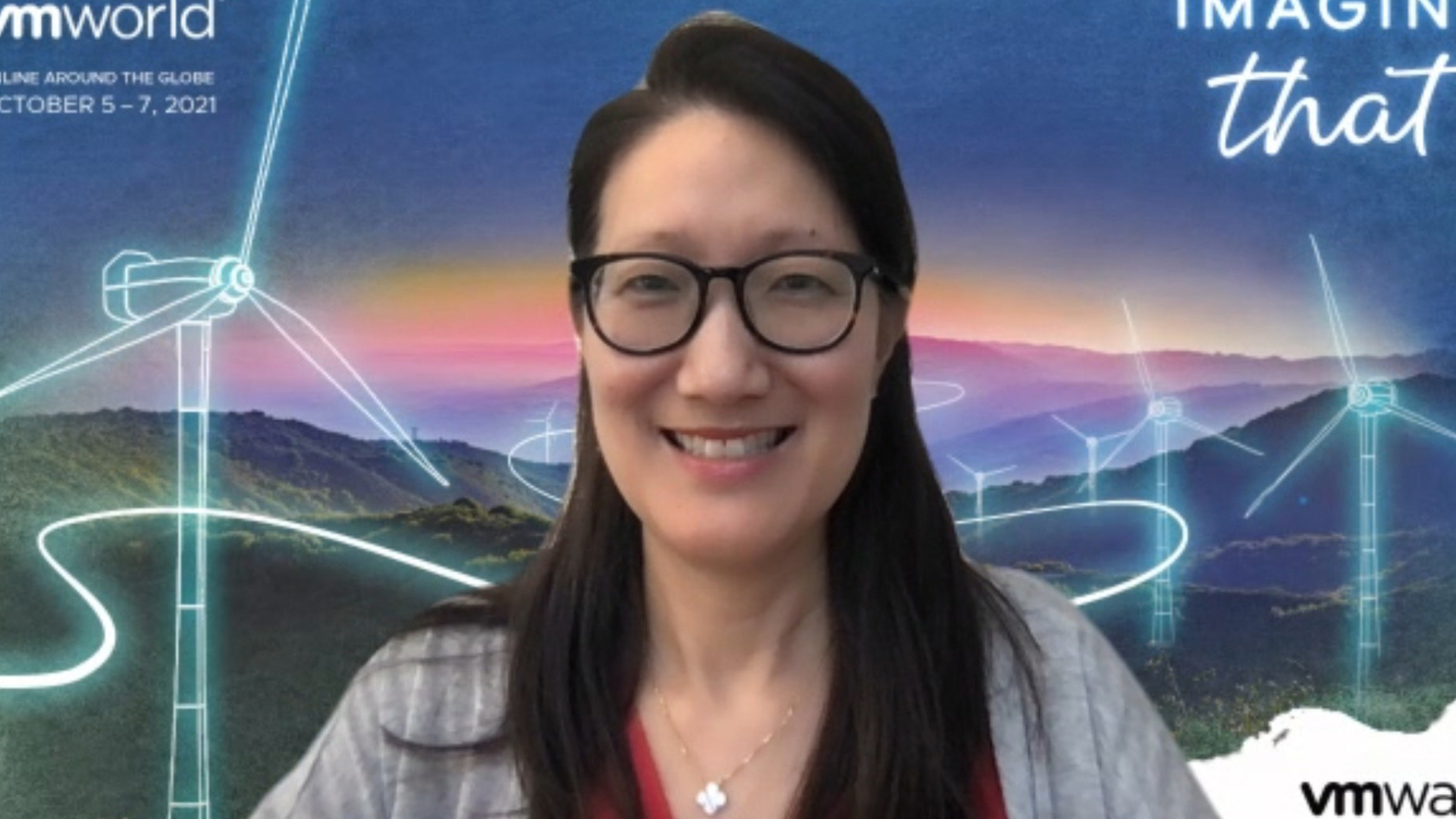
That assignment required adding a bottom-up, digital “learn, try, buy” motion without discarding VMware's enterprise sales strength. She spoke of changing a funnel into a flywheel and insisted that developer communities had to be engaged rather than marketed at. For VMworld 2021, nearly 100,000 customers, prospects, partners, and employees joined globally. The event became a stage for introducing the new company story internally and externally at once.
Unity offered another unfamiliar audience. Carpenter's introduction to real-time 3D had come through her son's enthusiasm for the virtual-reality games Beat Saber and Resist. The technology's reach beyond games appealed to her appetite for category construction. She compared Unity's moment to planning a young city: where should the roads, parks, pools, and public life go before the concrete sets?
A merger, an AI toolkit, and a human boundary
Cohesity handed Carpenter a different sort of unfinished city. The company had completed its combination with Veritas' enterprise data protection business in December 2024. When she arrived two months later, Cohesity said more than 12,000 organizations trusted the combined company. Her formal assignment covered brand awareness, go-to-market refinement, and demand generation. The practical assignment was to help two substantial organizations learn to speak and move together.
In a 2026 podcast conversation, she described the work of integrating marketing cultures inside a business of about 5,800 people while trying to preserve startup-like speed. Trust comes before a perfect process chart. So does clarity about which work deserves automation.
Let machines compress
- Translation workflows
- Brand governance checks
- First-draft assistance
- Sales development outreach
Keep humans deciding
- Creative direction
- Taste and standards
- Strategic judgment
- What deserves to exist
Her team has used AI in translation, brand governance, and sales-development outreach. One AI-supported outreach program doubled the conversion from lead to meeting. Carpenter's enthusiasm comes with a boundary: creativity, taste, and strategic judgment remain human responsibilities. Earlier, at Unity, she encouraged teams to use generative AI for first drafts and naming exercises. The conjunction mattered to her. Creativity and technology could work together without pretending to be interchangeable.
That balance resembles her advice on hiring. Look for talent, not a decorative resume. Ask what candidates actually did inside successful companies, what they learned when something failed, and whether they can see from a different angle. For a first-time CEO, she recommends a private “kitchen cabinet” of experienced peers who can hear the unfinished version of a problem. For young professionals, including her two children, the instruction is simpler: raise your hand and enter the work.
The work after the launch
Carpenter's public career is full of transitions: startup to acquirer, license to subscription, virtualization to multi-cloud, game engine to broader creation platform, backup to cyber resilience. Yet she speaks most proudly about people. Many marketers she once managed now lead consequential work elsewhere in technology. She continues mentoring through Harvard Business School's women's entrepreneurship program and Monte Jade, an AAPI professional organization.
That makes the elevator metaphor less mechanical than it first appears. A good system does not merely move the executive faster. It gives more people access to the upper floors. It turns individual effort into organizational capability, then leaves behind something that works after its designer exits.
Cohesity now sits at an awkward but important junction. Enterprises want to use their data for AI while protecting it from theft, corruption, and operational failure. The buyer's mental load is formidable. Carpenter's aspiration is visible in the assignment: make resilience understandable, make the merged marketing organization effective, and make useful technology easier to choose. Somewhere in that work, a team will be tempted to run harder. Her contribution may be asking whether anyone has checked the blueprints.