The people who told Carly Zakin that email was dead had an unfortunate choice of delivery system. They emailed her. Years later, she and Danielle Weisberg were still laughing about it. There are elaborate ways to investigate a market, and then there is opening a rejection in the very place your future readers check every morning.
In 2012, the two roommates quit their jobs at NBC News and started theSkimm from their New York apartment. Between them, they had about $4,000. Their proposition was plain: a short daily briefing that gave busy women enough context to understand the news. The technology was familiar. The attention to the reader was the point.
Zakin had trained for a life in television. She would spend the next thirteen years helping build a company around the written word, a recognizable voice and the modest pleasure of knowing what everyone was talking about. By 2025, theSkimm had a buyer. In 2026, its founders were preparing another chapter. The inbox, meanwhile, appeared to have survived the pronouncement.
A newsroom with room for two
Zakin and Weisberg met while studying abroad in Rome. They attended different universities, then reconnected while working in news and eventually became roommates. Zakin graduated from the University of Pennsylvania in 2008. Her early career included CNBC, MSNBC and NBC’s Peacock Productions. She had worked inside the industry whose audience habits she would soon question.
The timing mattered. Graduation coincided with a punishing period for the economy and the media business. The founders later described watching news operations contract and seeing people further up the career ladder become disenchanted. A familiar route into journalism was becoming less reassuring just as they were learning to follow it.
Outside work, their friends kept asking them to explain the headlines. These were people with jobs, interviews and crowded days. One request was for a quick account of what had happened; another was for a couple of informed things to say in a job interview. The requests were concrete. So was the eventual product.
The first newsletter went out in July 2012. The early format paired a synopsis with background and a takeaway. It arrived just before six in the morning, when phones were already within reach. Zakin and Weisberg were putting their reporting experience into the part of the day their friends had available.
The rejection arrived by email
Their choice of medium looks obvious in retrospect, which is a luxury retrospect offers without charge. Back then, prospective backers questioned both email and the audience. The founders recalled being asked why they had chosen a market as small as women. That question did rather a lot of revealing work for one sentence.
They kept going. Their early resources were savings, credit cards and the ability to write and edit the briefing themselves. The couch became part of the company’s origin story because it was where the work happened. A low barrier to sending an email did not remove the obligation to make the next one worth opening.
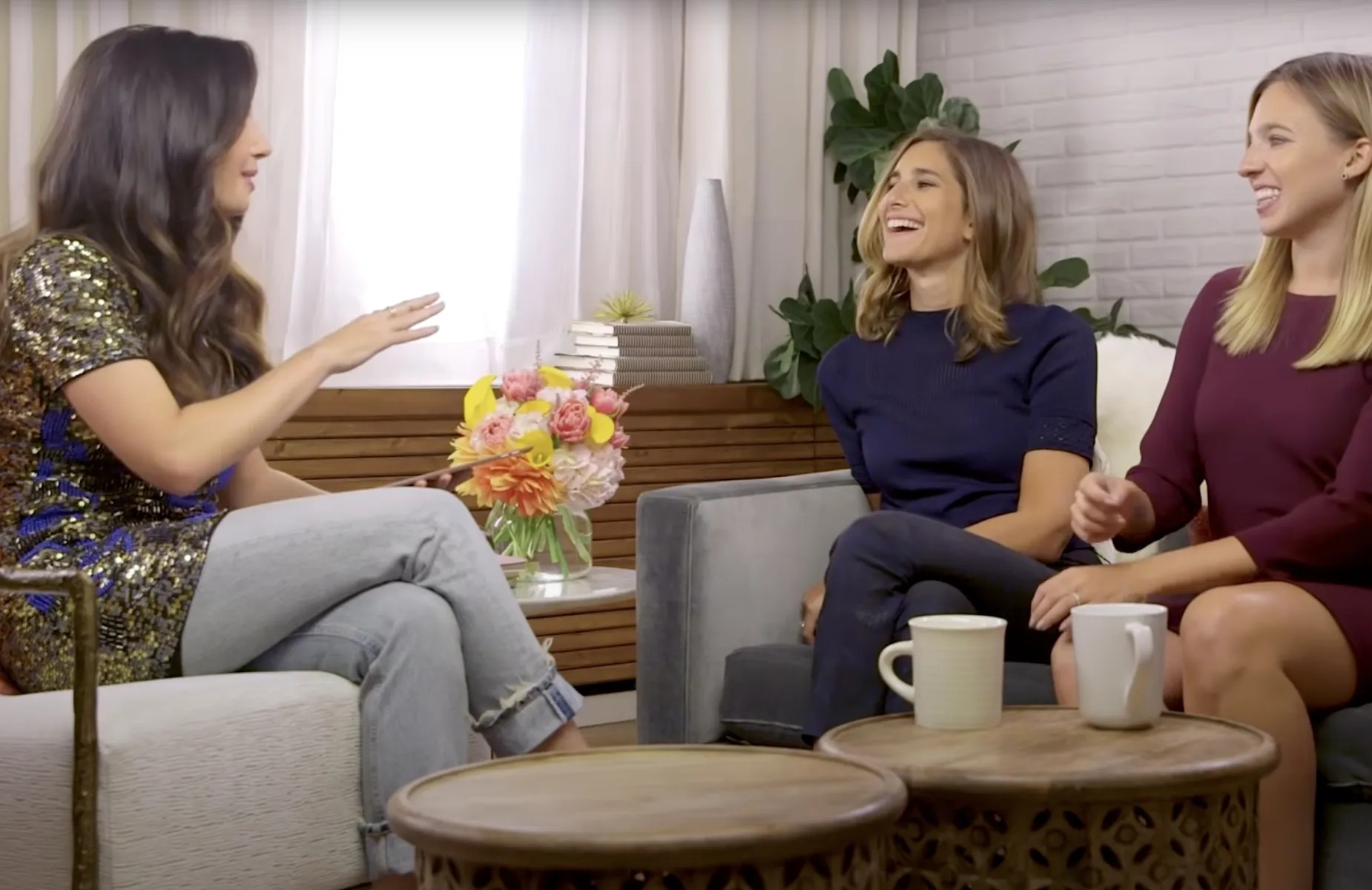
The voice had to carry that obligation. It used ordinary speech, wordplay and pop culture to explain subjects that could otherwise feel fenced off by specialist vocabulary. Zakin and Weisberg independently drafted versions of the voice and found themselves closely aligned. “We would have won a newlywed contest,” Zakin later said.
Readers who brought their friends
The first growth tactics had very little glamour. There were flyers on Penn’s Locust Walk, requests for sign-ups at Starbucks and notices in Equinox bathrooms. The last tactic got them kicked out. An inbox business still required people to leave the apartment and find someone willing to hand over an email address.
Word of mouth became more organized through the Skimm’bassador program. Readers referred friends, received merchandise and joined networking opportunities. By 2017, the network numbered about 20,000. These readers also helped test products and marketing ideas. The person opening the email could become the person who helped shape what came next.
That relationship gave the company something more useful than a fleeting visit. A referral came with a friend’s recommendation; a daily briefing came with a regular appointment. Neither was automatic. The company had to keep giving people a reason to return, especially when its particular blend of news and conversation attracted criticism alongside affection.
- 01A useful briefing
- 02A daily habit
- 03A friend forwards it
- 04A new reader joins
An illustration of the word-of-mouth model, not a measurement of conversion rates.
Friends, with a business agreement
The partnership was built on more than matching tastes in subject lines. Before the leap, Zakin and Weisberg discussed debt and what they were willing to take on. They made a business agreement. The friendship already existed; the responsibilities needed to be stated. Sharing a sofa was convenient. Sharing financial risk required a separate conversation.
Zakin has pushed back on the idea that the founders arrived knowing nothing. They were inexperienced at starting a company, but they understood the audience. That distinction helps explain the decision to keep the product focused. The uncertainty lay in running the business, raising money and building a team around an editorial instinct they already possessed.
By 2019, her workdays included budgets, profit-and-loss statements, brand marketing and editorial concepts. Managing people occupied more time. The work had changed even while the company’s founding story remained pleasantly upholstered. Asked about waking up, the co-founder of a morning briefing admitted, “I set multiple alarms.”
Their friendship retained ordinary spaces: a Monday catch-up after a weekend apart, or the walk home. In later reflections on leadership, Zakin also emphasized cultivating trusted advisors and allowing that circle to change as a leader grows. A familiar co-founder could provide continuity. Different problems could require different people around the table.
“The key is recognizing that this circle of advisors should evolve as you grow.”
Carly Zakin, on leadership
An audience that grew up
TheSkimm expanded beyond the morning news into newsletters about money, shopping and parenting, among other subjects. Its career conversations included the podcast 9 to 5ish with theSkimm, co-hosted by Zakin and Weisberg. The wider offering followed the founders’ stated interest in the decisions their readers were making as their lives changed.
In June 2019, How to Skimm Your Life reached number one on the New York Times bestseller list. A book and a tour gave the company a different kind of encounter with its readers. For Zakin, seeing thousands of people turn up in person was one of the moments when the size of the enterprise became tangible.
The work also moved into workplace policy. The #ShowUsYourLeave campaign asked organizations to make their paid family-leave provisions public. Through her Aspen leadership venture, the Sandwich Project, Zakin worked on expanding access to information about those policies. An Aspen venture profile documented participation by more than 500 organizations and a public database.
There is a consistent editorial instinct in those projects: make a difficult subject easier to examine. News background, a financial explanation and a leave policy are different kinds of information. Each becomes more useful when the reader can understand the terms and decide what to do next. The product had broadened along with the questions.
- 2012The first Daily Skimm
- 2019A number-one bestselling book
- 2025The company is acquired
- 2026The founders end their formal tenure
The career podcast gave the founders a chance to ask other people about the choices behind a public résumé. In 2025, their guests included Emily Oster and Neha Ruch. The conversations extended the same interest in how a working life actually unfolds, including the turns that a neat job title tends to leave out.
The weekend has a recipe
For someone who spent her working life making decisions, Zakin had a very specific weekend pleasure: following instructions. She grew up cooking alongside her father, a self-taught cook. He would make dinner; she would handle dessert. Family recipes from both sides remained part of her kitchen repertoire.
By 2024, she was trying to bake something every weekend, collecting recipes and looking at other bakers’ work on Instagram. She liked being able to work creatively inside a clear set of rules. The appeal was easy to understand. A recipe tells you what comes next with considerably more confidence than a startup does.
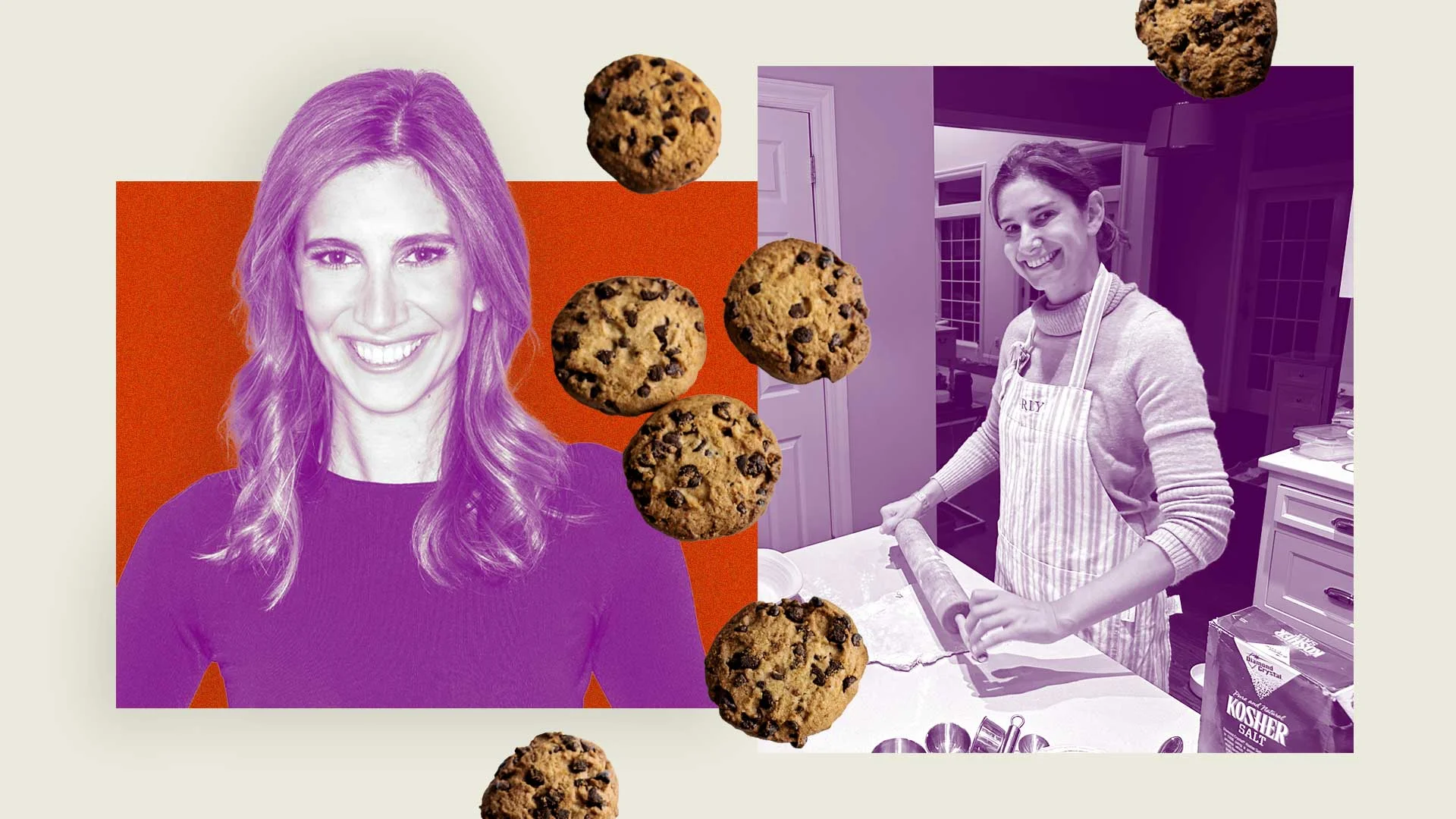
The detail puts a person back inside the business biography. There are funding rounds, product launches and public appearances. There is also someone thinking during the week about what she would like to bake on Saturday. Her answer to what the world could use more of was similarly economical: “Wine and kindness.”
An exit, then an open sentence
On March 19, 2025, Ziff Davis’s Everyday Health Group announced the acquisition of theSkimm. The financial terms were not disclosed. Zakin and Weisberg initially stayed on to guide strategy. They reassured readers that the company’s familiar voice would continue. Ownership had changed; the relationship with the audience still needed tending.
In March 2026, they announced that their formal tenure was ending. Zakin’s farewell credited the team, supporters and community, and named people who had offered guidance along the way, including Satya Patel, Betsy Morgan and Alexa von Tobel. The note looked back on an enterprise that had become larger than its two original writers.
By July 2026, they were together on the other side of an interview again, discussing their entrepreneurial journey on Making It with Jess Ekstrom. The conversation revisited their beginnings, the partnership and the acquisition. The old company had supplied years of material; the two people at the center of it still had a shared story to tell.
Then came the deliberately brief answer about their future: “a lot.” A new domain, Windy Apple, accompanied the announcement. Zakin described it as their LLC. The public promise was a continuation, with the particulars still to come. After years of supplying the day’s context, she had left herself a little room before the next send.
Keep the conversation going
- TheSkimm
- Carly on LinkedIn
- Carly & Danielle on Instagram
- Carly on X
- The early news briefing
- The partnership, in their words
- The Penn conversation
- Watch: the MarieTV interview
- Watch: In Session at Aspen
- The book and broadcast career
- The weekend baking habit
- The Sandwich Project
- Leadership and advisors
- The acquisition conversation
- The founders’ farewell
- The Windy Apple announcement
- Listen: Making It with Jess Ekstrom
- Alarms, workdays and kindness
- Listen: 9 to 5ish