The most revealing number in CARAA's origin story is not $50 million, the cumulative sales figure the company reported a decade after launch. It is 100. That was the size of the New York bag brand's first serious test - the batch sold beyond the forgiving circle of mothers, brothers and cousins. The people who bought those bags found problems. More usefully, they kept the bags and explained what needed fixing.
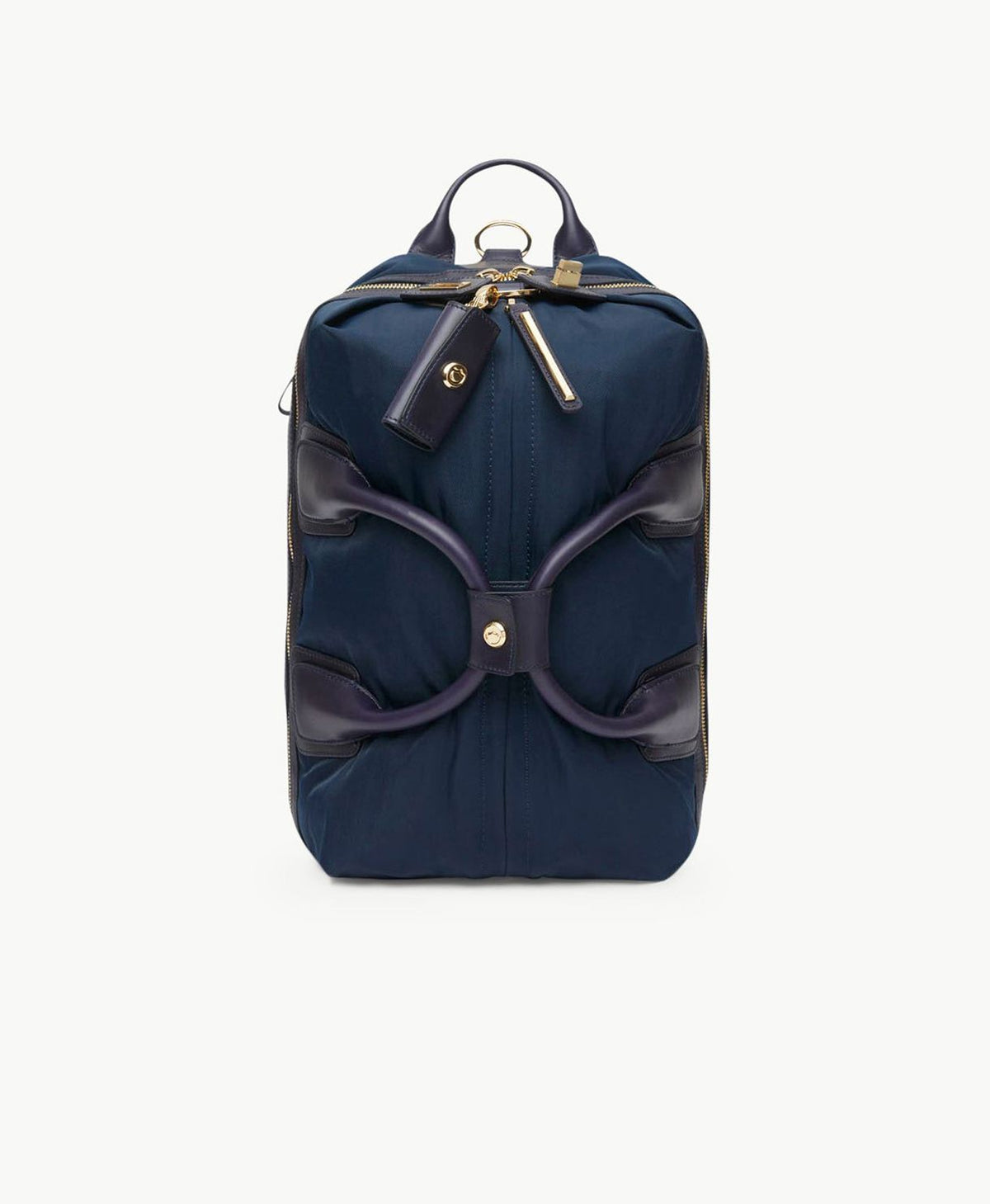
For co-founders Aaron Luo and Carmen Chen Wu, this was the good kind of bad news. Their thesis had survived contact with strangers even if the product had not escaped without bruises. The Studio Bag was handsome enough for work, ventilated enough for gym clothes and configurable as a backpack, crossbody or satchel. It also had the complications of a first product trying to do three jobs at once. Early design issues surfaced. Later users asked for changes such as a luggage sleeve. Independent reviewers praised its organization while noting tradeoffs including weight and a right-angle zipper that could require two hands.
The hole between the tote and the locker room
CARAA began in 2015 with an unfashionable observation about fashionable objects: many handbags behave badly. Fast-fashion bags can look current without lasting. Sports bags organize equipment while advertising that they belong near a treadmill. Traditional luxury offers craft and status but can become strangely helpless when asked to separate a laptop from damp leggings.
That gap was obvious to two founders moving around New York. Luo brought finance, sales and supply-chain experience, plus three decades of handbag manufacturing knowledge in his family. Chen Wu brought the creative authority: training at Central Saint Martins and Parsons, recognition from the Council of Fashion Designers of America, and experience with high-end design. Both were born into Chinese families and raised in Spain. They discovered, with storybook convenience, that their grandparents had once done business together.
Good-looking and accessible, but often not built for years of daily punishment.
Functional and compartmentalized, but usually styled for the gym rather than dinner.
Beautifully made and expensive, but not always fluent in commuting, tech or sweat.
The pair had already built a sourcing agency for smaller brands. That work mattered. Fashion startups commonly discover that the sketch is the easy bit; minimum orders, quality control, overseas logistics and factory relationships collect the real tuition. CARAA began with access to the machinery behind the product. Its original Studio Bag was made in factories used by major luxury brands and sold for less than $400, a high price for a gym bag but a different proposition from a four-figure fashion handbag.

The first thing that failed was the fantasy of version one
The founders first produced 50 units that went mostly to family. Luo has been cheerfully blunt about the evidentiary value of this milestone: relatives buying your bag is affection, not product-market fit. The next run of 100 mattered. Roughly the first 20 customers became memorable because their verdict contained both halves of a useful signal: “I'm keeping it” and “here is what is wrong.”
“Fail quickly, fail cheaply.”Aaron Luo's rule for early product tests
What did this cost? Public accounts do not reveal the production bill for those 100 units. The retail proposition was below $400 for the Studio Bag, and an early funding database records only a small $50,000 XRC investment. The more important cost control was structural. CARAA did not order a hundred styles or stake the treasury on one giant launch. One hero product and limited batches put a ceiling on the price of being wrong.
Customer suggestions did not get an automatic vote. This is the subtle part founders can copy. CARAA treated functional feedback as evidence: where should the laptop go, what needs ventilation, how does the bag sit on a suitcase? Aesthetic decisions remained Chen Wu's job. Research could reveal the need for a luggage sleeve; it could not be allowed to turn the bag into a committee-designed sack. The company calls customer feedback central to its process while preserving the creative director's right to decide what the answer should look like.
They changed their minds about who the bag was for
CARAA initially pictured an active millennial woman in an urban setting. Reality enlarged the portrait. Customers used the Studio Bag for flights, work and daily carry, not merely the trip from office to class. When the company studied parenting, it shadowed mothers and also learned that fathers often carried the diaper bag. The resulting Baby line treated the category as an organization problem: places for bottles, diapers, wipes, clothes and toys, wrapped in water-repellent nylon rather than nursery-pageantry.
That expansion eventually produced sport, travel, baby, pet and leisure lines. By its tenth year, CARAA said it had gone from two launch SKUs to more than 200 across 30 countries. The product menu now ranges from small organizers and slings to $390 baby bags and limited designs priced far higher. Bundles increase basket size; ecommerce remains central; wholesale partners such as Nordstrom and specialty stores put the product where customers already browse. The business is no longer pure DTC. Luo's current rule is simpler: be where she shops.
Reported momentum, not audited accounts
The cumulative sales number is company-reported, and CARAA does not publish full annual accounts. Still, the pattern is instructive. In 2025 it said cumulative sales had passed $50 million, with 2024 up 34 percent year over year. The founders contrast their approach with heavily funded DTC brands that purchased attention before earning retention. CARAA waited roughly two and a half years before leaning into advertising. Early customer acquisition ran from Soho flyers to fitness and fashion influencers to a national appearance on Project Runway: Fashion Startup.
A collaboration should know the secret handshake
Partnerships widened the funnel without dissolving the product logic. CARAA made an Equinox bag with a shoe compartment, several Athleta collections and a travel-minded design with Olympic gymnast Nastia Liukin. In 2026, it went narrower: USA Fencing. Luo is a lifelong fencer, and the collection used water-repellent antibacterial fabric and fencing references rather than simply attaching two logos to an ordinary tote.
The audience is modest - USA Fencing reported about 45,000 registered members in 2025 - which is precisely what makes the project interesting. CARAA says its profits from the capsule support the USA Fencing Foundation, and it plans to release iterations before, during and after the 2028 Los Angeles Olympics. The commercial bet is that expertise travels outward: make insiders feel seen, learn from their weirdly specific needs, then carry the useful discoveries into mainstream products.
What to steal - and when it will fail
Copy the sequence, not the handbag: one use case, a capped batch, buyers outside your social circle, interviews with people who keep the flawed product, and a revision before paid scale. It breaks when production cannot support small runs, feedback arrives too slowly, margins cannot absorb iteration, or the product is regulated or safety-critical enough that customers must never become the test lab. It also fails when “listening” becomes an excuse to surrender taste.
The useful thing CARAA actually sells
At surface level, CARAA sells nylon, leather, zippers and unusually opinionated pockets. At the customer level, it sells fewer handoffs. The commuter does not change bags before the gym. The parent does not excavate a bottle from a black hole. The traveler turns a satchel into a backpack when the gate changes. This is not a universal need, and the prices rule out shoppers who want a basic carrier. Competitors including Dagne Dover, MZ Wallace, Away, Calpak and Longchamp cover adjacent territory at different price, material and fashion points.
CARAA's defense is accumulated specificity. A convertible strap is easy to imitate. A decade of learning where urban customers put wet clothes, laptops, bottles, wipes and passports is harder. The brand's biggest risk is the same force behind its growth: 200-plus SKUs can blur a crisp original idea, and ornate hardware or many compartments can add weight. Its job is to keep earning complexity.
The first 100 customers offered a compact standard for doing that. They did not say the Studio Bag was perfect. They said it was useful enough to keep and imperfect enough to discuss. For a product company, that may be the finest complaint money can buy.