The vending machine was the easy part. The difficult bit, for Cara Sloman, was believing what a client said a mobile phone could do with it. Around the beginning of her career in technology public relations, a company proposed letting people buy a soda with a cellphone. The transaction now sounds almost aggressively unremarkable. At the time, she remembers, it belonged to the future.
That small purchase offers a useful way into Sloman’s working life. Technology can arrive before people have a comfortable place for it in their imagination. Someone has to explain why it belongs there. She began working in B2B technology PR in 2000; by her 25-year retrospective, the soda had become an example of how quickly astonishment turns into habit. The communications problem survives the novelty: what changes for the person using the thing?
From a purchase nobody expected to a pitch anybody can understand.
Years later, another everyday object gave her a way to think about changing audiences. A friend complained that newspapers were cumbersome: large, flimsy sheets that made finding the desired information hard work. Sloman initially found the complaint unconvincing. Scrollable news on a handheld screen made it easier to appreciate. Even a communications professional can need persuading that a familiar format has become an obstacle. She used the episode to explain why content has to meet people where, and how, they want to read it.
A new name, familiar people
Before Force4, her title at Nadel Phelan was executive vice president. Her 2019 Forbes Agency Council articles already explored themes that would recur in later work: measuring PR, explaining differences between competing products and preparing a company for acquisition. The bylines trace a working agenda across the change in job title. For Sloman, the question of how a business presents itself has long extended to what that presentation helps the business do next.
In January 2022, Sloman had a different sort of explanation to make. Nadel Phelan was spinning out its public relations and marketing communications arm as Force4 Technology Communications. She would become president and chief executive. A launch announcement might have invited trumpets. Hers offered reassurance.
The team would remain. So would the services, management and independent business structure. Sloman named the executives who would run the company alongside her: Peggy Tierney Galvin, Sean Wood and Lisa Christensen. Many of the people involved had already worked together for more than a decade. Force4 would remain majority women-owned.
Her account also made room for mentors Fred Nadel and Paula Phelan. A new name could accommodate a debt to the people who had made the transition possible. That gives this founding story its particular character. The important inheritance was a group of people who knew how to work together, and clients who needed to know they could keep depending on them.
Today, the division of responsibilities is plainly drawn. Galvin is chief strategy officer, Wood is chief operating officer and Christensen is chief accounting officer. Sloman’s remit includes strategy, management and execution, along with investing in the expertise and relationships that keep experienced people in the business. The company serves technology businesses across the globe. Its name borrows from the Beaufort wind scale: Force 4, which the agency describes as favorable sailing conditions. Even the branding assumes that getting somewhere requires reading the conditions.
Let the customer do some talking
Sloman’s public writing shows a sustained interest in who gets believed. In 2020, she made the case for customer champions: people whose experience with a product gives a prospective buyer something beyond the seller’s own enthusiasm. A company can declare itself useful all afternoon. A customer can describe the problem it solved.
There is a pleasing restraint to that idea for someone working in publicity. Hand some of the conversation to another person. Let their experience carry weight. A customer story can make an unfamiliar business legible because the reader recognizes the predicament, even if the product remains technically complicated. The sales brochure may have exquisite typography. The customer has been through the implementation.
Her later work on credibility extends that reasoning. In July 2026, she argued that polished language had become easier for any company to produce, making validation and consistency more consequential. Customer results and partner endorsements give a claim something to stand on. An account that changes between the fundraising conversation and the sales meeting makes understanding harder. The implication for a communications executive is demanding: the story has to hold together after it leaves the document in which it was written.
The room still matters
A career in communications is also a career spent watching the meeting place change. In her writing on digital networking, Sloman describes the much wider circle available to people working remotely. Geography no longer sets the same limits on who can find whom. The social work of making the connection worthwhile remains.
Her argument calls for deliberate attention rather than treating accessibility as a relationship in itself. A name on a screen still belongs to someone with a reason to be there. Technology supplies an opening; what people do with it determines whether another conversation follows. For an executive whose business depends on relationships, that is a practical distinction.
She also continues to defend time spent in the same room. In August 2025, she wrote about roundtables, conferences, workshops and community gatherings as opportunities that need preparation and follow-up. Showing up is a beginning. A meeting earns its place in a business when the conversation has substance and somebody remembers to continue it. The badge and lanyard have never been much use on their own.
An Appaloosa called Oops
Outside work, Sloman’s biography takes a turn toward a different kind of company. She has been around horses since she was five. Her first pony was an Appaloosa without spots, named Oops. The name did a respectable amount of descriptive work.
She went on to ride dressage, cross country and stadium jumping; these days, trails are her preference. At Horse Sense Education and Advocacy, she is listed as director of advocacy, overseeing strategic campaigns and projects. Her biography there describes a commitment to respect for animals. This is an enduring interest with an organizational role attached, giving the picture of her life a dimension beyond the agency.
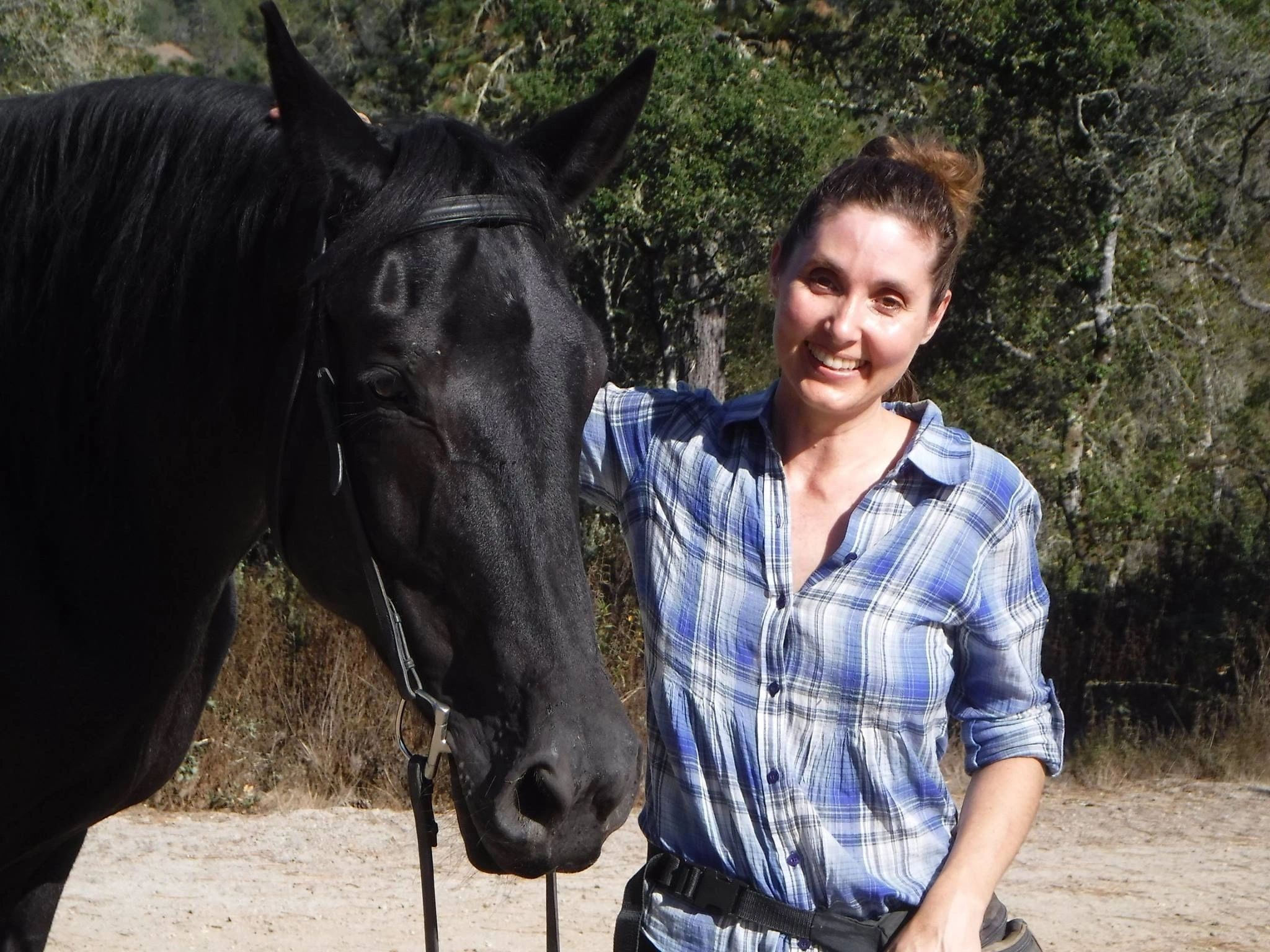
Her own description of time away from work includes adventures with her husband on land and at sea. An earlier biography mentions gardening, too. These details are appealing partly because they resist conversion into a business parable. A horse need not become a lesson in executive presence. Sometimes the useful thing to know about a person is simply where she likes to spend an afternoon.
“On the trails with my noble steed or adventuring with my husband on land or sea.”
Cara Sloman, on life away from work
The founder has homework
Back at the desk, Sloman has become increasingly explicit about where responsibility for a company’s story belongs. In June 2026, she argued that founders routinely put resources into products, engineering and selling while giving too little attention to whether people can understand the business. A buyer puzzled by a pitch is under no obligation to request a translation.
That places narrative clarity on the founder’s agenda. A marketing team needs a coherent account of the problem, the intended customer and the reason this particular business can help. Otherwise, beautifully produced material may distribute the confusion more efficiently. Her point puts communications beside the central decisions of a company: what it is for, whom it serves and what it does differently.
It is consistent with her advice on leadership under uncertainty. Writing in December 2025, she favored principled decisions, attention to early signals and teams able to act without perfect information. Waiting until every uncertainty has disappeared is a peculiar growth plan. The more useful habit, in her account, is to decide carefully, learn promptly and adjust.
The deletion test
Artificial intelligence gives these questions a new setting. In December 2025, Sloman was writing about generative engine optimization: how a company is understood and surfaced by AI services that people use to discover businesses. Her attention had moved beyond whether a company’s own pages read well to whether its description survives another system’s account of it. Being findable and being intelligible were becoming closely connected concerns.
By March 2026, she was also examining the executive’s own voice. AI can speed up a speech, an article or a social post. Her warning was that more fluent output does not automatically make the speaker more credible. The details of actual decisions and experience remain valuable precisely because they belong to somebody. An executive who has something particular to say gives readers a reason to stay.
Then, in September, she offered a compact test for companies trying to position themselves around AI. Remove the term from the message. Does a persuasive customer benefit remain? The exercise gives a busy founder something concrete to do with an otherwise sprawling debate. Two letters are easy to add to a presentation. A reason to buy requires more thought.
Remove “AI” from the pitch.
Can the customer still see the benefit?Adapted from Sloman’s September 2026 argument on technology positioning.Read against the soda anecdote, the test has a familiar shape. In one case, a phone made a small purchase possible. In the other, a fashionable label threatens to obscure what a product actually does. Across the distance between them sits Sloman’s recurring interest: the person trying to understand why any of this should matter. The vending machine, at least, supplied a refreshingly concrete answer.