Twenty years into a friendship, Camilo Giraldo-Gallo still had something to learn about Igor Witt. On his podcast, the chef described the experience that had sent him toward a kitchen career: as a teenager in Bogotá, he came home to find that the food available was being saved for the next day. He used money from his shoe-selling job to buy pizza for his family. Cooking began to look like a way to keep a plate on the table.
Giraldo-Gallo knew the friend. The interview revealed another part of the person. There is a small embarrassment in that discovery, and a useful lesson for anyone whose business card promises expertise in communication. Years of conversation do not guarantee that the right question has been asked.
His podcast is called Comersaciones, a Spanish wordplay that brings eating into conversation. Its premise is pleasantly hospitable: ask people about food and follow their answers into memory, work and the decisions that made them who they are. A professional biography usually arrives wearing shoes suitable for a boardroom. This one leaves space for the kitchen.
Before the microphone, the business pages
Giraldo-Gallo’s route to these interviews runs through Colombian journalism. A graduate of Javeriana University in Bogotá, he worked in print media and later served as a press adviser for the Colombian government. The movement between reporting and public communication put him on different sides of the exchange between institutions and audiences.
His early business writing had a taste for the specific. In April 2014, a La República article under his byline examined grocery shopping in Bogotá. A comparison of ten staples at four retailers in Usaquén found baskets costing roughly 69,000 Colombian pesos. The interesting question was how shoppers chose a store when the overall prices were similar.
Coffee, rice, eggs and butter are modest characters for a business story. They are also things people actually buy. By putting them together, the report could examine the gap between the total on a receipt and the impression a shopper carried into the supermarket. Perception had a price, even when the prices themselves came surprisingly close.
Another January 2014 piece covered the place of Colombian retailers in electronic commerce. Giraldo-Gallo reported on chains already developing online sales and competitors that had yet to open a consumer channel. The questions were about practical decisions: how a business reached its customers, where it lagged and what a new channel required.
That same month, he wrote about Tecnoglass and Nasdaq. The story joined a Colombian window manufacturer to the financial machinery of New York. It explained the acquisition structure behind the listing and the scrutiny the business had undergone. A stock-market bell makes a handsome photograph; the reporting made room for the less photogenic work that preceded it.
La República
University of Florida
Mass Communication
GO Global Media
Who gets to set the conversation?
In 2019, Giraldo-Gallo enrolled in the University of Florida’s Master of Arts in Mass Communication program. His focus was political communication. The newsroom’s question of what deserved attention acquired an academic companion: how attention moved between the public, social platforms and the press.
His graduate research examined Twitter conversations surrounding the arrest of former Colombian president Álvaro Uribe Vélez and their relationship to media coverage. The subject demanded an account of influence that reached beyond the person pressing “publish.” A conversation online could become material for journalism, which could then feed the conversation again.
He returned to that subject in June 2026, writing an analysis of presidential candidates Iván Cepeda and Abelardo de la Espriella’s competition on social media. In introducing the piece, he connected the election discussion to his earlier research. Company leadership and podcasting had become part of his working life; political communication remained on the page.
There is an instructive contrast between the settings. A campaign conversation brings competing actors, public stakes and rapid circulation. An interview about a remembered meal can proceed at a more generous pace. Both require attention to who is speaking and how an account takes shape. They make different demands on the listener, and his work has occupied both.
A company built between audiences
By September 2023, Giraldo-Gallo was listed as a JeffreyGroup press contact for the Council of the Americas’ BRAVO Business Awards announcement. The role placed him in communications around business and policy in the Western Hemisphere. The announcement is a concrete marker of his agency work, alongside his earlier reporting and research.
GO Global Media later announced him as its founder and CEO. Its early work ranged from communications around an urban-law organization’s rebranding to agricultural teaching videos and science communication. The company’s stated ambition was to extend its connections between Latin America and the United States.

The variety of assignments is worth pausing over. A farmer watching an instructional video, a researcher explaining a laboratory’s work and an organization changing its public identity do not arrive with the same needs. Calling all of it communication is convenient. Doing the work means finding the particular audience inside that convenient word.
Giraldo-Gallo has expressed his own standard in a testimonial about the design of his company’s brand: listening and understanding come first. He praised the designers for turning the personality he wanted for the venture into a recognizable identity. Even the communicator, in that exchange, needed someone else to hear him properly.
“La parte más importante de la comunicación es escuchar y entender.”
Camilo Giraldo-Gallo, on the design of his company’s brand
The claim sounds almost too simple to need saying. Yet it describes time that a finished piece of communication tends to conceal: the questions, revisions and effort to understand another person’s terms. A neat sentence is easier to display than the listening that made it possible.
The guest list goes off-menu
Comersaciones gives that listening a public format. The first episode, in January 2025, featured geoscientist Carolina Ortiz Guerrero. Its menu of subjects moved between venison soup in New Zealand, tacos in Los Angeles and pusandao from Colombia’s Pacific region. Geography entered the conversation through things somebody had eaten.
Witt followed that month. The Cartagena chef was an old friend, but the interview still produced a discovery. That detail matters to the series: proximity to a guest can supply warmth without exhausting the questions. The person who seems familiar may be carrying a whole explanation that has never come up.
Then came Victoria Vago, an Argentine political scientist who became a butcher and meat sommelier. Giraldo-Gallo described encountering her in an Instagram video and inviting her to tell her story. Her change of profession brought uncertainty, a government-office departure and the example of two political scientists who owned a butcher shop in Palermo.
These are excellent ingredients for an interview because they resist a tidy career ladder. A person can leave one professional world and learn the vocabulary of another. Asking about the food keeps the discussion tangible: a trade, a counter, a piece of work somebody knows how to do. The grand account of reinvention has to pass through ordinary details.
Brazilian food writer Gabrielli Menezes brought restaurant criticism into the series in February 2025. Their conversation included the work behind evaluating a meal, the cultural history of ingredients and the influence of restaurant lists. A host who also works in communications had reason to ask how reputation gets made around a table.
In June, producer and educator Sara Snyder spoke about family Sunday dinners and their place in her life as a storyteller. Her great-grandmother’s tuna casserole belonged in a discussion that also covered a career in media and teaching. Family ritual and professional formation shared the same conversational space.
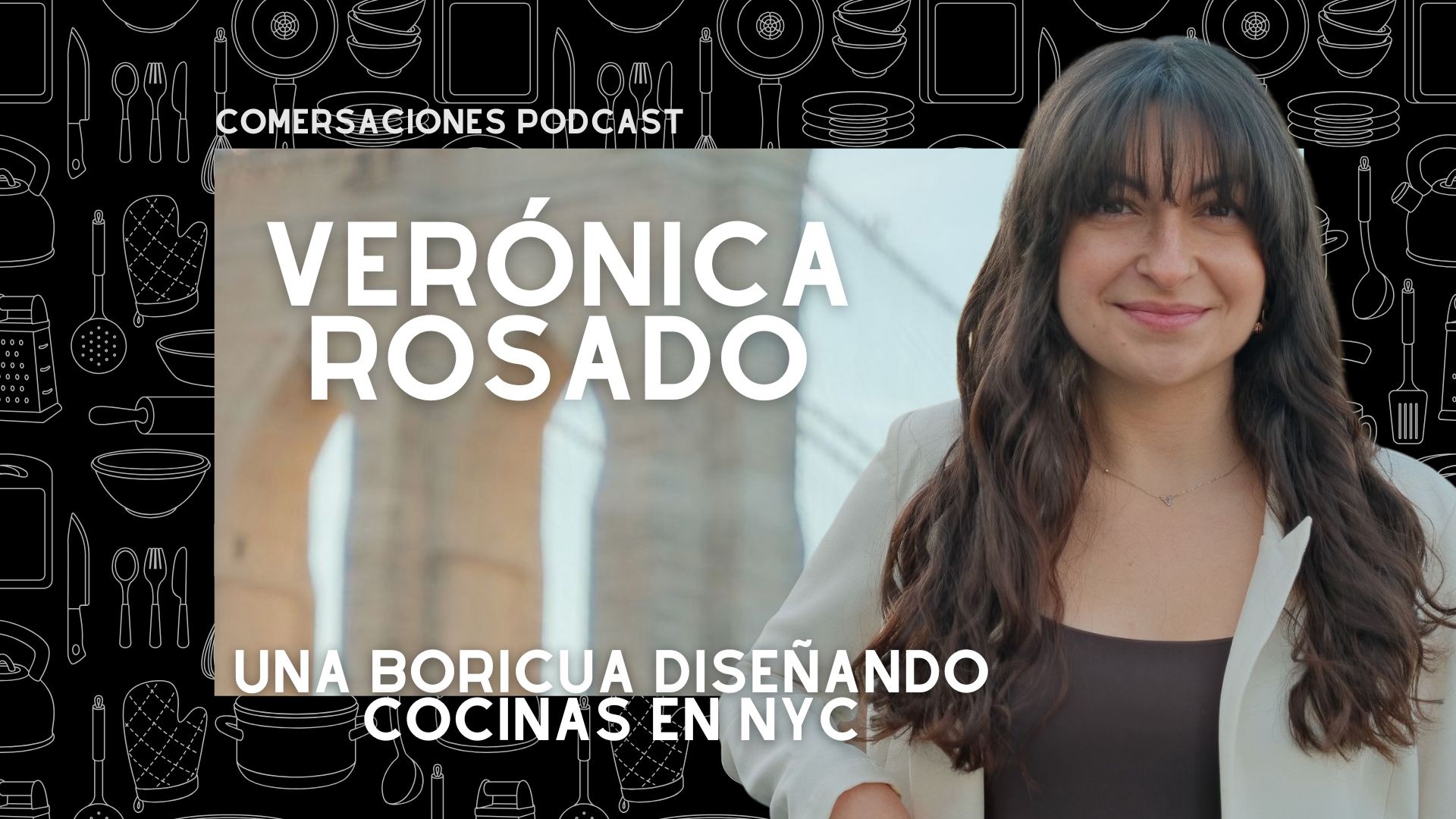
By February 2026, the second season opened with Verónica Rosado, a Puerto Rican architect working on industrial kitchens in New York. Here was food considered through the space where people make it. The guest list could accommodate a designer as comfortably as a chef, because the opening question was broad enough to travel.
Across these conversations, Giraldo-Gallo works with a useful constraint. Food supplies the starting point. The guest supplies the life. The episode can follow work, migration, childhood or a decision to change direction without requiring each person to fit the same professional outline.
Brooklyn, with the notebook open
Giraldo-Gallo’s own writing lets the everyday details take the foreground. In a personal essay published in March 2026, he described an autumn day in Brooklyn that began with homemade sourdough flatbread. He turned it into a savory variation on French toast with egg, milk and roasted chiles.
Later came a walk with his dog through Prospect Park, photographs, music and a pastry eaten on a bench. The essay eventually arrived at a notebook in a neighborhood laundry bar. Its arrangement gave ordinary errands the space they are rarely allowed in a professional profile. The person asking other people about their lives had also been writing about his own.

The domestic writer and the communications founder occupy the same public record. One attends to audiences and organizations. The other attends to breakfast and a walk. Together, they offer a less compressed picture of a working life than a title alone could provide.
The old friend’s unexpected answer remains a good place to leave him. It shows what an interview can add even when a relationship is long established. Giraldo-Gallo had twenty years of familiarity with Witt. A conversation about food made room for something else. The next question was still worth asking.