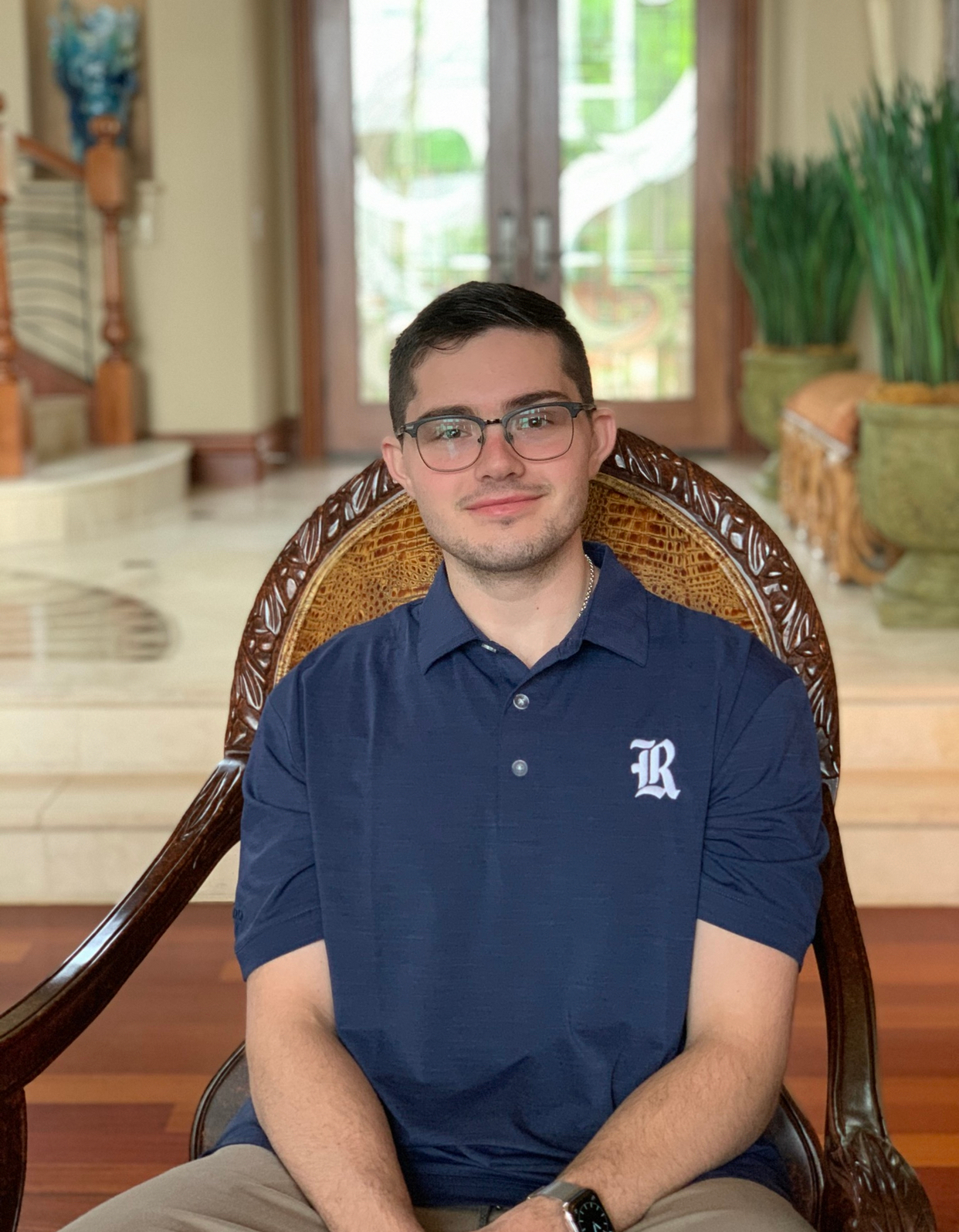
The man who reads the paper
so you actually understand it.
Senior Research Scientist at Netflix. Author of Deep (Learning) Focus, a newsletter that treats readers like researchers - because most of them are. He doesn't summarize AI papers. He rebuilds them from the ground up, with the kind of patience that makes 60,000 people show up twice a week.
Cameron Wolfe's newsletter doesn't have a headlines section. There's no "here's what happened in AI this week." What it has instead is a single cohesive thread - one topic, explored across multiple issues, for roughly a month - until you actually understand it. Not tracked it. Understood it.
That distinction is the whole project. Most AI newsletters chase the news cycle. Deep (Learning) Focus builds the mental model first and trusts that readers can apply it themselves. It's an unusual bet in a space where attention is scarce and novelty is the default product. The 60,000+ subscribers suggest the bet is paying off.
By day, Wolfe is a Senior Research Scientist at Netflix's Globalization team - the group responsible for making Netflix make sense in 30+ languages across 190+ countries. If you've ever noticed that subtitles feel oddly natural, or that dubbing doesn't quite match the uncanny valley, part of that is the work of people like him. He uses large language models to strip language barriers from a product that 300 million people use.
He finished his PhD at Rice University in 2023, in three years, while simultaneously holding a research scientist role at an AI startup. The Stack Overflow podcast interviewed him about it. The interviewer seemed surprised. Cameron seemed mildly confused about why anyone would do it differently.
"His primary goal is to be a bridge between academia and industry by making scientific information interpretable to all."
Cameron R. Wolfe - About PageThere's a particular type of intelligence that doesn't announce itself - it just explains things in a way that makes you feel smarter, without realizing you've been taught anything. Cameron Wolfe has that quality in writing, which is a rare thing to have. It's even rarer when the subject is non-convex optimization or the internal mechanics of RLHF.
He started coding at the University of Texas at Austin, studying computer science and gravitating toward the Neural Networks Research Group, where the work was genetic algorithms and evolutionary computation. These are not the glamour topics of AI - nobody's writing breathless Substack posts about evolutionary computation in 2020. But they were rigorous, and rigor seems to be the through-line in everything he's done since.
Rice University took him next, into the OptML Lab under Dr. Anastasios Kyrillidis. The research was deep: non-convex optimization for deep learning, graph convolutional networks, neural network pruning and efficiency. The kind of work that matters most after the papers are forgotten - because it shapes how the next generation of models gets trained. PipeGCN, his ICLR 2022 paper, figured out how to train large-scale graph convolutional networks through pipelined feature communication. It's still being cited.
He didn't wait for graduation to take on real problems. While finishing the PhD, he worked as a Research Scientist at Alegion, building pre-labeling systems that improved human annotation efficiency by over 200 percent. This is the kind of outcome that gets one sentence in a resume and took years to build. He received his doctorate in 2023 - Rice called him a "Trailblazing Researcher." He moved on quickly.
After Rice: Director of AI at Rebuy Engine, an e-commerce personalization company. This is where the theoretical background met industrial pressure. He built LLM agent systems, worked on reinforcement learning for product merchandising, and designed personalized product ranking systems for direct-to-consumer brands. It's the kind of role that sounds like a pivot from research but isn't - it's research with a deadline.
Then Netflix, where the Globalization team is doing something few people think about when they think about streaming: making a product feel local in 190 countries. The subtitles, the dubbing, every scrap of on-screen text - all of it has to feel right in the local language. Wolfe works on the LLM infrastructure that makes this possible at scale. His team's paper, "Speed Without Sacrifice," won the Best Paper Award in the Industry Track at ACL 2025. The paper title is, itself, a pretty good summary of his entire career approach.
Through all of it, the newsletter has run twice a week, every week. Deep (Learning) Focus doesn't skip issues when the job gets busy. It ends each one with a stoicism quote, which is either ironic or perfectly in character depending on how much Seneca you've read. The approach is methodical, the format is demanding, and the readership has grown past 60,000 people who apparently also prefer depth to headlines.
He built nanoMoE - a Mixture of Experts transformer - from scratch in PyTorch, not for a paper or a job, but to understand the architecture properly. That's the move of someone who doesn't trust reading about a thing to actually know a thing. It's also the move of someone who will shortly write a very thorough newsletter series about it.
"My newsletter, Deep (Learning) Focus, recently passed 50,000 subscribers. Here are my four favorite articles and some reflections on my journey with the newsletter..."Cameron Wolfe - X (formerly Twitter), 2025
Training, fine-tuning, inference, evaluation. The full stack of how LLMs actually function in production systems, not just in benchmark papers.
Reinforcement learning from human feedback - how you take a language model and shape it toward what people actually want. His newsletter's most-read series topic.
At Netflix, serving 300M+ members in 30+ languages. The problem of language isn't translation - it's cultural meaning. LLMs are how the gap closes.
PipeGCN (ICLR 2022) and GIST tackled the scalability problem for GCNs at the industrial scale. Tens of thousands of nodes, distributed training.
The i-SpaSP algorithm - iterative sparse structured pruning - for making neural networks smaller without losing what matters.
From building LLM agent systems at Rebuy to writing the definitive Deep (Learning) Focus series on AI agents from first principles.
Best Paper Award, Industry Track - ACL 2025 - "Speed Without Sacrifice" with the Netflix Globalization team.
Deep (Learning) Focus newsletter: 60,000+ subscribers, twice weekly, consistently since launch.
PipeGCN accepted at ICLR 2022 - efficient full-graph training for large-scale graph convolutional networks.
790+ Google Scholar citations across publications in optimization, GCNs, continual learning, and LLMs.
Named "Trailblazing Researcher" by Rice University, Class of 2023.
Built pre-labeling systems at Alegion that improved human annotation efficiency by 200%+ in production.
The AI newsletter market is crowded and fast. Most of it trades on novelty: what paper dropped today, what company raised money, what model just beat the last benchmark. Cameron Wolfe's Deep (Learning) Focus runs on a completely different clock.
A typical series picks one topic - RLHF, say, or LLaMA, or the mechanics of reasoning models - and builds upward from first principles over four or five issues. By the end of the series, a reader who started knowing only the name of the thing now understands the architecture, the training approach, the failure modes, and the research landscape surrounding it. It's less newsletter, more continuing education.
The format is demanding. It takes significantly longer to write a piece that builds genuine understanding than one that summarizes. It's harder to keep readers engaged across multiple issues than to offer a new shiny thing each time. And yet the subscriber count keeps climbing - past 50,000, past 60,000 - which suggests the format is the point, not a liability.
What the newsletter does, in practice, is make it possible to read a new paper in a field Wolfe has covered and actually follow it - not skim it, not feel vaguely informed about it, but engage with it technically. That's what 60,000 people are paying attention for. Not the news. The upgrade.
The stoicism quotes at the end of each issue are not accidental. Wolfe describes himself as a fan of stoicism, deep focus, and finding passion in life. The newsletter embodies all three: persistent, unhurried, genuinely interested in the subject rather than in the attention the subject generates.
Years to complete his Rice PhD - while simultaneously working as a Research Scientist at an AI startup. He seemed confused about why anyone found this unusual.
Countries where Netflix operates and his Globalization team's LLM work is actively running, serving 300+ million members in 30+ languages.
Improvement in human annotation efficiency from the pre-labeling systems he built at Alegion - the kind of number that's real because it's oddly specific.
Summary sections in his newsletter. Every issue builds something new. He doesn't recap last week. He assumes you were paying attention.
Topic at a time. The entire Deep (Learning) Focus format rests on this single constraint. One topic, fully understood, before moving to the next.
The Mixture of Experts transformer he built from scratch in PyTorch - not for publication or a product, but because he wanted to understand it properly first.