graph-neural-networks
(10)
Contrario
Contrario is a San Francisco AI recruiting company that pairs specialized human recruiters with AI agents to source, screen, and deliver vetted candidates to startups within days. Founded in 2025 by Stanford dropouts Arya Marwaha and Aditya Sood, it operates as a hybrid between a traditional agency and recruiting software, using AI talent scorecards and graph-based matching while automating scheduling and follow-ups. The company reached roughly $6M in annualized revenue and paid over $1M to recruiters within six months of operating, and raised a $2.3M seed led by Nexus Venture Partners.

Lynx Analytics
Lynx Analytics is a Singapore-founded, AI-native analytics firm built by INSEAD students and professors in 2010 to apply graph theory to hard business problems. Its flagship platform, LynxKite, turns very large datasets into graphs and runs hundreds of graph algorithms - many GPU-accelerated - to power everything from telecom churn prediction and fraud detection to drug discovery. Over the past few years the company has pivoted its focus toward AI-native consulting and products for pharma and life sciences, combining biomedical knowledge graphs, large language models, and NVIDIA's accelerated computing stack.

P-1 AI
P-1 AI is a deep-tech startup building engineering AGI for the physical world. Its product, an anthropomorphized AI engineer agent named Archie, is trained on proprietary semi-synthetic, physics-based datasets to reason across multiphysics design problems and use the same complex engineering tools human engineers use. Currently operating at the level of a junior mechanical and electrical engineer, Archie is already working with design partners on data center cooling and critical power systems, with expansion planned into automotive, aerospace, and defense. Founded by former Airbus and United Technologies CTO Paul Eremenko alongside Google DeepMind and Airbus veterans, the company raised a $23M seed round in 2025 led by Radical Ventures.
XTRIUM
XTRIUM is an Austin-based deeptech startup building an AI-powered intelligence layer for the material world. Its platform helps manufacturers, product developers, and procurement teams choose the right materials, discover new applications for existing ones, and diversify suppliers - compressing sourcing timelines from roughly 12 months to about 5 days. Using graph neural networks and combinatorial matching, XTRIUM aims to be the central hub of a materials research, development, and sourcing ecosystem.

Malur Narayan
Malur Narayan is the CEO and co-founder of XTRIUM, an Austin-based B2B AI startup building an intelligence layer for materials that matches materials to real-world applications, surfaces sourcing risk, and turns supply chains from fragile to resilient. A computer engineer who was running machine-learning research and self-managed software teams in the early 1990s, he spent three decades scaling technology businesses across five continents at Nortel and Tata Consultancy Services before co-founding two AI startups. He frames XTRIUM around a single idea: making the search for a new application for any material as fast and easy as an internet search, compressing what used to take a year into days.

TigerGraph
TigerGraph is a Redwood City-based software company building a native, massively parallel graph database and analytics platform designed to find patterns across deeply connected data in real time. Founded in 2012 by Dr. Yu Xu, it powers fraud detection, anti-money laundering, customer 360, recommendation engines and, increasingly, the relationship-intelligence layer behind enterprise AI and GraphRAG. Its cloud-native platform, TigerGraph Savanna, lets organizations query trillions of edges with the GSQL query language across AWS, Azure and Google Cloud.
Chris Parsonson
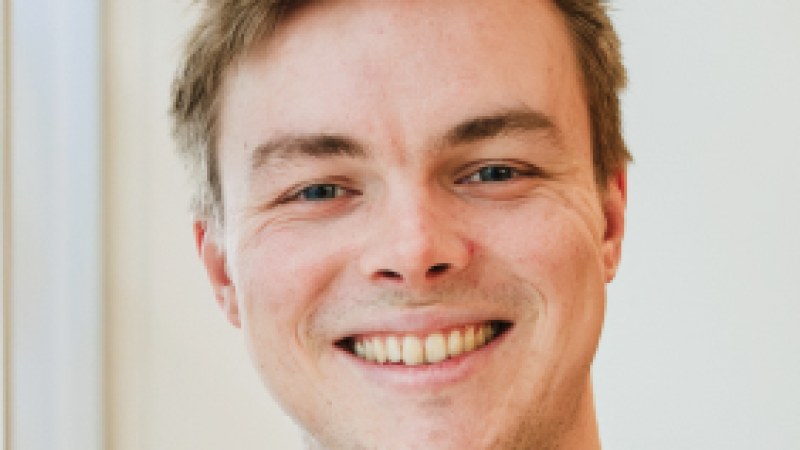
Chris Parsonson is the co-founder and CEO of Solve Intelligence, an AI platform for patent professionals that he started in 2023 after finishing a machine learning PhD at UCL. He built the company alongside his brother Angus and fellow UCL researcher Sanj Ahilan, ran it profitably to $10M+ in revenue with a single salesperson, and raised over $55M from Thomson Reuters, Microsoft, Y Combinator and 20VC. His work turns deep optimisation research into software that drafts and analyses patents for 400+ IP teams across six continents.

Osmo
Osmo is a digital olfaction company teaching computers to smell. Spun out of Google Brain in 2022 by neuroscientist Alex Wiltschko, it built an AI 'Principal Odor Map' that predicts how a molecule smells from its chemical structure, then uses that model to design new aroma ingredients and digitize real-world scents. In 2024 it became the first to 'teleport' a smell - capturing a fresh plum and recreating it with no human in the loop. Its platform, Olfactory Intelligence, now powers Generation, the world's first AI-driven fragrance house working with roughly 100 beauty and consumer brands.
Deep Principle
Deep Principle is an AI-for-Science company spun out of MIT that builds ReactiveAI, a closed-loop R&D platform fusing generative AI, quantum chemistry, and high-throughput experimentation to discover new materials, catalysts, and chemical processes far faster and cheaper than traditional trial-and-error labs. Founded by MIT PhDs Haojun Jia and Chenru Duan, the company targets materials, energy, and pharmaceutical R&D and has reported quantum-chemistry speedups on the order of 20,000x versus conventional DFT.
Cameron R. Wolfe
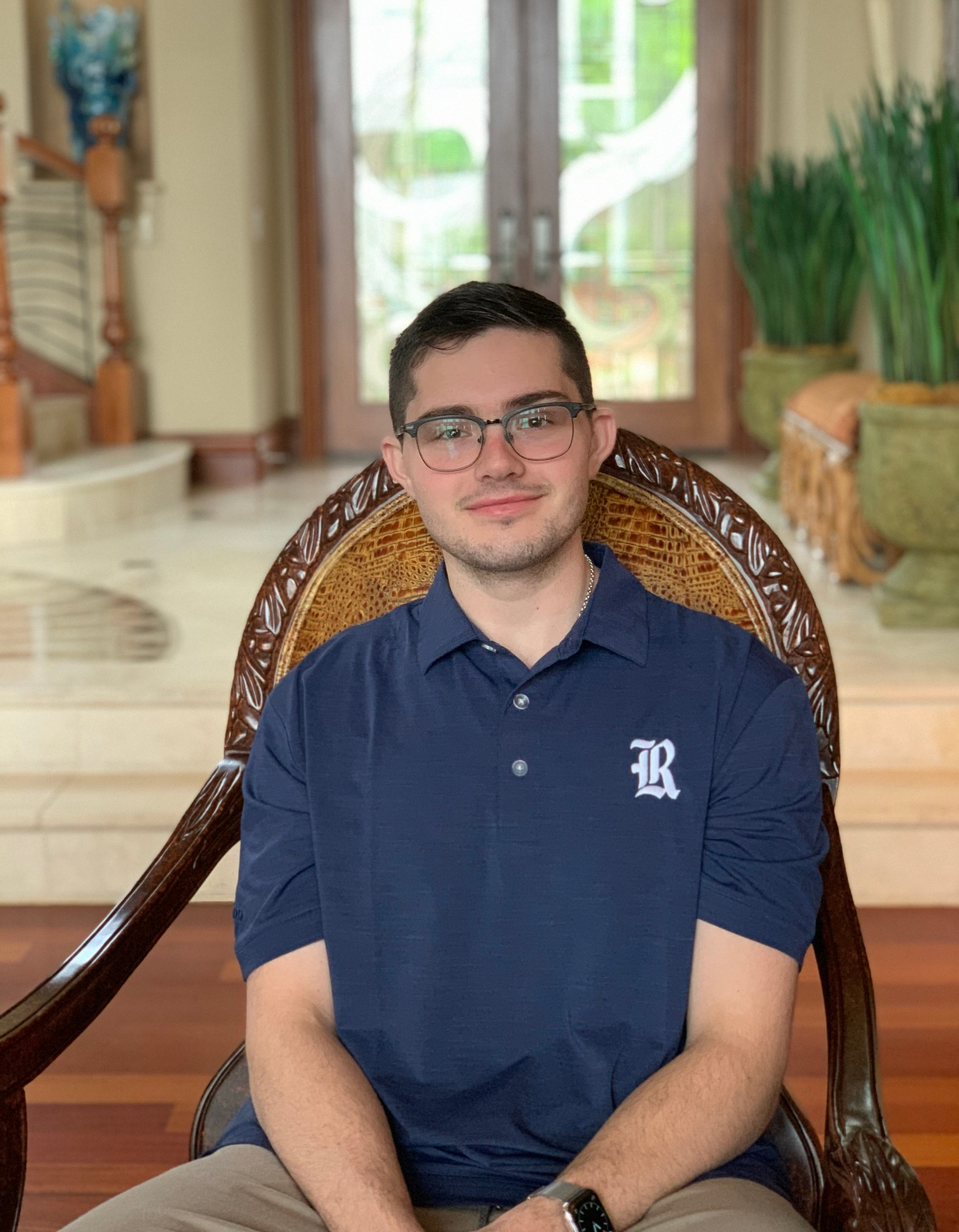
Cameron R. Wolfe, Ph.D. is a Senior Research Scientist at Netflix's Globalization team and the author of Deep (Learning) Focus, a twice-weekly Substack newsletter with 60,000+ subscribers that translates cutting-edge ML research into approachable long-form essays. A Rice University computer science PhD, he has built a reputation as one of the clearest explainers of large language models, RLHF, and AI agents in the field, bridging academia and industry with methodical depth and intellectual generosity.