Osmo closes $70M Series B led by Two Sigma Ventures - Feb 2026~100 brands now building fragrances on the Generation platform2024: first fully automated "scent teleportation" of a fresh plumPrincipal Odor Map published in Science, 2023Total raised to date: ~$130MNew molecules shipping: Glossine, Fractaline, QuasarineOsmo closes $70M Series B led by Two Sigma Ventures - Feb 2026~100 brands now building fragrances on the Generation platform2024: first fully automated "scent teleportation" of a fresh plumPrincipal Odor Map published in Science, 2023Total raised to date: ~$130MNew molecules shipping: Glossine, Fractaline, Quasarine
Digital Olfaction · New York, USA · Founded 2022
Osmo.
"Digitizing the sense of smell, for human health and happiness."
AIOlfactory IntelligenceGoogle Brain spinoutSeries B · $130M~70 employees
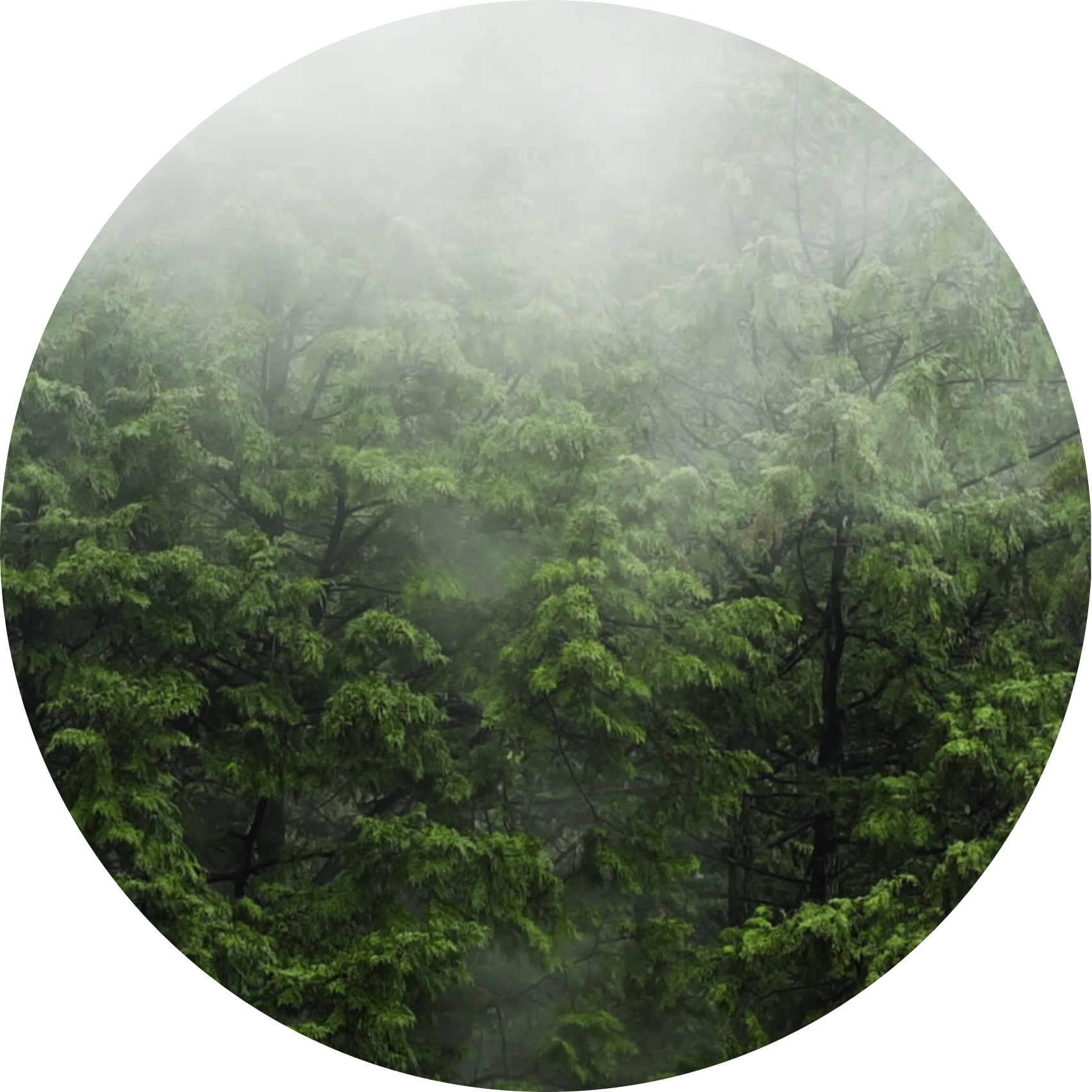
OSMO, RENDERED. A breath of forest air, bottled as data.
The bubble is the company's favorite party trick - a smell you
can see before you can sniff it.
The Scene
A machine that knows what a molecule smells like
In a lab in New Jersey, a computer is sniffing a molecule it has never met. It has no nose. It has a chemical structure on screen and a model trained on thousands of smells, and from that alone it predicts, with unsettling confidence, that the thing will smell of warm vanilla with a thread of something green underneath. Then a perfumer opens the bottle and agrees. This is a normal Tuesday at Osmo.
Osmo is a digital olfaction company. That is a clumsy phrase for a simple ambition: to do for smell what the camera did for light and the microphone did for sound. Sight went digital. Hearing went digital. Smell, the oldest sense in the evolutionary book, stayed stubbornly analog - locked inside human noses and the heads of a few hundred master perfumers worldwide. Osmo wants to give it a file format.
By 2026 the company has roughly 70 employees, about $130 million in the bank, and something rarer than either: a platform it calls Olfactory Intelligence that can read a smell, write a new one, and occasionally teleport an old one across a room.
Sight and sound have been digital for a century. Smell was the sense everyone forgot to plug in.
- The premise, more or less
The Problem
Smell never got its own science of prediction
Here is the inconvenient truth the fragrance industry lived with for a century: nobody could reliably predict what a new molecule would smell like before making it and sniffing it. Color has wavelengths. Sound has frequencies. Smell had a shrug and a trained nose.
So the discovery of new aroma molecules was slow, expensive, and a little superstitious. Chemists synthesized candidates, humans smelled them, most were disappointing, and the survivors took years to reach a shampoo. Meanwhile regulators kept retiring older ingredients on safety grounds, and the palette of legal, affordable, pleasant-smelling molecules quietly shrank.
That is the central tension Osmo exists inside. Demand for scent is everywhere - perfume, detergent, lotion, bug spray - but the map for inventing it was missing. You cannot search a space you cannot describe.
~500K
candidate molecules Osmo's map screened for odor
5,000
molecules in the dataset that trained the original model
400
brand-new odorants predicted in the validation test
The numbers behind the nose. A model raised on five thousand smells, then asked to guess hundreds it had never encountered. It did better than the average human in the room.
The Bet
An 18-year obsession, spun out of Google
Alex Wiltschko has wanted to digitize smell for most of his adult life. He did a PhD in olfactory neuroscience at Harvard, studying how brains turn molecules into perception, and carried the question into Google Brain, where machine learning was busy conquering images and language. His bet was almost annoyingly simple: if a neural network can learn the structure of a face, it can learn the structure of a smell.
In 2022 that research left the building. Osmo spun out of Google Brain with a $60 million Series A and a founding belief that scent was a prediction problem hiding inside a chemistry problem. Wiltschko liked to point out that he had been chasing this for eighteen years before the company existed - which is either devotion or stubbornness, and in startups the two are hard to tell apart.
With AI, we can go from a brief to the first sketch of a fragrance formula in an instant.
- Alex Wiltschko, Founder & CEO
The team he built is a deliberately odd mix. Olfactory neuroscientists sit next to machine-learning engineers, who sit next to master perfumers like Christophe Laudamiel - people who have spent careers describing smells in words the rest of us reach for and miss. The thesis: the AI proposes, the human nose disposes, and the loop gets faster every cycle.
The Product
The Principal Odor Map, and a printer for smells
The breakthrough has a deliberately grand name: the Principal Odor Map, or POM. Using graph neural networks, Osmo arranged odorant molecules not by chemistry but by how they actually smell - so that two molecules that look nothing alike but smell the same end up as neighbors, and two near-twins that smell wildly different sit far apart. In 2023 the company published it in Science, with collaborators at Monell, the University of Pennsylvania and Arizona State. On 400 novel odorants, the model's description matched the trained human panel more closely than the median panelist did.
Read that twice. The software was, on average, a slightly better smeller than the people.
It can find molecules that look identical but smell completely different - and molecules that look unrelated but smell exactly alike.
- On what the map actually does
Then Osmo did the showy thing. In 2024 it pulled off what it calls scent teleportation: a fresh plum went into a machine, a spectrometer broke its aroma into component molecules, the AI encoded that into a recipe, and a molecular printer rebuilt the smell on the other side - with no human deciding anything in between. The first fully automated round trip from a real smell to a digital file and back.
Platform
Olfactory Intelligence
The core engine that reads, writes, maps and digitizes scent - turning molecular structure into predicted smell, and briefs into formulas.
Science
Principal Odor Map
The graph-neural-network map of odor space, published in Science, that powers prediction for molecules no one has smelled yet.
Fragrance House
Generation by Osmo
Launched 2025 - the world's first AI-powered fragrance house, pairing AI-designed ingredients with formulation tools and market data.
Ingredients
New Molecules
Glossine, Fractaline and Quasarine - novel, sustainable aroma molecules designed by the platform and now used in real products.
The Receipts
Four years, from research paper to fragrance house
2022
Spun out of Google Brain
Osmo launches as an independent company with a $60M Series A and one big question: can AI predict smell?
2023
The Principal Odor Map, in Science
A landmark paper shows the model out-describing the median human panelist on hundreds of new odorants.
2024
Scent teleportation
The first fully automated digitization and recreation of a real smell - a fresh-cut plum, rebuilt by machine.
2025
Generation launches
The world's first AI-powered fragrance house debuts, with new ingredients Glossine, Fractaline and Quasarine.
2026
$70M Series B
Two Sigma Ventures leads a round (Stripe's Patrick Collison among backers) to scale Olfactory Intelligence.
The Proof
Money follows the molecules
Skeptics are right to ask whether a clever demo becomes a business. The answer, so far, is in the cap table and the customer list. Osmo has raised about $130 million across two rounds, roughly 100 brands are building fragrances on its platform, and the investors writing checks are not famous for sentiment.
$60M
Series A2022
$70M
Series B2026
~$130M
Total Raisedto date
Capital raised by round. Bars are scaled to dollars, not hype. The Series B was led by Two Sigma Ventures, with Valor, Atreides, Amplo, Collab Fund and Stripe co-founder Patrick Collison along for the ride.
The backing list tells its own story: GV and Lux Capital early, Two Sigma leading the growth round, and a cameo from Patrick Collison - the kind of investor who tends to show up where software is about to eat an old industry. The old industry, here, is the multi-billion-dollar world of flavors and fragrances long ruled by giants like Givaudan, IFF and dsm-firmenich.
Roughly 100 brands. One odor map. A printer that can rebuild a plum. The demo became a pipeline.
- Where 2026 stands
The Mission
Better smells, and maybe better medicine
Ask Wiltschko what this is really for and the answer splits in two. The near-term goal is unglamorous and enormous: design safer, more sustainable aroma molecules for the everyday products that already surround us - perfume, shampoo, detergent, insect repellent. A better-smelling, cleaner-formulated bottle of something is not a moonshot. It is a market.
The long-term goal is the moonshot. If a machine can read smell precisely enough, it could one day help detect disease - many illnesses change a person's chemistry, and therefore their scent, before any other symptom shows. Osmo has worked with the Gates Foundation on scent science aimed at public health, including the deeply practical problem of repelling the mosquitoes that spread malaria. A nose that never gets tired could, in theory, catch what a tired human nose misses.
The same map that designs a perfume might one day help a doctor smell what's wrong.
- The far edge of the bet
Watch
See (and almost smell) it work
Smell is hard to put on a webpage. Video gets closer. A few places to watch the map and the printer in action, and to hear the founder explain the idea in his own words.
Return to that lab in New Jersey. The molecule the computer sniffed at the start - the one it had never met - is no longer a stranger. The model named its smell, a perfumer confirmed it, and a version of it may already be threaded into a fragrance sitting on a shelf, in a bottle nobody will ever connect to a graph neural network.
That is the quiet thing Osmo has changed. For a century, inventing a new smell meant guessing, making, and sniffing, in that order. Osmo flipped it: predict first, make second, and let the nose be the editor instead of the explorer. Smell finally has a file format - searchable, sendable, and increasingly designable.
It is still early. The maps will get sharper, the printers cheaper, the disease-detection dream is years out, and the incumbents are large and patient. But the sense everyone forgot to plug in is, at last, plugged in. The plum proved it. The brands are buying it. And somewhere a computer with no nose is making something that smells, against all odds, exactly right.
Smell went analog for a hundred thousand years. It took Osmo about four to give it a save button.