A Philips field technician has a machine to diagnose. The useful knowledge exists, but it needs to arrive as the next sensible question, followed by the next sensible step. Philips asked Byteridge for a rule-based troubleshooting bot whose rules could be updated centrally. Byteridge built it with Electron, Angular and Node.js. An ordinary support problem became a software project because knowing the answer and delivering it are different jobs.
- The work: custom apps, enterprise modernization and AI integrations.
- The customers: enterprises and startups, including published projects for Microsoft, ADP, Philips and boAt.
- The useful idea: find the handoff that slows a job down, then design around it.
That gap is a useful way into Byteridge. Scan its portfolio and the nouns jump around: payroll, watches, lending, chatbots. Look at the verbs and a pattern appears. Connect. Translate. Update. Bring something useful to a person who would otherwise have to hunt for it. The company sells the engineering needed to make those verbs happen.
A business that paid for its own experiments
Vinayak Sharma founded Byteridge in Hyderabad in May 2008 after working at Microsoft and Oracle. His original plan, described in a 2011 interview, was to use IT services to bootstrap a products-and-services business. Customer projects paid the bills; some profits went into prototypes. Getting a product to customers turned out to require groundwork the team had not learned inside a large corporation.

Sharma was also refreshingly cautious about differentiation. Asked what separated his firm from India's crowded IT services market, he questioned whether he could offer a claim others had not already made. His principle was simpler: understand the business requirement before choosing the technology. That is a useful standard for judging the company today. A fashionable tool earns its place by doing a particular job.
“technology is the means and not an end”
Vinayak Sharma / 2011 interview
Seven watches, one front door
Consider boAt. A wearable brand can source devices from different manufacturers, but its customer still wants a coherent app. Byteridge says it coordinated with multiple original device manufacturers to build a health and activity application for iOS and Android, with Google Fit connectivity. Its case study reports support for seven wearable devices and more than one million Google Play downloads.
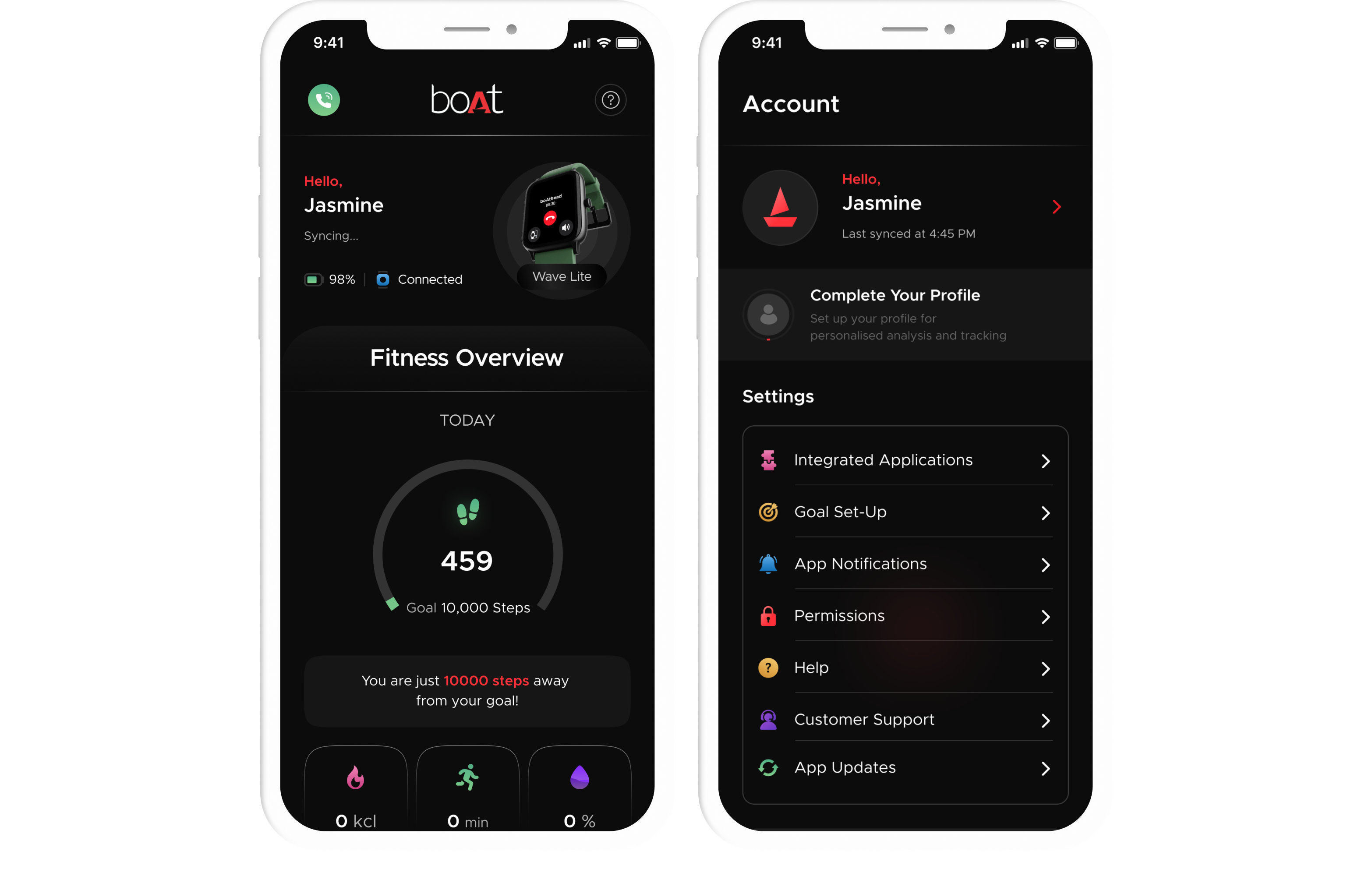
Reported in Byteridge's case study; historical project figures.
Those are company-reported figures, rather than a fresh count of active users. They still explain the assignment better than an adjective could. The screen is the visible result of negotiations between devices, platforms and data. For the buyer, a partner with experience across those boundaries may be more useful than one with a beautiful demonstration of a single feature.
The chatbot still needs the plumbing
Microsoft's Ruuh offers a helpful distinction. Byteridge's contribution was a responsive Angular web application and a .NET MVC middle tier connected to the AI engine and event tracking. The initial version supported a mobile-browser pilot with a device manufacturer. Saying it worked on Ruuh is true; saying it invented Ruuh's underlying intelligence would overstate the role.
The current ADP Compliance Assist case tackles a different bottleneck: payroll practitioners researching changing regulations across scattered documents and expertise. Byteridge describes a conversational system that returns contextual answers, summaries, impact assessments and supporting references. The engineering question becomes how to connect a question to relevant evidence inside the payroll workflow.
Its Deltek Teams bot case makes the same argument at desk level: bring timesheet entry into the application people already use. The page describes natural-language prompts linked to the Timesheet API. Its time-saving figures are projections. The proposal is worth examining because it names the interruption it intends to remove, giving a buyer something concrete to test.
The invoice is part of the story
Byteridge operates as a business-to-business engineering partner. Product Studio covers concept validation, design, development, testing and deployment. Other offerings address mobile applications, generative AI and existing systems that need modernization. A startup might buy help getting its first usable product out. An established business might need a new interface connected to years of accumulated software.
Its public Clutch listing gives a $10,000 project minimum and a $25-$49 hourly range. These are directory indications, not a quote. Customer reviews there also introduce useful friction: one buyer wanted more detail in initial proposals; another noted that the required engineers could be occupied on other projects. Scope clarity and staffing availability deserve attention before kickoff.
The alternatives include hiring internally, choosing a specialist agency, or using a broader engineering consultancy. Byteridge's case history supports a position around custom product delivery and integration. It gives buyers examples to investigate. It does not remove the need to check the proposed team, technical ownership and maintenance plan.
Start where the handoff hurts
One lending-platform case makes the lesson particularly clear. Policy rules embedded in application code required engineering involvement whenever policies changed. Byteridge built a centralized rules system with authoring, testing, versioning, approvals and audit logging. The change moved routine policy management toward the people responsible for the policy, while retaining controls.
A reader can copy the question behind that project: where does a routine decision become somebody else's queue? Map that handoff before writing the feature list. Run a limited pilot. Measure turnaround time, errors or repeated manual steps. Custom engineering makes sense when the workflow is distinctive and somebody can own it. A standard need already handled by packaged software may justify a much smaller intervention.
People are another dependency
Byteridge's careers page supplies unusually concrete culture details: no probation or employment bond, professional certification support, and babysitting reimbursements for working mothers. Its 2026 team gathering in Hyderabad included workshops with AWS and Deltek, identified as long-standing partners. These details put people and shared learning into a business whose deliverable depends on both.
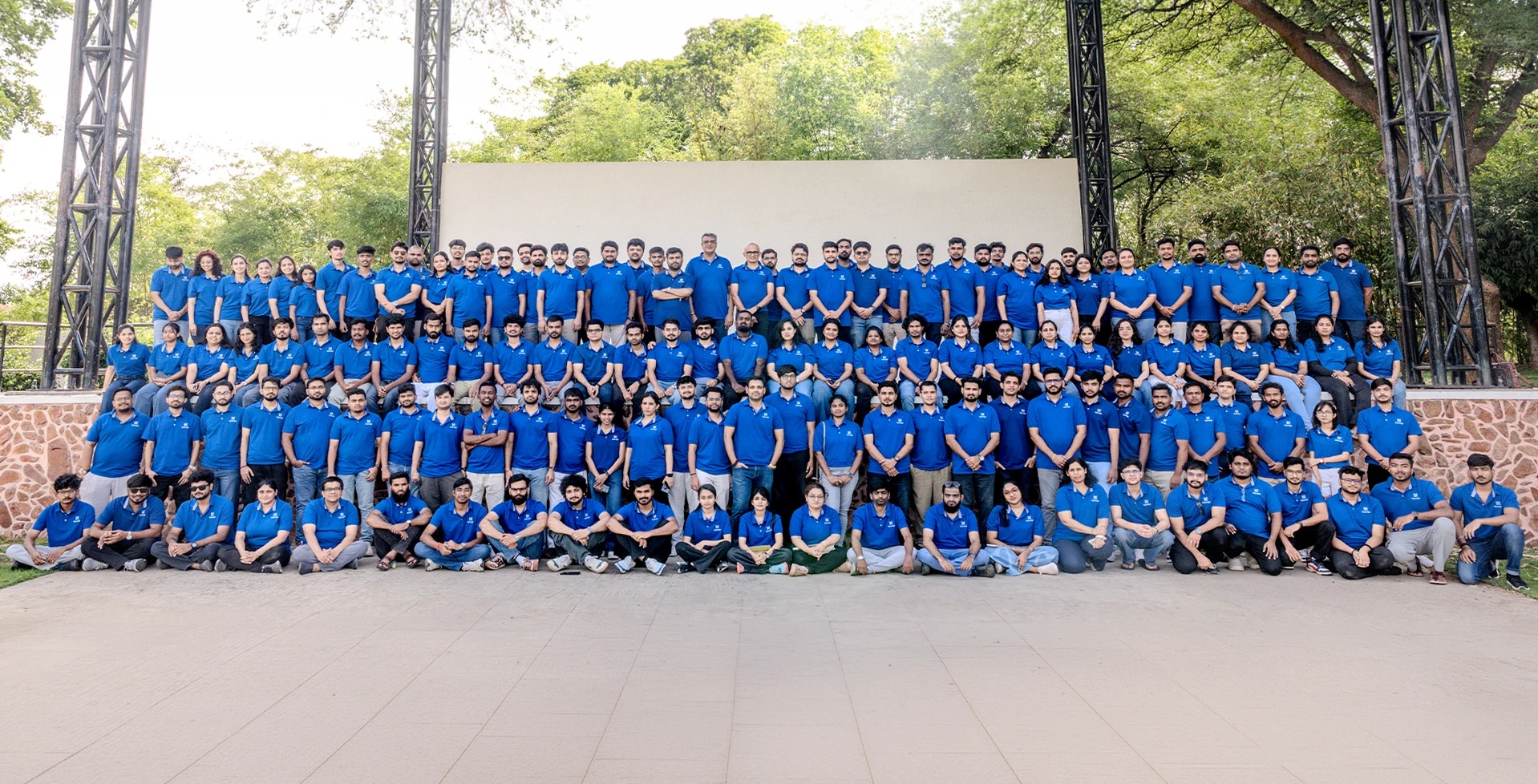
A watch, a payroll query and a technician's next question look unrelated. In Byteridge's portfolio, each becomes a test of whether software can carry information across an awkward boundary. For a prospective customer, that suggests a productive opening conversation: show the team where the work gets stuck.