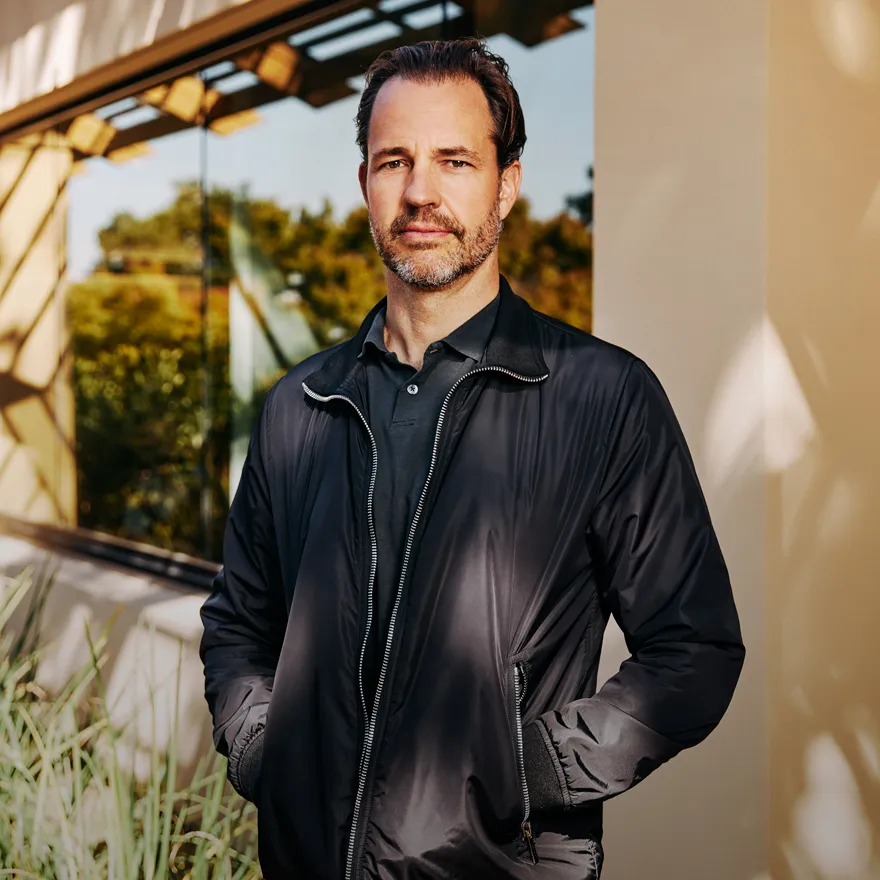
One Demo. Five Minutes. Five Hundred Million Dollars.
It's 2008. A kid from MIT walks into Sequoia's office with a folder that syncs across computers. Bryan Schreier watches the demo. One time. No second meeting. No due diligence marathon. He writes the check.
That folder was Dropbox. That check made Schreier one of the most trusted names in early-stage venture capital. But here's what nobody talks about - he almost didn't take the meeting.
Most VCs in 2008 were chasing the next Facebook, the next consumer viral hit. Schreier was looking for something different. Something most people would scroll past. "Marketplace and services infrastructure businesses that transform how work gets done." Say that at a cocktail party and watch eyes glaze over. Put it in a pitch deck and watch billion-dollar outcomes appear.
The Man Who Launched Google Europe
Before Sequoia, Schreier did something most investors never do - he actually built things. As Google's Senior Director of International Online Sales and Operations, he launched the European headquarters. Not "advised on." Not "consulted for." Launched. Then became interim President of Sales in China. Then walked away from it all to join a venture firm in 2008, right as the financial crisis hit.
Terrible timing. Or perfect timing, depending on how you see it.
"At Google, I learned from one of the great leaders of the time," Schreier says. "How to take a team from zero to thousands. How to creatively address challenges. Loyalty. Fighting for your people." Notice what's missing from that list - growth hacking, viral loops, disruption theater. The stuff everyone else was obsessing over.
The Anti-Checklist Investor
Here's where Schreier breaks from the pack. Most VCs have a checklist. Product-market fit. Unit economics. TAM. CAC/LTV. All the acronyms. Schreier's approach? "Specializing will give you tunnel vision. If Sequoia had a checklist of things they needed new investments to answer, they would have missed most of their winners."
Translation: the best companies don't fit in boxes. Dropbox was file storage - boring. Qualtrics was survey software out of Utah, bootstrapped for years - double boring. Thumbtack was local services marketplace - triple boring. All are now category leaders worth billions.
The pattern isn't in what they do. It's in who builds them.
The Bootstrapped Whisperer
Qualtrics started in 2002 in Provo, Utah. Not exactly Sand Hill Road. Ryan Smith and his father built it without taking a dollar of venture capital for over a decade. Then Schreier showed up. Not to tell them what they were doing wrong. To help them scale what they were doing right.
"He's known for hands-on board work and detailed founder playbooks," says one founder. "Often partnering with bootstrapped or non-Bay Area founders and helping them use data to find product-market fit and scale into category leaders." Qualtrics went public in 2021. SAP acquired them for $8 billion, then spun them back out. The company is still standing, still growing.
That's the Schreier pattern - find the founder who's been building in the dark, turn on the lights, get out of the way.
Behind the Scenes
"The best role for me is behind the scenes, supporting great founders and companies," Schreier says. He means it. Check his Twitter - 14,000 followers, barely active. Conference speaking circuit? Pass. Press interviews? Rare. His nightstand has an overflowing pile of books with drawers so full they won't open. But ask any founder on his board who they call when things get messy, and the answer is always the same.
"My goal is to be a founder's first call - something that has to be earned through trust, delivery and being there when things are messy and hard."
Not when things are going well. When they're messy. When the growth stalls. When the co-founder leaves. When the product launch fails. That's when most investors ghost. That's when Schreier shows up.
The Playlist Investor
Music has been the epicenter of Schreier's social and family life since childhood. He's played in bands for decades. Surfing. Beekeeping - yes, actual hives with actual bees. He reduced caffeine for his heart and uses physical tools to limit screen time, which is delightfully analog for someone who backed Dropbox.
There's a huge pile of books on physics he wishes he understood better. Projects he wants to build with his hands. None of this shows up in his Sequoia bio. All of it shows up in how he works.
He's not optimizing for portfolio markups. He's optimizing for building things that last with people who give a damn.
The Current Portfolio
Today Schreier sits on boards including Dropbox, Qualtrics, Retool, Thumbtack, Front, Domino Data Lab, Clever, Hearsay Systems, and Zum. He's backed Anrok, Clipboard, Gridware, Listen, Vanta, MongoDB. The pattern holds - infrastructure, marketplaces, tools that make work less terrible.
His investment range is $1M to $10M with a sweet spot at $5M. Seed to Series B. Enterprise, consumer, fintech, deeptech, SaaS. He doesn't lead with sector. He leads with founder.
In 2023, he highlighted Retool's AI agents automating millions of hours of corporate work. Not because it's trendy. Because it actually works.
The Midas Touch
Forbes ranked him #84 on the Midas List in 2015. #97 in 2017. #67 in 2023. That's not a decline and recovery. That's the market catching up to what he's been doing all along.
Most investors spray and pray, hoping one moonshot covers the losses. Schreier does the opposite - deep partnerships, patient capital, building alongside founders for years. Boring until it prints.
What Nobody Tells You
Schreier went to Bellarmine College Preparatory, an all-boys Jesuit high school in San Jose. Then Princeton for computer science. Then Morgan Stanley's Technology Investment Banking Group. Then Google. Then Sequoia. The resume reads like every other venture partner.
The difference is what he didn't do. Didn't start a podcast. Didn't build a personal brand. Didn't write a newsletter. Didn't launch a fund with his name on it. Stayed at one firm for seventeen years while everyone else job-hopped.
"Less active on Twitter and typically not found at conferences because he's better deployed as a partner to founders solving problems." That's not spin. That's the actual trade-off he made.
The Formula (That Isn't)
If you're looking for Schreier's secret, here it is: there isn't one. No framework. No playbook. No three-step system. Just decades of showing up, shutting up, and listening twice as much as he speaks.
One demo was enough for Dropbox because he'd already done the work - years at Google building international teams, years before that in banking, years before that writing code. When you know what good looks like, you don't need a checklist.
When you've launched actual products, you can spot founders who've done the same. When you've managed thousands of people, you know what leadership looks like under pressure. When you've been there for the messy parts, founders remember.
That's not a hack. That's just time.
The Next Act
Schreier's still at Sequoia. Still on the seed/early team. Still backing marketplace and infrastructure businesses. Still taking meetings with founders outside the Bay Area bubble. Still being the first call when things fall apart.
The aspiration, if you can call it that, is simple: "To be a founder's first call when things are messy and hard, continuing to support marketplace and infrastructure companies that transform how work gets done, while helping the next generation of category leaders emerge from unexpected places."
No exit plan. No victory lap. No memoir. Just more companies, more founders, more quiet wins that nobody hears about until years later.
Because here's the thing about Bryan Schreier - by the time you've heard the story, he's already moved on to the next one.
The folder still syncs. The surveys still run. The marketplaces still match. And somewhere in Menlo Park, a partner who launched Google Europe and backed Dropbox after one demo is taking a meeting with a founder everyone else passed on.
Five minutes. One demo. No checklist.
Place your bets.