Bruce Buchanan once sold painted rocks by the roadside. Years later, he would help build an airline and co-found a business called Rokt. The two names give the biography a pleasing echo. The more useful connection is the habit underneath. Find something other people pass by. Give them a reason to stop.
In his adult career, that overlooked object became the checkout page. Buchanan had spent years at Jetstar thinking about what travellers wanted, what they would pay for, and how an airline could earn money while keeping fares low. The instant someone decided to buy seemed unusually promising. A customer had arrived with a purpose. Why did so much online commerce treat the end of that journey as an administrative afterthought?
His answer would take him from Sydney to New York, from a familiar executive position to the slower business of persuading strangers to trust a young company. It also required a particular kind of confidence: enough to keep pursuing an idea whose usefulness seemed clearer to him than to everyone he needed to convince.
The first customers wanted their gutters checked
Buchanan was born in Sydney to a British mother and an American father. He spent periods at school in Britain and the United States, and later worked in Boston. He has described himself as “predominantly an Australian”. The international career began before there was a career to speak of.
By high school, he was already trying different ways of earning money. There were car washes, market stalls and handyman work. On the Central Coast, holiday-home owners needed someone to check their properties, clear gutters and make sure nobody had broken in. Buchanan employed school friends to help. These were fairly direct commercial arrangements: someone had a job that needed doing, and a teenager organised the people to do it.
He studied civil engineering at the University of New South Wales. Alongside university, he worked in a technology business and became an owner. The accounts of that early venture describe software and manufacturing work; the constant is that he was already buying into a business and learning through responsibility. He eventually sold his interest and went to business school, studying at the Australian Graduate School of Management and UCLA Anderson.
His route into Boston Consulting Group was less ceremonious than the name might suggest. He encountered the firm while at business school and joined it, developing an interest in consumers and brands. Engineering had given him problems to solve. Consulting brought him closer to the people whose decisions made the solutions worth paying for.
A six-month assignment with a very long return ticket
In 2003, Buchanan helped write the business case for Jetstar and presented it to the Qantas board. He was asked to stay for six months to help get the airline established. The assignment expanded into a substantial part of his working life. He became Jetstar Group CEO in 2008 and remained in the role until 2012.
He worked on its expansion across Asia-Pacific and on the long-haul low-cost model. At the scale described in his executive biography, the airline business employed more than 7,000 people and generated over $3 billion in revenue. That is an elaborate setting in which to discover an interest in a few inches of screen.
Yet the booking process brought the commercial problem into focus. An airline must make its economics work around customers who are deliberately shopping for inexpensive tickets. Buchanan began seeing relevance at checkout as a way to improve both the experience and the revenue. The timing of an offer mattered alongside the offer itself.
The observation travelled well beyond aviation. Any online business completing a purchase faced a version of the same question: what, if anything, would be useful to this customer next? Buchanan left Jetstar with a problem he wanted to keep working on.
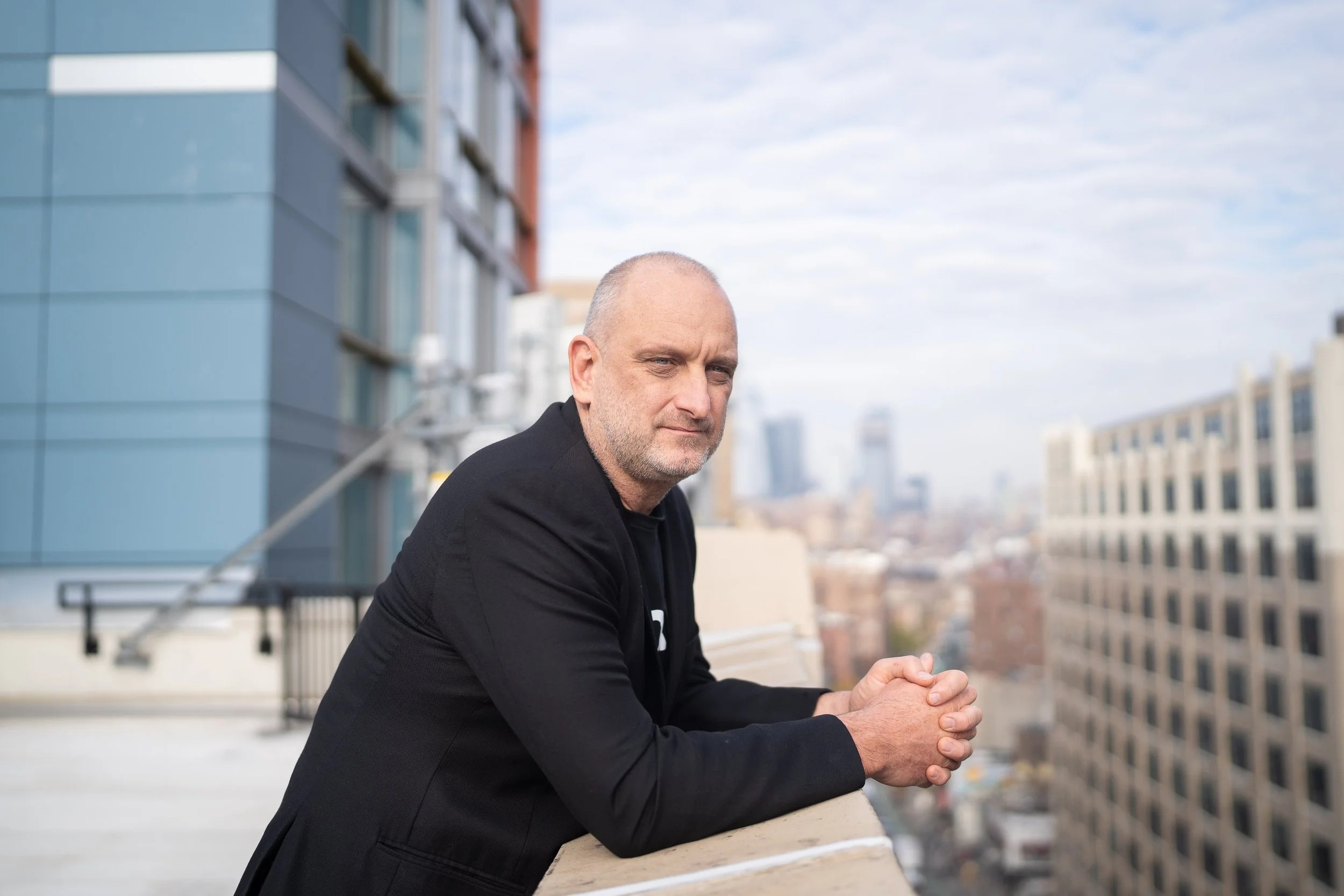
The company was already there. The focus had to change.
Rokt’s beginning has a useful wrinkle. Buchanan joined an existing operation. In 2012, he encountered the people behind Rocklive, an existing digital marketing business with engineers and a product that caught his attention. Rokt’s own history describes its founding through the acquisition of Rocklive by Justin Viles and Buchanan.
He joined as CEO. Much of the earlier revenue came from email and affiliate marketing, work that helped pay the bills while something more focused took shape. By his 2014 account, the company had moved to a business based entirely on its transaction product. Finding the opportunity involved deciding which existing activities to leave behind.
The proposition was understandable even then. A merchant could promote something relevant to its own customer and introduce an appropriate offer from another business. The technology sat inside the purchase experience. Advertisers gained access to that moment; the merchant shared in the revenue. Buchanan was trying to turn a neglected part of an existing transaction into a business in its own right.
- 01A customer buysThe purchase creates context.
- 02A decision is madeRelevance guides the next offer.
- 03The merchant earnsA useful connection can add value.
Building the product was one task. Earning permission to put it inside another company’s checkout was another. Buchanan later admitted, “I was blinded by the size of the opportunity.” He had underestimated the difficulty of winning trust. A promising idea still had to survive a prospective partner’s perfectly reasonable questions.
New York was a commute before it was home
Rokt opened its New York office in 2014 and expanded into Europe the following year. Buchanan spent almost two years commuting between Sydney and New York. The phrase sounds tidy until one considers the geography. International expansion comes with a calendar, a suitcase and a great deal of time above the Pacific.
He regarded contracts with Ticketmaster and Expedia as milestones. Familiar relationships also helped assemble the team. People he knew through Jetstar, including Stuart Fitzroy and John Ho, became part of the wider Rokt story; Gemma Fredericks brought experience from eBay. His earlier career supplied connections as well as an idea.
The expansion made an organisational question increasingly pressing. A business could win more customers faster than its managers learned to support them. Buchanan was explicit about that risk: rapid growth meant people would soon be doing jobs several times the size of their current roles.
- 2003
- Helps write the Jetstar business case
- 2008
- Becomes Jetstar Group CEO
- 2012
- Co-founds Rokt through Rocklive
- 2014
- Rokt opens its New York office
A growing company makes bigger jobs
In 2017, Buchanan said he interviewed every incoming employee, regardless of seniority or location. He wanted people who put the team first, questioned existing approaches and could enjoy the work together. Differences in thinking were welcome. The practical difficulty was maintaining common expectations across offices separated by continents.
He also circulated a weekly report to every team member. That detail is less glamorous than a financing announcement, but more revealing about the daily work of running a company. Shared information gives people a chance to understand decisions beyond their immediate desk.
By 2025, his language for the culture had developed into “Builder DNA”, with principles around autonomy, learning, trust and developing talent. The underlying concern remained recognisable: people needed to grow with their responsibilities. In his formulation, “you can’t grow a business any faster than you grow your people.”
His tolerance for uncertainty has an accompanying demand for effort. He describes a workplace for people comfortable with change and willing to keep going after failed attempts. That is a demanding proposition to make to employees. It also puts responsibility on the person making it: autonomy and fairness have to hold up when the work gets difficult.
“I fear irrelevance more than I fear failure.”
Bruce Buchanan
The numbers acquired more zeroes
In 2021, Rokt closed a US$325 million Series E financing led by Tiger Global. The company put research, international expansion and acquisitions among its uses for the money. By January 2025, a different kind of transaction gave employees and early investors a chance to sell existing shares.
That US$335 million secondary agreement valued Rokt at US$3.5 billion. The distinction matters: the company’s valuation was a price attached to its shares, while the sale offered liquidity to existing holders. Rokt also reported US$600 million in revenue and 43 percent annual growth in that announcement. A once narrow checkout proposition was carrying substantial commercial weight.
The acquisition of Aftersell in 2024 and the addition of mParticle and Canal in 2025 broadened the company’s capabilities. Buchanan’s original problem was acquiring more surrounding machinery: customer data, merchant software and ways to connect products with buyers.
The next decision can be to show nothing
In August 2026, Rokt introduced Brain V4, a revised version of the technology that decides what a customer sees during a transaction. Its description included an easily overlooked option: the system could choose to show nothing. Even a company built around offers needs a place for silence.
The release said Rokt had generated more than US$800 million in 2025 revenue and expected to power over 10 billion transactions in 2026. That second figure was a forecast. Behind it sat the same question Buchanan had carried out of the airline business: how do you make a decision useful enough to earn its place in a purchase?
His interest in AI also extends to how the company works. In 2026, operating chief Bill Barton described Buchanan asking him back into a different role, leading corporate functions after a career largely spent in product and engineering. Training and experimentation with AI had spread across the organisation. Buchanan was applying the pressure to rethink familiar work inside his own company, too.
A Batman costume, and a percentage set aside
There are smaller economies in Buchanan’s life. In a 2019 interview, he explained that wearing a Rokt T-shirt each day removed a clothing decision. He also owned a Batman costume because his son liked the character. The wardrobe apparently allowed for both efficiency and exceptions.
He lives in Brooklyn with his family, is married to Elizabeth, Rokt’s chief commercial officer, and has five children. Skiing and family travel feature among his interests. His household has also included two dogs and a cat. The corporate calendar has company.
In January 2026, the Buchanans helped launch Rokt’s Build Forward Foundation, backed by a commitment of one percent of company equity. The pledge gives a concrete financial form to his stated belief that successful businesses should help create opportunities for others.
One piece of advice has stayed particularly simple. Asked for the best he had received, Buchanan credited his mother: “Always ask questions.” It is a useful habit for someone whose career took a turn when he kept looking at the part of the shopping journey most people were pleased to have finished.