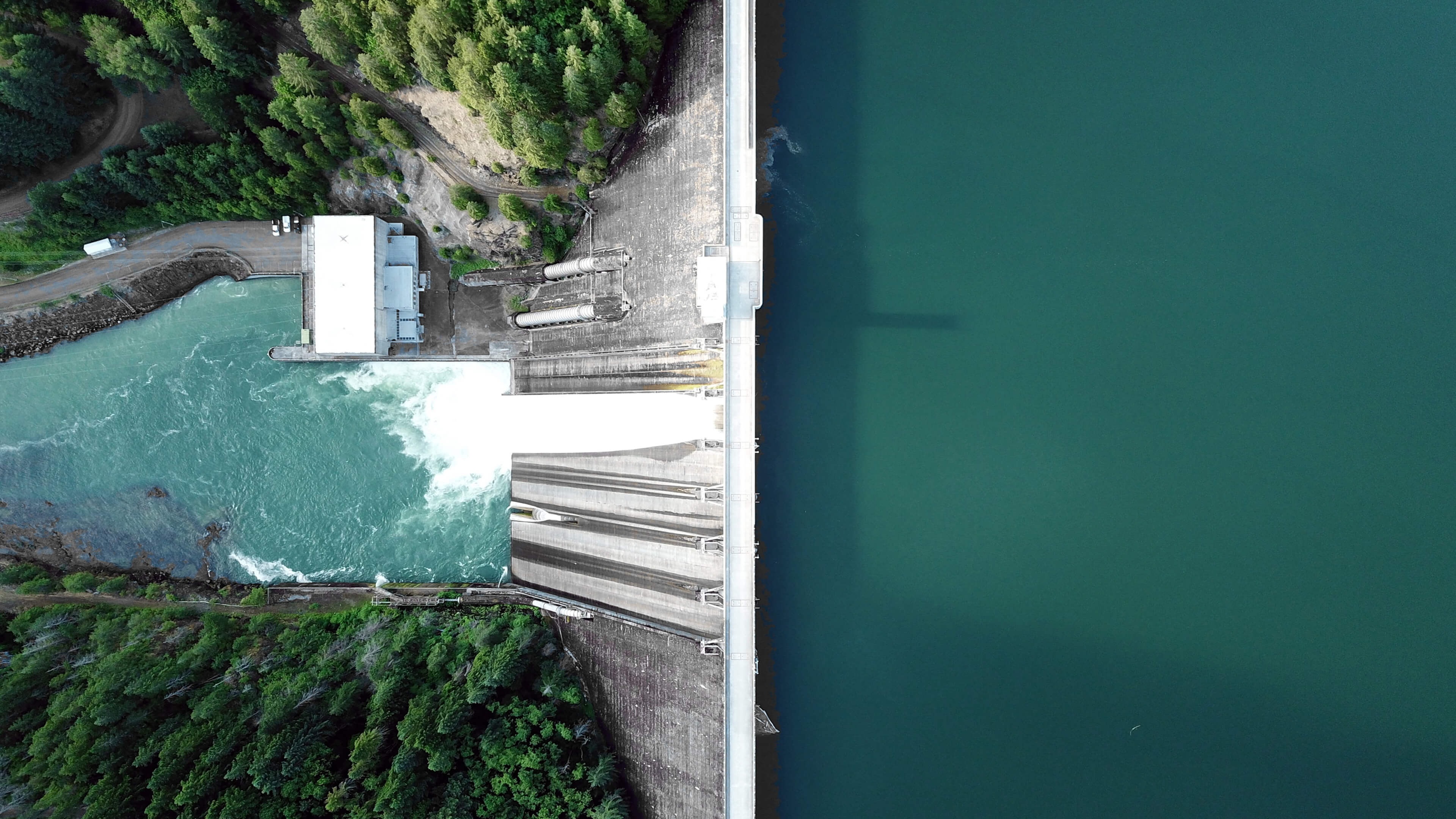
Consider the peculiar journey of a question typed into Google. Somewhere behind the screen, computers need electricity. In Pennsylvania, the Holtwood and Safe Harbor hydroelectric facilities can supply it. In July 2025, Google and Brookfield announced initial contracts covering 670 megawatts and more than $3 billion of power. An apparently weightless activity had acquired a very substantial river.
- Brookfield connects long-term investors with assets that generate income.
- Its edge is operating experience across infrastructure, energy and property.
- The Google deal shows the appeal. Office defaults show the limits.
That river is a useful entrance to Brookfield. The company belongs to the world of alternative investments: infrastructure, energy, property, private equity and credit. Its proposition is that owning and improving the physical machinery of economic life can produce returns for people whose financial obligations stretch far into the future. A pension payment and an electricity bill have more in common than they first appear.
The money has two customers
Brookfield serves two sets of needs. Pension plans, sovereign wealth funds, insurers and endowments want places to put capital. Businesses and households need buildings, transport, communications and power. Brookfield assembles investment vehicles on one side and acquires, develops or operates assets on the other. Financial advisors also distribute its alternative investment solutions to private wealth clients.
The distinction matters because the product changes depending on where you stand. For an institution, it might be a commitment to an infrastructure fund. For Google, it is contracted electricity. For a tenant, it is usable space. The investment case depends on somebody finding the underlying service worth paying for.
The wider group’s insurance operations extend the same time-horizon problem into retirement. Its businesses offer retail annuities, pension risk transfer and reinsurance, among other products. Someone retiring wants dependable income; an insurer needs investments that support its promises. Brookfield argues that real assets with long-term cash flows fit those obligations. That is a business case to evaluate, rather than a guarantee that every asset will perform.
There are also two Brookfields worth separating. Brookfield Asset Management, traded as BAM and headquartered in New York, earns management fees and performance-related compensation. Brookfield Corporation, traded as BN, is the broader investor, with interests in asset management, operating businesses and wealth solutions. Buying either stock is different from subscribing to a private fund.
From streetcars to other people’s capital
Brookfield traces its origins to the São Paulo Tramway, Light & Power Company, founded by Canadian investors in 1899. Electricity and streetcars belonged together: generating power made more sense when a growing city had things to run with it. The company’s history starts with operating infrastructure, well before the language of alternative assets became fashionable.
A second strand begins in 1954, when Peter Bronfman established an investment company using proceeds from Seagram shares. The strands eventually converged. Brascan, a predecessor name, joined Brazil and Canada in one word. Brookfield’s own history dates the launch of its first private equity fund to 2001, a turning point toward managing outside capital.
That shift changed the economics. Operating knowledge could help attract investors as well as improve assets. Today, the group describes collaboration, entrepreneurship and discipline as its cultural foundations. One of Bronfman’s recorded principles is particularly revealing:
“Maintain ownership control to permit long-term planning.”Peter’s Principles · Brookfield
Control gives an owner room to renovate, renegotiate and wait. Brookfield’s pitch against competitors such as Blackstone, KKR and Apollo rests heavily on this operating identity. They compete for investor allocations; their mixes of property, credit, insurance and infrastructure differ. Brookfield’s history gives its owner-operator argument something concrete to point at.
A contract before a megawatt
The Google agreement makes the method visible. Its wider framework allows up to 3,000 megawatts of U.S. hydro capacity. The first 670 megawatts came with 20-year power purchase agreements. The $3 billion figure describes contracted power over time, rather than a purchase price for the dams. For the investor, a long customer commitment helps make future revenue more legible.
initial contractsUp to 3,000 MW
framework capacity
Signed first: about 22% of the framework ceiling. The remainder is not shown as delivered capacity.
Microsoft supplies another version. In May 2024, it signed a framework with Brookfield for developing more than 10.5 gigawatts of renewable capacity in the United States and Europe during 2026-2030. Brookfield’s investor presentation associated the opportunity with deploying more than $10 billion. Development still requires projects, permits, connections and construction. A framework sets direction; execution supplies electricity.
Credit broadens the offering. Brookfield’s 2019 agreement to acquire 62% of Oaktree called for roughly $4.7 billion, split between cash and shares. By August 2026, BAM reported acquiring the remainder. The strategic logic was to add established credit expertise to a platform already built around real assets.
The tower could not wait
Patience has a financing schedule. In 2023, subsidiaries of a Brookfield-managed Los Angeles office fund defaulted on loans totaling $784 million tied to the Gas Company Tower and 777 Tower. EY Plaza subsequently entered receivership after missed payments on separate $275 million financing. These were property-level problems, not a default by the entire Brookfield group.
The immediate failure was meeting loan obligations. Weaker office conditions and financing pressure made the distinction between a useful building and a workable investment painfully clear. A long-lived asset can outlast its debt agreement. An investor cannot assume that time alone will repair the gap.
Copy the sequence, check the debt
The transferable lesson is a sequence: find a durable need, secure customers, improve delivery and arrange financing that can survive the work. It needs affordable entry prices, credible counterparties and enough liquidity. It becomes harder when demand changes, borrowing costs rise or construction takes longer than contracts allow.
Brookfield’s scale keeps growing. BAM reported $77 billion of fundraising in the second quarter of 2026 and $672 billion of fee-bearing capital. Those are investor commitments and capital generating fees, not corporate revenue. The interesting question remains smaller than the headline numbers: who will keep paying for this particular asset, and for how long?