Bronwyn Le Grice’s career acquired its direction while she was covering somebody else’s absence. Newly arrived in Melbourne from Western Australia, she took a temporary job as an executive assistant at Neurosciences Victoria. The chief executive, William Hart, looked at her CV and offered her another role. She had studied business. She had worked with sporting teams. This was unfamiliar territory, and someone had decided to let her in.
Years later, when asked about her journey, she gave people much of the credit. There was luck involved, she said, along with a willingness to take an opportunity when it appeared. It is a useful beginning for the founder of an organisation whose work involves giving other people a better chance of getting somewhere.
Le Grice founded ANDHealth in 2017, after a career that had taken her through industry leadership, venture capital and public-market transactions. She understood how investors assessed a company. She also understood that a promising founder could arrive at the wrong door, with an idea that the people behind it were poorly equipped to assess.
A commerce degree, with room to wander
She grew up on a dairy farm southwest of Perth and completed a Bachelor of Commerce at the University of Western Australia. The attraction of business was its portability: a qualification that could take her into different industries. Her subsequent career made considerable use of that permission.
From 2008 to 2011, she led NZBIO, New Zealand’s industry body for biotechnology. The job involved a wider mixture of businesses than a narrowly specialised career might have offered. Agricultural and industrial technologies sat alongside other emerging companies. She became interested in what happened when separate technical disciplines met, and in the commercial opportunities those meetings created.
In 2012, she joined BioScience Managers as an investment director. Her work put her inside both the investment firm and portfolio businesses, where the distance between an attractive proposition and an executable transaction becomes rather more visible. A presentation can finish in twenty minutes. Preparing a company for the transaction it promises tends to take longer.
At Adherium, she project-managed the company’s A$35 million initial public offering in 2015 and held responsibility for commercial development and corporate affairs. She later completed a Master of Commercial Law at Melbourne Law School in 2019, with a focus on corporate governance and capital markets law. The business graduate kept adding tools.
The investor who built a nonprofit
In 2016, Le Grice developed the concept for a new commercialisation program with James Dromey of the Murdoch Children’s Research Institute. ANDHealth followed in 2017, built with a consortium of industry partners. Its nonprofit structure put a commercially experienced team to work on companies that needed specialist help to become ready for investment and overseas markets.
There was an unusual choice embedded in the model. In its early ANDHealth+ program, the organisation asked for neither equity nor a financial payment for the support it provided. For founders accustomed to discussing how much of their business an accelerator might take, that was a meaningful line in the terms.
The practical work was specific: help a company understand investor, partner and customer requirements; identify commercial uncertainties; bring experienced people into the discussion. Le Grice wanted Australian companies to attract backing at home and succeed in international markets. There was no requirement for the ambition to remain domestic simply because the organisation was based in Australia.
A nonprofit still has to find money, recruit people and persuade partners to remain involved. In a 2021 business interview, Le Grice recalled being asked about the sustainability plan when she started ANDHealth. Her answer began: “I don’t know if there is one.” An investment background had apparently survived contact with the awkward honesty of starting something.
“Frank, fearless, persistent.”
Bronwyn Le Grice’s three-word self-description, 2022
First, persuade someone to join you
The early recruiting story is more revealing than a polished founding legend. After she and Dromey secured an MTPConnect project grant, Le Grice approached Grace Lethlean, who had just accepted a job at a large consultancy. ANDHealth was close to incorporation. Its band of employees, as Le Grice later remembered it, consisted of herself.
Lethlean agreed to join and became the organisation’s first employee. By January 2026, when her departure from a full-time executive role was announced, she had spent nine years helping turn the concept into programs. She would continue as an expert advisor. Le Grice’s public tribute dwelt on the faith involved in that first decision to come aboard.
It gives the founding story a second participant’s risk to consider. The person with the original idea must make a leap. The first employee must decide whether to follow. A consortium and a grant help, but they do not answer every question someone might reasonably have about leaving an established employer.
That attention to other people runs through Le Grice’s own account of her life. In 2022, she singled out her husband, Tom, as someone who encouraged her ambitions while they raised their two daughters and pursued their respective careers. Institutional biographies usually allocate more room to committees. She chose to allocate some of hers to the person making the rest possible.
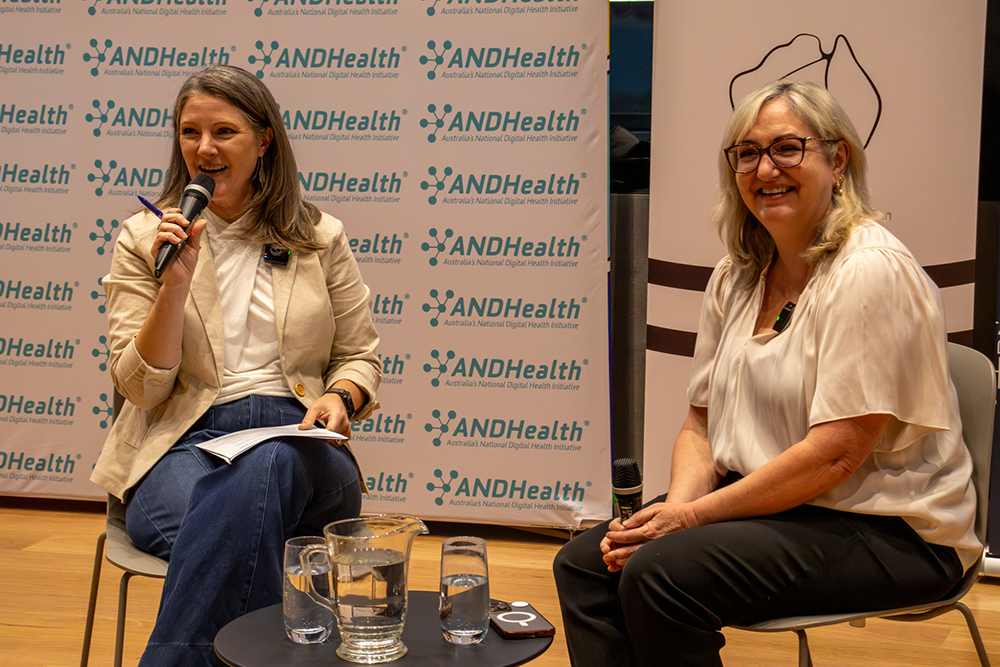
A small detour involving other people’s pets
There is a second startup in her career, and it comes with considerably more fur. Le Grice and Tom co-founded PetHomeStay, a peer-to-peer pet-sitting business. It is an appealing detail in a biography otherwise occupied by capital raising and corporate governance: somewhere among the transactions, there were pet owners looking for someone trustworthy to mind an animal.
The two ventures belong to different worlds, but PetHomeStay matters to the portrait. Le Grice had experience of building a consumer startup alongside her work with investors and companies. When she talks to founders, she brings more than the perspective of the person evaluating the proposal from across a table.
Her 2021 discussion of entrepreneurship also questioned the pursuit of unicorn status and raised an uncomfortably useful distinction between wanting wealth and wanting fame. It is a good question for a startup culture that sometimes treats visibility as an operating result. Attention can get a founder into a room. The business still has to work once everybody has sat down.
The awkward question about the customer
Le Grice’s advice to aspiring founders starts with a paying customer. Verify that a market exists, she argues, and establish that someone can and will pay for what the company is building. A persuasive account of a problem does not, on its own, establish a viable business.
She has also pointed to the difference between demonstrating savings across a system and securing an actual purchasing decision. The person who benefits, the organisation controlling the budget and the person signing an order may have different priorities. A business plan needs to survive those distinctions.
This helps explain the particular kind of assistance she has built ANDHealth to provide. Commercialisation involves finding the questions that could stop a business before they become expensive surprises. Specialist advice, customer validation and preparation for investment can sound less glamorous than a launch. They become more interesting when it is your money running out.
By the end of the 2025 financial year, the organisation reported delivering 79 programs and events to more than 2,700 participants, alongside over 1,100 hours of individual coaching and mentoring. Those figures describe a fairly practical occupation: time spent with people, working through what needs to happen next.
THE WORK BEHIND THE WORK · FY2025
She checks who has been left off the list
In November 2023, an Australian startup survey published a recommended-mentors list containing only men. Le Grice objected publicly. She pointed to the women already founding and leading companies in ANDHealth’s pipeline, and challenged the idea that an all-male list could adequately represent the talent available.
Her question was direct: “When do we stop tolerating this lack of diversity and start calling it out?” The report’s organisers subsequently published an updated list that included women, following criticism from several people in the startup community.
By April 2025, another set of figures showed both progress and unfinished business. ANDHealth’s sector research put the proportion of companies with women founders at 44%, up from 35% in 2020. Yet women founders received an average of A$320,000 in funding against A$500,000 for men, a gap of 36%.
Le Grice treated access to capital as an economic question as well as one of fairness. It is consistent with the rest of her work: look at who is being supported, examine the terms, and ask whether capable people are being overlooked. An open door is useful only if people can reach it.
THE CAPITAL GAP · 2025 SECTOR RESEARCH
Average funding reported in ANDHealth’s sector dataset. The figures describe the surveyed sector, rather than ANDHealth’s own funding allocations.
Still more people at the door
Recognition has followed: the BioMelbourne Network’s Most Valuable Women in Leadership Award in 2020, the Victorian Pearcey Entrepreneur Award in 2021, and a place among the 2022 Brilliant Women in Digital Health award recipients. She has served on the NHMRC Council since 2021 and is a non-executive director at Lumos Diagnostics. These roles put her commercial experience into several different rooms.
In August 2026, ANDHealth’s flagship program received a Prix Galien USA nomination in the incubators, accelerators and equity category. By September, the next intake had drawn 104 applications. As of 22 October, the award ceremony was still ahead, scheduled for 29 October. The nomination was recognition; the applications were a reminder of the work waiting.
Asked in 2022 for three words to describe herself, Le Grice chose “Frank, fearless, persistent”. The first is audible in her questions about money and representation. The last is visible in an organisation approaching a decade of operation. As for fearlessness, the career suggests a woman prepared to take an opening seriously, even before she knows quite where it leads.