Paul Bassat wanted a house. The newspaper was making a poor estate agent. In March 1997, he and his wife, Sharon, were at an auction in Melbourne, having encountered a familiar indignity: the homes they liked cost too much, and the homes within reach looked less appealing in person. The advertisements supplied precious little information. Here was an ordinary domestic nuisance with unusually productive consequences.
Bassat had already had an introduction to the internet through legal work for LookSmart, the company started by his university friend Evan Thornley and Tracey Ellery. He began considering an online property business with his brother Andrew, then a management consultant. The idea moved into employment. Matt Rockman joined them, and SEEK began in late 1997. An attempt to improve the house hunt had become a plan to change the job hunt.
There is something pleasingly untidy about that origin. A career associated with venture capital began with a customer who could not get enough useful information. Bassat did not arrive at online recruitment after a childhood spent announcing his destiny. He was a lawyer who had encountered an interesting medium and an irritating problem. The combination proved more useful than a magnificent founding myth.
A lawyer walks past the partnership track
His earlier life supplied a respectable alternative. Bassat, whose full name is Paul Moss Bassat, graduated from the University of Melbourne in commerce and law. His father was an Egyptian-born IBM executive; his mother was a Polish-born lawyer. He attended Brighton Grammar and spent six years practising at Arnold Bloch Leibler. Business and professional life were already close at hand.
Leaving that career looked perilous to other people. Bassat has recalled being close to partnership, with a family and a mortgage, when SEEK beckoned. He judged the risk differently: imagine looking back years later and knowing that he had let the opportunity pass. Regret belonged in the calculation alongside income. A secure job could carry its own rather expensive uncertainty.
That recollection is useful because it preserves the choice as he understood it. He was excited enough to investigate the opportunity and wanted to pursue it. The lesson is narrower, and more interesting, than a command to abandon your salary. Different people can look at the same decision and disagree about which outcome would be hardest to live with.
The newspapers had something to lose
SEEK launched its website in March 1998. On the other side of the contest stood newspaper businesses with audiences, advertisers and capital. They also had profitable print classifieds to protect. Shifting those advertisements online threatened the economics that made the incumbents comfortable in the first place.
Andrew later described the advantage with the perspective of someone who had lived through it: the newcomers kept moving while newspaper rivals alternated between pursuing the online opportunity and reconsidering its consequences. The established businesses had to weigh the damage to their existing revenues. SEEK could concentrate on attracting people to a new marketplace. Hesitation has a price, especially when a competitor has no old business to mourn.
The road still had some unglamorous bends. An attempted float around the dotcom bust became one of the experiences Bassat later discussed when reflecting on SEEK. The eventual ASX listing came in April 2005, at a market capitalisation of A$587 million. Between its founding and his departure, the company also expanded internationally. The chronology gives the origin story some needed resistance: spotting a problem and building an enduring employer are separated by years of work.
- 1997SEEK founded
- 1998Website launches
- 2005ASX listing
- 2011Paul leaves CEO role
Leaving a business you still love
By October 2010, Bassat was preparing to leave the joint chief executive role. The thought had been recurring, then growing harder to ignore. He discussed it with Andrew and the chairman before announcing his departure for June 2011. There was no need to pretend that the preceding years had been a mistake.
“I had to separate my passion for the business with my passion for the job.”
Paul Bassat, on leaving SEEK
The distinction is unusually candid in a profession that encourages founders to become inseparable from their companies. Affection for SEEK could survive a change in his working life. Andrew would continue as chief executive, and Paul intended to remain active in business. He was also already talking about what smaller ventures might need from him: capable people, a coherent direction and an organisational culture that helped them execute.
The eventual move makes more sense seen through that departure. He had spent almost fourteen years helping build one company. His next substantial undertaking would put him alongside people trying to build their own. Experience could travel without requiring him to occupy the same chair indefinitely.
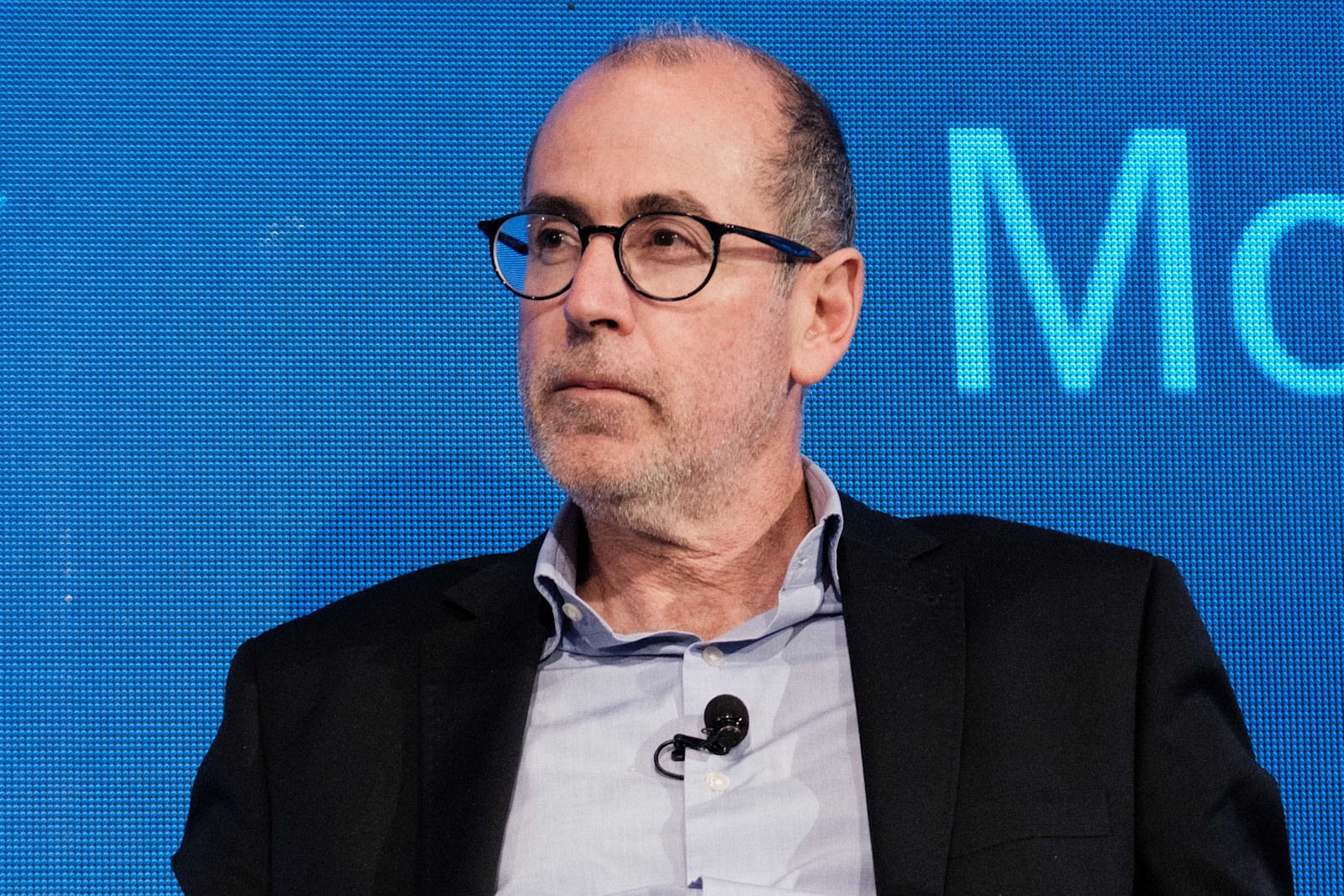
Now the questions come from his side of the table
In 2012, Bassat co-founded Square Peg. The firm backs technology founders with ambitions beyond their home markets. Its investments include Canva, Airwallex and Rokt; Bassat has personally led investments in companies including Airwallex, Athena, UpGuard, Zeller and Constantinople. The distinction between a firm’s portfolio and an individual partner’s work matters. Venture capital is quite capable of accumulating enough borrowed glory without editorial assistance.
Airwallex offered a recognisable problem: international payments could be costly, slow and cumbersome for businesses. Square Peg’s investment account described getting to know chief executive Jack Zhang after meeting him at Tech23 in 2016. It committed US$6 million in a Series A+ round. The attraction lay in both the problem and a team with the technical knowledge to address it. Another awkward transaction had become an opening for software.
With Constantinople, the target was the machinery inside banks. Square Peg led its A$32 million seed round, announced in May 2023, alongside AirTree Ventures and Great Southern Bank. The proposition was to handle complex infrastructure and operations so banks could devote more attention to customers. It was a larger institutional cousin of the newspaper problem: an established way of doing business had become difficult to change.
Bassat’s conversations also return to the founders themselves. When he interviewed Airwallex co-founder Lucy Liu in 2023, he asked about responsibilities, the changing experience of growth and what advice she would give her earlier self. These are questions about the people required to carry a company through its next stage. A product can expand faster than the habits of the people running it.
His own public framework for assessing growing companies asks about the team, the remaining market, the strength of the competitive advantage and the economics of serving customers at scale. He invited responses rather than presenting it as a completed tablet of commandments. For someone in the business of forming judgments, the willingness to keep questioning them is a useful habit.
Would the customer applaud?
One of Bassat’s recurring interests is what a company chooses to measure. Revenue and profit describe results for the business. They do not necessarily describe an improvement in the customer’s day. A company celebrating its higher earnings may discover that the people paying its bills have neglected to send flowers.
In his writing, he asks whether leaders talk about financial growth or about benefits such as money saved by customers. He applies the same reasoning to investing: Square Peg’s outcomes depend on the achievements of the companies it backs. The practical implication is demanding. A mission must show up in decisions and measures, rather than retire comfortably into the opening slide of a presentation.
His concern extends to Australia’s place in the software economy. In a 2019 investor letter, later published as an essay, he argued that domestic success would offer limited shelter from global competitors. Software could reach customers across borders, while scale could reinforce a company’s position. He wanted more Australian businesses capable of competing internationally. In May 2026, an Airwallex podcast conversation returned him to the changing requirements for founders as AI alters what can be built and how quickly competitors can respond.
The house hunt comes round again
Bassat’s other commitments keep him connected to institutions beyond the investment meeting. He joined the AFL Commission in 2012; the league cited his understanding of business and digital media when announcing the appointment. He served on the Wesfarmers board from 2012 to 2018. He also serves with his wife and their three children on the P&S Bassat Foundation board.
There is football without a board agenda, too. He supports St Kilda. His official biography describes golf in the modest terms of someone hacking his way around the course. Apparently even a career spent assessing potential does not make every shot a sound investment.
In 2023 he founded AMPLIFY, where he serves as chair. Its approach brings Australians into policy discussions and seeks support for practical reform. Housing became a central focus. For a national deliberation in February 2025, the plan was to bring together 100 representative Australians to examine 13 reform proposals, hear experts and challengers, and consider the trade-offs. The exercise gave disagreement some work to do.
The subject has a personal reference point. Bassat has written that he and Sharon bought a two-bedroom timber home in South Yarra in 1993 for A$170,000, against combined annual incomes of about A$90,000. He contrasts that experience with the much heavier burden a comparable young couple would face today. His argument is about the opportunities available to the generation following his own.
The first house hunt helped produce a business that made finding work easier. The present undertaking asks how more people might get a workable chance at a home. A website could reorganise advertisements; housing reform requires persuading citizens and governments to change rules and make choices. Bassat has returned to a familiar frustration with a much more complicated set of participants. The house, it turns out, was never a small subject.
Continue the conversation
Follow the work, hear the interviews, or revisit the departure that changed his career.