Andrew Bassat had helped build a business that made the newspaper classifieds look cumbersome. Then the comfortable business began to look vulnerable itself. LinkedIn had professional profiles. Indeed had a different approach to collecting and advertising jobs. SEEK had customers, a reputation, and the awkward obligation to prove that yesterday’s good idea could keep improving. Winning had supplied an entirely new collection of problems.
Bassat is unusually willing to describe that discomfort. The co-founder who spent more than two decades leading SEEK can talk about success without polishing away the complacency that followed it. His career has room for a company going public, an entrepreneurship award, and the less flattering discovery that being good at sales and strategy did not automatically make the organisation good at building technology. It is a better story for having the blemishes left in.
The newspaper was only the beginning
The first irritation belonged to his brother. Paul Bassat was searching for a house in Melbourne and dealing with newspaper listings. The brothers began considering what the internet could do for classifieds. Real estate, cars and employment all appeared in the early thinking. Jobs won their attention. Andrew liked the prospect of helping people with their careers; the category also looked commercially attractive. A property search had opened a door into an entirely different market.
In 1997, Andrew, Paul and Matt Rockman co-founded SEEK. It is tempting to recast an internet founder as someone who had been waiting impatiently for everyone else to catch up. Bassat’s account is more entertaining. He was learning about the internet while preparing the business plan. The enterprise demanded a willingness to start before every qualification was conveniently in place. The founders had an opportunity to pursue and considerable learning ahead of them.
He nevertheless arrived with an unusually varied education: computer science at the University of Melbourne, an honours law degree at Monash, and an MBA from Melbourne Business School. His father had worked for IBM. His parents had come from Egypt and Poland. Bassat attended Brighton Grammar before taking a professional route that led through law and consulting. The credentials suggest an orderly career. What followed was rather harder to file.
At Corrs Chambers Westgarth, where he joined as a graduate in the early 1990s, he learned to weigh competing arguments rather than expect every problem to yield one correct answer. His later recollections give ample space to his fellow clerks and the pub gatherings on Fridays. A solemn account of professional formation could have omitted the pub. Bassat appeared to consider it part of the education.
Management consulting at Booz Allen & Hamilton supplied another kind of preparation. He remembers the work as intense and credits it with teaching strategic thinking and making unfamiliar situations less intimidating. That mattered when the next unfamiliar situation was a company of his own. Professional services had given him practice in entering a problem before he felt entirely comfortable inside it. Entrepreneurship offered plentiful opportunities to continue practising.
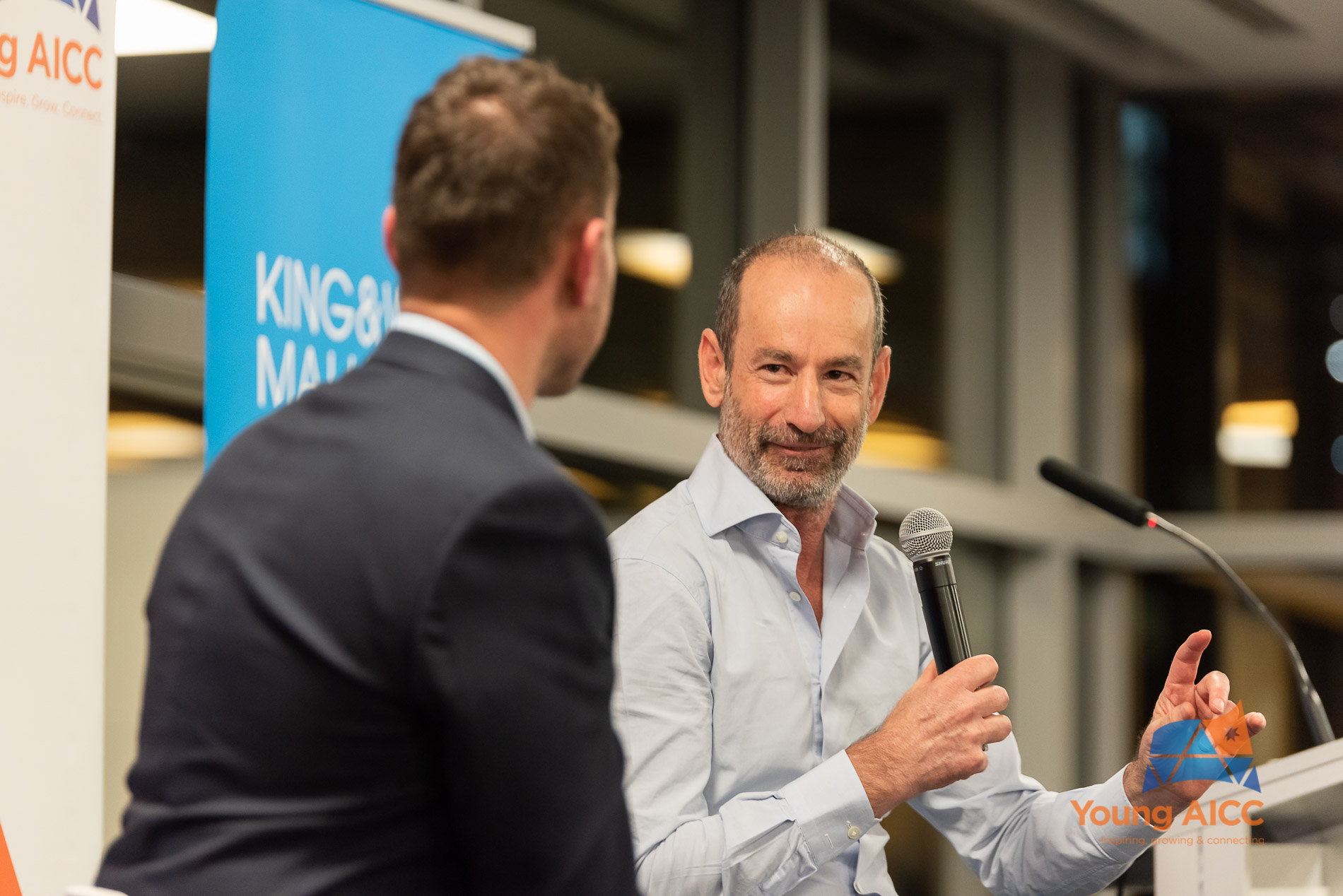
SEEK listed on the Australian Securities Exchange in 2005. By 2013, Bassat had received EY’s Australian Entrepreneur Of The Year award. Those dates make convenient milestones, although the work between them concerned something less ceremonial: persuading employers and jobseekers to meet in a new place. A marketplace needs both sides to keep returning. The website could be open all hours; the founders still had to make it useful enough to visit.
The uncomfortable side of success
By the time Bassat spoke at QUT’s Business Leaders’ Forum in 2017, he could divide SEEK’s life into three phases. Starting had been difficult and enjoyable. Growth had been easier and enjoyable. Defending the business was tougher. There was now an organisation worth taking business from, and rivals had noticed. The founder’s position had changed from asking an established industry to move aside to explaining why his own company needed to move faster.
At a Sydney innovation summit the following year, he described the response to LinkedIn and Indeed. SEEK had to improve its product and technical capabilities. It also reconsidered the evidence of success. Counting advertisements and visitors offered one view. Asking whether an employer actually found the right person offered another. That shift brought the company closer to the practical reason anyone had opened the site in the first place.
SEEK’s response to new competition included a sharper focus on hiring outcomes. An editorial illustration of the change in emphasis.
For someone looking for work, the distinction is immediate. An advertisement is a possibility. Getting hired changes the week ahead, the household budget, perhaps the direction of a career. That everyday consequence gives the discussion about product performance a human scale.
There is a particular discipline in examining a successful product through the people it fails to serve. A company can find plenty of encouragement in its existing audience. The people who go elsewhere are less convenient company. Yet their absence can tell a founder where the next problem sits. Bassat’s account of this period gives the missing customer a place in the conversation, alongside the satisfied one and the shareholder.
“We always need to be vigilant.”Andrew Bassat, 2018
His approach to people also allows for revision. He has described wanting passion to be the sole attribute used to assess SEEK employees, before accepting that judgment, decision-making and leadership belonged alongside it. Caring about a purpose was essential, but an organisation needed people who could make sound choices about how to pursue it. The admission has the charm of a founder discovering that even enthusiasm requires colleagues willing to edit the plan.
A different seat at the same table
On 30 June 2021, Bassat stepped down as SEEK’s managing director and CEO. Ian Narev took over the next day. Bassat moved into the role of Executive Chairman and CEO of SEEK Investments and remained a non-executive director of the listed company. The change gave the operating business and investment activity more distinct leadership. For a founder, continuity could take the form of a new responsibility rather than the same title indefinitely.
- 1997Co-founds SEEK with Paul Bassat and Matt Rockman
- 2005SEEK joins the Australian Securities Exchange
- 2018Becomes St Kilda president in December
- 2021Moves from SEEK CEO to investment leadership
SEEK Investments now describes its territory as work and learning, investing in technology businesses through the SEEK Growth Fund. That keeps Bassat close to subjects he had spent years examining. Employment involves finding work; learning can change the work a person is able to do. The connection gives the investment role a recognisable relationship to the original company, even as backing a management team differs from running the marketplace oneself.
The structure matters as much as the continuity. The Growth Fund operates independently of SEEK, which retains an economic interest. The listed business can concentrate on its employment marketplaces while retaining exposure to the investment portfolio. Bassat’s experience travels into that arrangement with him. The story has moved beyond one founder supervising everything under one roof. There are separate organisations, responsibilities and decisions about where capital should go.
The other business of belonging
Then there is Moorabbin. As a boy, Bassat went to St Kilda games with Paul, sometimes without adults accompanying them. He remembers supporters helping the brothers forward so they could see. For all the abstractions available in a business career, this is wonderfully concrete: two small spectators, a crowd, and someone making room. His connection with the club began long before there was a board seat to occupy.
He joined St Kilda’s board in July 2016 and became president in December 2018, succeeding Peter Summers. Born in 1966, the year of the club’s first VFL premiership, Bassat said when his appointment was announced that he had never witnessed a Saints flag. His ambition was clear. The club wanted a second. An entrepreneur accustomed to discussing growth had taken responsibility in an institution whose supporters could measure patience in generations.
The argument continues
Football has supplied fresh occasions for disagreement. In April 2026, Bassat publicly challenged revised AFL draft bidding arrangements, arguing that the changes rewarded finishing near the bottom of the ladder. It is an argument about how clubs gain access to talent and what a competition should reward. For a president trying to improve his club’s position, the rules governing the contest are hardly a peripheral interest.
He has also acknowledged that changing accepted behaviour in football proved harder than he expected. That admission sits neatly beside his earlier accounts of running SEEK. Experience offers a way of approaching problems; it does not guarantee the response. At St Kilda, business judgment meets a supporter’s attachment and a public audience with its own strongly held opinions. There is no annual report capable of making a disappointing Saturday feel satisfactory.
In October 2026, the club’s Trevor Barker Award coverage included another address from its president. The public responsibilities continue: explaining progress, facing expectations, and speaking for a community that wants the next season to deliver more than the last. Bassat’s work now runs between investment decisions and football administration. Both demand choices about people and the future. Only one comes with a crowd ready to render its verdict before the weekend is over.
The interesting thread through his career is his willingness to return to the awkward question after the reassuring answer has arrived. SEEK worked. Could it keep working when rivals changed the terms? Professional experience helped. How much would it settle at St Kilda? A founder can accumulate achievements and still have unfinished business. For Bassat, some of it is measured in companies. Some of it is still waiting for a flag.