BREAKING Crossbow Therapeutics closes $77M Series B, March 2026
PIPELINE CBX-250 Phase 1 data expected by end of 2026
PROFILE Briggs Morrison: 30 years, three pharma giants, one startup
TARGET TCR-mimetic antibodies aim at the "undruggable" cancer proteome
BREAKING Crossbow Therapeutics closes $77M Series B, March 2026
PIPELINE CBX-250 Phase 1 data expected by end of 2026
PROFILE Briggs Morrison: 30 years, three pharma giants, one startup
TARGET TCR-mimetic antibodies aim at the "undruggable" cancer proteome
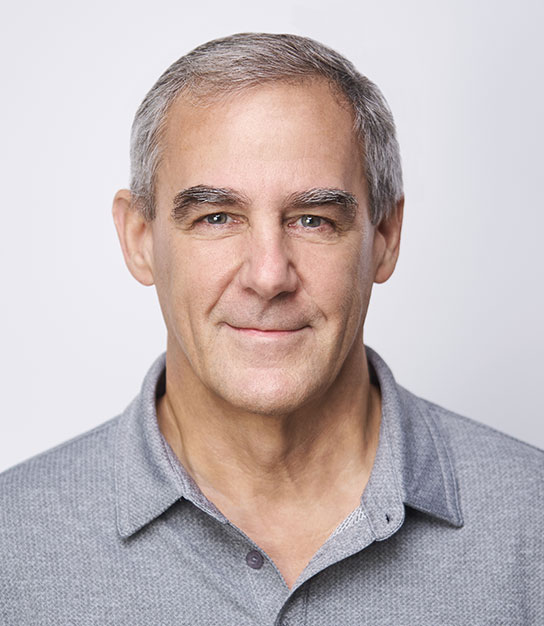
Most executives who reach the top of pharmaceutical R&D stay there. Briggs Morrison reached it, looked around, and left for a company of forty-four people with a molecule named after a crossbow bolt.
Today Morrison is President and CEO of Crossbow Therapeutics, a clinical-stage biotech in Cambridge, Massachusetts. The company is chasing a stubborn problem in cancer: the most interesting targets tend to live inside the cell, where conventional antibodies can't reach them. Crossbow's answer is a class of drugs it calls T-Bolt molecules - TCR-mimetic antibodies engineered to spot the tiny peptide fragments that cancer cells display on their surface, then drag a T-cell over to do the killing. If it works, the reachable universe of cancer targets gets a lot bigger.
TCR-MIMETIC ANTIBODIEST-CELL ENGAGERSIMMUNO-ONCOLOGYPRECISION MEDICINECAMBRIDGE, MA
"This financing accelerates our mission to bring next-generation TCR-mimetic immunotherapies to patients who urgently need new options."
- Briggs Morrison, on Crossbow's $77M Series B, March 2026
What he's building now
Crossbow's platform starts from a simple biological fact: cancer cells chop up their internal proteins and pin the fragments to their surface using the MHC class I system. That display is a fingerprint. Most of it is invisible to ordinary antibody drugs, which only see whole proteins sticking out of the membrane. Morrison's company builds antibodies that behave like the T-cell receptor instead - reading those fragments directly.
The lead program, CBX-250, is a first-in-class T-cell engager aimed at myeloid cancers. It's in a Phase 1 trial with the CROSSCHECK-001 designation, enrolling patients with relapsed or refractory myeloid malignancies. The company expects clinical data by the end of 2026. A second program, CBX-663, targets a peptide derived from telomerase - the enzyme cancers switch back on to become immortal - and is slated to enter the clinic in the second half of 2026.
The $77 million Series B that closed in March 2026 was co-led by Taiho Ventures and Arkin Bio Capital, and it drew a telling roster of strategic backers: Pfizer Ventures, Eli Lilly, and Morrison's own MPM BioImpact among them. When the people who ran your former employers write checks into your startup, it says something about the résumé.
The bet, in one sentence
If you can teach an antibody to read what a T-cell reads, you can point the immune system at targets that antibody drugs have never been able to touch.
By the numbers
1995Joined Merck
44People at Crossbow
$77MSeries B, 2026
$157MTotal funding raised
2Blockbusters he helped ship
The long way to the small company
Morrison did not arrive at biotech leadership by way of a business school and a spreadsheet. He arrived by way of a chemotherapy ward. He earned a biology degree from Georgetown, an M.D. from the University of Connecticut, trained in internal medicine at Massachusetts General Hospital, and completed a medical oncology fellowship at the Dana-Farber Cancer Institute. Then came two postdocs that read like a who's-who of modern cancer biology: genetics with Philip Leder at Harvard Medical School, and immunology with Lee Nadler at Dana-Farber.
He joined Merck Research Laboratories in 1995 and spent a dozen years climbing to Vice President of Clinical Sciences in oncology, responsible for the clinical development of every novel anti-cancer drug in the pipeline. In 2007 Pfizer hired him to run clinical development across therapeutic areas. In 2012, AstraZeneca made him Chief Medical Officer and Executive Vice President of Global Medicines Development - the person accountable for the company's entire late-stage pipeline and a seat on its senior executive team.
That's where the blockbusters come in. Under his watch, AstraZeneca advanced medicines that became household names in oncology: TAGRISSO, now a cornerstone lung cancer therapy, and LYNPARZA, a PARP inhibitor used across several cancers. He also chaired TransCelerate BioPharma, an industry consortium set up to make clinical trials less slow and less wasteful.
And then, in 2015, he did the surprising thing. He left the corner office of a global drugmaker to run Syndax Pharmaceuticals - a company most of the industry had never heard of. Fierce Biotech framed it as trading "the lead role in AstraZeneca R&D for the helm of tiny Syndax." It was the first sign of a pattern: given the choice between scale and speed, Morrison keeps choosing speed.
Career timeline
1995
Joins Merck Research Labs, rising to VP, Clinical Sciences, Oncology
2007
Named Head of Clinical Development at Pfizer
2012 - 2015
Chief Medical Officer & EVP, Global Medicines Development, AstraZeneca
2015
Leaves AstraZeneca to become CEO of Syndax Pharmaceuticals
2022
Becomes CEO of Crossbow Therapeutics
2026
Leads Crossbow's $77M Series B; advances CBX-250 and CBX-663
A résumé measured in decades
Three companies, three eras of oncology. Here's roughly how his big-pharma tenures stack up before the startup chapter.
The operator who is also an investor
Morrison doesn't live in a single role. He runs Crossbow while serving as an Entrepreneur Partner at MPM BioImpact, the fund whose portfolio Crossbow belongs to - which means he's building a company and helping evaluate others at the same time. He chairs the board of Arvinas, a public company pioneering protein-degrading drugs, and sits on the board of Werewolf Therapeutics. Across a career, he has collected board seats and advisory roles the way some people collect frequent-flyer miles.
What ties it together is that he trained as the doctor who gives the drugs, not just the executive who approves them. That vantage point - having sat across from patients who ran out of options - is the quiet engine under everything from the trial designs he favors to the targets he's willing to bet a company on.
Four things worth knowing
01He's a doctor first
A trained medical oncologist, not a manager who wandered into oncology. The lab bench and the clinic both left marks.
02He shipped blockbusters
TAGRISSO and LYNPARZA advanced on his watch at AstraZeneca - drugs now central to how doctors treat lung and other cancers.
03He trades scale for speed
Twice now he has left, or passed on, the big platform to run something small and unproven. It's a pattern, not an accident.
04His backers are his alumni
Pfizer Ventures and Eli Lilly, echoes of his former employers, put money into Crossbow's 2026 round.
Fun & telling facts
THE NAMECrossbow's investigational drugs are branded "T-Bolt" molecules - a wink at the crossbow bolt in the company's name.
TWO LEGENDSHe did back-to-back postdocs in the labs of Philip Leder and Lee Nadler, two giants of cancer genetics and immunology.
FROM 1 TO 44After steering pipelines with thousands of colleagues, he now runs a company of roughly 44 people.
THE UNDRUGGABLECrossbow's whole thesis is aimed at the intracellular targets antibody drugs have never been able to reach.