A film festival is good at beginnings. The lights dim, the title appears, and for an hour or two a roomful of strangers agrees to pay attention. Brian Walker works on what happens after the applause. He thinks about the teacher who might use the film in a classroom, the nonprofit that already knows the issue from the inside, the community host who can fill a screening, and the viewer who leaves asking for something useful to do.
This is less glamorous than a premiere and more consequential than a social post. It is the craft of giving a story a public life. At Picture Motion, the Los Angeles-based executive leads an agency that develops advocacy, marketing, and audience campaigns for film, television, books, podcasts, and other media. The company describes more than 400 projects in its history. The number matters, but the pattern matters more: a story arrives, the team maps the people around it, and attention is turned into participation.
Walker has a neat phrase for creators who understand the assignment. The filmmakers finding the most success, he says, have the dual brain of an artist and an organizer. One side makes the thing worth watching. The other gives people a reason and a route to show up. In an industry fond of treating the audience as a crowd that materializes on opening weekend, Walker's formulation feels almost impolite. It suggests that viewers are not a weather system. They are relationships.
Two Howard schools, one practical education
Walker came to entertainment with a business education and a legal one. At Howard University School of Business, he earned a bachelor's degree in business management. At Howard University School of Law, his studies focused on civil rights, intellectual property, and social enterprise. It is an unusually tidy preparation for impact work, which sits at the crossing of money, ownership, institutions, rights, and public persuasion.
His early operating experience was equally useful. For more than eight years, he was chief operating officer of The Creative Mind Group, a professional development organization that placed students and early-career workers inside film festivals and markets such as Cannes, Sundance, and Toronto. One former colleague remembered his attention to detail and his ability to remain calm and focused amid the pressure of Cannes. Festivals can be romance from the seats and logistics everywhere else. Walker learned the logistics.
That apprenticeship gave him a view of the industry from its crowded corridors: young talent trying to enter, established gatekeepers deciding what travels, and films competing for notice in places engineered to manufacture it. The lesson was not that attention is unimportant. It was that attention is temporary unless someone builds a structure around it.
Operating film-industry development programs at Cannes, Sundance, and TIFF.
Joining Participant Media to direct education, outreach, and digital impact work.
Leading culture and entertainment advocacy at Color of Change.
Advising Disney leaders on multicultural stakeholders and external relationships.
Running Picture Motion through expansion and its acquisition by Publicis Media.
The campaign is not dessert
In 2013, Walker joined Participant Media, the company that made social impact part of its identity rather than a charitable attachment. He directed strategy for TEACH and He Named Me Malala, projects concerned with education, inclusion, and access. The work required more than finding sympathetic viewers. It required translating a film's themes into materials and alliances that teachers, students, families, and organizations could actually use.
That distinction has stayed with him. An impact campaign is not the sweet course served after production, once the serious meal has been cleared away. It needs a budget, a calendar, and people empowered to make decisions. Walker has described conversations with filmmakers who arrive late, eager to create impact but surprised to discover that engagement costs money. His advice has the patient firmness of someone who has heard the same sentence too often: plan for marketing and distribution while planning production.
“It has to be a good project. It can't just be a lecture.”Brian Walker, on the foundation of impact storytelling
Purpose cannot excuse dullness in Walker's account. The attention economy remains an economy. Viewers have too many alternatives, worthy and otherwise, and moral importance does not confer narrative magnetism. “Make sure it's entertaining,” he says. This may be the least fashionable sentence in some advocacy rooms and the most useful. A call to action works better when people stay for the story.
The Walker pathway: from a film to a field of action
- Make a story people want to experience.
- Find communities already connected to its subject.
- Build useful roles for partners, educators, and brands.
- Give the audience a clear next action.
Representation moves upstream
At Color of Change, Walker became the organization's first Culture and Entertainment Advocacy Director. He led the development of the Hollywood Culture Project, created to improve inclusion and the accuracy, empathy, and humanity of Black representation across television and media. The important move was upstream. Instead of only criticizing portrayals after release, the work engaged writers, producers, and executives while culture was being made.
That role placed Walker between communities with justified demands and an industry fluent in polite delay. It also clarified the difference between visibility and power. Being present on screen is not the same as shaping the conditions under which a character is written, a project is financed, or an audience is addressed. His later service on the boards of Made In Her Image and Color Congress extended that commitment to the institutions supporting creators and nonfiction organizations led by people of color.
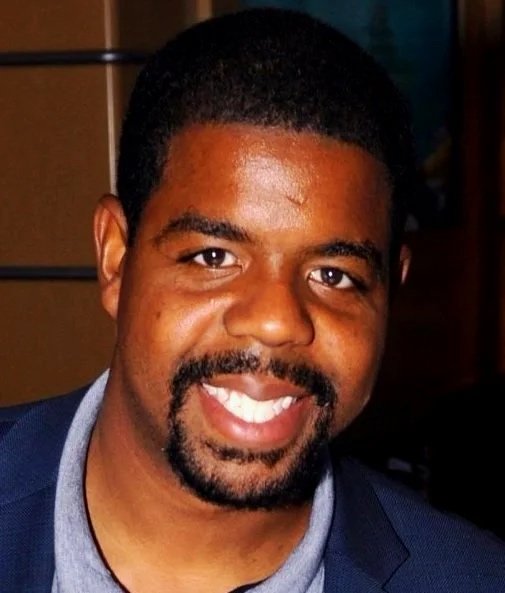
A birthday post offers a small window into his habits. During Black History Month, Walker used the occasion not for a personal retrospective but for a list of actions: support Black-led organizations, buy from Black businesses, amplify Black artistry, and share Black stories. It was a celebration redirected outward. Even the cake, one imagines, would have been asked to join a coalition.
Inside the world's largest storyteller
At The Walt Disney Company, Walker worked in enterprise diversity and inclusion as a stakeholder engagement leader. He advised senior leaders across the company's businesses on cultural competency, social justice, and external relationships with multicultural communities. The scale changed. The essential question did not: who is affected, who is missing, and who has earned the trust to help?
He has spoken about engagement around Black Panther as relationship work rather than conventional promotion. The circle included the NAACP, the American Black Film Festival, NALIP, AfroTech, the Congressional Black Caucus, Grace Hopper, Howard University, and others. A blockbuster already has awareness. The more interesting task is to connect its cultural moment to institutions and people who have been doing the work long before a studio campaign arrives.
This is where Walker's career resists an easy label. He is an executive, operator, advocate, and adviser, but the recurring job is translation. Artists speak in characters and scenes. Companies speak in risk, reach, and return. Advocacy groups speak in conditions, consequences, and constituencies. Walker's work is to find the useful overlap without pretending the parties are identical.
Taking the baton at Picture Motion
Picture Motion named Walker CEO in May 2021. Founders Christie Marchese and Wendy Cohen moved to the board, while Walker joined COO Juliette Richey to lead strategy and partnerships. He arrived after the pandemic had forced the company to redesign screenings and engagement for a virtual world. The old model of gathering people in a room had not disappeared, but it now had a digital twin.
Walker set out to widen the agency's engagement with audiences, partners, and clients from historically underrepresented communities. Three years later, Publicis Media U.S. acquired Picture Motion and placed it within Publicis Media Content & Innovation. Walker remained CEO. The arrangement brought a specialist impact shop into a large advertising network while preserving his leadership, an unusual marriage of grassroots vocabulary and holding-company scale.
Scale is useful only if the relationships remain credible. Walker's public comments return repeatedly to brain trusts, advisory boards, and partnerships that are not merely transactional. The best partner is not a borrowed mailing list. It is an organization with its own expertise, audience, and reason to care. Invite it early enough and it can sharpen the campaign. Invite it at the end and it may quite reasonably decline to become distribution labor.
When impact becomes distribution
The independent film market has made Walker's argument more urgent. He and Richey describe filmmakers who visit scores of festivals, win awards, and still fail to secure a broad distribution path. In that environment, impact no longer simply orbits a distributor's timetable. Sometimes the campaign becomes the distribution: screenings, community hosts, educational licenses, events, and partner networks doing the work once expected from a conventional release.
The funding has changed too. Philanthropy played a large role through 2021, Walker says, but newer filmmakers now face a tighter door. Brands are filling part of the gap as they seek trust and relationships with younger audiences. That creates opportunity and tension. Brand resources can extend reach, but a campaign still has to respect the community whose attention it wants. A logo is not a relationship, just as an impression is not a change.
“Community continues to be one of the most valuable assets a project can build.”Brian Walker, after a 2026 Tribeca conversation
Picture Motion's To Be Seen initiative applies that thinking to awards season, supporting films connected to underrepresented filmmakers, casts, and talent. Walker frames the effort as more than visibility with voters. The aim is to amplify work with lasting cultural force. The distinction is small in wording and large in ambition: an awards push can chase a moment, or it can use the moment to build an audience that remains after the envelopes are opened.
An audience is a verb
In 2026, Walker has kept pressing the case in panels and interviews. At Tribeca, he moderated a conversation about connecting stories with audiences in a crowded landscape. At Comic-Con, he discussed partnerships, distribution, and audience growth. For a proposed SXSW 2027 session, he asked how community organizations, nonprofits, brands, and technology can support films from development through release.
The through line is wonderfully unromantic. Start earlier. Budget honestly. Listen before asking. Give partners a real role. Make the film good. These are not incantations. They are operating instructions, and their modesty is part of their charm.
Walker works in a business that often uses “audience” as a noun, a mass waiting somewhere beyond the screen. His career treats it more like a verb: to gather, invite, equip, and connect. A story may begin in solitude, with a writer and a blank page. Its impact begins when somebody else can see a place for themselves in it. Before the credits roll, Walker wants that place ready.
Continue the conversation
Hear Walker discuss impact storytelling, or follow the work of Picture Motion and its current initiatives.