There are two kinds of people at a Hollywood party: those who scan the room for someone important, and those who already know why the important people ought to meet. A&CO has made a business of being the second kind. The firm is neither simply an ad agency nor simply a fundraising consultancy. It stands between an institution with a mission and an organization with money, audience, distribution, or influence - then asks whether the two sides can produce something neither could make alone.
This sounds soft until you look at the work. BAFTA North America wanted partners that understood its future, not merely its tea parties. A&CO developed relationships spanning travel, luxury fashion, automotive, finance, beauty, and technology. The resulting roster included Delta Air Lines, Virgin Atlantic, Bentley, and Meta. Women In Film wanted material support for emerging filmmakers. The agency helped develop e.l.f. Makers with e.l.f. Beauty, a program that placed grants, mentorship, and career support behind selected fellows. LA Pride needed sponsorship revenue without becoming a floating wall of logos. A&CO became its partnership agency.
2016-2026
by the company
the public portfolio
The expensive problem is not finding a sponsor
A spreadsheet can find a sponsor. It can sort companies by category, marketing spend, or executive title. The harder problem begins one minute after the list is finished. Why this brand? Why this institution? Why now? What does the audience receive besides signage? Who inside both organizations will keep the promise when the launch team moves on?
A&CO's answer is a sequence: build the partnership framework, map valuable categories and targets, make the approach, structure the deal, negotiate, activate, and then steward the relationship. The last verb matters. Annual sponsorship programs often fail first at the annual reset. The event ends, the recap arrives, institutional memory evaporates, and everyone returns twelve months later pretending the relationship is new. A&CO explicitly positions its work beyond that loop, toward revenue engines that can last.
Clients buy three overlapping services. Brand Partnership & Revenue Development includes sponsorship strategy, sales, category mapping, negotiation, executive engagement, and fundraising counsel. Entertainment & Social Impact Strategy covers cause marketing, philanthropic programs, stakeholder engagement, and impact reporting. Cultural Marketing & Brand Relevance turns the strategy outward through narrative, entertainment marketing, experiences, audience engagement, and communications. The boundary between them is intentionally porous. A partnership may begin as a revenue brief and become a story; a story may need a cause; a cause may need measurement before any brand will attach its name.
“All good business starts and ends with good relationships.”A&CO's stated belief
Four careers folded into one agency
Founder Jonathon Aubry's résumé explains the hybrid. He began in nonprofit development at Outfest, where the company says he increased revenue 40 percent year over year. He moved into film distribution, overseeing theatrical marketing for more than 35 independent films. Then came publishing: The Advocate, followed by senior brand-partnership work at The Hollywood Reporter and Billboard. Fundraising, film marketing, media sales, brand strategy - what looks like an eclectic career becomes a single curriculum once the company is visible.
The team adds complementary dialects. President and chief strategy officer Amy Kestel spent a decade at American Airlines and led global sponsorship and promotion work. That client-side experience matters because partnerships usually arrive with asymmetrical anxieties. The institution fears being commercially distorted. The brand fears funding something worthy but invisible. Someone who has occupied the sponsor's chair can hear both.
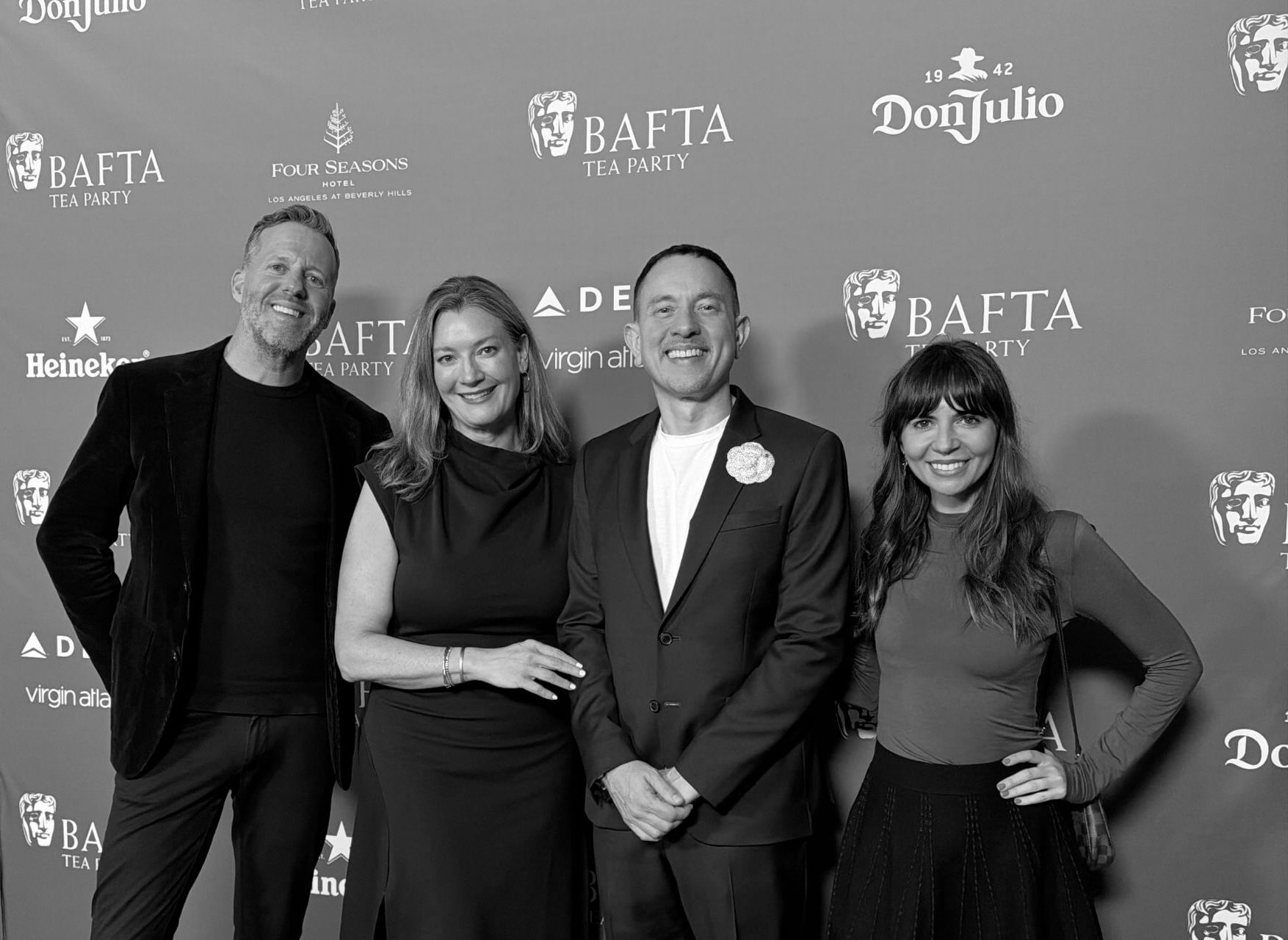
A&CO calls itself LGBTQ+-owned and majority women-led. Its public team is compact, with specialties across entertainment, integrated marketing, partnerships, strategy, account management, and creative direction. LinkedIn shows 17 people associated with the company, while its stated size band is 2-10. The useful point is not which number wins. It is that this is a small group working across an unusually large range of rooms: airlines and animation, film academies and environmental organizations, luxury brands and recovery centers.
The work changes when purpose carries a budget
Consider e.l.f. Makers. The easy version of the brief would have been event sponsorship: beauty brand pays, logo appears, guests applaud. The program A&CO helped create is more structural. Five Women In Film fellows received personal grants supporting their creative development, backed by mentorship and career-building support. The brand's interest in rising storytellers met WIF's existing fellowship infrastructure. The audience could see where the money went.
Or consider amfAR. A&CO says it built an annual strategy with explicit revenue goals, including event targets, then pursued not only brands but agencies working in experiential marketing, diversity and inclusion, and creative programs. That is partnership mapping as multiplication: each agency can represent access to several budgets and clients. For LA Pride, the mandate expanded again - diversify revenue, evolve brand relationships, grow audiences, and strengthen year-round impact across live, social, experiential, and broadcast channels.
The approach works best where cultural meaning is part of the asset: awards, film, art, philanthropy, identity, hospitality, and civic life. It is less useful for a commodity sale that needs immediate, attributable conversions and nothing more. It also depends on access, credibility, and patience. A young organization without a defined audience, a capable delivery team, or a proposition beyond “please fund us” cannot outsource those missing foundations to a connector.
A bespoke business, priced behind the curtain
A&CO is privately held and does not publish a rate card, revenue figure, valuation, or outside funding history. The product is bespoke professional service, likely shaped by scope: strategy, representation, campaign execution, or some mixture of the three. That opacity is common in agency work, but it gives a prospective client one important homework assignment. Agree on what success means before agreeing on what activity means.
The public case studies lean toward outputs and partner names, not detailed budgets, fees, conversion rates, or post-campaign scorecards. So a buyer should ask direct questions: Is compensation fixed, retainer-based, performance-linked, or blended? Who owns the target list and relationships? What happens if a partner signs but activation stalls? Which metric - cash, in-kind value, reach, retention, trust - settles an argument?
This is also where A&CO differs from its alternatives. A large integrated agency can buy media, produce creative, and deploy staff at scale. A fundraising consultant may understand donors. A sponsorship broker may close inventory. An in-house team may know the institution best. A&CO's claim is narrower and more interesting: it can translate among those systems because its people have worked inside several of them. The competitive advantage is not a proprietary platform. It is accumulated judgment about who belongs in the room and what each person must hear.
The clever part is not arranging the introduction. It is designing a reason for both sides to answer the second call.
Ten years of being in the right room
By its tenth anniversary in 2026, A&CO reported more than 100 partnerships across seven industries. Its current public work includes the Academy, BAFTA North America, Delta Air Lines, LAIKA Studios, Warner Bros. Pictures Animation, LA Pride, AltaSea, Sierra Club, Women In Film, amfAR, and the Social Impact Fund. In September, the agency said it steered a partnership between LAIKA and Big Brothers Big Sisters around Wildwood, celebrating young people's stories of courage and mentorship.
The pattern is consistent. An animated film wants a social idea larger than opening weekend. A youth organization has real stories and a national mission. A partnership agency notices that each side contains a missing piece of the other. The result can promote a movie, honor young people, and direct attention toward mentoring at once. Three objectives, one piece of connective tissue.
That is A&CO's place in the market. It is the interpreter at a table where everybody speaks fluent ambition but different languages. The agency makes money by reducing the distance between those languages. When it works, the sponsor is no longer renting relevance, the institution is no longer merely selling exposure, and the audience is given something better than another logo.