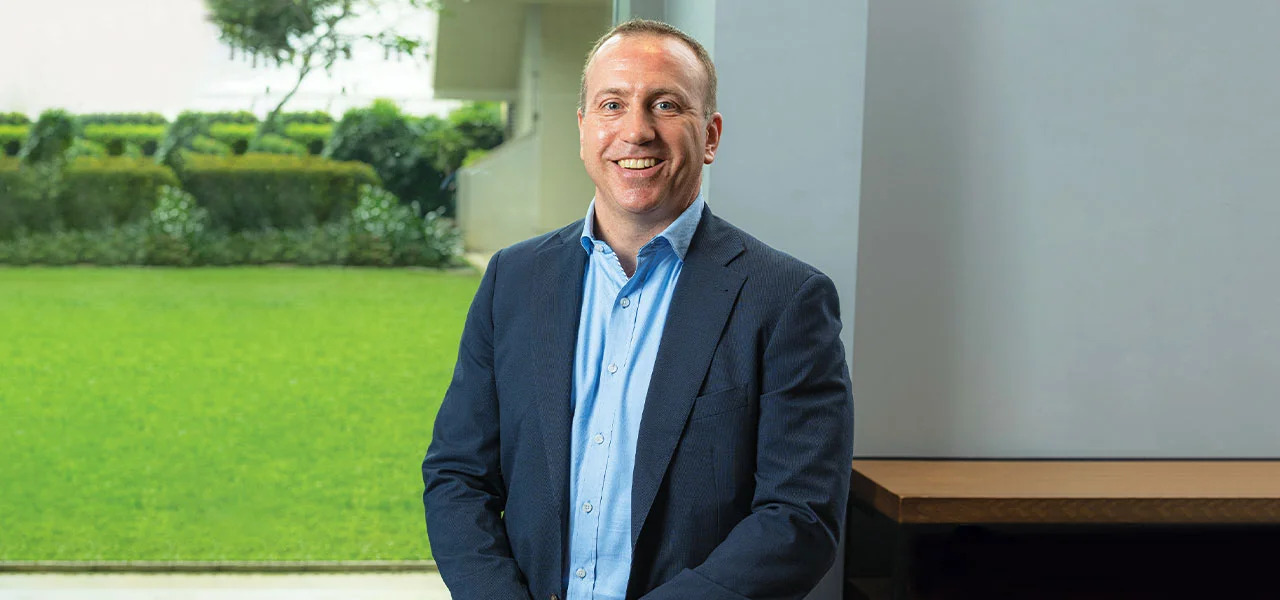
A bottle of shampoo, a power drill and an enterprise AI program rarely appear in the same marketing plan. They do appear in Brian Jochum's career. Before he became Senior Vice President and Global Chief Marketing Officer at Virtusa, he learned brand management at Procter & Gamble, moved into Craftsman and Kenmore at Sears, then carried those consumer instincts into Accenture and Tata Consultancy Services. The objects disappeared. The need for a useful promise did not.
This is the tidy line through a résumé that otherwise changes scenery with each act. Beauty and hair care teach the discipline of a crowded shelf. Appliances demand a claim sturdy enough for a showroom and a household budget. Technology services ask a buyer to trust work that may be global, intangible and full of acronyms. In each setting, the marketer has the same small piece of real estate: the distance between what a product does and what a person can understand.
Jochum has spent more than 25 years working in that distance. His public philosophy is notably physical for an executive in the business of digital transformation. He talks about builders, makers and doers. He favors viable solutions and practical problem-solving. Even Virtusa's "Engineering First" position, which could easily drift into corporate mist, arrives in his telling as a description of people testing AI, managing banking platforms and solving industry-specific problems.
The shelf was the first interface
Jochum began at Procter & Gamble and spent more than a decade in brand management for beauty and hair-care products. One surviving artifact from that period is a partnership between Aussie and the women's media company SheKnows. The campaign used tutorials, polls, contests and editorial content to turn a hair-care message into participation. Jochum, then an Aussie brand manager, described the value as direct engagement with consumers. Long before every company developed a "content engine," the idea was already there: a brand earns attention by giving people something they can use.
At Sears Holdings, the aisle changed. Jochum led brand management and direct-to-consumer sales for Craftsman tools and Kenmore appliances. His language about Kenmore is revealing. The team, he said, began with what manufacturers already did well, identified unmet needs, then optimized and customized the product. The final test was not novelty for its own sake. It was whether the result deserved the name on the front.
The habit stayed: find the need, sharpen the promise, prove it in the work.
That is product marketing in its work boots. It begins with observation, not adjective. A refrigerator can arrive with pages of specifications, but the buyer eventually asks whether the shelves fit a family's habits. An enterprise modernization program can arrive with a cloud diagram, but the executive buyer eventually asks what becomes faster, safer or less frustrating. Complexity belongs inside the product. It does not need to colonize the explanation.
Then the product became invisible
The move from Sears to professional services changed what could be placed on a table. Jochum took marketing leadership roles at Accenture and Tata Consultancy Services before joining Virtusa. At Virtusa, he leads a global organization responsible for the brand, its value propositions and go-to-market programs across technology capabilities and industry domains. The work now spans buyers in banking, retail, communications, insurance and other sectors. There is no single box to photograph.
There is, however, an advantage to having marketed things with handles and doors. Physical products punish empty language quickly. A tool either fits a job or it does not. Jochum's preferred description of Virtusa applies the same test to services. Engineering First is meant to signal expertise put to work on viable outcomes, not mere ownership of fashionable technology. In a 2024 interview, he said the company tries to make its services "understandable and applicable" in a market crowded with repetitive jargon.
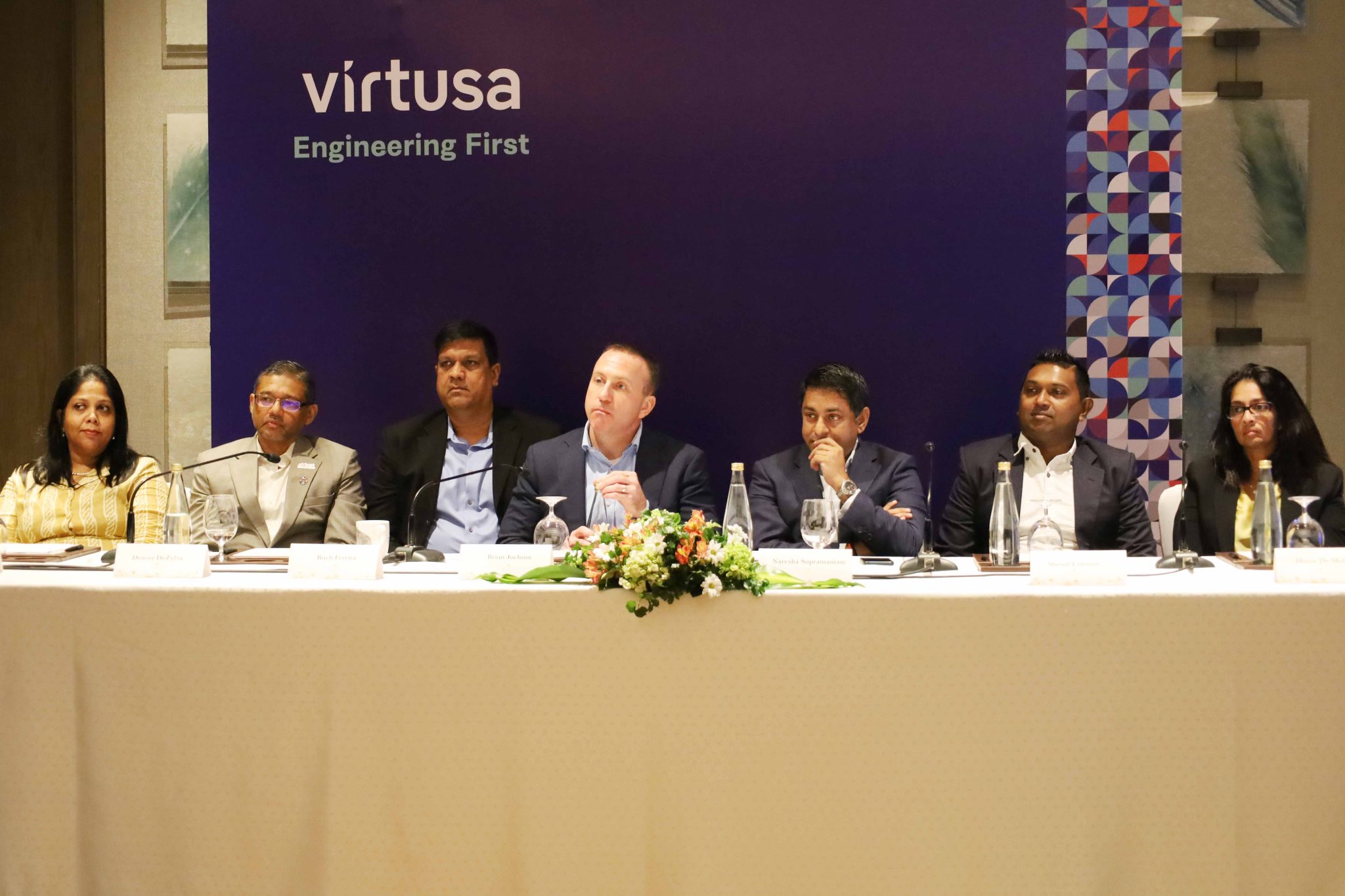
During a 2023 visit to Virtusa's teams in India and Sri Lanka, that argument moved from a brand page into a room. In Colombo, Jochum joined local executives, university representatives, technology groups and journalists to discuss engineering, talent, sales and the brand's stakeholder impact. It was an appropriately mixed audience. A global services brand has to make sense to a CIO considering a program, an engineer considering a career and a community considering the company's place in its economy.
The infinite-content problem
Now marketing has acquired a new appliance: generative AI. It can draft, resize, personalize, translate and test at a speed that makes yesterday's production calendar look archaeological. Jochum is not arguing against the machine. His recent writing treats the efficiency as real. Campaign tasks that took weeks can happen in seconds, and automated production can release human teams from tactical labor.
His warning concerns what happens next. When every marketing organization gains access to similar systems, increased volume can create a sea of algorithmically polished sameness. The dashboard celebrates output while the audience remembers nothing. A productivity gain becomes a brand problem.
The figures above are an editorial illustration, not company metrics. The relationship is the point. Jochum wants scorecards that value operational efficiency alongside strategic human agency. Let AI handle more of the production burden. Use the recovered time for market positioning, audience empathy and the long narrative of a brand. The machine can multiply a choice. People remain responsible for making a choice worth multiplying.
This is where his consumer apprenticeship becomes newly relevant. P&G's classical brand system was built around choices: which audience, which benefit, which reason to believe. Sears added the blunt feedback of retail. Enterprise services added long sales cycles and multiple stakeholders. AI does not erase those disciplines. By making execution abundant, it exposes the cost of avoiding them.
There is also a management consequence. If software takes on the first draft, the resize and the routine variation, a marketing leader has to decide what people do with the room that opens up. Jochum's answer is not a smaller version of the old production line. It is deeper human work: study the market, locate a position, understand an audience and construct a story that can survive more than one campaign cycle. That sounds pleasant until one notices that each task requires a decision for which the dashboard cannot accept responsibility.
This explains his insistence on mixed scorecards. A team can measure how quickly an asset moved from prompt to publication. Measuring whether the brand became more distinct takes patience, research and a willingness to protect an idea across quarters. The two kinds of measurement do not have to quarrel. Efficiency can fund craft. Faster testing can improve judgment. Trouble begins when the easy number becomes the only number and the marketing organization mistakes motion for memory.
For a global services company, the temptation is especially strong. Virtusa works across industries and technology partnerships, with messages intended for executives, practitioners, clients and prospective employees in different markets. Generative systems make it possible to produce a variation for every audience. Jochum's earlier brand work suggests the necessary counterweight: every variation still needs to feel as though it came from the same considered promise. Personalization without a center is merely confetti with excellent targeting.
Judgment is becoming visible.
A career built on translation
Jochum's career does not offer the usual founder mythology. There is no garage, lightning strike or tidy conversion scene. Its interest is more practical. He is an operator who kept changing the thing being marketed while preserving a method. Learn the audience. Find the useful distinction. Give colleagues language that can travel. Treat brand as a business instrument rather than a layer of varnish.
Colleagues have associated his Sears years with the Kenmore Grab N Go product launch, the Kenmore Performance advertising campaign and the Sears Appliances awareness, consideration and engagement program. His public record also includes a 2015 keynote on building brands through digital content, an expert panel appearance and service as a hackathon judge. The details suggest comfort at the border between the carefully managed brand and the messy room where work gets made.
At Virtusa, the aspiration has grown with the canvas. Jochum has described a company that wants to demystify digital transformation, develop its people and make engineering useful in specific markets. He has also argued that thought leadership can help leaders name threats and opportunities, quantify the cost of delay and create urgency around a decision. The common word beneath all of this is clarity - clarity about the problem, the work and the consequence of waiting.
The amusing part of modern marketing is that its tools keep becoming more astonishing while its central request remains almost embarrassingly human. Please understand me. Please show me what changes. Please give me a reason to care. Jochum has carried that request from the shampoo aisle to the appliance floor to the cloud. AI may answer faster than any team he has led. His point is that someone still has to ask the right question.