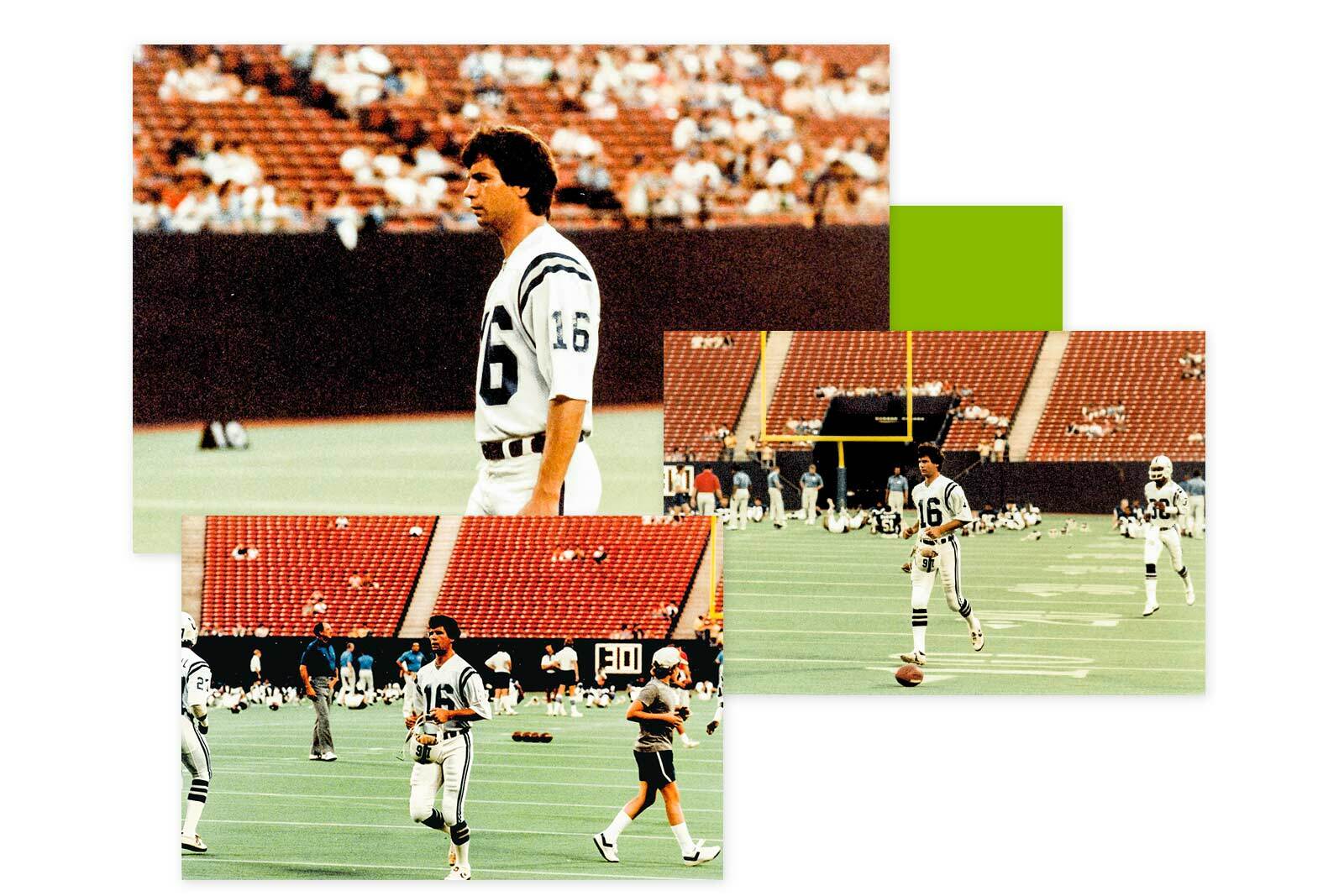
Brian Happel has a useful joke about professional football. When a coach summoned him and requested his playbook, the invitation seldom involved a lively exchange of tactical ideas. He learned to recognize the meeting. He had been cut seven times. Eventually, the placekicker decided that banking offered a more dependable way to make a living. It was a practical conclusion, reached after considerably more travel than most career counselors would recommend.
He remembers the stadiums with pleasure: Lambeau Field, Shea Stadium, RFK, Mile High, the Astrodome. The list has the sound of a football fan’s itinerary. Happel had been there with a job to do, and with the knowledge that the job might end. His professional football experience stretched across NFL and USFL teams in the early 1980s. He also belonged to the University of Texas at Arlington’s 1981 Southland Conference championship team.
Today, his title places him in Fort Worth’s banking establishment. He is an executive vice president and Fort Worth market executive at Regions Bank, where he leads commercial banking work. The football years help explain something that a title cannot: why someone responsible for other people’s business plans might have a particular appreciation for the possibility of changing his own.
A Pennsylvania education, with a Texas sequel
Happel came from Bangor, Pennsylvania, and a scholarship brought him to UT Arlington. His route south began with a skill he had deliberately rebuilt. He originally kicked straight on. His family encouraged him to try the angled, soccer-style approach. A book and practice helped him learn it. There is something pleasingly unglamorous about that beginning: a future professional athlete working from instructions, trying again until an unfamiliar movement became useful.
The striking thing about his account is the willingness to be a beginner. He had to alter something he already knew how to do. Banking eventually required a similar adjustment. He has described seeking people who could help him address gaps in his knowledge. For a person whose early work was judged by a ball’s flight, asking for help became another way to improve the result.
College gave him more than a playing field. He earned a Bachelor of Business Administration in management from UTA in 1983. The university would later record his return to its business community through its College of Business Advisory Board. A student who left Arlington with a management degree became someone whose experience could be brought back into the institution’s conversations about business.

The long apprenticeship after the whistle
His early banking career began in 1983. Over the following decades, his work included credit, mortgage and commercial banking leadership at JPMorgan Chase and its predecessor banks. The range matters. Credit asks whether a commitment can be supported. Mortgage work connects financing with property. Commercial banking brings the questions into the life of an operating business. Happel’s eventual market role rested on experience across those different responsibilities.
By 2006, he had moved into Fort Worth leadership at Compass. A contemporary banking trade notice recorded his appointment as president of Compass Bank-Fort Worth after he joined from Chase that spring. Later came the BBVA Compass years. His work put him in a position to understand a market through its companies, customers and the people responsible for making decisions inside them.
In 2018, his responsibilities included the commercial and real estate banking team for Tarrant County, along with oversight of the market’s retail and wealth management teams. The businesses his commercial team sought to serve ranged from $5 million to $1.5 billion in revenue. Their needs included deposits, credit, treasury services, leasing, international services and investments. A market executive’s territory could therefore include a company’s daily payments and its next substantial expansion.
That is a broad assignment for someone once employed to specialize in a single movement. There is a useful irony in it. The player spent years trying to secure one place on a roster. The banker’s work eventually involved bringing several kinds of expertise together around one customer.
- 1981UTA championship team
- 1983BBA; banking begins
- 2006Compass Fort Worth
- 2021Joins Regions
Fort Worth, beyond the loan agreement
The local part of Happel’s career is visible in the work surrounding Columbia at Renaissance Square. At its 2016 groundbreaking, the southeast Fort Worth housing development brought together Columbia Residential, the city, BBVA Compass, RBC Capital Markets and Renaissance Heights United. Happel attended as a banking leader. The first phase was planned to provide 140 mixed-income homes, with additional phases contemplated for the wider development.
A housing development introduces a different scale of time into a banking story. A groundbreaking is an event; a neighborhood takes shape over years. Financing has to connect the visible promise of new buildings with the arrangements that allow construction to proceed. In this case, those arrangements included several distinct forms of capital and public participation.
BBVA Compass described $16.3 million in federal Low-Income Housing Tax Credit equity, a $17.2 million construction loan and $5.7 million in permanent debt supporting the 140-unit development. The city and its housing finance corporation also participated. Happel appeared with Mayor Betsy Price and HUD Secretary Ben Carson during a tour. He spoke about the project as an example of public and private organizations working together to create opportunity.
The figures belong to the project and its financing partners. They also give substance to the community language that surrounds a market executive’s job. A person’s contribution sits within a larger effort involving developers, public officials and specialist bankers. The resulting story has many participants, which is appropriate for housing intended to become part of a neighborhood.
Getting to know someone takes longer
Happel’s stated approach to clients has been patient. In 2017, he described wanting customers to become comfortable with the people at the bank before making a sale. High-pressure tactics, in his view, could push people away. He talked about helping without treating every favor as the first installment of something owed. It is a revealing preference in a business that can measure almost everything except the exact moment confidence takes hold.
“You’re looking for an opportunity to be relevant in someone’s world.”Brian Happel · 2017
The settings for those relationships were sometimes more entertaining than a conference room. During his BBVA Compass years, the bank supported a weekly TCU football coach’s luncheon where clients and guests could meet the program’s staff. A 2016 Christie’s event in Fort Worth involved rare wines and a sommelier. Happel’s own sporting history gave the football occasions an obvious point of connection, although the work extended well beyond Saturday’s score.
At the same time, digital banking was becoming part of his public brief. UTA’s 2017 alumni spotlight described him bringing a 31-branch Fort Worth operation into an era of digital technology while keeping his attention on fundamentals. The combination is characteristic of the career: methods change, but someone still has to understand what the customer is trying to accomplish. A more convenient channel does not relieve the banker of that responsibility.
A new roster at Regions
In November 2021, Happel joined Regions to lead an expanded Fort Worth commercial banking team. Four relationship managers joined the effort: Julie Cottongame, Matt Henderson, Abby Oliver and Kyle Sederstrom. The team’s territory included Tarrant, Denton, Parker, Wise and Johnson counties. The geography was wider than a downtown office address, taking in businesses across the western side of the Metroplex.
His appointment also carried community responsibilities involving economic development, education and workforce readiness. At the time, his civic work included boards at the Fort Worth Chamber of Commerce and Downtown Fort Worth, Inc., as well as the UTA business advisory board. Those commitments place his work among institutions that have to think about a city’s future, alongside the immediate demands of a customer’s business.
His involvement in downtown Fort Worth also appears in the city center’s Strategic Action Plan 2033 materials, which list him with Regions Bank. Such documents are less colorful than a football anecdote, but they provide another view of a career spent in one region. The banker is present in discussions about the place where customers hire, build, sell and decide whether to stay.
The next play is a business decision
An October 2026 financing announcement offers a recent example of that work. Redhawk Federal Solutions established a relationship with Regions in support of its acquisition of Geneva Software and further growth. The package included a line of credit, treasury management tools and a delayed draw term loan facility for future acquisitions. Local Fort Worth bankers worked with the bank’s defense, aerospace and government services team.
Happel described the approach as combining relationships with specialist industry knowledge. Redhawk CEO Matthew Muns credited the local and specialist teams with taking time to understand the company and structure the financing. The announcement makes the division of labor clear: a local relationship can open the conversation, while a broader banking team helps address the particular demands of the business.
Fort Worth Inc.’s 2026 list of influential local people includes Happel as Regions’ executive vice president and Fort Worth market executive. The recognition follows a career with several employers but a sustained connection to North Texas. His alma mater has also recognized him among graduates shaping Fort Worth. The college connection, commercial work and civic participation have continued alongside one another.
There is room in that career for the old football stories, including the joke about handing back the playbook. They offer a reminder that a working life can contain several auditions before it acquires a settled description. Happel kept finding another place to work, then spent decades learning the businesses and institutions around him. The stadium names remain good conversation. Fort Worth has supplied the longer engagement.