A founder takes a prototype to people he knows. They are polite. They are interested. They have reservations. Brent Pearson kept hearing the small word that can ruin an otherwise agreeable meeting: but. His first business idea was collecting qualifications. One part, however, kept attracting attention. People liked the onboarding element. Pearson could have treated this as encouragement for the whole proposal. Instead, he let it change the proposal.
There is an entire business biography inside that decision. Enboarder, founded in Sydney in 2015, grew from the part of an early concept that potential customers wanted. Pearson’s subject became the experience of arriving at work: the introductions, the manager’s preparation, the feeling that somebody has considered your arrival. An employment contract can confirm that you have a job. Feeling at home takes a little more arrangement.
The useful little word: but
Pearson had enough experience to bring a network to the exercise. He had held senior roles at Monster and LiveCareer and helped establish the recruitment outsourcing business HRX, later part of PeopleScout. Much of his working life had concerned how organisations find people. Enboarder asked him to pay closer attention to what happened once those people said yes.
When he returned to testers with the revised proposition, their reaction changed. They wanted to buy it. By January 2019, he was reporting that Enboarder had powered 100,000 experiences, encompassing new jobs, returns from leave and departures. He described the milestone as a chance to examine the decisions behind it. One lesson had a wonderfully economical heading: “Listen to the ‘buts’”.
That advice has a practical sequel. In a 2019 interview, Pearson urged new HR technology founders to establish whether prospects would pay, whether a budget existed and whether the value could be justified. These questions remove some romance from entrepreneurship. They also spare a founder the expense of confusing applause with demand. A pleasant conversation, after all, is difficult to deposit.
His product argument centred on managers. They influence how a new recruit experiences work, but they are busy and may have little training in HR. Software could give them coaching, reminders and timely prompts. Pearson wanted the employer’s promise to survive contact with an actual working day. A recruitment campaign has ample opportunity to describe the culture. A manager has to demonstrate it.
A welcome with a barbecue attached
One of Pearson’s favourite examples involved Alana, an early customer who had already sketched the employee experience she wanted. Her organisation asked incoming recruits about their favourite afternoon snack. The answer went to the hiring manager, with a suggestion to have it waiting on the first day. Then a new recruit requested tandoori lamb chops. This was a welcome requiring rather more preparation than a packet of biscuits.
The manager bought the chops. On the employee’s first day, the team gathered around a barbecue on an outdoor patio. Pearson recounted the episode in 2021, including the photograph of the manager in an apron beside the new colleague. The charm of the story rests on its slight inconvenience. Someone had taken an answer seriously enough to act on it.
The arrangement is worth examining. A questionnaire captured a preference; a message carried it to the right person; a manager made something happen. The technology had a limited but useful part. The people supplied the hospitality. There is a reason the barbecue makes the idea easier to understand than a diagram full of boxes: you can picture what arriving there would feel like.
An illustration of Pearson’s early-customer story, rather than a measured outcome.
The people who made the idea work
Anuj Gupta encountered Pearson’s conceptual designs in 2015 through a mutual friend, while preparing to move from India to Australia. The proposed effect on employee engagement and the employee-manager relationship interested him. He joined as Enboarder’s second employee and CTO. An early business requires people willing to work on something that exists partly as an explanation. Gupta was one of them.
Customers supplied another kind of confidence. In Pearson’s account of reaching 100,000 experiences, he named oOh!media and Alana Bennett among those who understood the problem early. He also credited the first hires with shaping the product and admitted that he would have built the marketing team sooner. Hindsight becomes useful when it includes the decision you would change.
Our Innovation Fund, now OIF Ventures, backed Enboarder in 2016. Pearson later emphasised choosing investors whose principles fit the business. The relationship mattered beyond the cheque: an experienced investor could help a young company avoid mistakes. That is a less cinematic version of building a startup, though probably a more recognisable one. The people around the founder have opinions, experience and occasionally better directions.
By June 2019, Enboarder announced an $8 million Series A led by Greycroft, with Next Coast Ventures participating. Its customer base had passed 200 global companies. Names included McDonald’s, Hugo Boss, EA Games and Eventbrite. The company was taking a proposition about personal attention into organisations where delivering it consistently required a system.
Austin, with room to grow
Pearson chose Austin for Enboarder’s US headquarters after considering several cities. His explanation included the music, food and culture, and a sense that the place suited him. “It’s funky. It’s a bit rebellious. It’s smart.” For a software business devoted to the experience of joining somewhere, the founder’s own sense of fit was an appealing detail.
In February 2022, Enboarder announced a $32 million Series B, taking its reported fundraising total to $50 million. At the time, plans included nearly doubling global headcount from 130 to 250. The numbers describe that moment and those intentions. They also show how far Pearson had travelled from a prototype being discussed within his network.
The proposition was broadening too. In a February 2022 conversation, he described extending the original onboarding platform to help HR deliver a wider set of employee experiences. The first day remained an entry point. A working relationship has many more transitions to handle, and customers were finding uses for the same underlying approach.
Remote work added another challenge. Pearson had written about onboarding remote employees in 2018, before distributed work became such a widespread management concern. He stressed maintaining a connection between a new recruit and the organisation. In Enboarder’s virtual onboarding toolkit, he returned to the need to deliberately build opportunities for people who had never met face to face. Distance made preparation more visible.
The camera comes back out
Before consulting and HR technology, Pearson worked in film and television production. The camera never entirely disappeared. On his photography blog, he describes photography as a passion he preferred to keep outside professional work. He enjoys landscapes, seascapes and light painting, and shares knowledge with other photographers. The blog’s appeal is its willingness to show learning in progress.
A 2007 photograph of a mountain lake came with an admission: an earlier visit had produced results he considered too uninspiring to process. He went back. In a 2012 Manhattan street photograph, he described noticing steam from a vent and waiting for an interesting person to enter the scene. These are small accounts of attention, patience and another attempt. They make a useful companion to a career narrated in funding rounds.
“I don’t mind sharing my knowledge with other photographers”
Brent Pearson, on his photography blog
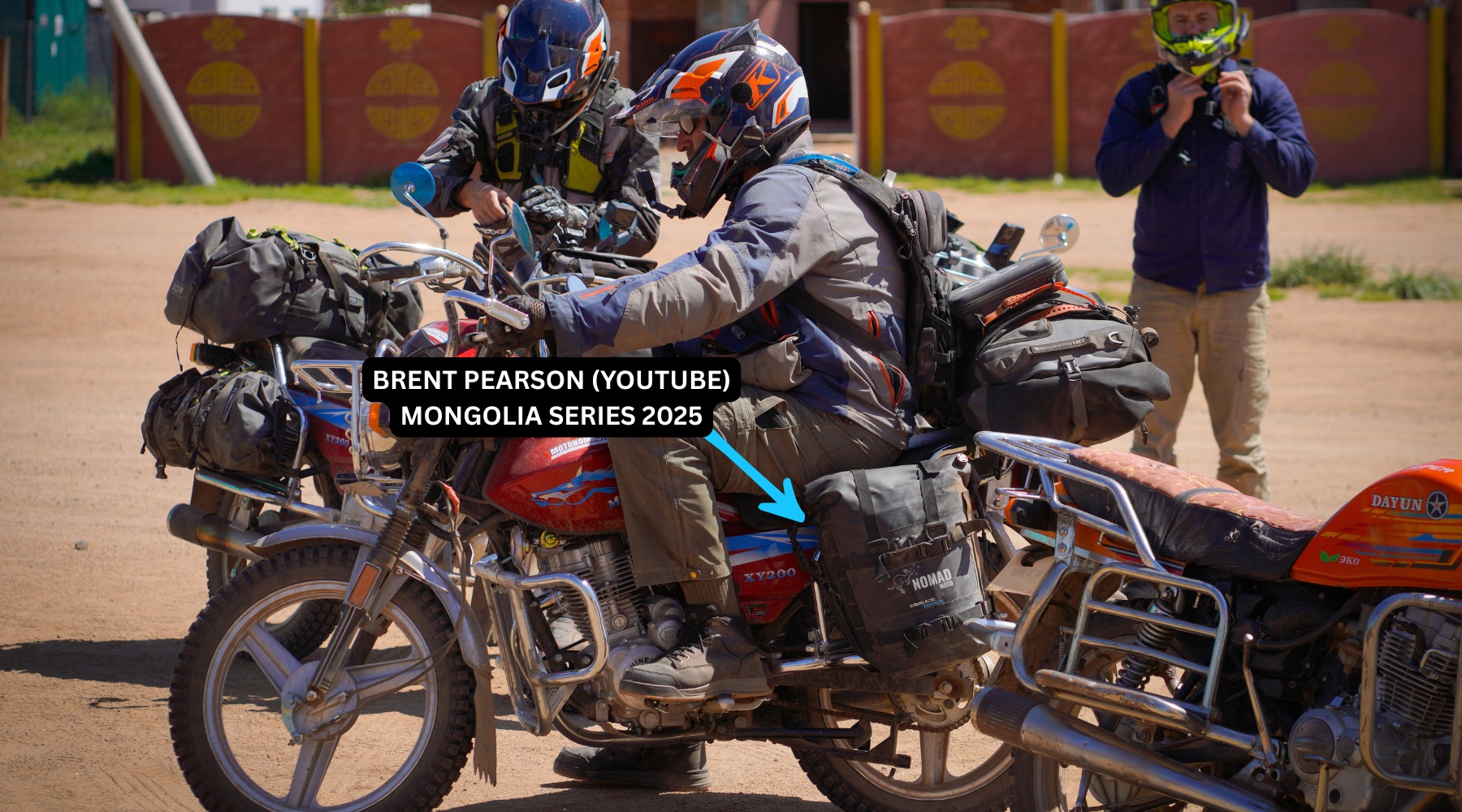
Motorcycle filmmaking brought his interests together. His YouTube channel, @brentbat, combines adventure riding with photography and video. In 2021, his film The Idaho BDR won the BDR Keep It 100 Film Festival. In a Reel Riders interview, he discussed returning to video creation as a passion and sharing tutorials about production and route planning. There is a creative life here with its own audience and its own work.
He has also used an Enboarder Enrichment Day to ride with friends. The company described those days as quarterly time off for activities that enrich employees’ lives. Pearson’s answer was a bike ride. His opinions extend to the wardrobe: “nobody needs more than five pairs of shoes.” One suspects motorcycle boots have to negotiate for a place in the allocation.
A different seat at the table
On September 18, 2024, Enboarder appointed Dan Finnigan CEO. Pearson’s announced focus shifted to strategy, partnerships and customer engagement, with the two working together on research and development in AI. Finnigan brought experience from Yahoo, HotJobs and Jobvite. Pearson welcomed his understanding of customers’ needs. The founding story continued with someone else responsible for the chief executive’s job.
In May 2025, Enboarder launched its Intelligent Journey Platform. HR teams could use natural language and uploaded documents to create employee workflows. The interface was evolving, while the original ambition remained recognisable: give practitioners a way to arrange the experience they want colleagues to have. Faster workflow creation still leaves an employer with choices about what deserves to happen.
Pearson’s career offers a recurring question: are people responding to what you meant to make, or showing you something more useful? The testers pointed to a button. Customers supplied occasions worth designing for. Away from work, a camera offered another reason to watch carefully. The interesting part of his story is the response that follows the observation: change the proposal, return to the lake, make the welcome happen.