Brent Frei went home to Idaho and found that his résumé carried very little weight. The rocks carried plenty. He had built Onyx Software and co-founded Smartsheet, but on the family farm near Grangeville there was still a field to clear, and his father still needed help. A public offering is a respectable accomplishment. A rock lodged in a farm implement is unimpressed.
Frei picked them up by hand. He also began looking for a better way to do it. His search ranged from existing machinery to grinders and lasers, an unusually elaborate response to a chore. Eventually, he founded TerraClear in 2017. Today he is its founder and chairman, working on a problem that connects the two halves of his life: the agricultural world that raised him and the technology businesses he learned to build.
The appeal of this story is partly its stubborn lack of glamour. There is no fashionable consumer habit to explain. There is a stone, a field, and somebody who would rather be doing something else. Frei’s career asks a useful question: how much ingenuity can you bring to work that everyone already understands and nobody particularly enjoys?
“It is the worst job on the farm.”
Brent Frei, on picking rocks, 2021
A tractor with a peculiar blind spot
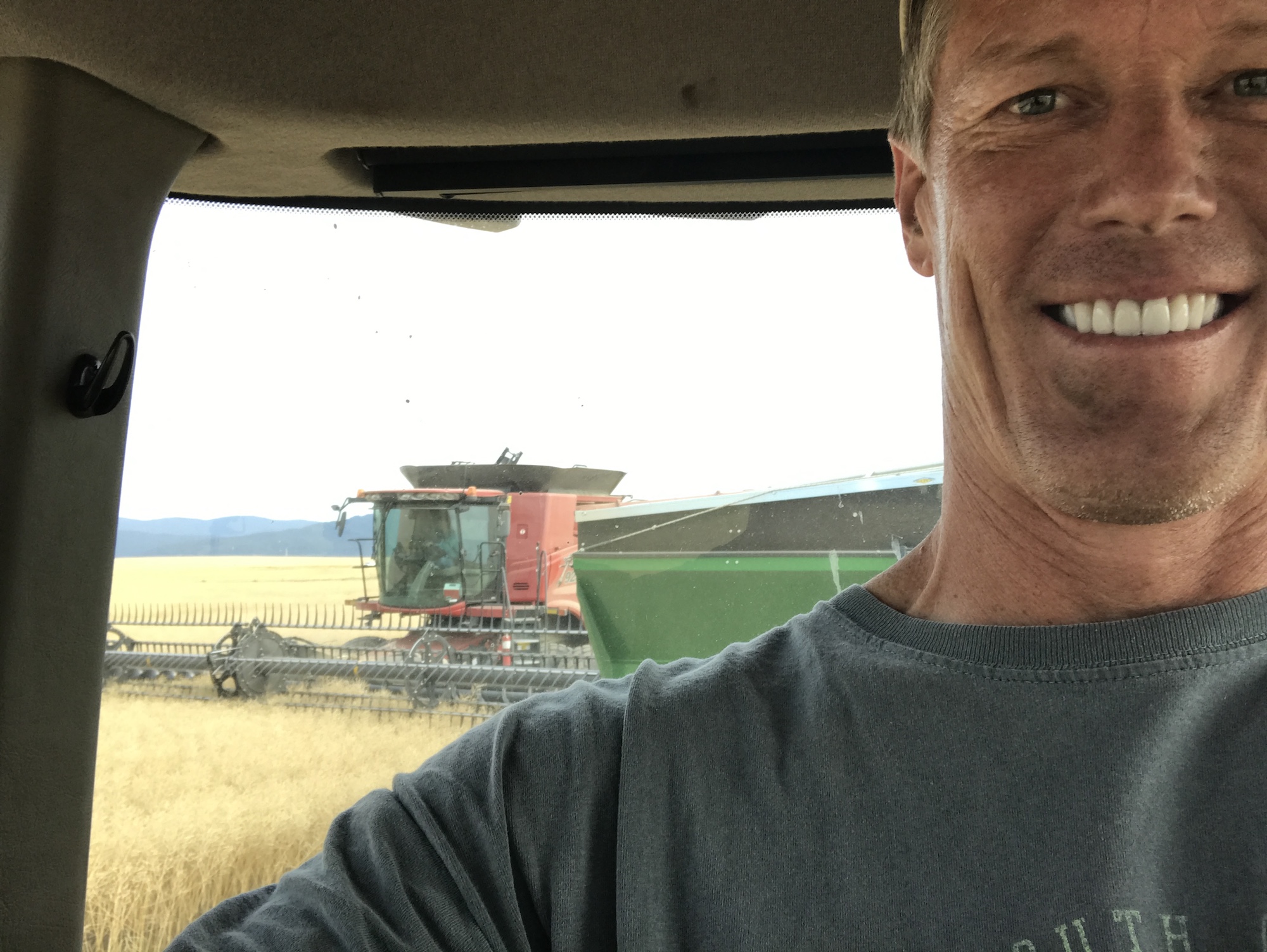
Frei grew up farming wheat and cattle with his parents in Grangeville. Agriculture remained a recurring part of his life after he left for college and then a technology career. Coming back meant participating. The family farm supplied work as well as scenery, which is an effective way to keep nostalgia reasonably honest.
In his own account of the insight behind TerraClear, Frei noticed an absurd division of labor. The tractor carrying away the rocks could drive itself. The people beside it were still bending down and loading the bucket. Automation had reached the vehicle without reaching the job that made the vehicle necessary.
Rock removal also has an aggravating feature for an entrepreneur: completion is temporary. Tillage, erosion and frost heaving bring more stones to the surface. Those stones can damage harvesting equipment. A field cleared one season can need attention again. Nature has arranged a recurring task without troubling itself to provide a subscription discount.
That combination explains why a seemingly modest problem deserved a company. It was familiar, repeated and consequential. Frei had experience assembling technical teams; he also knew the customer’s work firsthand. TerraClear would have to join those forms of knowledge. A clever mechanism alone would leave too much of the farmer’s day unsolved.
The nine-dollar detour
Before software, Frei trained as an engineer. He earned his undergraduate degree at Dartmouth in 1988 and his Bachelor of Engineering at its Thayer School in 1989. He played defensive tackle for Dartmouth, then helped coach freshman football while attending Thayer. His education involved both designing things and being forcibly reminded that other people have plans too.
His early professional work included mechanical engineering at Motorola, where he received patents for cellular system designs. Then came a career choice that looks more comfortable in retrospect than it probably did on a payslip. He left a steady job for a nine-dollar-an-hour internship at Microsoft and taught himself to code at night.
At Microsoft, he worked as a programmer analyst and became the primary architect of an international customer relationship management system. It served sales, marketing, customer service and product support. Mechanical engineering had given way to software, but the work still involved making separate parts cooperate.
In 1994 he co-founded Onyx Software, a customer relationship management company, and served as CEO until 2004. Onyx went public in February 1999. The sequence matters: farm work, engineering, a poorly paid change of direction, then a software business. His later return to agriculture drew on a career that had already crossed boundaries.
- 1994Co-founds Onyx Software
- 1999Onyx goes public
- 2005Co-founds Smartsheet
- 2018Smartsheet goes public
The spreadsheet had to lose an argument
Smartsheet began in 2005. Its opportunity lay in work that organizations were already doing through email, documents and spreadsheets: assignments, commitments, updates, all the small exchanges that make a project move. The early team wanted to give people a shared way to manage that activity. The first office was a little yellow house.
There was a trap in the founders’ experience. Enterprise software had taught them how to build powerful systems. Customers wanted something they could understand. Frei later described watching people use the early product and discovering that its architecture made little intuitive sense to them.
“There were too many things to learn.” His diagnosis was admirably plain. The product demanded an education before it delivered relief. In a workplace already filled with duties, that was a rather ambitious admission requirement.
The answer required rebuilding. Madrona, which had recently invested, backed the team through the rewrite. Once the design worked better, ordinary employees began adopting Smartsheet inside larger organizations. Their use opened the way to enterprise conversations. The lesson travels well: a purchase decision at the top cannot compensate indefinitely for confusion at the keyboard.
A hiring question with room for a family
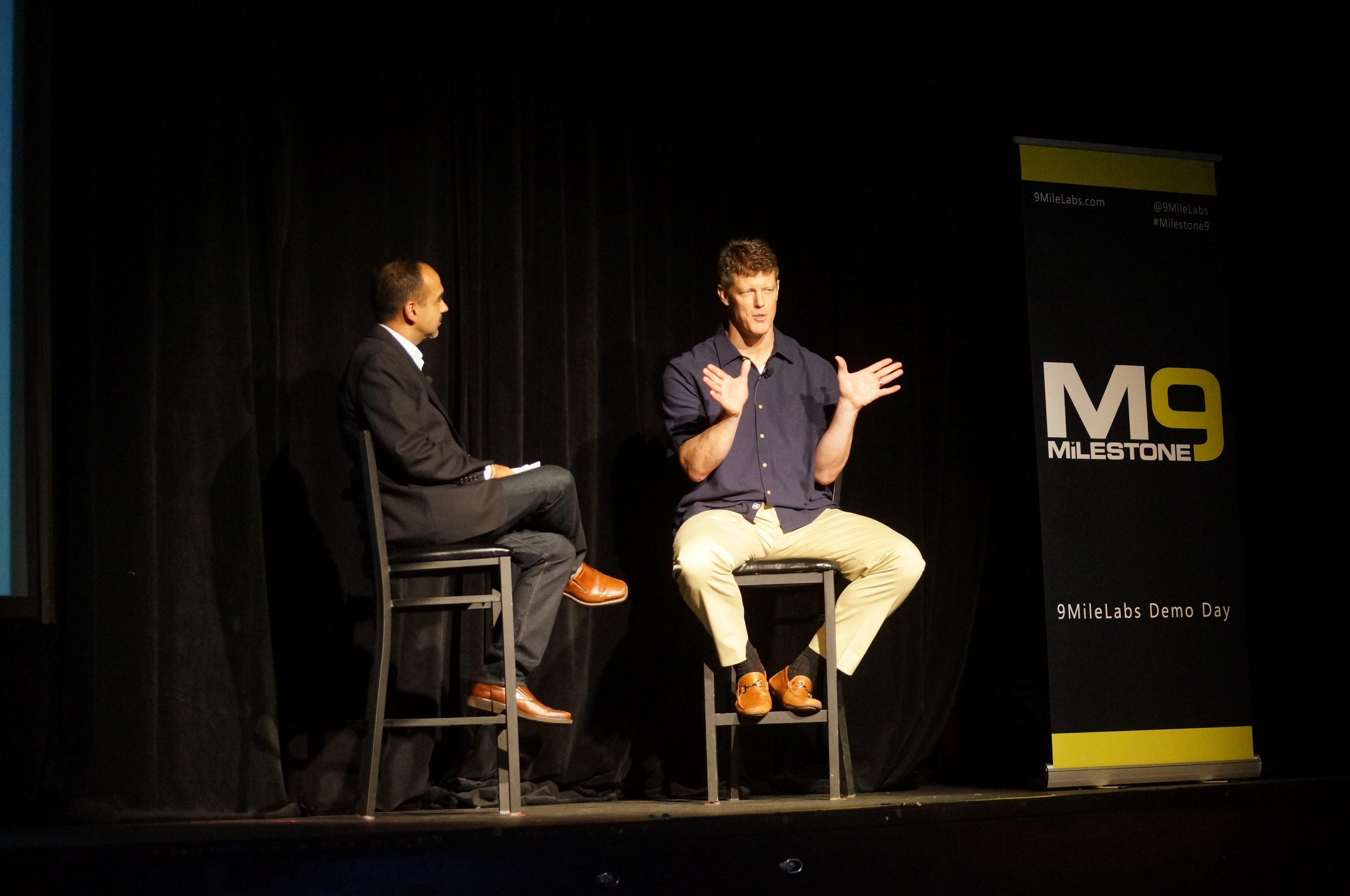
Frei’s method of building companies includes considerable attention to the people doing the building. By a 2018 appearance at the University of Washington, he said he had conducted more than 4,000 job interviews. His questions reached beyond technical competence into values, motivations and the culture a candidate would create.
He asked what people were most proud of and welcomed answers about friends and family. A technical accomplishment might demonstrate ability; it would not necessarily explain the person. He also wanted to hear how candidates handled obstacles. He remembered a Dartmouth football coach refusing to accept an opponent’s illegal play as a sufficient explanation for failure.
There is a practical reason to care about those answers. A startup eventually produces a problem that the job description did not anticipate. People have to decide what to do together. Frei has described honesty with investors as essential to getting useful advice, especially when performance falls short of the plan. A polished update can be a poor substitute for an accurate one.
His connection to Dartmouth has persisted through company building. He has recalled that Onyx at one point employed 26 Dartmouth alumni. In September 2025, the college inducted him into its Entrepreneurs Hall of Fame. The school that trained him had become a place to find collaborators, then a place to recognize what those collaborations produced.
His father was a difficult customer, usefully
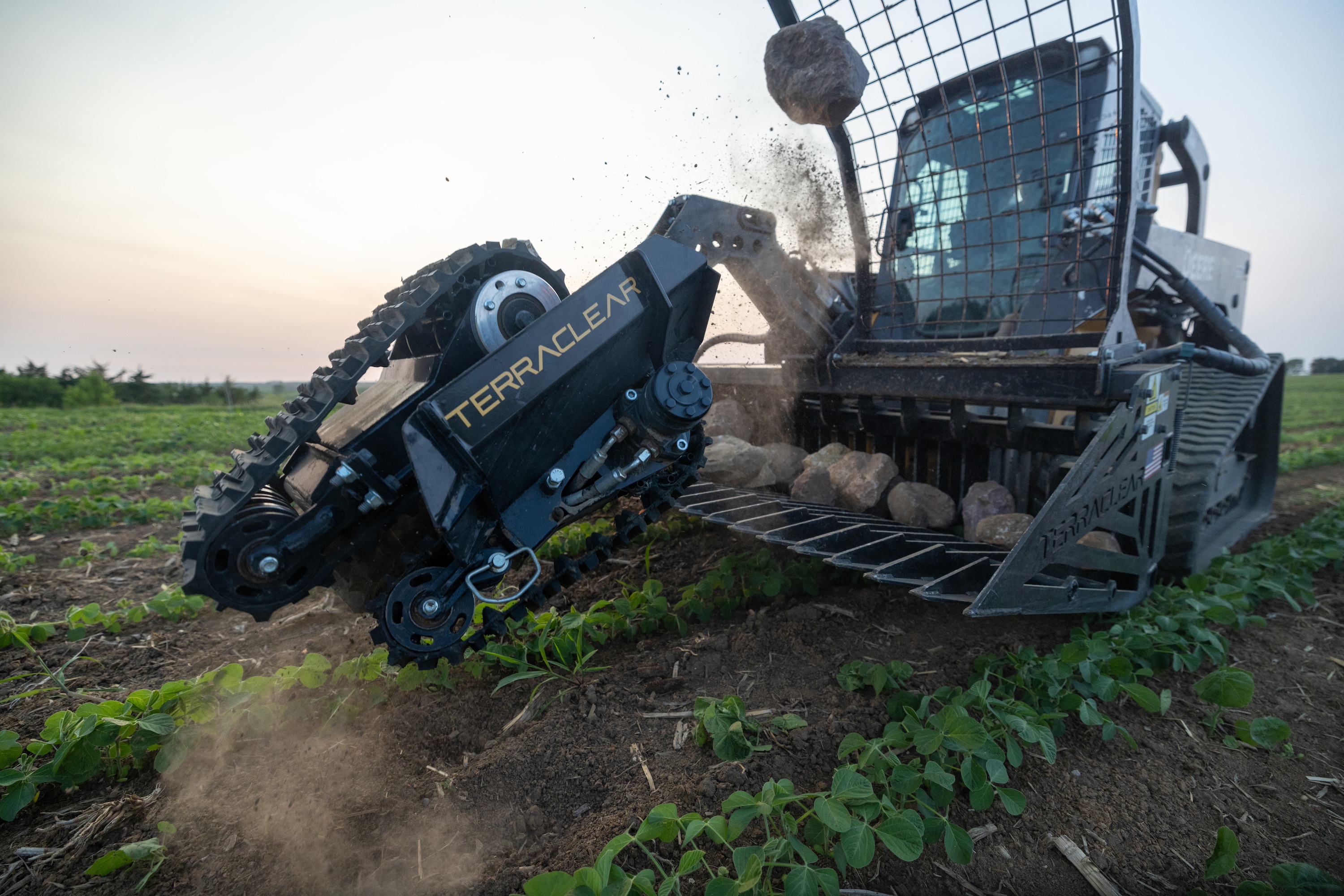
TerraClear added physical machinery to the software problem. The company’s early approach paired drone imagery with maps of rock locations and a picking implement mounted on a farm vehicle. Locating the stone and removing it were separate jobs that had to work together.
The distinction sounds elementary until someone must actually build it. A map can tell a farmer where to go. A machine must then reach, grip and lift. Neither part has much value if the person using the system finds it unnecessarily complicated. TerraClear assembled expertise in software, mechanical design, artificial intelligence, robotics and farming.
Frei’s father, Ron, reviewed the technology along the way. His verdict on early prototypes was that they needed to be easier to use. The resemblance to Smartsheet’s early difficulty is hard to miss. A product can have a sound technical idea and still ask too much of its user. Family feedback has the additional advantage of rarely requiring an appointment.
Another test came from the younger end of the family. When Frei’s nine-year-old nephew could operate a robotic rock picker, he felt the design was working. That is a concrete standard of usability. The machine’s sophistication should appear in what it accomplishes; operating it need not become a second profession.
Capture imagery across the field.
Identify rocks and map their positions.
Guide equipment or a service crew to the work.
Rocks were the first assignment
Frei’s interest in agriculture also produced HarvestWest, a farmland investment business focused on the Pacific Northwest. TerraClear brought him closer to the operational detail of farming. Its customers needed a completed task, whether they owned the picking equipment or hired someone to do the work.
By 2024, he was describing a business that could map a field and connect a farmer with a local service provider for removal. That widened the commercial approach beyond selling implements. It allowed other businesses to add rock picking to the services they already offered.
“Rocks for us is like books were for Amazon,” Frei said that year. It was an analogy about a starting point: a specific problem could require capabilities useful elsewhere. Image collection, identification, location data and coordinated action could apply to more than stones. The analogy remains an ambition, rather than a promise about the size of the business.
In August 2024, Devin Lammers became TerraClear’s CEO. Frei retained the board chair role and remained involved. He had also retired from Smartsheet’s board that June, after leaving its operating team in 2016. His current title reflects that transition: founder and chairman, with a new executive leading TerraClear’s next stage.
The field is getting another look
In February 2026, TerraClear announced TerraScout, an autonomous robot designed to collect detailed field imagery and turn it into plans for existing equipment. Its job is scouting. The company’s expansion puts increasing weight on knowing what is in a field and directing the next action.
In August, TerraClear announced commercial weed mapping for corn and soybeans and began accepting acreage commitments for the 2027 crop season. It reported more than 1.5 million acres mapped and over 1,000 farm operations served. Those are company figures, but they describe a tangible progression from the original rock problem toward a broader field-information business.
Frei’s personal life still connects him to the institution where his engineering career began. A 2026 class update reported that the oldest of his five children had gone to Dartmouth. His ties now include education, colleagues, recognition and another generation.
For all the machinery and software, the thread running through his story remains easy to grasp. He keeps returning to work he knows, gathering people who can improve it, and letting the user judge the result. The family farm supplied the original test. A rock would have to leave the field. Everything clever was accountable to that.