The useful way to read Brad Younggren’s résumé is not from top to bottom. Read it from center to edge. At nearly every stop, the Seattle physician and operator has worked on moving expertise away from the place where it traditionally sits and toward the place where it is suddenly needed. In the Army, that meant thinking about how specialists could reach soldiers without all standing in the same dangerous patch of ground. At Mobisante, it meant helping put diagnostic imaging on a phone. At 98point6, it meant making a doctor available through a text conversation. At Circulate Health, it meant placing a complex clinical service inside a network of existing clinics. The logos changed. The delivery problem did not.
That pattern has carried him to a fresh transition. On August 12, Viome Life Sciences announced its acquisition of Circulate and said Younggren would become president of Viome PRO, a newly formed clinical group. The move places Circulate’s partner network alongside Viome’s testing and data platform. It also turns Younggren’s latest startup chapter into a larger operating assignment: connect measurement, clinical action and follow-up without making the machinery feel like a scavenger hunt.
The constraint came first
Younggren studied political science at UCLA before earning his medical degree at the Uniformed Services University of the Health Sciences in 1999. He trained in emergency medicine at Madigan Army Medical Center, then served as an associate program director in its emergency department. In 2004 he deployed to Tall Afar, Iraq, as squadron surgeon for a Stryker reconnaissance unit. He received a Bronze Star and Combat Medical Badge for his service.
In a later interview, he described the deployment less as a cinematic origin story than as an encounter with a badly arranged system. People and equipment were scattered. Specialists were valuable, exposed and not always where the need appeared. “When I saw critical time wasted and providers pushed to the point of injury, that launched this notion to use technology to save soldiers’ lives,” he said.
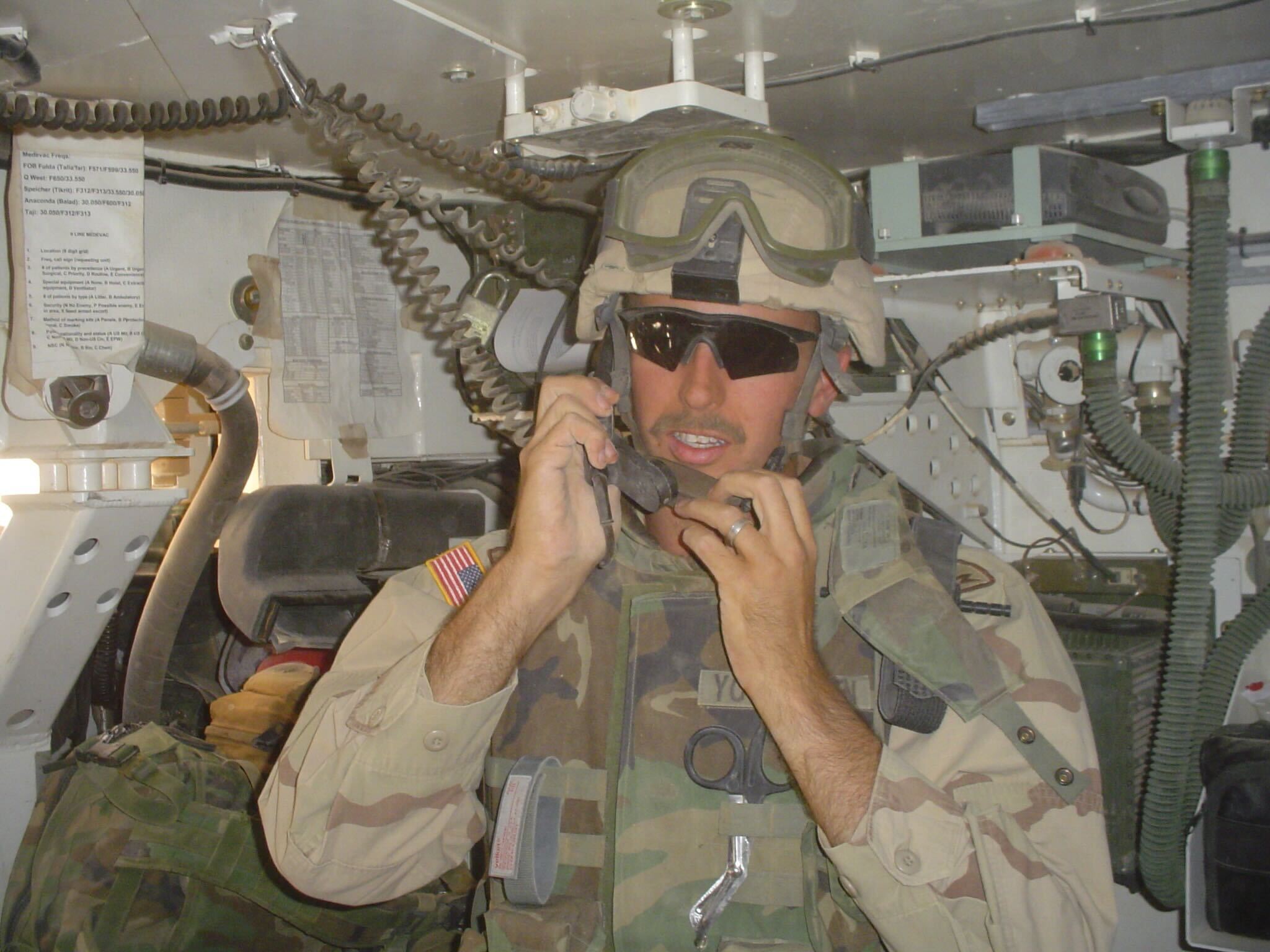
The lesson survived the uniform. After leaving the Army in 2010, Younggren continued practicing emergency medicine in the Seattle area and took on emergency preparedness, trauma and ultrasound responsibilities around EvergreenHealth. He did not leave the hospital behind when he entered startups. He kept a foot in the environment where tools meet shifts, interruptions, handoffs and people who do not arrive according to a product roadmap.
“The recurring idea is not a device. It is expertise that can travel without becoming careless.”YesPress observation
A phone becomes a clinical instrument
At Mobisante, where Younggren served as chief medical officer from 2012 to 2015, the problem was physical. The company’s MobiUS system paired ultrasound capability with a mobile phone. Portable ultrasound is ordinary enough now to be easy to underestimate. At the time, placing an FDA-cleared diagnostic system on consumer-adjacent hardware asked regulators, clinicians and customers to redraw the border around a medical device.
Younggren then held medical leadership roles at Shift Labs and Cue. Shift Labs developed lower-cost devices for settings with scarce resources. Cue worked on compact diagnostic testing. Taken together, these roles gave him practice in the unphotogenic parts of innovation: clinical validation, usability, regulation, training and the awkward translation between an engineer’s prototype and a clinician’s Tuesday afternoon.
The delivery thesis
There is a habit here that founders can borrow. Younggren has repeatedly treated distribution as part of the invention, not the errand that follows it. A portable device is only useful if it survives real workflows. A digital clinic still needs judgment, escalation and trust. A protocol offered across many sites still needs training, quality control and consistent data. The glamorous object is usually smaller than the operating system around it.
Fifty doctors and a text box
Younggren joined 98point6 as chief medical officer in 2017 and later became president and chief medical officer for care innovation. The company built text-first primary care supported by automation and staffed by board-certified physicians. The interface was spare. The organizational problem behind it was not. The company had to recruit doctors, design triage, establish escalation paths and make a conversation on a phone feel continuous even when a different physician might answer next time.
Younggren spoke about the physician workforce with the wary affection of someone who had managed an emergency department. He described tracking clinician satisfaction and looking for ways to prevent burnout. He also argued that technology could carry the relationship at moments when a single doctor could not be present around the clock. That is a slightly uncomfortable idea in a profession built around personal continuity, which is precisely why the operating details mattered.
By the time he left the operating role in 2024, 98point6 had become a long apprenticeship in the economics and choreography of virtual care. The technology could speed intake and surface urgent cases. It could not absolve the company of employing, training and listening to physicians. Software changed the front door. It did not make the building behind it imaginary.
Operator’s note: Younggren’s career keeps pairing a technical shift with a human system: portable imaging plus training, virtual access plus clinical triage, distributed clinics plus common protocols.
Circulate, measured in networks
Circulate publicly launched in January 2024 with Younggren as co-founder and CEO alongside Eric Verdin, the chief executive of the Buck Institute for Research on Aging. Instead of constructing a national chain from scratch, Circulate partnered with existing clinics, supplying protocols, machines and trained nursing support. By July 2025, the company said it worked with 24 clinics across eight states and had delivered more than 1,000 treatments since May 2024.
The company’s work sat in a field where consumer enthusiasm can sprint ahead of evidence. Circulate partnered with the Buck Institute on a randomized, placebo-controlled study of 42 participants. Published in 2025, it reported changes in molecular biomarkers, including an average reduction in a composite measure of biological age for one treatment group. The study was small, short and did not assess changes in how participants felt or functioned. Younggren acknowledged that more research was needed and described the clinic network’s routinely collected data as another potential source of insight.
That mix of commercial delivery and evidence-building attracted capital. In July 2025, Circulate announced a $12 million seed round led by Khosla Ventures, with Seaside Ventures and CSC Ventures participating. The company planned to expand its clinic network and research program. “There’s a bunch of other research we want to do,” Younggren said at the time. It is the sort of sentence a founder can enjoy saying only until the calendar arrives.
“Longevity medicine has reached an inflection point.”Brad Younggren, August 2026
An acquisition, then a larger canvas
Viome’s acquisition of Circulate arrived a little more than a year after the seed announcement. The companies did not disclose financial terms. They did explain the operating logic: Viome brings molecular diagnostics and a data platform; Circulate brings clinical protocols and a nationwide partner network. Younggren, moving into the presidency of Viome PRO, inherits the job of making those pieces behave like one system.
It is tempting to call this a pivot from founder to executive. His record makes the distinction look fussy. Younggren has been a physician inside startups, an executive who still worked clinical shifts, an academic, a hospital commissioner and an advisor. His particular value appears at the seams, where a company’s technical possibility meets a professional standard and somebody has to decide how the work will actually happen.
Outside the office, the public biographical details are pleasingly specific. He is an Eagle Scout. He speaks Spanish. He enjoys traveling through Central America with his twin daughters. These facts do not explain a career, but they soften its procession of titles. The résumé belongs to a person who has kept returning to institutions while repeatedly testing their edges.
What builders can steal
The first lesson is to choose a bottleneck durable enough to outlive a product. Younggren’s bottleneck is the distance between expert capability and practical access. It remained relevant when the answer was a field communication system, a phone attachment, a text interface or a clinic partnership.
The second is to stay close to the workflow. His continued emergency medicine work was not decorative credibility. It kept the mess visible. Clinicians are not abstract users. They have shifts, liability, fatigue, judgment calls and a low tolerance for tools that create a second job.
The third is to treat evidence as an operating function. In a category crowded with confident promises, Circulate’s published study invited both interest and criticism. The useful response is neither triumph nor retreat. It is a larger, more careful research program, clearer endpoints and enough patience to let measurements mature into knowledge.
Younggren’s new role at Viome PRO will test all three lessons at once. A bigger platform creates more reach and more seams. Data must connect to decisions. Partner clinics must deliver consistent work. Patients must understand what is established, what is still being studied and what happens next. The old question returns in a new suit: how close can capability get without leaving rigor behind?