At a workshop in Cambridge in 2010, Brad Flora put his ambitions on three yellow Post-it notes. The first concerned making money. The second concerned making more of it. The third concerned continuing to make it. Among people discussing the future of journalism, this had the appeal of remembering that the future would eventually send an invoice.
Flora was running Windy Citizen, a Chicago news community, and developing an advertising product called NowSpots. He had won a $250,000 Knight News Challenge grant. His notes were almost comically practical. The business behind them had taken 16 months to sell its first advertisement. There was a reason he had revenue on his mind.
Today, Flora is a General Partner at Y Combinator. Between that workshop and that job sits Perfect Audience, the advertising company he co-founded and led into a sale to Marin Software. The route makes more sense when you start with the unpaid bills than with the acquisition announcement. Each business raised a question the next one tried to answer.
Three notes, one stubborn problem
His education pointed toward words: English at Princeton, then a master's in journalism at Northwestern. There was a spell working in Princeton admissions and a Slate internship along the way. He had also considered the CIA. His own explanation for choosing journalism was that he was “more of a blabber mouth than a secret keeper.” An encouraging degree of self-knowledge for either profession.
The publishing impulse emerged while he was still a graduate student. Classmates were producing work that could live online, and Flora was interested in getting it there. An early school project grew into Windy Citizen, launched under that name in 2008. Readers submitted links and voted on stories. Chicago supplied the subject; the readers helped decide what mattered.
For a local-news entrepreneur, that arrangement held an attractive promise. The audience could participate in the publication rather than simply receive it. Yet participation left another job unfinished. Someone still had to pay for the machinery that let the conversation happen. A community could be busy, worthwhile and financially awkward at the same time.
That tension gave Flora an education his degrees had not provided. Making something people read and making something advertisers buy were separate assignments. Windy Citizen's survival depended on doing both. The advertising problem occupied a corner of the newsroom until, gradually, it began demanding a room of its own.
The advertisement gets promoted
Flora's verdict on the standard format was concise: “Banner ads suck.” NowSpots attempted to improve the thing publishers were selling. It pulled fresh material from a business's social accounts into an advertisement: a new tweet, a Facebook update, a photograph. Instead of leaving the same little rectangle to go stale, the advertiser could keep it supplied with information.
The 2010 Knight grant gave him money to test and extend the idea. It also supported a particular ambition: give local publishers an easier way to sell useful advertising. Fresh content and measurable performance might make the ad more valuable to everyone involved. The work combined publishing, software and sales, with Flora moving between all three.
NowSpots entered Y Combinator's Summer 2011 batch. The business carried him from Chicago to the Bay Area. But the effort required to sell the product remained a problem. Publishers could admire the technology without getting their sales teams to sell enough of it. An approving meeting and a functioning distribution channel were proving to be different things.
Flora and his co-founder, known professionally as Jordi Buller, turned toward retargeting. Their fellow founders wanted help reaching people who had already visited their websites. Perfect Audience launched in 2012. Flora later supplied a compact description of the change: “The market pulled the idea out of us.” The founders had found a request they could build around.
That turn changed who needed persuading. NowSpots asked publishers to adopt a new advertising product and then sell it onward. Perfect Audience let an advertiser act directly. Someone with a website and a reason to bring visitors back could become a customer. A shorter route to the buyer also gave the company a shorter route to an answer.
A trial beats another meeting
The mechanics were understandable even when the underlying advertising machinery was complicated. A business installed a small piece of code on its website, created an audience and prepared a campaign. Perfect Audience helped it reach those visitors again across display and social advertising. The unfinished visit became a potential starting point for another sale.
Flora described a customer base that could include a garage-door business alongside a subscription retailer such as BarkBox. That range mattered to the product's design. A small operator needed to get an advertisement running without first becoming an expert in the advertising industry. The software had to make its usefulness legible to someone with other work waiting.
The company offered a trial with advertising credit. Prospective customers could run a campaign and see what happened. Flora liked that this also reduced the need for elaborate sales conversations. Support remained available, but the product could take on some of the explaining. There is a pleasing economy in selling advertising software by letting it advertise.
He also discussed making it easy to stop targeting someone after they converted. A customer who had already signed up did not need an endless reminder to sign up. For a business paid on ad impressions, that was a meaningful product choice. It put the advertiser's relationship with the customer into the design, alongside the immediate opportunity to serve another ad.
“The market pulled the idea out of us.”
Brad Flora, on the turn toward Perfect Audience
The price had a footnote
Marin Software completed its acquisition of Perfect Audience on June 2, 2014. The headline figure was $25.5 million. The agreement separated $22.8 million in cash and stock from another $2.7 million in equity retention grants for continuing employees. That second figure belonged to the task of keeping people with the business after the purchase.
Those terms explain why an acquisition story needs more than one number. A buyer acquires software, customer relationships and capabilities. It also needs the people who know how those things work. The public total bundled the purchase with an incentive for continuity. For employees, the next chapter was part of the transaction.
Marin's stated interest was in combining its advertising platform with Perfect Audience's display and social retargeting capabilities. Customers already included businesses such as Eventbrite and New Relic. The product gave Marin another way to help advertisers follow an interested audience across channels. Flora moved into a product leadership role at the acquiring company.
The SharpSpring connection belongs to a later transaction. In November 2019, Marin sold the Perfect Audience business assets to SharpSpring for approximately $4.6 million in cash, with specified liabilities assumed. By then, Flora had worked at Marin and subsequently in business development at Brave. His current job is at YC; the product's ownership history follows its own path.
Learning to sit on the other side
After the sale, Flora began making angel investments. He started with relatively small checks and attended YC Demo Days to hear founders pitch. Over time, he organized funds and invested more broadly. His personal website displays investments including Deel, Razorpay, Truebill and Function of Beauty. Another startup had become a way to keep learning after his own was sold.
His curiosity could take an unusual route. Reading Ready Player One made him think about a future in which people owned fewer of the objects they used. That line of thought helped lead him to invest in Feather, the furniture-rental business. Fiction had supplied a question about an ordinary purchase: perhaps the sofa did not need to belong to its sitter.
YC appointed him a Group Partner in February 2021 after three batches as a Visiting Group Partner. The change formalized a different relationship with founders. Choosing an investment is one decision. Helping a company through the consequences of its choices is continuing work. A founder's problem can return next week wearing a different hat.
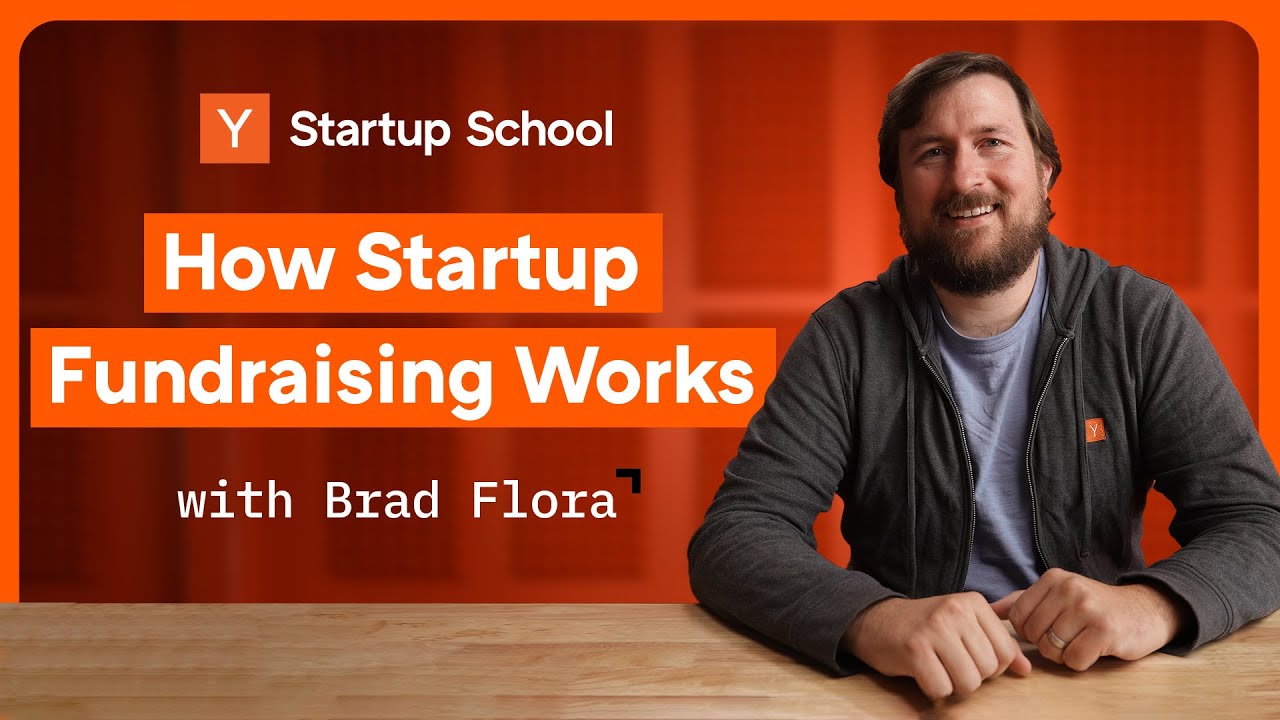
His public teaching deals with the gap between how fundraising looks and how it happens. In his Startup School talk, he describes repeated conversations and the importance of getting a product into use. The presentation gives a novice founder a less theatrical picture of the job. A meeting can be ordinary and still have consequences.
A plane ticket, then a question
There is a glimpse of his working manner in a 2024 account of YC office hours. A founder was struggling to close a trial customer in Atlanta. Flora urged him to fly there that night. The suggestion initially sounded like a joke. It was an unusually literal answer to the problem of getting closer to a customer.
His interests now include stablecoin businesses. He and fellow YC partner Harj Taggar have publicly encouraged founders building tools for businesses and developers in that area. YC also lists him as the primary partner for Unifold, a Winter 2026 company developing deposit and payment infrastructure. Advertising dashboards and payment tools occupy different markets, but both can begin with a process someone finds needlessly difficult.
Read backward, Flora's career can look neatly arranged: journalist, founder, investor, partner. Lived forward, it required abandoning some versions of the plan and spending time on questions that looked peripheral. Windy Citizen needed advertising. Advertisers needed easier tools. Other founders needed someone who understood why a promising product might still be hard to sell.
The three yellow notes make a useful ending because they were written near the beginning. Before the sale, before the investments and before the partner title, Flora was trying to build something that could keep paying its way. The question has traveled well. Somewhere between the audience and the invoice, there is still work to do.
Keep following the questions
More from Brad Flora, plus conversations and chapters from his career.