A copper price is a wonderfully tidy thing. A cargo of copper concentrate is considerably less obliging. It has other elements in it, a journey to make, a buyer to satisfy, and bills that arrive before the sale is complete. Boris Eykher built his business in the space between that tidy number and the untidy cargo. The space turns out to contain an entire career.
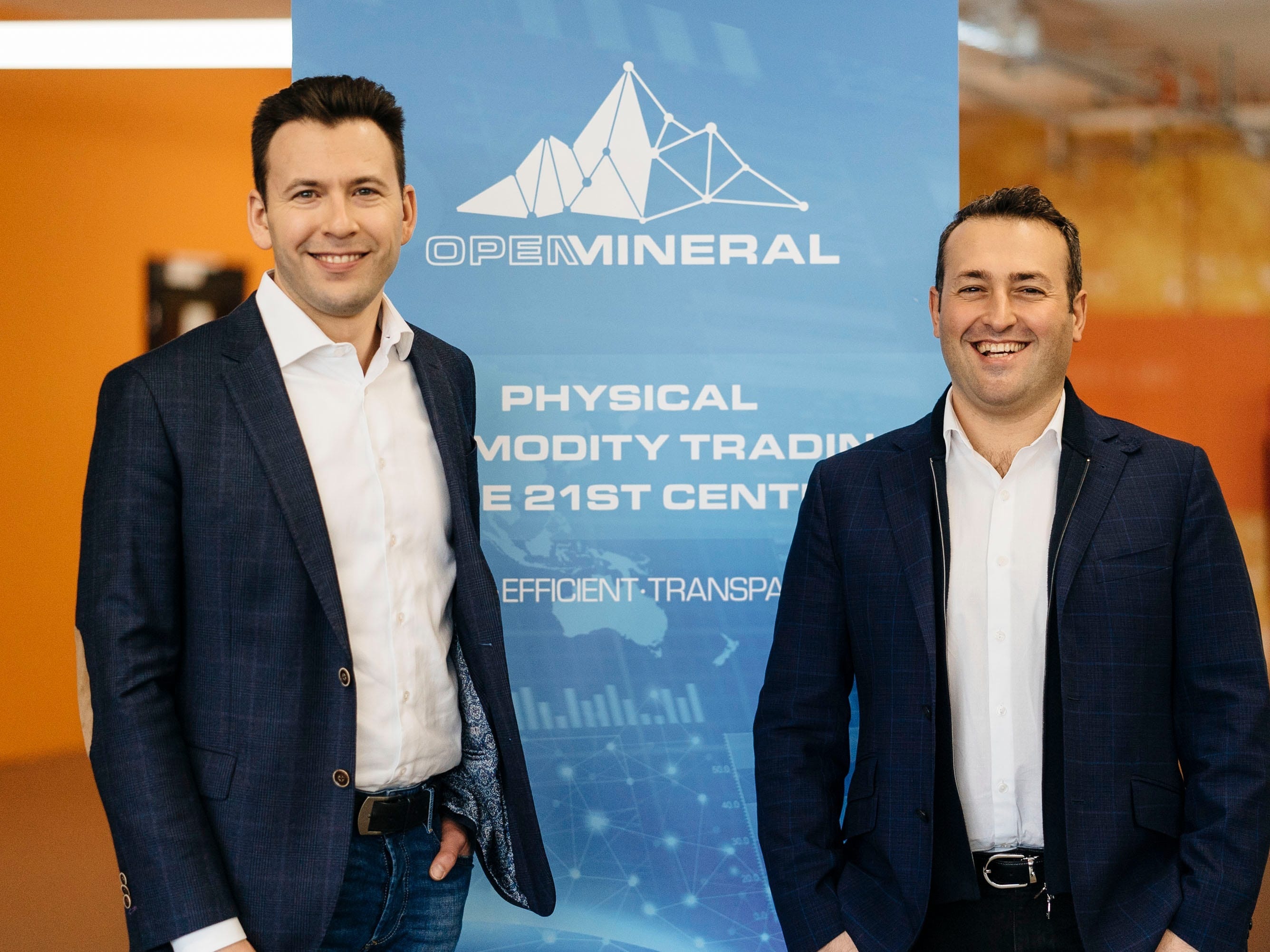
Eykher is the co-founder and CEO of Open Mineral, a physical-metals trader that uses data and artificial intelligence in its commercial decisions. The company's work joins pricing to financing, sourcing, and logistics. Its proposition is easy enough to state: give producers and consumers better information and help them trade more efficiently. Delivering it requires fluency in several businesses that rarely fit on the same presentation slide.
That is where his earlier jobs become interesting. Before asking the minerals industry to change its methods, Eykher had worked inside its machinery. He had traded concentrates, managed mining and smelting assets, and held the finance job at Kazzinc. He knew the commodity from several sides of the desk.
Eight years on the inside
His education supplies one part of the explanation. Eykher earned a bachelor of science in electrical engineering and computer science at the University of California, Berkeley, followed by an MBA at Harvard Business School. His public education record dates the Harvard course to 2007-2009. The combination gives his later venture a recognisable vocabulary: systems, capital, and decisions.
He began his private-equity career as an associate at Pacific Corporate Group. Then came eight years at Glencore. His responsibilities included trading and managing assets at mines and smelters, as well as serving as chief financial officer of Kazzinc. His trading experience covered copper, zinc, lead, gold, and silver concentrates. These were different responsibilities within an interconnected trade, each exposing a different piece of the commercial calculation.
Open Mineral grew out of that industry experience. Eykher dates its founding with former Glencore colleagues to 2016. It was publicly presenting its exchange model in 2017. His co-founder Ilya Chernilovskiy also came from Glencore and held a Harvard MBA. The early team brought together former colleagues and commodity specialists. Their starting advantage was familiarity with the work they wanted to reorganise.
For Eykher, the move into entrepreneurship therefore involved returning to an existing problem with a different set of tools. The knowledge accumulated inside a large trading organisation became part of the foundation for a smaller one. The proposed change concerned how commercial information travelled between participants and how much of the transaction could be organised digitally.
Copper has company
The concentrate trade explains why Eykher's venture needs more than a list of buyers and sellers. Concentrates sit upstream of the refined metals that appear in familiar market quotations. Their commercial value depends on the material being offered and the terms under which a customer can use it. The metal's name begins the conversation; it does not finish the arithmetic.
Open Mineral developed pricing tools for that arithmetic. Its work includes assessing recoverable elements and elements that attract penalties, alongside processing costs and market terms. A mine wants a suitable outlet for what it produces. A smelter wants inputs that work commercially and operationally. Bringing those requirements into the same calculation is the point of the exercise.
The early exchange allowed participants to tender concentrates and handle negotiations and contract execution. Services around the transaction included transport, quality control, and insurance. Its membership checks and document exchange were part of the offer too. A commodity marketplace has to answer a rather old-fashioned question before it can enjoy being modern: who, exactly, is on the other end of the deal?
Eykher's approach makes information useful by attaching it to a decision. Where should this material go? What terms make sense? What can it yield for a particular processor? These questions help explain the place of machine learning in the business. The technology is directed at the commercial attributes of materials and the choices of the people producing or processing them.
Product quality
Freight · insurance
Processing terms
The money behind the model
In September 2021, Open Mineral raised $33 million in a Series C round led by Mubadala Investment Company. Statkraft Ventures and Lingfeng Capital joined existing investors Xploration Capital and Emerald Technology Ventures. The announced uses included extending the platform and strengthening the company's physical merchant activities. Software development and the capacity to do business travelled together.
Company funding led by Mubadala Investment Company.
The investor group brought interests in industrial technology, energy, and financial services. Those connections fit a company whose customers needed both commercial intelligence and the means to execute a trade. Capital was part of the operating problem, as well as the startup story. Financing a shipment and financing the business arranging it are separate jobs, but they meet in the same supply chain.
The following January, Open Mineral announced additions to its commercial bench. Former Glencore executive Nico Paraskevas joined as a senior adviser, while Kareem Barbir became head of commercial. Barbir brought experience from companies including Noble Group, Nyrstar, and Trafigura. Eykher was building around industry experience again, enlarging the network of people who understood how a metals transaction gets completed.
The paperwork fights back
There is a pleasingly stubborn detail in Open Mineral's account of digitisation. In March 2024, its technology leadership described staff still spending hours pursuing paperwork, dealing with exceptions, and trying to get banks to communicate. Even a company built around digital tools was doing the administrative chasing familiar to physical trade. The cargo had acquired algorithms. The documents retained a personality of their own.
That account helps put Eykher's business in proportion. Better forecasts can inform a decision, while execution depends on institutions outside the company's software. The company had added data scientists and machine-learning engineers in 2023 to develop forecasting and hedging capabilities. It also described trialling Tradeflow's trade-finance platform in December of that year. Better analysis and fewer procedural delays were parallel projects.
Open Mineral's present service descriptions make the breadth explicit. The company can arrange prepayments, purchase material at a mine gate or port, and manage its journey to the final customer. It offers product pricing and help with finding buyers and negotiating offtakes. In that setting, a successful digital tool earns its place by supporting a physical obligation.
The result is a useful way to read Eykher's career. His engineering education sits alongside trading, asset management, and finance. Each discipline has something to say about the transaction. None gets to declare the job finished on behalf of all the others.
A different sort of trading hub
Eykher's public LinkedIn profile lists Abu Dhabi as his base. He has said that Open Mineral opened its first Middle East office there in 2022, after the Mubadala-led capital raise. The Gulf has become a visible part of his commercial outlook, connecting pools of capital with suppliers and customers across several regions.
In January 2024, Open Mineral announced a cooperation agreement with China's Steel Searcher, also known as Zhaogang, at the Future Minerals Forum in Saudi Arabia. The initial objective was to develop a steel-products supply chain in the kingdom. The larger stated ambition was a Middle East steel supermarket, offering a place to source steel products. The phrase gives a pleasantly ordinary name to a complicated undertaking.
Later that year, Eykher described a company of about 80 people across 12 offices and plans for a Saudi Arabian office. Those were his November 2024 figures and plans, a snapshot of the business at that time. The geographical spread also illustrates a practical point in his model: digital information still benefits from people close to the producers and customers who act on it.
The border in the business model
A company promising greater transparency also carries responsibilities beyond price discovery. Open Mineral faced scrutiny in 2023 over Russian-gold trading by its Abu Dhabi subsidiary. The company confirmed six shipments worth $44 million between August 2022 and January 2023. The transactions raised questions about the treatment of overseas subsidiaries under Switzerland's sanctions framework.
Open Mineral AG said that the UAE company operated separately. It also said that it took regulations seriously and had taken steps to confirm that the subsidiary had not breached applicable law. The episode belongs in the account of the business Eykher leads: the commercial appeal of operating across borders comes with questions about oversight and responsibility.
The broader lesson is a limit to any account centred entirely on data. Knowing a material's composition and finding an attractive buyer address important trading questions. Corporate accountability involves another set of decisions. As a trading company's footprint grows, the structures around its transactions become part of the story too.
Keeping another door open
One of Eykher's more revealing public observations came after a 2024 strategy meeting in New York. He discussed the shift from just-in-time thinking toward just-in-case planning. His description of resilience emphasised alternatives and the capacity to use them. It was a commercial definition, concerned with what an organisation can do when circumstances change.
“To me, resilience means constantly creating optionality and having the resources to react to/capitalize on opportunities.”
Boris Eykher / 2024
His remarks after speaking at the Global Freight Summit that November applied the same concern to smaller producers. He said Open Mineral was committed to small and medium-sized miners and wanted to work with supply-chain partners to bring capital, increase output, and support reliable long-term supply. The aspiration joins information to resources once again.
His public conversations continued in 2025. The Milken Institute listed him on a May panel about industrial policy and protectionism. A July Mission Matters podcast episode featured his discussion with Adam Torres about technology, risk management, logistics, and critical minerals. The subjects surrounding the trading desk had widened to include the policies shaping who can supply whom.
The through-line remains close to Eykher's original commercial problem. A producer needs choices that can actually be used. A processor needs material on terms it can accept. Someone has to connect the information, money, and delivery. Eykher's working life has touched each part of that arrangement. Open Mineral is his attempt to make them work together, with all the practical complications still attached.
Follow the conversation
- Open Mineral: Boris Eykher
- Boris Eykher on LinkedIn
- Listen: critical minerals, AI, and strategy (2025)
- Listen: metals and China with Winston Ma (2021)
- Read: the 2024 trading interview
- Read: the $33 million round
- Read: digitisation and the paperwork problem
- Read: Russian-gold trades and the company response
- Read: Open Mineral’s response on compliance