The family business had opportunities. What it needed was time. Abhay Kalra grew up around electrical and industrial distribution in India, watching the work of serving existing customers consume the hours that might have gone toward finding new ones. A sales team could be busy all day and still have too little time to sell. The paperwork, one might say, had acquired a rather demanding customer of its own: the salesperson.
Kalra and his older brother talked about expanding the business. In his telling, those conversations kept arriving at hiring. More business required more people; new people needed training; training required knowledge that experienced employees had accumulated over years. The question of growth circled back to the same practical limit. Before it became a startup problem, it was a family conversation.
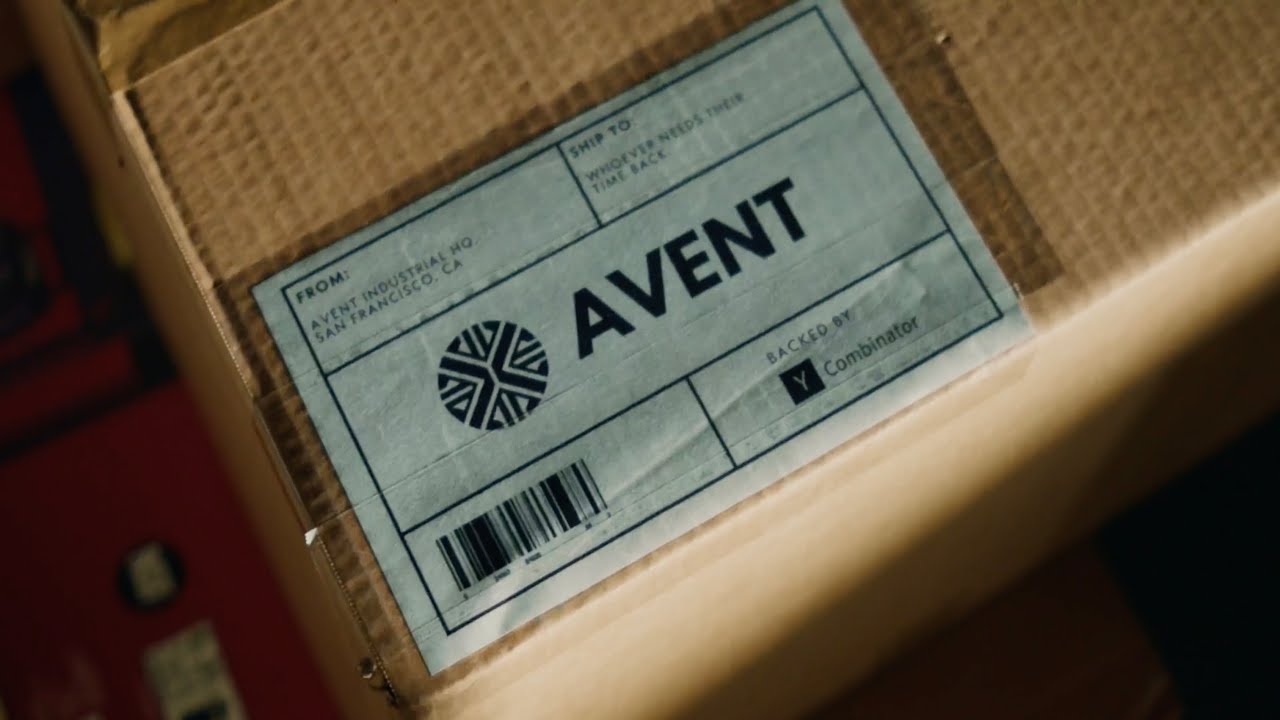
Today Kalra is the founder and CEO of Avent, a San Francisco company building AI agents for industrial commerce. It entered Y Combinator’s Summer 2025 batch. The company’s work begins with quotations and orders, the documents through which an inquiry becomes something a distributor can fulfill. His route into that work helps explain the choice. He had already watched people do it.
A business education before Berkeley
Kalra describes growing up in the distribution industry and watching his father build an industrial distribution business. He later worked as an operator in manufacturing and industrial distribution. Those experiences gave him a view of the business from inside its daily routines, where knowing a product and knowing how to get an order through the system are closely connected skills.
He studied electrical engineering and computer science at the University of California, Berkeley. There, his computer vision research concerned defect detection in manufacturing. That is a specific technical problem: teaching a system to identify something wrong in a physical production context. His later company addresses a different part of industrial work, but the industrial setting remained.
The connection is useful without turning his education into a tidy prophecy. Manufacturing research and sales administration are different disciplines. What joins these parts of his public biography is an interest in applying computing to businesses that handle physical goods. A factory’s output eventually needs a buyer, a price and a record of the transaction.
His public GitHub profile supplies a smaller detail. Among its pinned repositories is an EECS 106A project using a Sawyer robot as a chess agent. It is a pleasing companion to the current business: another meeting between software instructions and a world that has to obey them. A chessboard has rather fewer product descriptions to reconcile.
“Avent is what I wish we had back then!”
Abhay Kalra, on the company’s beginnings
The order behind the inbox
Avent publicly launched on August 14, 2025. Its initial description was straightforward: an AI inside sales representative for industrial distributors and manufacturers. The work included preparing quotes, entering orders and finding products. These are modest words for tasks that sit between a customer wanting something and a business being able to supply it.
Consider the sequence the product was designed to handle. An incoming request needs a product match and a price. A quotation follows. A purchase order then has to connect back to the quotation, and the resulting sales order must reach the distributor’s enterprise resource planning system, or ERP. That system holds the business records the rest of the operation depends on.
Avent’s launch description put salesperson review into that process. The distinction matters to the story because a prepared document and an approved customer commitment carry different responsibilities. Software can move information through a workflow while a person remains involved in deciding what goes out. The product’s usefulness depends on how those responsibilities fit together.
Kalra’s choice of work also changes the meaning of a busy sales desk. Processing an order is necessary. So is talking to the customer whose needs are still taking shape. When the same team must do both, repeated administrative steps compete with conversation. Avent’s premise is that software can take on more of those steps.
Three handoffs, one working day
For a founder, the temptation is to describe the destination. The more revealing part can be the handoff. A customer’s language needs to become a recognizable product. A quoted price needs to remain attached to the right order. The order needs to appear where the business already keeps its records. Each connection has a job to do.
Avent says its agents use past pricing and knowledge accumulated inside the business. Its product materials also emphasize existing systems. That approach acknowledges an unromantic feature of commercial software: installation does not erase the customer’s history. Prices, records and operating practices have to remain useful when a new tool arrives.
The launch workflow, simplified. A sequence of tasks, not a measurement of speed or performance.
For Kalra, this brings the technical problem back to the people he watched growing up. Experienced staff know things that are difficult to reduce to a clean form. Making that knowledge usable by software requires attention to the business around the data. The automation has to survive an ordinary working day, including the requests that arrive inconveniently incomplete.
What the first numbers actually mean
Avent’s YC launch materials reported more than $200,000 in quotations generated each day for distributors across North America and the United Kingdom. That is the face value of quotations the company said its software prepared. It is distinct from Avent’s revenue, customer payments or the value of completed sales.
in quotations generated per day
Quoted business, rather than booked revenue. Reported in Avent’s YC launch materials.The figure is interesting because it measures the kind of work Kalra chose. Preparing a quotation touches commercial activity even before a transaction closes. It is a way to describe activity moving through the product, with the usual limitation that a quotation may never become an order. Keeping the unit attached makes the number useful.
The launch also came with Y Combinator backing. Avent received $500,000 through the accelerator’s standard investment structure. That gave the new company a financial and institutional milestone. It did not settle the product question. The product still had to work inside a distributor’s existing operation, where the next incoming request would supply another test.
When the answer is “nothing”
One of Kalra’s more revealing observations concerns asking distributors what is broken. “Most people will say, ‘Nothing,’” he said. His explanation was that people do not always know what is possible. The comment suggests a difficulty for anyone building software around an established routine: familiarity can make a costly task feel perfectly ordinary.
A business that gets its orders out has evidence that its process works. The time it consumes may be harder to isolate. Discovering a useful change therefore requires more than collecting a wish list. It requires understanding what people actually do, how one step depends on another, and which inconvenience they have learned to work around.
Kalra’s family experience gives that observation a personal setting. He did not need to imagine a business with customers to serve and too little capacity to pursue more. He had participated in conversations about that problem. The challenge of turning that familiarity into software is preserving the detail that made the original observation valuable.
The family question gets a larger address
Avent’s current ambitions extend into a connected platform for industrial commerce. Its public materials describe workflows, business rules, permissions and human judgment alongside AI. Its engineering recruitment describes customer deployments as work that requires understanding constraints and unusual cases. That is a practical reminder that the company’s product lives inside other companies’ decisions.
There is a revealing requirement in Avent’s recruitment for engineers who work directly with customers. They are expected to understand the business well enough to discuss it as peers. For a company selling automation, that puts considerable weight on a human skill: recognizing why a customer works a particular way before proposing to change it. The requirement echoes the route Kalra took into the market himself. He brought experience of distribution to the software problem, and the company now asks people building customer deployments to develop that same attention to operating detail. An integration is only useful when it fits the business that must use it.
The San Francisco team recruits engineers to build both the core software and the integrations customers need. In those roles, the work is described in terms of operating businesses: understand the workflow, connect systems, get the deployment running. The language fits Kalra’s original concern with what a sales team can actually accomplish during its day.
His stated aim is to give people more room for customers and strategy. The family business supplied the question; Berkeley supplied technical training; Avent is the ongoing attempt to make a product answer it. The thread running through those stages is time, a resource that never appears on a distributor’s shelf but determines how much business can pass through the door.
For the customer on the other end, the ambition has a simple expression: get a useful answer and keep the order moving. For the salesperson, it means having attention left for a conversation. Those two experiences are the everyday measure against which Kalra’s larger plans must work.
The old conversation with his brother has acquired software, employees and an accelerator investment. Its central question remains pleasantly concrete: once the existing orders are handled, who has time to find the next customer?