The machine works. That is the good news. It forecasts demand, sorts information or produces an answer that once required a roomful of people. Then comes the less photogenic question: who will pay for it? Boab, the Melbourne venture company, has built much of its work around the distance between those two sentences. An algorithm can be impressive in private. A business requires somebody else to care.
- The original offer: investment plus practical help for AI companies already in the market.
- The newer audience: founders building AI ventures and Australian SMEs trying to use them.
- The useful lesson: examine the customer’s buying and switching costs before polishing the demo.
The cheque has company
Boab began in 2020 with a fairly precise brief. Its public scaleup application asks for a market-ready AI product, demonstrable traction and customers. This is a revealing entrance requirement. The company is interested in what happens after technical promise has acquired some commercial evidence, when the founder must turn a handful of believers into a repeatable business.
The advertised arrangement paired A$300,000 in entry investment with a six-month program and the possibility of up to A$5 million in follow-on funding. Those later cheques were possibilities, not entitlements. LaunchVic supplied A$1.5 million in program support, alongside A$8 million of private capital from Artesian. The original ambition was to support 32 mature AI scaleups over four years.
Program support and investment capital serve different jobs. Neither is Boab’s valuation.
The early cohort made the thesis concrete. Remi AI worked on forecasting and supply chains; Daitum on decision optimisation; PI.EXCHANGE on making machine learning usable by enterprises. Boab was backing tools for business problems rather than one universal AI product. Its customer was the company building the tool. That company’s customer might be a retailer, an operations team or a larger enterprise.
There is another number to read carefully. In February 2021, Boab announced a A$100 million global AI fund capital raise, with an ambition to invest in another 150 companies. An announced raise is a plan to assemble capital. Treating that headline as money already banked would give the story a very handsome, very unearned extra zero.
A laboratory needs a sales department
Managing director Andrew Lai came from university commercialisation and venture programs: Deakin University’s spinout portfolio, the agricultural accelerator SproutX and FinTech Melbourne. That background helps explain Boab’s attention to the machinery around an invention. Researchers, investors and corporate buyers can inhabit the same city while speaking remarkably different languages.
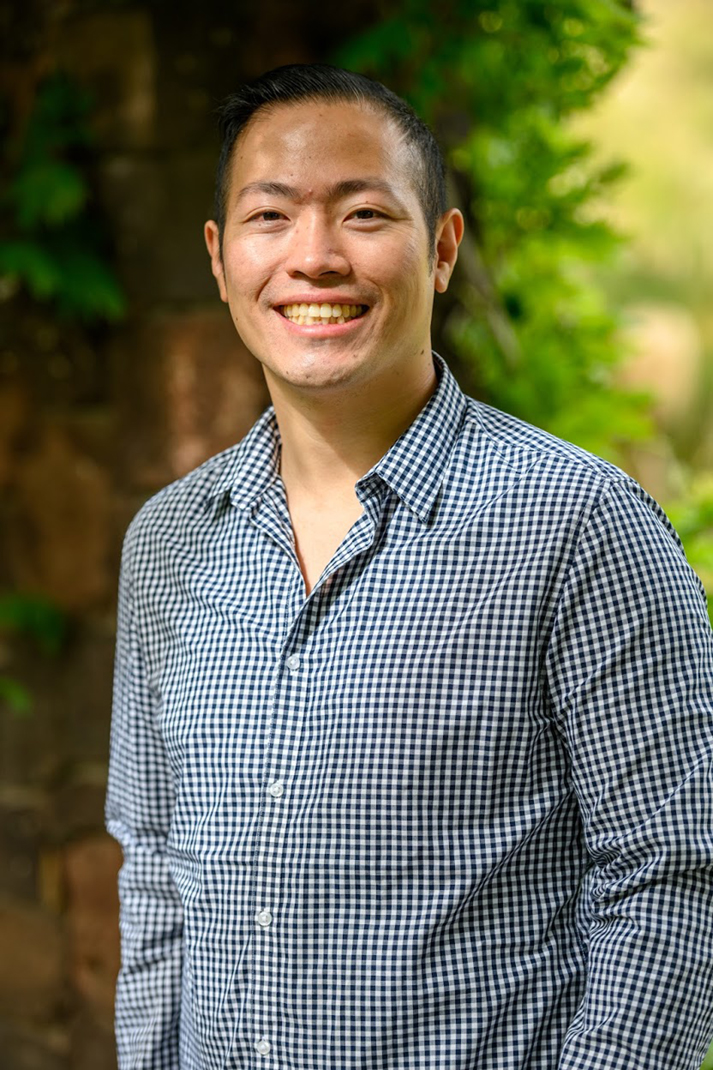
Boab’s commercial assistance has included PR, content, sales workshops and customer introductions. Lai described the work as collaborative and tailored to each founder’s gaps. A business with an effective sales operation needs different help from one whose founders can explain the model beautifully but cannot explain the buying decision. The useful distinction is the diagnosis before the intervention.
The approach travelled into Cremorne Digital Hub’s six-month scaleup program. Its first 2024 cohort brought together LARKI from Victoria, CADS from Singapore, FCC Analytics from Hong Kong and ZEPIC from the United States. Boab helped deliver support around investment, partnerships, product validation, teams and brand awareness. For overseas participants, the program also offered a foothold in Australia. A network becomes valuable when it contains the people a particular business needs to meet.
Then Boab went to the other side of the desk
Backing AI suppliers leaves a second problem untouched: buyers who cannot decide where to start. In May 2024, the Australian Government named Boab among four AI Adopt grant recipients. Its SMEC AI initiative received A$3,983,254 excluding GST. The funded project targets adoption and new product development in fields including agriculture, medical science, enabling technologies and low-emissions technology.
That gives Boab several audiences, with different entry points. An established SME can seek practical adoption advice. An early founder can join a program. A scaleup can need investment and distribution. Through SMEC AI, eligible businesses with fewer than 200 employees can access a free consultation and self-service tools. More involved commercial work is priced separately.
The paid audit maps workflows and ranks opportunities by return. Medical document automation connects a practice’s inbox with its management system to handle incoming records. The published offer includes a 30-day trial, followed by implementation and subscription options. Its fit requirements include specialist practices with sufficient document volume and a compatible system. The economics depend on having enough repetitive work to justify the integration.
The year of work you might have to abandon
A published SMEC AI case study supplies a less comfortable example of help. Sundrift AI founder Yarin Cohen had spent about a year building a product when the Pathfinder program challenged its position against existing CRM providers. Could an incumbent absorb its value into a feature? Would customers replace years of embedded data and processes?
“After a year of developing, I actually changed my mind.”
Yarin Cohen / Sundrift AI
Sundrift changed from replacing the CRM to adding an execution layer over existing systems. The case study attributes that shift to both the program’s challenge and customer needs. It is a founder account, rather than an independent outcome study. Still, the mechanism is instructive: the first assumption to break concerned adoption and defensibility. The product could be built; the proposed business needed another shape.
A useful question to steal
Readers can copy the sequence without copying the company. Identify the existing workflow. Find who owns the budget. Ask what must change before the customer can say yes. Then test whether the benefit survives those costs. Boab’s mix of programs, investment and implementation makes these questions part of the work rather than a conversation postponed until launch.
Pathfinder’s next listed eight-week cohort begins on 21 October 2026. Its curriculum includes distribution, metrics, building with AI and fundraising. That emphasis is telling. Cheaper development does not automatically produce cheaper customer acquisition. A founder can now make something faster and still discover, at a perfectly traditional pace, that nobody has a reason to buy it.
Follow the work
Boab website · LinkedIn · X · SMEC AI · AI adoption blog · ROI from AI videos · Watch Yarin Cohen’s founder interview