A college refund is an odd place to look for a banking business. The money arrives because a student’s financial aid exceeds the charges on a campus account. Somebody has to send the balance back. For the student, it is money to use. For the institution, it is a payment to administer. BM Technologies discovered that these two perspectives could support one business.
- Help colleges send refunds and handle the messy exceptions.
- Offer students an optional digital banking account.
- Use the institution’s existing relationship to reach the customer.
That last step explains why this company deserves attention beyond the bursar’s office. Building an account is one problem. Finding people who will use it regularly is another. BankMobile, the business that became BM Technologies, learned the distinction early. Its eventual answer involved less advertising and considerably more administrative plumbing.
A good app still needs a customer
Luvleen Sidhu and her father, banker Jay Sidhu, launched BankMobile in 2015 within Customers Bank. The proposition was straightforward: deliver banking through a phone, make it affordable, and remove some of the irritation associated with traditional accounts. A bank behind the operation supplied experience as well as infrastructure. This was a banking family’s experiment with a different distribution system.
The first approach ran into an expensive reality. Consumer challengers such as Chime and Varo were competing for attention. Speaking at FinovateFall in 2021, Sidhu described difficulty attracting the engagement and direct deposits that make an account valuable. Marketing could produce an introduction without producing a lasting banking relationship. The economics did not meet the company’s ambitions.
“We weren’t getting the sort of engagement and direct deposit customers, which are critical in banking.”Luvleen Sidhu · FinovateFall, 2021
In 2016, Customers Bancorp acquired Higher One’s disbursements business. That brought institutional contracts, operating knowledge, and a practical reason to interact with students. The refund product became BankMobile Disbursements; the consumer account became BankMobile Vibe. The campus connection was acquired and integrated, an important detail for anyone tempted to imagine that distribution appeared simply because the app was good.
The refund desk becomes the front door
Consider what a college actually needs. Sending a payment is only the beginning. Checks come back. Account details are wrong. Money goes unclaimed. Students ask where their refunds went. BMTX’s current service explicitly includes returned checks, incorrect ACH information, and escheatment, the handling of unclaimed property. Its expertise lives partly in these exceptions, where a clean software demonstration meets an untidy working day.
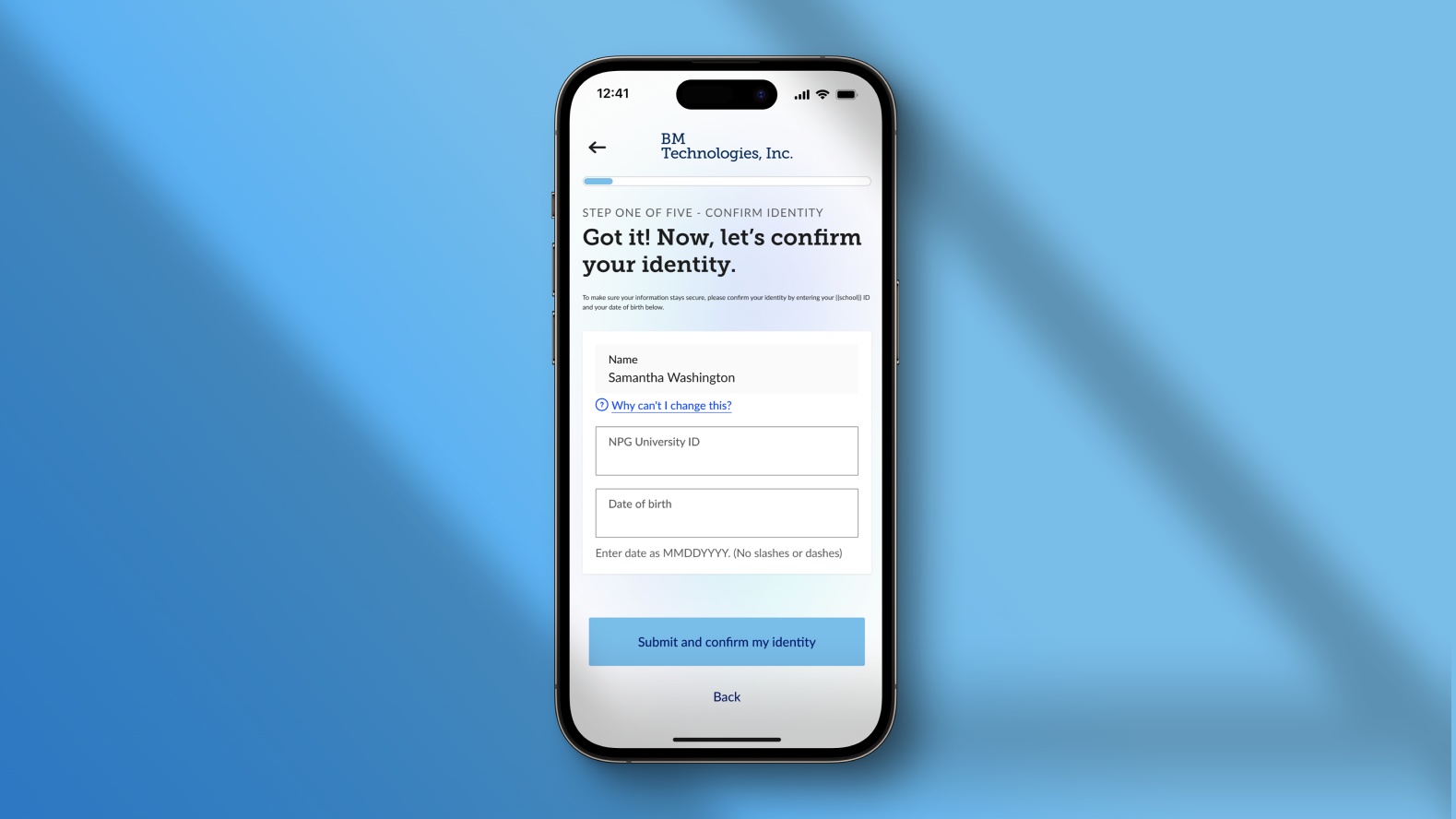
Students choose how to receive their refunds. The checking account is optional. That separation matters: a school needs a refund service whether or not a student wants another bank account. A student can benefit from the payment process without becoming a banking customer. The commercial opportunity sits alongside that choice.
For institutions, the alternatives include doing the work themselves or selecting another payment provider. For consumers, the alternatives include other digital accounts and ordinary student accounts. BMTX occupies the intersection. Its campus workflow gives it an introduction that a consumer banking app would otherwise have to buy.
- 01 / CampusA financial-aid balance needs returning.
- 02 / BMTXRefund selection, payment handling, support.
- 03 / StudentChooses a refund destination; banking is optional.
Four ways to get paid
Before its acquisition, BMTX described four revenue streams: interchange and card revenue, deposit servicing fees, account fees, and university fees. They reward different activities. A school pays for institutional services. Deposits generate servicing economics under bank agreements. Debit spending generates card revenue. The model connects operational usefulness with consumer activity, rather than depending on a single subscription.
The consumer offering includes checking, savings, and debit-card access. Kard-powered cash-back Offers, launched in July 2024, add rewards on eligible purchases. Kard’s account describes a program without individual offer activation. This addresses a problem beyond opening an account: giving someone a reason to keep using it.
There are product boundaries, too. BMTX’s credit-and-loans page says new credit-card applications ended in December 2022 and new personal-loan applications ended in May 2023. An old product list can therefore give a misleading impression of what a new customer can obtain today.
The bank it did not buy
Corporate independence arrived in January 2021 through the Megalith transaction. Later that year, BMTX proposed purchasing Seattle’s First Sound Bank for approximately $23 million. Owning a bank would have changed the company’s responsibilities as well as its opportunities.
The deal never closed. In December 2022, the companies terminated it after a prolonged regulatory process. Sidhu pointed to higher interest rates and argued for a sponsor-bank model without the capital requirements and credit risk of holding the banking business on its own balance sheet. By January 2023, BMTX had announced a cost-reduction plan targeting $15 million in annual savings, including a roughly 25% workforce cut.
The next bank relationship moved in the opposite direction. First Carolina became the higher-education banking sponsor in December 2023, then acquired BMTX effective January 31, 2025. The closing consideration was approximately $66 million in cash. Jamie Donahue continued as president and chief digital officer. BankMobile banking services are now provided by First Carolina Bank.
31 January 2025
The opportunity after the introduction
The purchase did not settle every question. First Carolina’s first-half 2026 reporting showed a $2.7 million BM Tech segment loss. It also described the planned discontinuation of a BaaS partnership that did not fit its strategy. University fees increased, while consumer fraud and transaction losses declined. Those figures suggest a business being narrowed and repaired, with results still to earn.
Identity verification extends the campus proposition upstream: screen prospective students before fraudulent applications become fraudulent payments. For a college, refunds and applicant checks belong to different desks, but both involve deciding who should receive access to money or services.
The transferable lesson is specific. Find an institution with a recurring problem, remove work it dislikes, and earn a useful place in its customer’s day. It requires access to those institutions, dependable operations, and customers who retain a meaningful choice. Without those conditions, the supposed distribution advantage becomes another costly introduction. BMTX’s own history shows how much work comes after the first hello.