The cash register is an unlikely place to look for the future of banking. It has chewing gum nearby. Somebody is waiting to buy shampoo. Yet this is where Green Dot’s story becomes interesting: a company associated with prepaid plastic built a way to move money from the physical world into the digital one, using the places people already visited.
- A card intended for teenagers found a different audience: adults poorly served by conventional banking.
- Retail distribution grew into cash infrastructure that other financial brands could use.
- Today, embedded finance offers growth, while regulation and a proposed corporate split complicate the picture.
The customer who changed the plan
Steve Streit founded the company in 1999 after a career in radio. His early idea was a prepaid card for young people who wanted to buy things online. It solved an obvious mismatch: access to the internet did not mean access to a credit card. The assumption about the buyer, however, needed work.
In a 2019 interview, Streit described discovering that adults were buying the cards. The company pulled cards from Rite Aid shelves and changed the packaging for an adult audience. The product had found people whose problem was more persistent than teenage shopping: getting ordinary financial tasks done outside mainstream banking.
“Sometimes, you are smart and strategic, and sometimes, you just get lucky.”
Steve Streit · 2019
There is a useful discipline here for anyone building a business. Watch who pays. A customer who uses your product for an unexpected reason may be telling you more than your original pitch ever did. Green Dot followed that signal toward a broader financial-services business. The lesson is especially sharp because changing the audience did not require abandoning the basic product. It required admitting that the original audience was too narrow.
The checkout becomes infrastructure
A bank branch asks customers to make a special trip. A retailer is somewhere they may already be going. Green Dot connected that existing traffic to account funding, turning a routine errand into an opportunity to move cash. The company now describes a network of more than 90,000 retail distribution and cash-access locations nationwide.
retail distribution & cash-access locations
The network also gives Green Dot something to sell to companies that already have customers. In September 2025, it announced a Stripe partnership intended to let Stripe Treasury users deposit cash at more than 50,000 locations. That smaller number matters: the whole network and one partner’s supported footprint are different things. In August 2026, Green Dot still listed Stripe among upcoming launches.
Its position is unusual because it combines a bank subsidiary, program operations, technology and physical distribution. A company building a financial product can buy several pieces together. Alternatives such as Galileo, Marqeta and sponsor banks cover overlapping parts of that work, with different combinations of processing, banking and program support.
One network, several ways to get paid
For individuals, Green Dot offers branded cards and GO2bank, its mobile banking product launched in January 2021. Customers can receive direct deposits, manage spending, save and, if eligible, obtain a secured credit card. The practical appeal is managing money through a phone while retaining a route for handling cash.
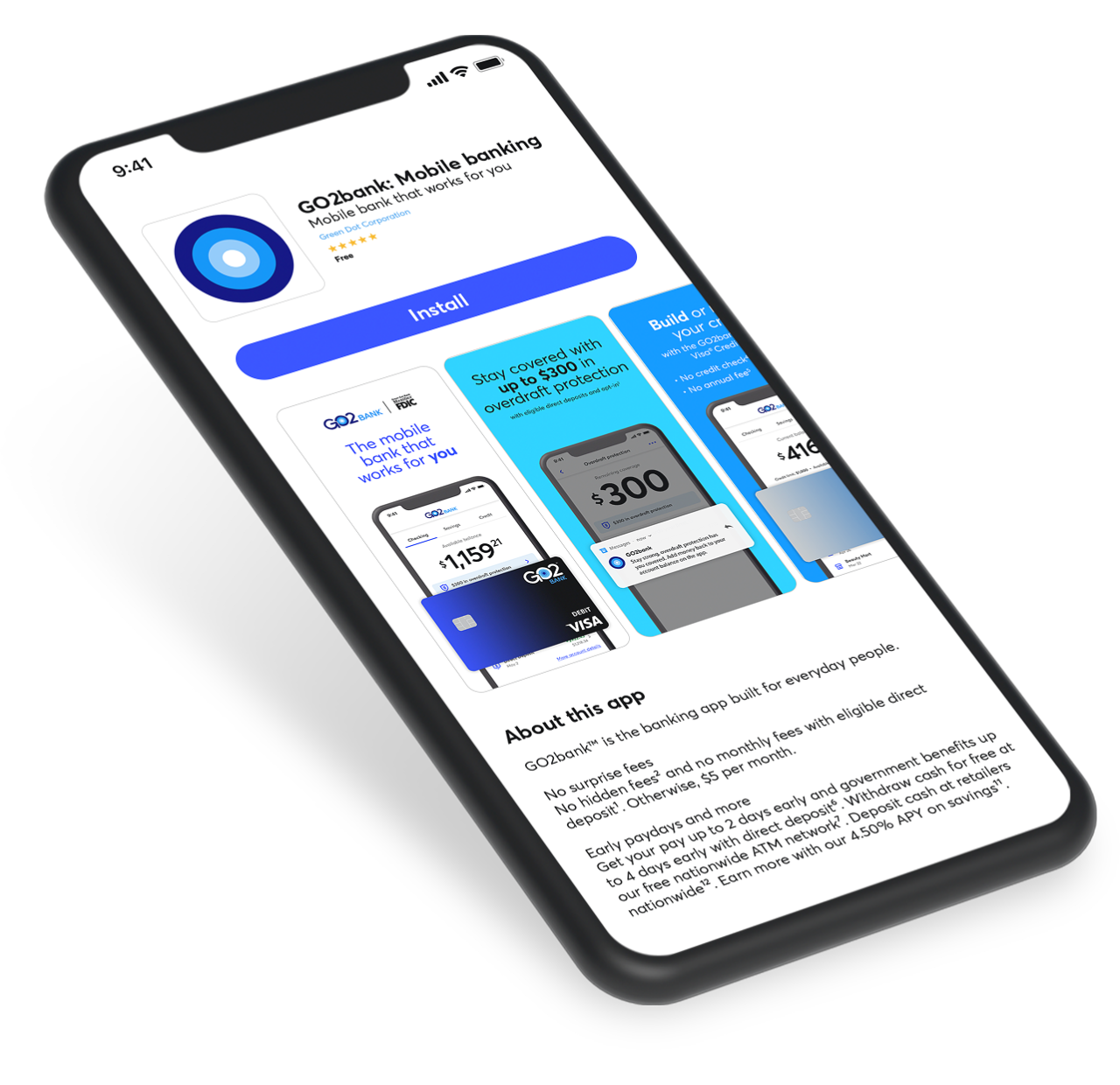
The price deserves equal billing. GO2bank lists a $5 monthly fee, waived when qualifying payroll or government-benefits direct deposit arrives in the previous statement period. Retail cash deposits can cost up to $4.95. Early pay depends on payment timing and other conditions. For someone paid irregularly, those details can determine whether the account helps.
Businesses enter through other doors. Arc packages embedded banking and money movement with APIs and program management. Employers use rapid! for payroll and disbursement services. Santa Barbara TPG handles tax-related payments. Walmart MoneyCard puts banking inside a retail brand people already know. Different wrappers, connected operational work.
Green Dot earns card and service fees, cash-processing revenue, interchange when cards are used, and net interest income. Its 2025 operating revenue reached $2.08 billion, alongside a $98.9 million net loss. Scale is visible in those figures. So is the difficulty of turning financial infrastructure into consistent profit.
The $44 million test of access
Access is an easy promise to print and a demanding one to keep. In July 2024, the Federal Reserve fined Green Dot $44 million over consumer compliance failures. Its findings included inadequate tax-refund fee disclosure and blocked accounts belonging to legitimate unemployment-benefit recipients, without reasonable procedures to resolve those blocks.
The regulator also identified weaknesses in anti-money-laundering and compliance programs and required independent reviews. These failures strike directly at the customer proposition. An account is useful when the person who owns the money can use it. A convenient deposit location cannot compensate for an unresolved restriction on the balance.

That limits what another founder can copy. Retail partnerships require reliable cash handling, customer support and workable fees. Embedded banking requires oversight as well as software. A business without those capabilities risks making money easier to deposit than to recover.
Two businesses, one seven-year promise
Green Dot’s next structural change was announced in November 2025. Smith Ventures agreed to buy its non-bank fintech operations for $690 million; CommerceOne would combine with Green Dot Bank. A seven-year exclusive sponsor-bank agreement would reconnect the separated businesses commercially. Shareholders approved the transaction in June 2026. August results still described regulatory approvals and other closing conditions as outstanding.
The operating picture explains the stakes. Second-quarter 2026 active accounts totaled 3.45 million, with business accounts growing while consumer accounts declined year over year. The business increasingly depends on serving other brands as well as its own users. Its enduring question remains wonderfully concrete: when somebody walks into a store holding cash, how much useful banking can begin there?